Home Blog Page 134

Envoy highlights Iran’s efforts to achieve sustainable development despite economic terrorism

0
Envoy highlights Iran's efforts to achieve sustainable development despite economic terrorism
Envoy highlights Iran’s efforts to achieve sustainable development despite economic        terrorism


First Counselor of the Permanent Mission of the Islamic Republic of Iran to the UN Ali Hajilari said despite economic terrorism imposed on Iran, the country still continues efforts to achieve sustainable development.


“With this introduction, allow me to elaborate a little on the situation of my country in terms of sustainable development. Despite all these unjust and illegal pressures and sanctions.


The Islamic Republic of Iran has continued its efforts to achieve sustainable development and as a result of these tireless efforts we have been able to rank 56thamong 166 countries in the Sustainable Development Goals Index, according to the “Sustainable Development Report 2020”.


Hajilari said in a statement addressing the Economic and Financial Committee (Second Committee) of the General Assembly at its seventy-fifth session.


He said: “The year 2020 is a turning point in our journey towards development.


It marks the 75th Anniversary of the United Nations and the start of the decade of action and delivery for sustainable development.


At the same time, we are facing a catastrophic devastating global challenge namely COVID-19, which threatens the life and livelihood of all people on earth in an unprecedented manner.


In a way that decades of development achievements have been reversed.


Read More


Also Read: US accuses Iran of destabilizing Syria through proxies
Unfortunately, at this very critical juncture where the world needs solidarity, unity, and unconditional resort to multilateralism more than ever, we face a surplus of unilateral approaches and a deficit of multilateral solutions. While the entire world continues to grapple with the most devastating pandemic of the modern era, the US continues to impose unilateral coercive measures, including illegal economic sanctions, on countries that are greatly suffering from the grave consequences of the pandemic. While in principle, unilateral coercive measures are, under all circumstances, contrary to and violate international law.

US accuses Iran of destabilising Syria through proxies

0

US accuses Iran of destabilising Syria through proxies

On September 19 2020, the Iran Action Group of the United States Department of State published the report “Outlaw Regime: A Chronicle of Iran’s Destructive Activities, 2020”. In the foreword to the report, the US Secretary of State Mike Pompeo calls Iran as a “radically revolutionary outlaw regime, the world’s leading state sponsor of terror and anti-Semitism, and the principal driver of instability in the Middle East”.

Bahrain as an Arena for Iran Subversion and Terrorism

Bahrain as an Arena for Iran Subversion and Terrorism

Iran has been a permanent threat to the stability of the Bahraini regime since the country declared independence. Iran’s fundamental antagonism is based on a combination of geopolitics, history and the Iranian regime’s regional interests.

Four Iranians face trial for plotting attack on Trump officials in Paris

Four Iranians face trial for plotting attack on Trump officials in Paris

The trial of an Iranian group charged with planning a terror attack in France is due to open in Belgium, the Asharq Al-Awsat newspaper reported Sunday.

Iraq protests one year on: Demands, Iran’s role, al-Kadhimi and the future

0
Iraq protests one year on Demands, Iran’s role, al-Kadhimi and the future
Iraq protests one year on: Demands, Iran’s role, al-Kadhimi and the future


This month marks the one-year anniversary of the outbreak of protests in Iraq known as the “October Revolution.”


Throughout the year, Iraqis have taken to the streets across the country. They have been met with force – with an estimated 600 people being killed as security forces and militia fire upon the crowds.


Despite two changes in the prime minister, the protest movement remains alive in the country, determined to tackle the same structural issues that sparked the initial demonstrations a year earlier.


Here is all you need to know about the protests.


What caused the Iraq protests?


The protests that broke out on October 1 are the result of the build-up of years of Iraqi resentment against the political class and system – which is based on the ethnic-sectarian quota system – because of unemployment, the lack of services, and electricity, nepotism, corruption, and foreign interference.


Before 2019, Iraqis held sporadic demonstrations on these same causes, such as in 2016 when they stormed into Baghdad’s Green Zone and the Iraqi Council of Representatives.


Many Iraqis had boycotted the 2018 elections, with only 44.5 percent turnout reflecting frustration.


Despite Iraq having one of the top five oil reserves globally, 22 percent of Iraqi people live on less than 2 dollars a day according to the World Bank.


The Shia majority areas of Baghdad and southern Iraq suffer from high rates of poverty and became the heartland of the protests.


There were two sparks to the protests on October 1, 2019. In late September, the government launched a harsh crackdown on graduate students who had demanded jobs and called for an end to corruption.


On September 29, Prime Minister Adil Abdul-Mahdi stoked controversy by firing the popular Iraqi commander Abdul Wahab al-Sa’adi, with speculation that the move had been the result of Iranian pressure against the commander’s local popularity.


Read More


Also Read: Iran thinks its phone-call diplomacy could help ceasefire in the Caucasus

Iran thinks its phone-call diplomacy could help ceasefire in Caucasus

0
Iran thinks its phone-call diplomacy could help ceasefire in Caucasus
Iran thinks its phone-call diplomacy could help ceasefire in the Caucasus


Iranian media has revealed the depths Iran went to try to achieve a ceasefire on its northern border where Azerbaijan and Armenian forces are fighting.


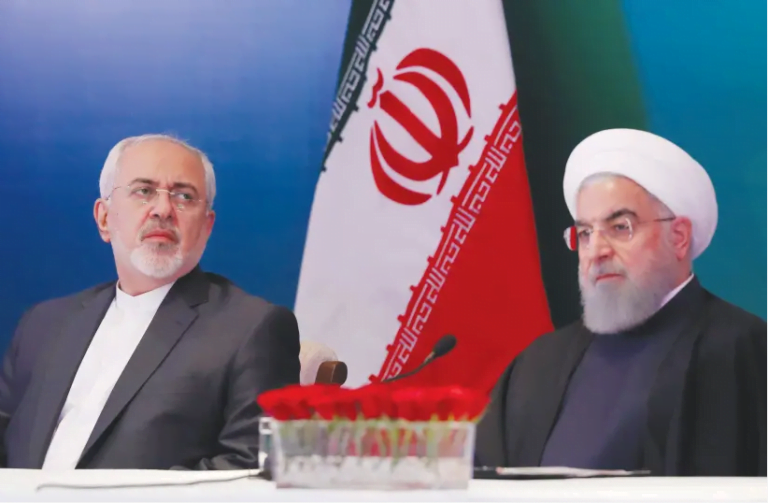
Iran has been concerned about the battles close to the border and has called all those involved with both President Hassan Rouhani and Foreign Minister Javad Zarif playing a role.


The phone-call diplomacy hasn’t worked so far and even Russia’s attempt to broker a ceasefire appears to have failed.


Iran is concerned the conflict could harm the region. This is partly due to the fact Turkey has recruited extremists from Syrian refugees to fight against Armenia.


A recent video shows the Syrians, many of them from the Turkmen minority and members of Turkish-backed former Free Syrian Army Units, now mercenaries for Ankara.


The fighters shout extremist slogans and promise to murder “Armenian pigs.” These are the same fighters that murdered Kurds and Libyans in the past when Turkey used them.


Iran doesn’t want these extremists on its border, especially because they tend to shout anti-Shi’ite slogans and cause chaos, looting, rape, and murder wherever they go.


In Afrin, they are known for running secret prisons and kidnapping women.


Iran thus put in motion a series of calls with the President of Azerbaijan, the Prime Minister of Armenia, as well as Russia’s Vladimir Putin.


Armenia did not work as closely with Turkey, despite the fact that in the past Turkey and Iran have worked together on Syria through the Russia-backed Astana process.


Turkey has been the main supporter and driver of the war against Armenia, using it to champion its armed drones and regional stance.


Iran began by getting Zarif to phone his Armenian counterpart in September.


Read More


Also Read: Iran renews condemnation of use of chemical weapons

Iran renews condemnation of use of chemical weapons

0
Iran renews condemnation of use of chemical weapons
Iran renews condemnation of the use of chemical weapons


Iranian Ambassador and Permanent Representative to the UN Majid Takht-Ravanchi on Friday renewed condemnation in the strongest possible terms the use of chemical weapons by anyone, anywhere, and under any circumstances.


The full text of the statement by Takht Ravanchi at the United Nations Security Council on “the situation in the Middle East – Syria / chemical” is as follows:


In the Name of God, the Most Compassionate, the Most Merciful,


Mr. President,


First, I would like to congratulate you on assuming the Presidency of the Council for the month of October and assure you of the full cooperation of my delegation.


Read More


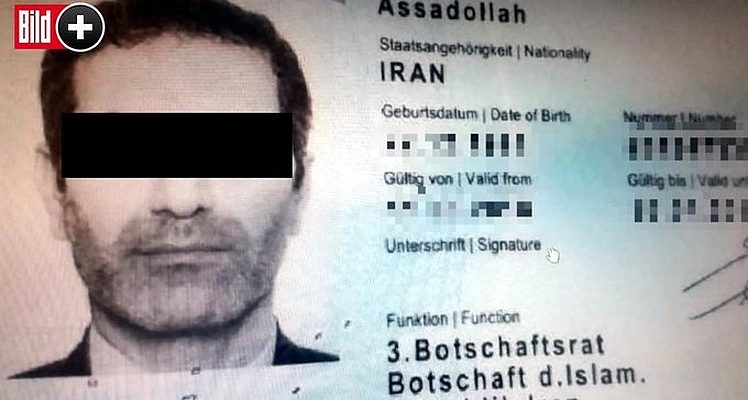
Also Read: How Germany Was Drawn to Iran ‘Dual-use’ Drone Motors for Yemen Houthis

As a major victim of chemical weapons in contemporary history, Iran continues to condemn in the strongest possible terms the use of chemical weapons by anyone, anywhere, and under any circumstances. Iran also reiterates its call for the balanced, full, and non-discriminatory implementation of the CWC and upholding the authority of the OPCW. In the past several years, based on unsubstantiated allegations, the processes of the CWC, OPCW, and the Security Council have been abused against the Syrian Government. However, the fact is that in 2014, the head of the Joint Mission to Eliminate Chemical Weapons in Syria, in her final report to this Council, confirmed that Syria has fulfilled all its commitments and that its entire chemical stockpiles have been destroyed. Later, the OPCW also confirmed the destruction of the entire chemical stockpile of Syria and all its 27 production facilities. Now, these facts as well as the Syrian government’s significant cooperation with the OPCW and the UN, including its provision to the OPCW of over 80 monthly reports and a large amount of information are being neglected. Such unproductive policies have not contributed to the resolution of outstanding questions.

How Germany Was Drawn to Iran ‘Dual-use’ Drone Motors for Yemen Houthis

0
How Germany Was Drawn to Iran 'Dual-use' Drone Motors for Yemen Houthis
   How Germany Was Drawn to Iran ‘Dual-use’ Drone Motors for Yemen Houthis


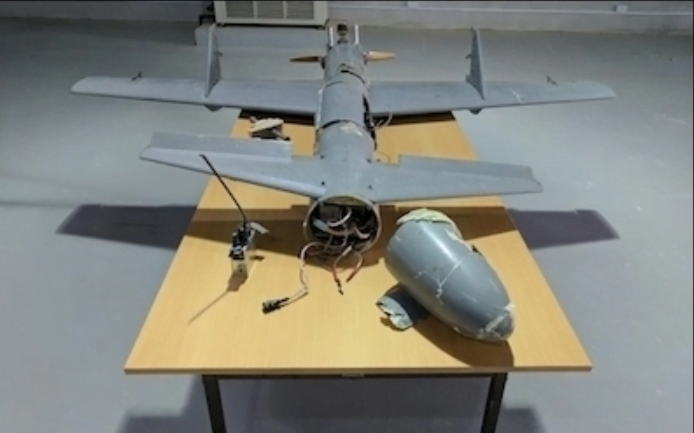
Germany has worked to prevent engines from being transferred to Iran for use in drones that are used by Houthi rebels in Yemen against Saudi Arabia.


This complicated trafficking in materials for armed drones is part of the larger Iranian nexus of procurement for its military program.


Iran hopes that the end of an arms embargo against it will make it easier to import and export weapons.


According to an article at The National, in the United Arab Emirates, German officials “imposed a ban on the same of model aircraft engines to Iran after a shipment ended up on drones used by Houthis in Yemen.”


Iran then moved to acquire similar parts from China.


“It emerged that a small maker of engines for miniature versions of well-known aircraft was approached by Germany’s domestic intelligence service, which had been monitoring sales of units later found on the battlefield.”


The report claims the parts were moved from Xiaman to Mombasa.


At the heart of the German portion of this story are 42 twin-cylinder propeller motors that were sent to Athens in 2015. The motors were then moved to Iran.


This kind of dual-use technology, engines that could be used for civilian needs, shipped through a third country, easily hides the end user.


Conflict Armament Research has produced several reports on Iranian technology transfers to Yemen.


A report in March 2017 traced the components of a Qasef-1 drone that had been recovered near Aden in 2016.


It includes a DLE-111 two-cylinder engine that was “manufactured by the Chinese company Mile Haoxiang Technology,” the article claimed. It was identical to other engines found in attacks near Marib.


The Case-1 is a kamikaze drone, which is similar to an Iranian Ababil.


Read More


Also Read: Iran foreign minister to visit China following U.S. sanctions

Iran foreign minister to visit China following U.S. sanctions

0
Iran foreign minister to visit China following U.S. sanctions
   Iran foreign minister to visit China following U.S. sanctions


China says Iran’s foreign minister will visit the country from Friday to Saturday, a day after the Trump administration blacklisted virtually all of Iran’s financial sector in the latest step aimed at the oil-rich country’s economy.


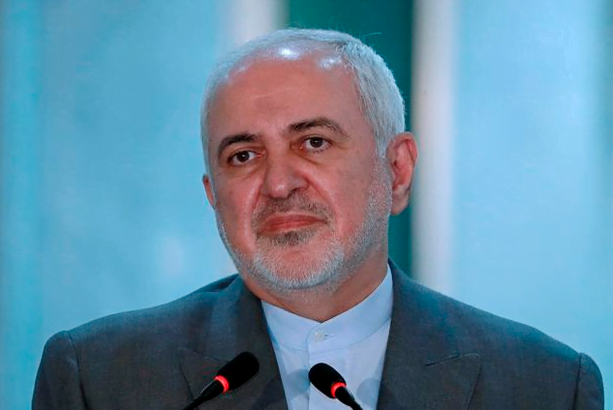
In a brief announcement, China’s Foreign Ministry said only that Foreign Minister Javad Zarif was visiting at the invitation of his Chinese counterpart Wang Yi.


China has been a staunch Iranian ally and remains a party to the 2015 Iranian nuclear agreement from which the U.S. has withdrawn while unilaterally reinstituting punishing sanctions on Iran.


Thursday’s U.S. move hits 18 Iranian banks that had thus far escaped the bulk of reimposed U.S. sanctions and subjects foreign, non-Iranian financial institutions to penalties for doing business with them. That effectively cuts them off from the international financial system.


Read More


Also Read: Where Russia, Turkey, Iran stand in the Armenia-Azerbaijan conflict

The blacklisting has been opposed by European nations because it will open up their biggest banks and other companies to U.S. penalties for conducting business with Iran that had previously been allowed. Zarif reacted angrily to the designations, calling them a “crime against humanity” at a time of global crisis. The move comes as the U.S. has stepped up efforts to kill the 2015 Iran nuclear deal by steadily increasing pressure on through sanctions on its oil sales, blacklisting top government officials, and killing a top general in an airstrike. Almost the entire rest of the world has vowed to ignore the latest U.S. sanctions but violating them will come with a significant risk of losing access to the U.S. financial system. The Chinese ministry said Indonesia’s presidential special envoy for China, Luhut Binsar Pandjaitan, and Philippine Foreign Secretary Teodoro Locsin Jr. are visiting Beijing at the same time as Zarif.

Where Russia, Turkey, Iran stand in the Armenia-Azerbaijan conflict

0
Where Russia, Turkey, Iran stand in the Armenia-Azerbaijan conflict


The war raging between Armenia and Azerbaijan over the disputed Nagorno-Karabakh region has dragged in a complex web of foreign countries.


The neighboring former-Soviet states are fighting over the Nagorno-Karabakh region, which is controlled by the self-proclaimed Republic of Artsakh, an ethnically Armenian enclave that is internationally recognized to be a part of Azerbaijan but has never been under Azeri rule.


The current flare-up is the most serious escalation since the early 1990s and has raised tensions between key regional actors, most notably Russia, Turkey, Iran, and Israel.


Here is where each country stands on the conflict.


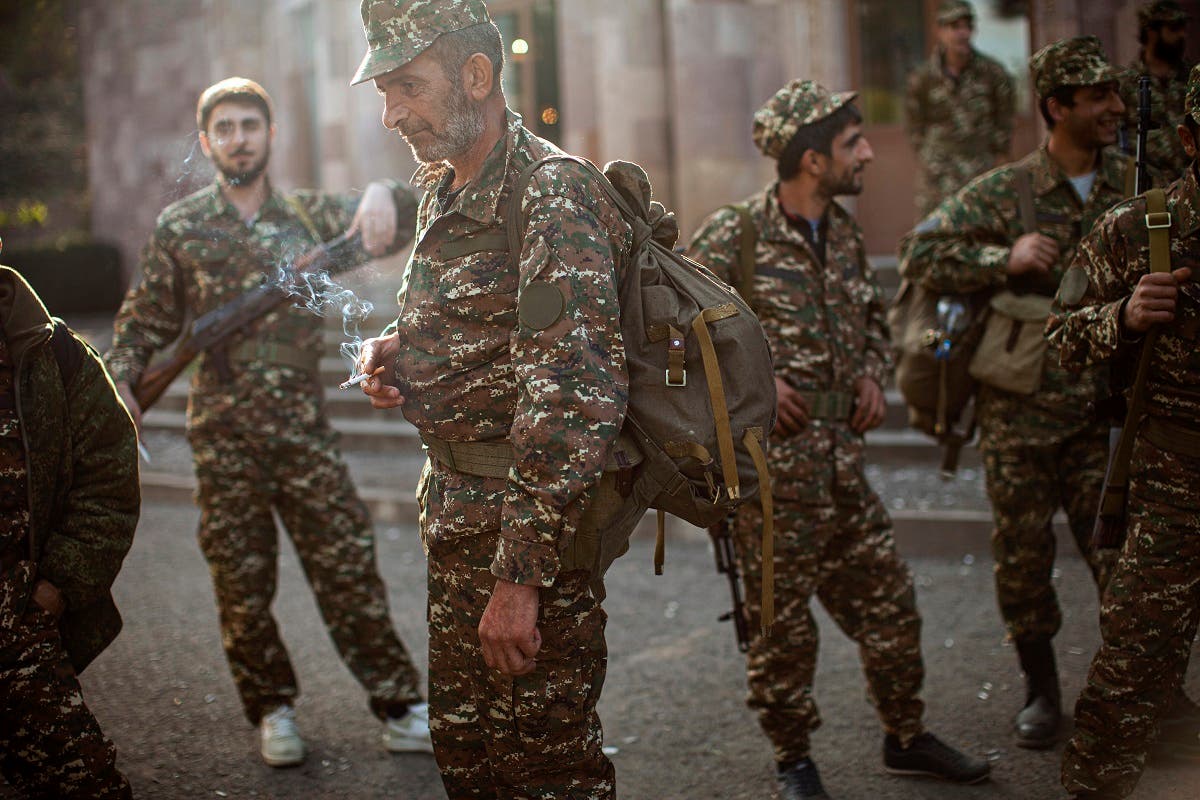
Ethnic Armenians volunteer recruits gather at a center where they receive their uniforms and weapons. (AP)

Ethnic Armenians volunteer recruits gather at a center where they receive their uniforms and weapons. (AP)


Russia: Regional powerhouse trying to mediate


Russia is the most influential country in the South Caucasus region but has remained on the sidelines in the current flare-up and called for an end to hostilities.


Russia has a military base in Armenia and sells arms to both Armenia and Azerbaijan in a balancing act that gives it considerable influence and leverage over both countries.


Over the years, Moscow has used its position to play the role of a mediator.


According to Laurence Broers, Associate Fellow of the Russia and Eurasia program at Chatham House, Russia has a security-driven approach based on the idea of “pivotal deterrence,” a term he coined.


Read More


Also Read: Tehran scrambles for hospital beds as Iran reports record new coronavirus cases

“[Russia] is a pivot moving between Armenia and Azerbaijan with a range of different kinds of policies, being a security guarantor to Armenia, providing weapons to both sides and mediation initiatives,” Broers told Al Arabiya English. According to Broers, the recent escalation is a dilemma for Moscow. On the one hand, Russia is a co-chair of the main mediation entity for this conflict.