Home Blog Page 145

Cracks in the Iranian Regime’s Armor

0
Cracks in the Iranian Regime’s Armor


An analysis of the November 2019 Iranian revolt reveals vital truths about the Islamic Republic’s inability to suppress popular demand for regimes change.


The government anticipated the uprising would come if it raised gas prices, and it was correct. It announced the 300% hike abruptly in an effort to prevent the opposition from organizing.


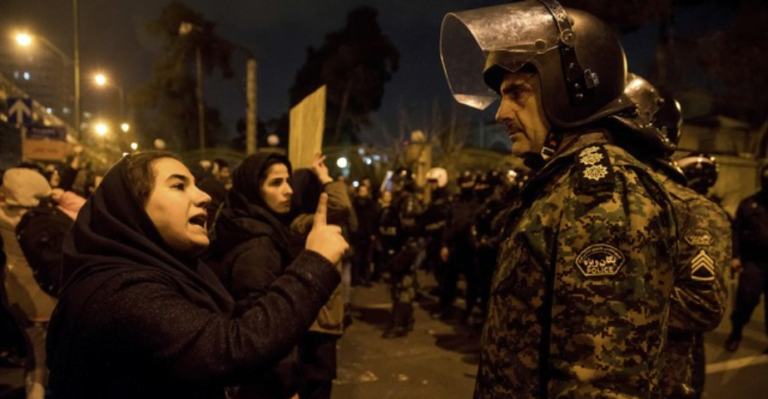
Despite this, relatively small, spontaneous uprisings in cities across Iran shook the regime to its core, and for parts of two days, the regimes lost control in a number of cities and towns.


Large parts of Shiraz were freed from the regime’s authorities for more than one day. Witnesses there reported clashes between the Islamic Revolutionary Guard Corps (IRGC) and regular Army forces.


In Ghodes, protestors took over a base after it was abandoned by security forces. In Behbahan, citizens took charge of large areas after the murder of two citizens.


And troops retook Mahshahr only after employing heavy machine guns against unarmed civilians with a policy to shoot and kill. Nationwide, it took the regime three days and the murder of 1,500 people, according to Reuters, to regain control.


Yet, the protests were small in number if not in space. In total, demonstrations were held in some 719 locations.


The number of people at these locations was, however, between 50 and 500 persons only. So, on average, if we consider 200 people in each, fewer than 150,000 people participated nationwide, representing about a quarter of a percent of Iran’s population.


Read More


Also Read: IRGC: UAE-Israel Deal Historical Folly, Doomed to Failure

Since then, living conditions in Iran have continued to deteriorate considerably. Furthermore, most government institutions can no longer function, and the economy has cratered.Exporters of locally produced commodities won’t return the hard currency that banks desperately need to support the Rial, which is in free-fall. Resulting inflation and the lack of economic opportunity mean many people can no longer afford even basic necessities across the country.

IRGC: UAE-Israel Deal Historical Folly, Doomed to Failure
0
IRGC UAE-Israel Deal Historical Folly, Doomed to Failure
IRGC: UAE-Israel Deal Historical Folly, Doomed to Failure
 

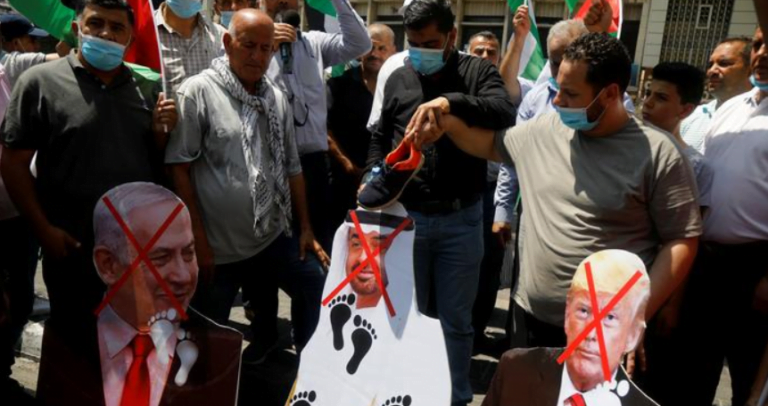
The Islamic Revolution Guards Corps (IRGC) in a statement on Saturday strongly condemned the normalization deal between the UAE and Israel, and warned of a dangerous future for the US and supporters of the agreement.


“The deal is a strategic mistake, a historical folly and a poisonous dagger in the body of the Islamic Ummah,” the statement said.


“The measure will not meet the Zionist regime’s interests and will instead annihilate the dream of a new Middle-East and will put a dangerous future before the US and supporters of the deal,” it added.


The statement also advised the UAE statesmen to review their measure, cautioning that otherwise they should wait for the firm reaction by the country’s people against the deal because they will not allow the Palestinian people’s rights to be trampled by the psychological operations and deceitful images of the imperialist and Zionist media.


It added that the deal will not guarantee Israel’s security and will create a dangerous future for the US, the UAE rulers and the regional and trans-regional supporters of the shameful agreement.


Read More


Also Read: Iran, Turkey slam UAE over agreement with Israel

US President Donald Trump on Thursday announced a deal brokered by his government between Isreal and the UAE which he said would lead to full normalization of ties between the two.Critics see the deal as the latest attempt by Trump to save his presidential campaign against the Democrat Joe Biden.In a relevant statement on Friday, the Iranian foreign ministry strongly condemned the UAE’s decision to set up diplomatic relations with “the Zionist regime of Israel” and termed it as a strategic act of idiocy by Abu Dhabi and Tel Aviv which will undoubtedly result in the further reinvigoration of the axis of resistance in the region.

Iran, Turkey slam UAE over agreement with Israel

0
Iran, Turkey slam UAE over agreement with Israel


Iran has said the establishment of diplomatic ties between its arch-rival Israel and the United Arab Emirates is a “dagger in the back” of all Muslims, while Turkey said the UAE had “betrayed” the Palestinian cause.


Iran and Turkey on Friday resoundingly condemned the normalization of ties between Israel and the United Arab Emirates (UAE).


The US-brokered deal announced Thursday establishes full diplomatic relations between Tel Aviv and Abu Dhabi, while haltingIsraeli plans for annexation of occupied land in the West Bank.


Iran called the deal a “dagger in the back” of all Muslims, according to a foreign ministry statement.


Tehran also said the deal was an act of “strategic stupidity” by the UAE, and “will undoubtedly strengthen the axis of resistance in the region.”


In separate remarks, Iran’s Foreign Minister Mohammed Javad Zarif slammed the deal as a “theater” fabricated by the US.


“They (US) think that by fabricating the theater like the one that happened yesterday unfortunately, that they can determine the fate of Palestine,” Zarif said in televised comments during a visit to Lebanon.


Iran’s top diplomat also said that the current US administration had “proven that it is not capable of understanding the political realities in our region.”


Palestinian Authority: deal is ‘treason’


A spokesman for Palestinian President Mahmoud Abbas said Thursday the deal amounts to “treason,” and should be reversed.


Read More


Also Read: ‘Strategic Mistake’ Caused Escalation Of COVID-19, Iran Coronavirus Taskforce Official Says

The Turkish Foreign Ministry issued a statement supporting the Palestinian administration, saying that the “history and the conscience” of the region’s people will not forget and never forgive the “hypocritical behavior” of the United Arab Emirates in agreeing to a deal with Israel.”While betraying the Palestinian cause to serve its narrow interests, the UAE is trying to present this as a kind of act of self-sacrifice for Palestine,” the foreign ministry said.

‘Strategic Mistake’ Caused Escalation Of COVID-19, Iran Coronavirus Taskforce Official Says

0
'Strategic Mistake' Caused Escalation Of COVID-19, Iran Coronavirus Taskforce Official Says
‘Strategic Mistake’ Caused Escalation Of COVID-19, Iran Coronavirus Taskforce Official Says


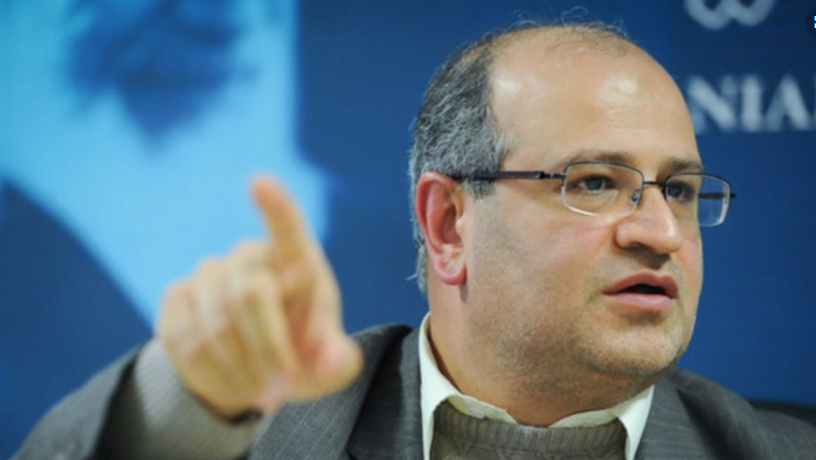
Dr. Alireza Zali, the head of the Tehran Coronavirus Combat Taskforce, has admitted for the first time that the escalation of the COVID-19 in Iran over recent months was caused by a “strategic mistake” on the parts of the government and health authorities.


Speaking to reporters on Friday, Dr. Zali said that holding the people solely responsible for applying social distancing and health regulations, as opposed to the authorities, was “a strategic mistake.”


Dr. Zali also defended the hands-on intervention of the government to combat the coronavirus epidemic, calling it a sign of “good governance”.


Read More


Also Read: Speaker: Fight against Zionist regime to continue with uttermost zeal

“The effectiveness of the government actions will be affected if public trust is marred for any reason,” Dr. Zali said, adding that the loss of public health in this case results from the government’s lack of a realistic approach to the epidemic.Criticizing the government for lifting the restrictions and ending the lockdown too soon, Dr. Zali said people are worried about earning their living to survive and the government’s haste in resuming normal activities could lead them to believe that the epidemic had been contained.Another official of the Tehran Coronavirus Taskforce, Dr. Ali Maher, also called for greater government intervention to contain the crisis.Daily deaths in Iran dropped from around 150 in March to around 50 early April after a partial lockdown came into effect in late March. The number began to surge again after the relaxation of lockdown measures on April 12, and on July 21 reached a record high of 229.Dr. Maher said the Tehran taskforce has proposed that to enforce the regulations more effectively, penalties should be introduced to ensure all individuals and businesses abide by the health protocol designed for preventing the spread of the virus.

Speaker: Fight against Zionist regime to continue with uttermost zeal

0
Speaker Fight against Zionist regime to continue with uttermost zeal
       Speaker: Fight against Zionist regime to continue with uttermost zeal


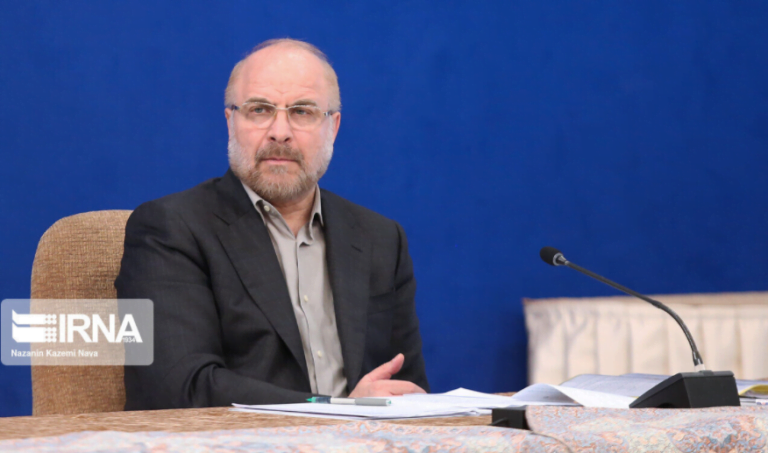
Iranian Parliament Speaker Mohammad Baqer Qalibaf in a message reacted to official establishment of political relations between the Zionist regime and the United Arab Emirates (UAE), warning that fighting the Zionist regimes will continue with uttermost power and zeal.


The humiliating compromise of the UAE rulers with the criminal Zionist regime is considered as a betrayal of human values, the Islamic Ummah and the Palestinian cause, Qalibaf wrote in his Twitter account.


We warn these traitors and those who intend to join this project that fighting the Zionist regimes will continue with power, he added.


Earlier, Iran’s Foreign Ministry strongly condemned the establishment of ties between the United Arab Emirates (UAE) and the Zionism regime.


Read More


Also Read: Iranian President Hassan Rouhani’s seven years of broken promises

In a statement early Friday, the ministry voiced strong condemnation to the UEA decision to set up diplomatic relations with the Zionist regime of Israel and termed it as a strategic act of idiocy by Abu Dhabi and Tel Aviv which will undoubtedly result in the further invigoration of the axis of resistance in the region.The statement further stressed that the oppressed nation of Palestine as well as other freedom-seeking peoples worldwide will never forgive the sin of normalization of the ties with the occupier and bloodthirsty regime of Israel and also the act of those who approve and cooperate with its crimes.The Iranian foreign ministry’s statement also noted that the history will definitely demonstrate how this strategic mistake by the Zionist regime and the dagger which stabbed both the Palestinian nation and the Muslim peoples in the back will backfire and further strengthen the resistance axis by enhancing unity and solidarity against the Zionist regime and the backward governments in the region.

Iranian President Hassan Rouhani’s seven years of broken promises

0
Iranian President Hassan Rouhani’s seven years of broken promises
              Iranian President Hassan Rouhani’s seven years of broken promises


This month marks seven years since Hassan Rouhani assumed the Iranian presidency. There was a lot of hope, both in Iran and abroad, when he was elected in 2013.


He twice ran to be president, offering promises such as “prudence and hope” and “freedom, security, peace and progress.”


He pledged to improve Iran’s economy, raise people’s living standards, bring normalcy to the country, enhance its image abroad, improve its ties with other countries, bring it out of international isolation, and advance civil liberties, human rights and the freedoms of speech, press and assembly.


In the West, he was dubbed as a reformist and a “diplomatic sheikh.”


But anyone who had studied the Islamic Republic since 1979 and examined Rouhani’s political and religious background in the system, as well as his books, speeches and activism prior to his presidency, was cognizant of the fact he was anything but a reformist.


What the international community, particularly the West, failed to realize was that Rouhani, like many other Iranian politicians who are labeled as reformists or moderates, had always been a staunch supporter and advocate of the Velayat-e Faqih (Guardianship of the Islamic Jurist) system, which was expounded by the founding father of the Islamic Republic, Ayatollah Ruhollah Khomeini.


In a speech in 2008, Rouhani said: “In an Islamic society, the ‘Islamic system’ (of Velayat-e Faqih) is more important than anything else, and the preservation of the system is a religious obligation.”


A look at Rouhani’s past positions in the Islamic Republic should also have made it crystal clear to the international community that Rouhani was the ultimate insider and one of Supreme Leader Ali Khamenei’s closest confidantes.


Ever since the Supreme National Security Council (SNSC) was set up in 1989, Rouhani has been Khamenei’s representative on the committee. It is difficult to believe that Khamenei would have chosen Rouhani to be his representative on this important council without having assurances that Rouhani believed in his hard-line approach.


Read More


Also Read: Where does Iran stand in the India-China regional rivalry?


Where does Iran stand in the India-China regional rivalry?

0
Where does Iran stand in the India-China regional rivalry?
             Where does Iran stand in the India-China regional rivalry?


The possible strategic agreement between Iran and China presents concerns not only for the United States, but also for one of the premier powers of the Asian continent: India.


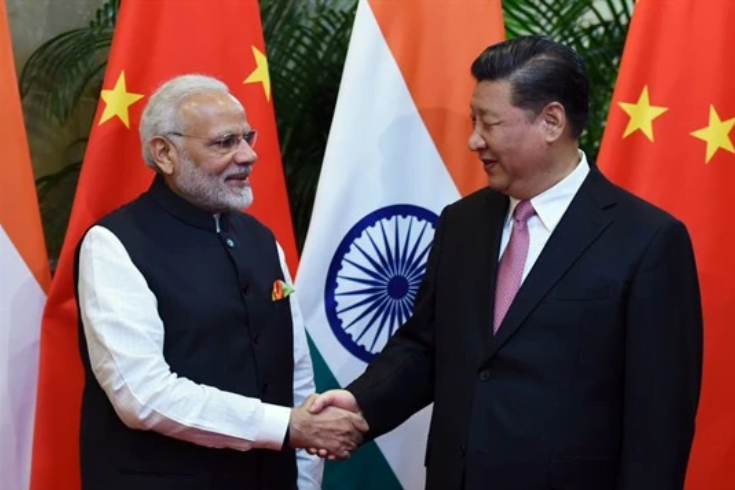
On a visit to Tehran in May 2016, Indian Prime Minister Narendra Modi signed a memorandum of understanding with Tehran in a meeting with Iranian President Hassan Rouhani to develop the strategic Iranian seaport of Chabahar.


Chabahar, located in southeastern Iranian province of Sistan and Baluchestan on the Sea of Oman serves as Iran’s only oceanic port and its closest to international waters in the Indian Ocean.


The port consists of two nodes (terminals), each of which has five berths built in an area of 485 hectares.


The $1.6 billion memorandum of understanding between Iran and India was also signed to build the Chabahar-Zahedan railway, which was slated to link India to Afghanistan, as well as Central Asia, through Iran.


Needless to say, Pakistan has for a long time denied India to use its soil as a transit route.


India saw signing the Chabahar agreement with Iran as a counterbalance to China’s action in signing an agreement with Pakistan to develop Gwadar port in 2015.


The Gwadar port is situated only 350 km by land and 140 km by sea from the port of Chabahar.


But more than four years after signing the Tehran-New Delhi memorandum, the Chabahar development project has seen no progress even as the news of a 25-year Iran-China strategic partnership arrived recently.


Much to New Delhi’s dismay, on July 16, Kheirollah Khademi, Iran’s Deputy Minister of Roads and Urban Development, confirmed the earlier reports that India had been dropped from the Chabahar-Zahedan railway project, citing funding delays.


Although Iranian officials have not cited the strategic agreement with China as a reason for excluding India from the Chabahar project, political commentators are well aware of the increasing tensions and rivalry between India and China.


Read More


Also Read: Iran Conservatives Uncertain About Winning 2021 Presidential Election

Iran Conservatives Uncertain About Winning 2021 Presidential Election

0
Iran Conservatives Uncertain About Winning 2021 Presidential Election
     Iran Conservatives Uncertain About Winning 2021 Presidential Election


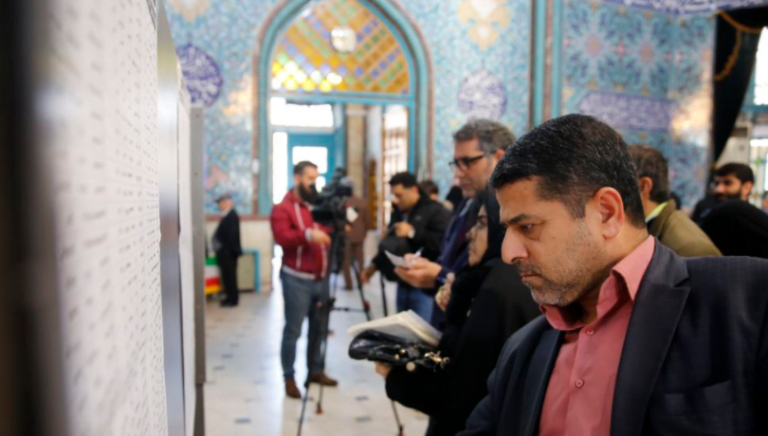
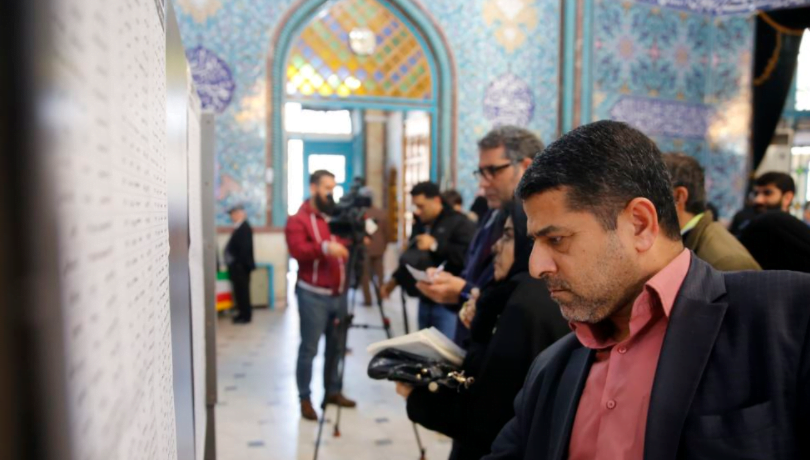
A divide among Iran’s conservatives casts doubt whether a victory in the May 2021 election is within their reach, despite their overwhelming majority at the Iranian parliament and the fact that many of the institutions that affect the election and its results are also held by conservatives.


Despite their differences and infightings, the conservative camp has historically enjoyed wholehearted support from Supreme Leader Ayatollah Ali Khamenei.


Conservatives would be met with little resistance in the vetting process by the conservative-held Guardian Council, and have generally been treated favorably by powerful institutions including the seminaries and the armed forces.


So, why regardless of all the advantages, are Iranian conservatives unsure about the prospects of winning the election?


Iranian conservatives thrived as a relatively same-minded camp until 2005, when ultraconservative President Mahmoud Ahmadinejad won the election for the first time.


The emergence of Iranian neo-cons around Ahmadinejad ignited divides that shattered the image of unified conservatives, challenging their status as Iran’s most important pillar of power.


During the second term of office of Ahmadinejad from 2009 – 2013, new groups emerged within the conservative camp, particularly with the emergence of Paydari Front.


Since 2013, conservatives have not been able to unite under any leadership, and the party’s status as a unified group seems ultimately altered.


Read More


Also Read: ‘Hook’s resignation proves US’ anti-Iran policies inept’

Conservatives won the latest election in Iran, the Majles election of February 2020, with the reformist and moderate parties edged out partly because of their own weaknesses, and also due to the intervention of the Guardian Council, which refused to endorse the qualifications of most eligible reformist and moderate figures who wanted to run for the Majles.Mohammad Reza Taraqqi, a leading member of the Islamic Coalition Party, one of the most prominent conservative parties of Iran, spoke to pro-reform news website Fararu in July 2020, claiming, “Without a consensus among them, conservatives do not have any chance for success.”

‘Hook’s resignation proves US’ anti-Iran policies inept’

0
'Hook's resignation proves US' anti-Iran policies inept'
     ‘Hook’s resignation proves US’ anti-Iran policies inept’


 In an interview with Mehr news agency, Iranian political expert Prof. Mohammad Marandi said Brian Hook’s resignation will make the world countries more doubtful about the practicality of US’ pressures on Iran.


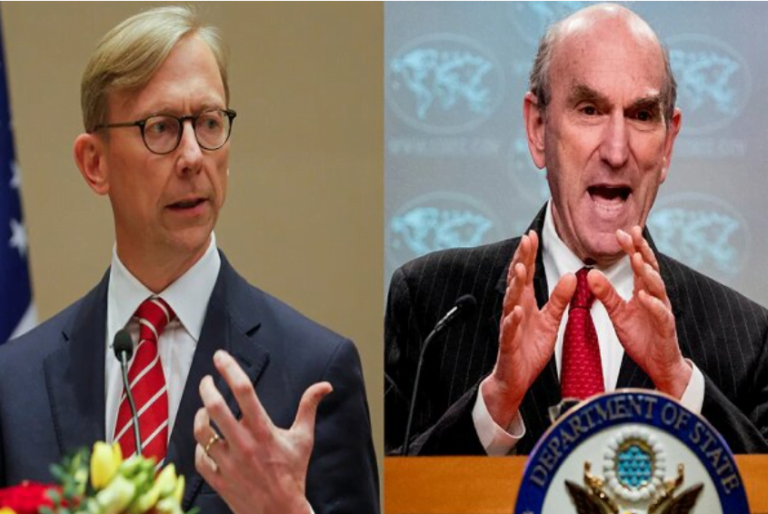
Last Thursday, on August 6, the US Secretary of State Mike Pompeo announced that the State Department’s special envoy for Iran Brian Hook was departing his post.


The news came somehow as a surprise regarding Hook’s anti-Iranian stances and efforts since his appointment as one of Pompeo’s top advisers in August 2018.


Hook has played a big role in the US administration after Trump’s withdrawal from the 2015 nuclear deal between Iran and the world powers, most importantly via running the “maximum pressure” campaign against the Islamic Republic.


Pompeo’s announcement of Hook’s successor, Elliott Abrams, who simultaneously serves as the US Department’s special representative for Venezuela, however, was not that much a surprise, regarding Abrams’ background.


Considered as an American veteran diplomat by his advocates, Abrams is the one with failure in leading the US-engineered coup d’état in Venezuela and his role in other US scandalous failures.


Accordingly, observers are expecting Abrams’ future moves and efficiency in helping the US with its anti-Iranian targets, given the fact that the US has been trying its best to extend Iran’s arms embargo at the United Nations Security Council (UNSC).


Iran, however, believes there is no difference between John Bolton, Brian Hook, or Elliott Abrams; when it comes to the US policies against Iran.


Read More


Also Read: Iran hails claimed coronavirus vaccine breakthrough

In an interview with Mehr news Prof. Mohammad Marandi, head of the American Studies Department at Tehran University, elaborated on the most recent substitution in the US administration.While US President Trump may leave the White House in a few months, how do you translate Brian Hook’s resignation?Whether being dismissed or persuaded to resign, stepping down of Hook is a good proof for the failure of the US ‘maximum pressure campaign’ against Iran.

Iran hails claimed coronavirus vaccine breakthrough

0
Iran hails claimed coronavirus vaccine breakthrough
               Iran hails claimed coronavirus vaccine breakthrough


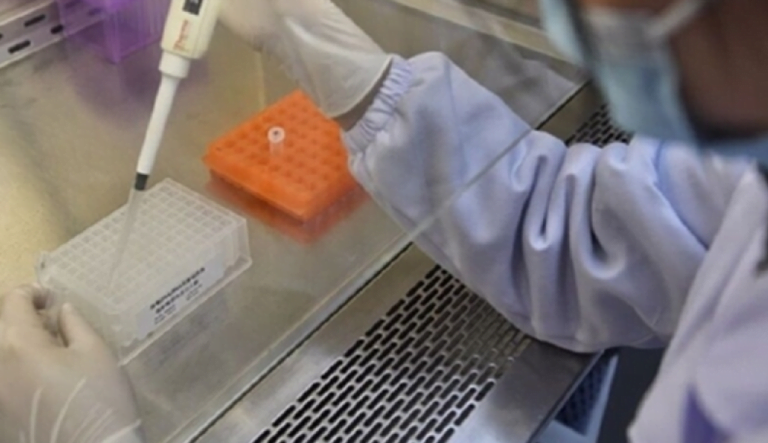
Iran has made a breakthrough in its testing of a locally formulated coronavirus (COVID-19) vaccine according to the country’s president, IRNA reported on August 12.


During a cabinet meeting, Hassan Rouhani thanked scientists in Iran for their work in pursuing a working vaccine that would be distributed at no cost to citizens once approved, but he did not detail the scope of the breakthrough.


His comments come following Russian President Vladimir Putin’s August 11 claim that Russia has developed the world’s first safe vaccine against the coronavirus, named Sputnik V, that it was ready to administer to Russians.


The approval of the Russian vaccine after less than two months of human testing  before so-called “phase 3” testing has been greeted with criticism from some experts who described the approach as reckless and unethical, saying it risked exacerbating rather than helping manage the coronavirus pandemic.


Rouhani said: “In recent months, with the efforts made, good steps have been taken to produce drugs and vaccines for the coronavirus, and this path must continue with strength and speed until the final and definitive result is reached.”


Read More


Also Read: Iran Considers Allowing People To Invest In Oil On Local Exchange

“We assure our dear people that the country’s young researchers and specialists are working in knowledge-based companies with high motivation and round-the-clock efforts to produce drugs and vaccines for COVID-19, and the government is providing the necessary and full support for these efforts,” he went on.Also on August 12, Fars News Agency reported Iranian health minister Saeed Namaki as saying that as part of a “multilateral cooperation” scientists at the country’s Pasteur Institute of Iran and Razi Institute had sent three to four vaccines to the human trial stage.Claims of cooperationIran has not said anything about working in tandem with Russia to find a vaccine, but there have been recent claims of hacking attempts made by both countries on COVID-19 pharmaceutical labs in the UK and elsewhere.