Home Blog Page 159

Iranian proxy in Iraq targets US bases

0
Iranian proxy in Iraq targets the United States bases
Iranian proxy in Iraq targets US bases


In a recently published video, the Iranian-backed front League of the Revolutionaries (LoR) claimed responsibility for recent attacks including the crash of an American C-130 military cargo plane and several rocket attacks against American-led coalition bases in Iraq.


The LoR publication begins by claiming the group was responsible for a June 8 Camp Taji crash of an American C-130 which led to the injury of 4 aboard including a Wyoming Air National Guard member.


A night time recording of the incident shows two rockets being launched towards the Camp Taji runway.


“The bombing of the runway at the Taji base at the time of the landing of a Lockheed C-130 which led to the plane crashing and causing a great loss to the enemy,” the LoR statement read.


The Associated Press has quoted US officials as downplaying any link to hostile activity, but added that they were “investigating” the incident.


Furthermore, LoR claims it was able to position a drone over Camp Taji to monitor movements of the “enemy” before the attack occurred. It’s not the first time LoR has claimed to position a drone over an American-led coalition base.


As previously detailed in FDD’s Long War Journal, LoR published several videos of its commercial drones monitoring the American Embassy in Baghdad and Ayn al Asad Airbase.


This is also not the first rocket strike on Camp Taji claimed by LoR. In March, 2 US personnel and one UK soldier were killed in a rocket barrage on the base.


Not long after, LoR emerged to take credit for the strike, beginning its campaign against Coalition troops in Iraq.


The publication goes on to claim responsibility for a June 11 attack against the U.S. Embassy in Baghdad.


Similar to the previous videos of the Camp Taji attack, a night time recording of a rocket launch adjacent to a road is depicted.  b

ases


Read More


Also Read: Iran’s IRGC attacks Iranian Kurdish groups in Iraq
Iran’s IRGC attacks Iranian Kurdish groups in Iraq
0


Iran’s IRGC attacks Iranian Kurdish groups in Iraq


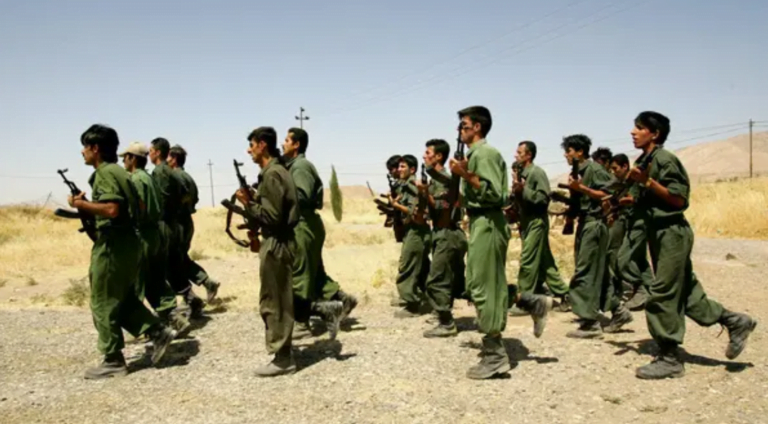
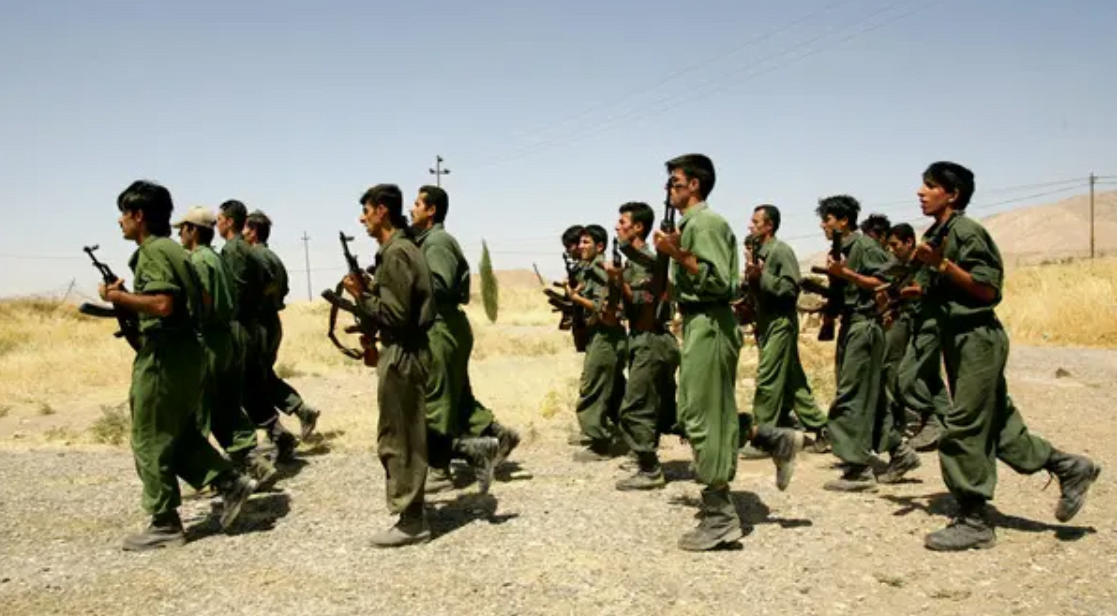
Iranian forces carried out artillery attacks against Iranian Kurdish opposition groups in Iraqi Kurdistan for the second day in a row on Wednesday, according to the semi-official YJC news agency.


Iran’s Islamic Revolutionary Guard Corps (IRGC) confirmed it had attacked Kurdish groups on Wednesday, saying it had targeted “armed anti-revolutionary” groups by carrying out large-scale artillery and missile attacks on the Iraqi Kurdish border.


“Anti-revolutionary” is a term the Iranian regime uses to refer to any opposition groups.


The attacks took place in the area of Alana in Erbil province’s Haji Omaran district bordering Iran.


The IRGC targeted members of the Iranian Kurdish opposition groups Komala Party of Iranian Kurdistan and the Democratic Party of Iranian Kurdistan (PDKI), YJC reported, adding that the IRGC had carried out similar attacks against Kurdish groups on Tuesday.


Read More


Also Read: Iran: What will happen when the conservatives take complete control?


RRRRIranian forces carried out artillery attacks against Iranian Kurdish opposition groups in Iraqi Kurdistan for the second day in a row on Wednesday, according to the semi-official YJC news agency.Iran’s Islamic Revolutionary Guard Corps (IRGC) confirmed it had attacked Kurdish groups on Wednesday, saying it had targeted “armed anti-revolutionary” groups by carrying out large-scale artillery and missile attacks on the Iraqi Kurdish border. “Anti-revolutionary” is a term the Iranian regime uses to refer to any opposition groups.The attacks took place in the area of Alana in Erbil province’s Haji Omaran district bordering Iran.The IRGC targeted members of the Iranian Kurdish opposition groups Komala Party of Iranian Kurdistan and the Democratic Party of Iranian Kurdistan (PDKI), YJC reported, adding that the IRGC had carried out similar attackagainst Kurdish groups on Tuesday Iranian forces carried out artillery attacks against Iranian Kurdish opposition groups in Iraqi Kurdistan for the second day in a row on Wednesday, according to the semi-official YJC news agency..


Iran: What will happen when the conservatives take complete control?

0
Iran What will happen when the conservatives take complete control
Iran: What will happen when the conservatives take complete control?


Iran’s new parliament, dominated by conservative elements, was recently inaugurated. a former senior member of the Islamic Revolutionary Guard Corps (IRGC) and three-time loser of presidential races, was elected as the speaker.


As a sign of things to come, in his first speech, Ghalibaf attacked President Hassan Rouhani for his tendency to look outside of Iran for solutions to its problems, and for his lack of faith in the resistance economy as a better alternative. Ghalibaf also characterised talks with the United States as being harmful to Iran.


It is hard to assess whether these statements reflect the new parliament’s real intentions, or whether they are merely the opening salvo for next year’s presidential election.


Regardless, Ghalibaf’s remarks reflect a shift in Iranian politics and discourse in a hardline direction, suggesting that Iran’s next president will likely be a conservative. Should this happen, conservatives would control all three branches of government.


It is possible that even the presidency could be eliminated, in favour of a prime minister as the chief executive.


Not being elected by popular vote, a prime minister would have less power and popular legitimacy than a president, and thus would be no rival for the supreme leader.


Without a president to blame, the real centres of power and decision-making would become answerable for their failures


Because of the skewed nature of the balance of power and authority in Iran against the president, such a change could be positive. Without a president to blame, the real centres of power and decision-making would become answerable for their failures, and the lines of authority and responsibility would become clearer.


Yet, changing from a presidential to a parliamentary system, and having conservatives in control of all branches of government, would not resolve Iran’s problems and challenges. Their roots lie elsewhere, including the lack of a national outlook among Iran’s leadership, the disorganised conditions of its administrative and economic structures, and the existence of parallel institutions with competing goals and interests.


Diverging interests


Paramount among the parallel institutions is the IRGC and its economic arms, with diverging domestic and foreign policy priorities.


Next in the IRGC’s order of priorities is to retain and expand its control over the country’s economy, and to enrich itself and its clerical and secular allies. It actively competes with governments in power. During the worst of the coronavirus crisis, the IRGC tried to show how it was more efficient than the government in helping people, while the government was blamed for all shortcomings.


The Iranian Revolutionary Guard Corps ‘emphasises the resistance economy’ (AFP/File photo)

                             The Iranian Revolutionary Guard Corps “emphasizes the resistance economy” (AFP/File photo) 

Read More


Also Read: Video of Iran’s long-range missiles that could target Israel

Images of Iran’s long-range missiles that could target Israel

0


Video of Iran’s long-range missiles that could target Israel


Iran has released new video and images of the long-range ballistic missile attack it carried out in 2017 against ISIS positions. The video shows Iranian Islamic Revolutionary Guard Corps members praying and then counting down to launching numerous missiles.


The video is interesting because it shows the process, from the loading of the missiles on their launcher to the launch process, as well as the drone footage Iran took of the impacts. This missile attack was done from a distance of around 600 km., which showcases Tehran’s ability to use long-range ballistic missiles in precision attacks.


Iran carried out another attack using ballistic missiles against Kurdish dissidents in 2018 and then against US forces in Iraq in January 2020. The attack on US forces targeted bases where they are located and was in retaliation for America’s killing of IRGC Quds Force leader Qasem Soleimani.


The Islamic Republic has long threatened Israel and has transferred missiles and missile technology to Hezbollah over the years. It has also reportedly transferred precision-guided munitions to the terrorist group. US media reports indicate that Iran transferred ballistic missiles to Iraq in the fall of 2018 and the fall of 2019.


Iran’s new video shows that on June 19, 2017, IRGC members congregated at the launch sites, reported to be in Kermanshah province and a neighboring area. Rockets of the Zolfaghar type, with a range of some 700 km., were loaded and readied. This type is believed to be built on the model of a Fateh 110 rocket and was unveiled in 2016.


The Zolfaghar uses solid fuel. It is believed that six were fired in 2017.  Iran also says the Qiam 1 rocket was used.


This is the same style that was used against the US in January 2020. First tested in 2010, it is based on a Shahab-style rocket with a range of 800 km. Heaver and longer than the Zolfaghar, it is a liquid-fueled weapon. It has a 750 kg. warhead, compared to the one on the Zolfaghar, estimated to weigh 500-600.


Read More

Also Read: On designating the IRGC, Trudeau is two years too late

On designating the IRGC, Trudeau is two years too late

0
On designating the IRGC, Trudeau is two years too late


Canadians are still waiting for answers on whether or not their government truly takes the threat of the Islamic Republic of Iran seriously.


A little more than two years ago, the House of Commons passed a private member’s motion to condemn the brutal Iranian regime, which ended any potential chance of restoring diplomatic relations between Canada and Iran, as well as the immediate request to list the Iranian Revolutionary Guard Corps (IRGC) in its entirety, as a terrorist entity under the Criminal Code.


While the motion received bipartisan support from both the opposition and the government, the only act carried out was the list of condemnations in the text.


There is one crucial item that has not been fulfilled yet, and that is listing the IRGC—a motion item that should have been carried out from the moment it passed in 2018.


The ministry responsible for designating terrorist entities, Public Safety Canada, has had ample time to review, analyze and decide on whether or not to go forward with a part of the motion that the government agrees with based on their voting record, yet there is still no update on this matter to the Canadian public.


In 2012, the Canadian government under Prime Minister Stephen Harper took a bold and courageous move to end relations with Iran, which included closing the Canadian embassy in Tehran and list one wing of the IRGC: the Quds Force.


Canada has given no consequences in any way to the regime more than six months after the shooting down of Flight PS752—not even a simple condemnation of the gross human-rights violations the regime commits.


The horrific downing of the Ukrainian airliner is further proof that if the IRGC was listed, the families of the victims of this tragedy could file a lawsuit under the Justice for Victims of Terrorism Act.


Essentially, had the Quds Force committed this atrocity, they could be sued. However, since the IRGC is not listed in its entirety, it could not be part of any potential lawsuit. This very disappointing fact alone should be more than enough for Public Safety Canada to classify the IRGC in the category where it belongs as a recognized terrorist organization.


Read More


Also Read: Belongings of victims of downed Ukrainian airliner were ‘looted’, say relatives

Belongings of victims of downed Ukrainian airliner were ‘looted’, say relatives

Belongings of victims of downed Ukrainian airliner were ‘looted’, say relatives


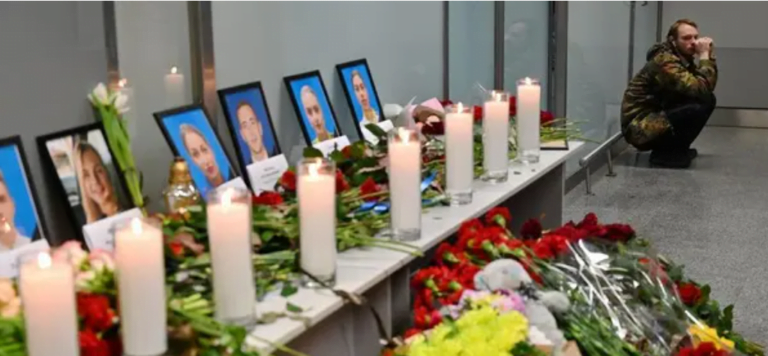
The victims of the Ukrainian civilian airliner downed by Iranian missiles in January had their belongings ransacked at the crash site, family members of the victims revealed at a virtual press conference on Tuesday.


Iran’s Islamic Revolutionary Guard Corps (IRGC) shot down the Ukraine International Airlines flight PS752 on January 8, killing all 176 onboard.


Iran admitted to downing the plane after days of denying responsibility and insisting the plane crashed due to a “technical failure,” but it is yet to hand over the black boxes for analysis.


“Our families’ belongings were looted, and what was not looted was confiscated by Iranian officials. No one knows where my wife’s wedding ring and my daughter’s pink doll is; they have not been returned,” Hamed Esmaeilion, whose wife Parisa Eghbalian and nine-year-old daughter Reera were killed in the crash, said.


Esmaeilion said his daughter’s wristband, coat, carry on, and both her Canadian and Iranian passports are missing.


Possessions belonging to the victims, such as laptops, cell phones, wedding rings, passports, and wallets with cash in them were “looted,” he said.


“We have photos of Iranian officials just searching the bags and the luggage to find something. We do not know what they were doing,” said Esmaeilion.


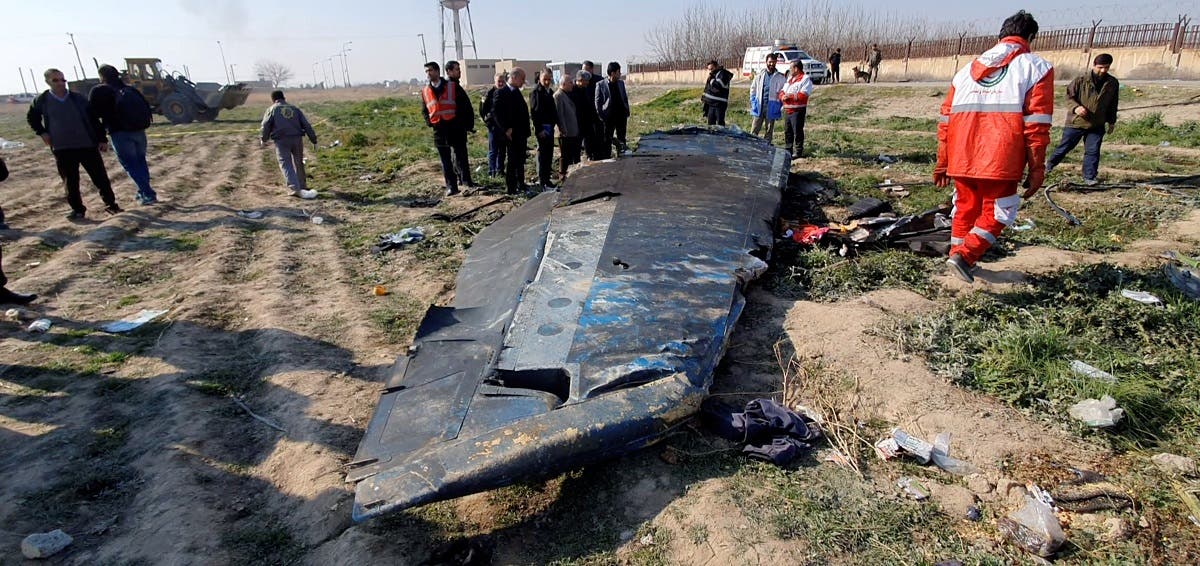
General view of the debris of the Ukraine International Airlines, flight PS752, Boeing 737-800 plane that crashed after take-off from Iran's Imam Khomeini airport, on the outskirts of Tehran. (File photo: Reuters)General view of the debris of the Ukraine International Airlines, flight PS752, Boeing 737-800 plane that crashed after take-off from Iran’s Imam Khomeini airport, on the outskirts of Tehran. (File photo: Reuters)
 

Javad Soleimani, whose wife Elnaz Nabiyi was killed in the crash, cast doubt on Iran’s official version of events, raising the possibility that the downing of the plane may have been intentional.


Read More


Also Read: Iran’s Claimed 112 New Naval Vessels Demystified

The victims of the Ukrainian civilian airliner downed by Iranian missiles in January had their belongings ransacked at the crash site

Iran’s Claimed 112 New Naval Vessels Demystified

0
Iran’s Claimed 112 New Naval Vessels Demystified


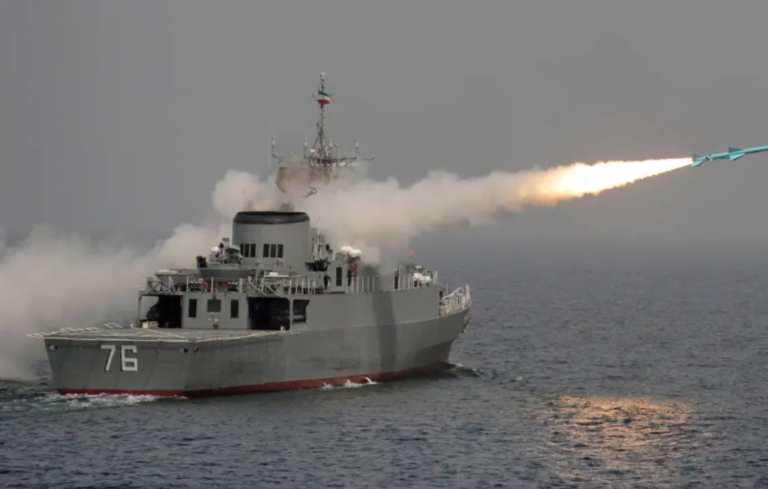
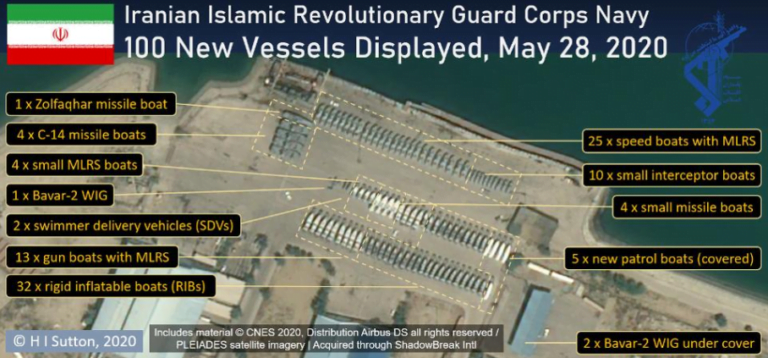
The first observation is that there were possibly only 100 vessels on display. At least there were only 99 on the parade ground, plus one more in the water .


The craft included 9 missile boats. These were made up of four Chinese-designed ‘C-14’ catamarans and one North Korean-derived ‘Zolfaqhar,’ plus four of a new type. The new model is very similar to the Zolfaqhar but smaller in every respect. All of these types carry light anti-ship missiles and are much smaller than the equivalent boats in other countries. This emphasizes swarm tactics and action against civilian targets such as tankers.


The most significant new type is actually a single prototype of a robotic mini-sub. This is termed an Extra-Large Uncrewed Underwater Vehicle (XLUUV) in Navy parlance. It is much larger than most UUVs in service worldwide although similar to the latest Boeing Orca XLUUV entering service with the U.S. Navy, and Manta entering service with the Royal Navy.


It is almost certainly considerably less advanced than either of those projects, but that might be a strength as well as a weakness. Having XLUUVs could pave the way for the IRGC to gain new ways to conduct covert operations in the Persian Gulf.


Other unusual underwater craft on display were two swimmer delivery vehicles (SDVs). These are wet submarines meaning that the crew has to wear diving gear to operate them. In some respects there are similar to the SEAL Delivery Vehicles in service with the U.S. Navy SEALs, but much less capable.


The IRGC-N model is actually a smaller version of the Al-Sabehat 15 SDV which in service with the Iranian SBS (Special Boat Service). Like most of the types displayed, it is actually not new.


There were a total of 38 gunboats with multiple-launch rockets. The tactic would be to drive alongside a tanker and fire them into the superstructure. Some of the RIBs also had rocket launchers. And there were 10 smaller interceptor boats armed only with machine guns.


Read  More


Also Read: Iran’s regime further digs its hands into the people’s pockets


Iran’s Zarif went to Turkey to push ‘close relations’

0
Iran’s Zarif went to Turkey to push ‘close relations’
Iran’s Mohammad Javad Zarif went to Turkey to push ‘close relations’


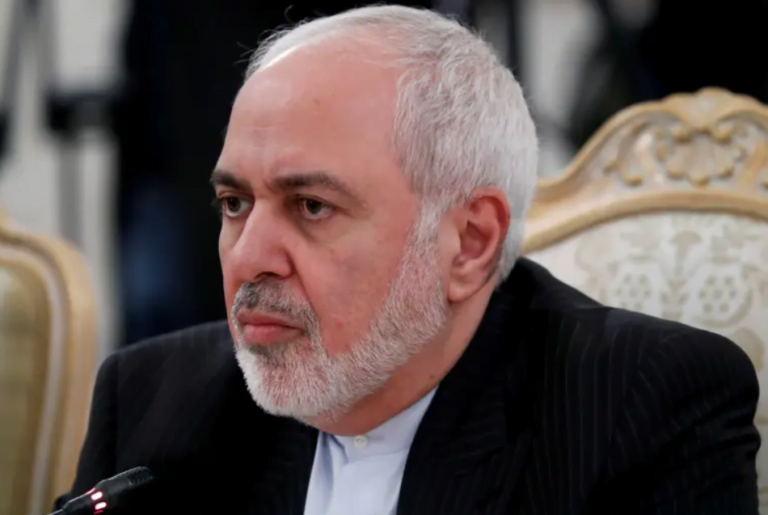
The Russians cancelled a high-level trip to Turkey on Sunday and Iran’s Foreign Minister turned up in Ankara unannounced, heralding potential closer relations with Turkey.


The surprising decision by the Russian Foreign Minister and Russian Defense Minister meant Ankara had to turn to its second partner ally in the region, Iran.


Iran’s Foreign Minister Javad Mohammad Javad Zarif boarded a plane sometime around when the Russian trip was postponed, so it was not clear if his trip was supposed to have initially been a clandestine event to coincide with Russian visit or if it was arranged at the last minute.


Jason Brodsky Tweet
Jason Brodsky Tweet


Given the overall mystery of the Russian cancellation, purportedly due to disagreements over Syria and Libya where Ankara is trying to play the Americans off against the Russians and work both sides, the red carpet for the Iranians was particularly interesting.


ISNA news in Iran says that Mohammad Javad Zarif stressed “relations between Tehran and Ankara  are close in various fields but require further consultations.”


Reports indicate that Turkey and Iran discussed their common view against US sanctions on Iran, a new summit on Syria between Russia, Turkey and Iran, an upcoming meeting in Tehran, resumption of gas trade  and pipeline repairs between the two countries, and cooperation in Libya and against “terrorism.”


Mohammad Javad Zarif praised the fruitful talks and said he was moving on to Russia next. Flights may resume between the two countries by August.


That Iran said Turkey and Iran have the same view on Libya is interesting because Turkey was trying to pressure the US to do more in Libya and leaked media stories tried to portray Iran and the Syrian regime as on the side of the Libyan opposition, instead of Iran siding with Turkey.


Read More


Also Read: Iran’s regime further digs its hands into the people’s pockets

Iran’s regime further digs its hands into the people’s pockets

0
Iran’s regime further digs its hands into the people’s pockets
                           Iran’s regime further digs its hands into the people’s pockets


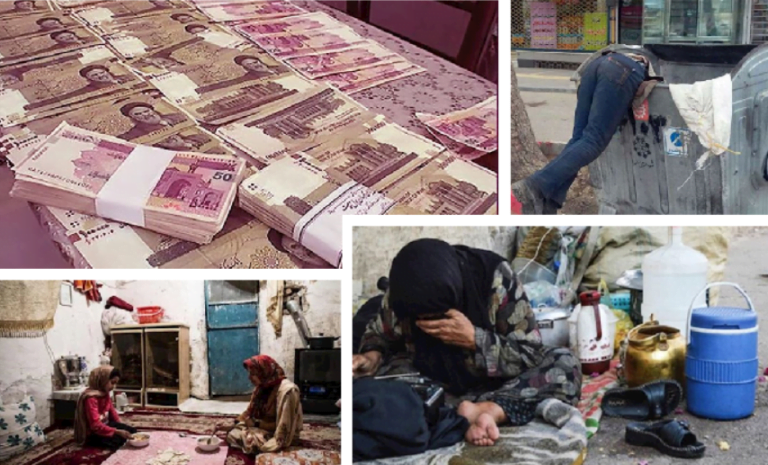
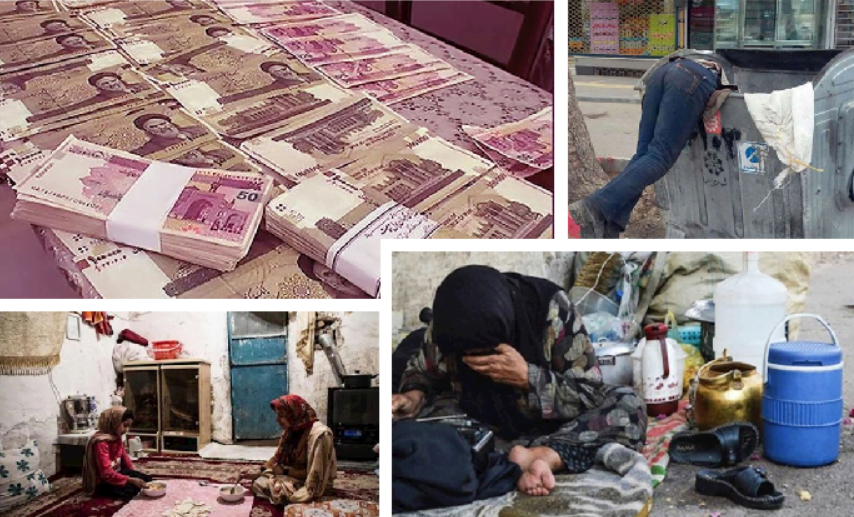
The growing shortage and expenses of vital goods has put an immense pressure on the Iranian people. Product, especially items monopolized by the government, are becoming more expensive every day. After the price hike of water, electricity, houses, train tickets, cars etc.


The price of bread has risen. Fars News Agency, affiliated with the Revolutionary Guards (IRGC), announced a 40-50 percent rise to the price of bread but put the blame on the bakers union.  Also, the price of fruit has risen dramatically, to the point that even the middle class is unable to purchase adequate amounts. Iranian regime


Iranian regime president Hassan Rouhani acknowledged on Sunday, June 14, the people’s financial problems and rising prices, but like other regime officials and institutions, blamed the people themselves and said: “Failure to deal with price increases is not accepted at all … Some intermediaries increase the price of housing by disrupting the market.” Iranian regime


As always, he spoke in vague terms, refraining from naming names, because it would lead back to regime officials themselves. Iranian regime


Mounting prices have made it difficult for many people to buy goods. But Rouhani despicably claimed: “Fortunately, the dear people of our country have experienced the least difficulty in procuring the products they need.”


This is while rising prices is a known tactic of the regime to loot the people. Reflecting on the dramatic rise in fruit prices provides a glimpse of how the regime uses price fluctuations to plunder the people and cover the government’s budget deficit.


The state-run television broadcasted a report on June 13 about how fruits that are sold in the market at 400,000 rials per kilogram are bought from farmers at 50,000 rials per kilogram. This amount does not in any way compensate the expenses incurred by farmers and is only results in losses.


In several cases, protesting the regime’s destructive policies, farmers have poured and destroyed their own products on the road or in front of the headquarters of regime institutions. On social media, heartbreaking videos show angry agricultures destroy their crops in frustration and despair at the regime’s destructive policies.


Read More


Also Read: Iranian Envoy: IRGC Quds Force Commander’s Visit Not Related to Iraq-US Talks

Iranian Envoy: IRGC Quds Force Commander’s Visit Not Related to Iraq-US Talks

0
Iranian Envoy: IRGC Quds Force Commander's Visit Not Related to Iraq-US Talks
Iranian Envoy: IRGC Quds Force Commander’s Visit Not Related to Iraq-US Talks


Iranian Ambassador to Baghdad Iraj Masjedi said that the recent visit by Commander of the Islamic Revolution Guards Corps (IRGC) Quds Force Major General Esmayeel Qa’ani to Baghdad was in line with strengthening bilateral ties and was not related to the strategic talks between Iraq and the US. Esmayeel


“The negotiations between Iraq and the US is an internal issue and the decision depends on Iraq, itself. Rest assured that Iran will support any agreement that the Iraqi government inks and the parliament approves,” Masjedi said in an interview with the Arabic-language al-Iraqiyah news channel on Monday.


“The recent visit by Mr. Qa’ani is not related to these talks and he had earlier traveled to Iraq too,” he added. Esmayeel


“Mr. Qa’ani has always visited Iraq upon an official invitation and with coordination with the Iraqi officials and any meeting he makes is in line with strengthening relations between the two countries,” Masjedi said, adding that the Iraqi officials welcome and pay the same level of respect to General Qa’ani that they did to martyred Quds Force Commander General Soleimani. Esmayeel


Read More


Also Read: Police, IRGC Seize Huge Drug Hauls in Southern Iran

His remarks came after the Associated Press claimed in a report on Thursday that “for his second visit, Ghaani had to apply for a visa, something unheard of in Soleimani’s time — a bold step by Baghdad’s new government effectively curtailing Iran’s freedom of movement inside Iraq”. “The episodes, relayed to The Associated Press by several Iraqi officials, illustrate Iran’s struggles to maintain sway over Iraqi militias six months after America assassinated Soleimani and top militia leader Abu Mahdi al-Muhandis in a drone strike. Iran at the same time is grappling with the economic fallout from U.S. sanctions and the coronavirus outbreak,” it added.