Home Blog Page 163

Mark Zuckerberg Rules Out Trump Fact-Checks, Says Facebook ‘Shouldn’t Be the Arbiter of Truth’

0

Don’t expect Facebook to join Twitter in fact-checking false or inaccurate statements made by Donald Trump. In an interview set to air Thursday, CEO Mark Zuckerberg told Fox News “I just believe strongly that Facebook shouldn’t be the arbiter of truth of everything that people say online.”
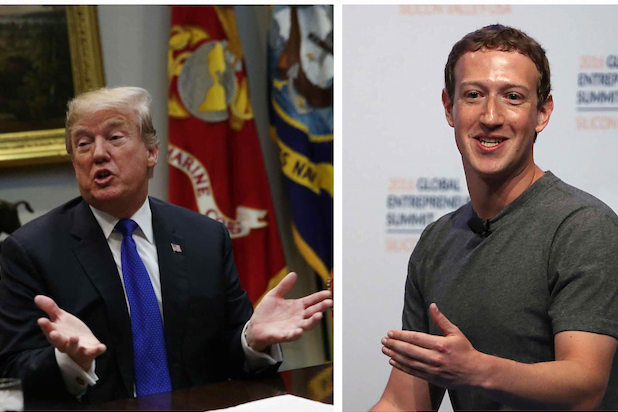
 

Mark Zuckerberg Rules Out Trump Fact-Checks, Says Facebook ‘Shouldn’t Be the Arbiter of Truth’


But Twitter CEO Jack Dorsey pushed back against Zuckerberg’s comments, saying Wednesday night that Twitter will “continue to point out incorrect or disputed information about elections globally.”

On Tuesday, Twitter took the unprecedented step of adding a fact check link to the bottom of several tweets in which Donald Trump falsely claimed that mail-in voting is linked to fraud. The text, “Get the facts about mail-in ballots,” redirected users to a Twitter page linking to explanations that that Trump’s claims are not supported by any evidence.

Zuckerberg told Fox News he disagrees with that decision. “We have a different policy than, I think, Twitter on this,” he said in the interview. “I just believe strongly that Facebook shouldn’t be the arbiter of truth of everything that people say online. Private companies probably shouldn’t be, especially these platform companies, shouldn’t be in the position of doing that.”

Several hours after Zuckerberg’s comments were made public, Dorsey responded. “Fact check: there is someone ultimately accountable for our actions as a company, and that’s me,” Dorsey tweeted Wednesday night. “Please leave our employees out of this. We’ll continue to point out incorrect or disputed information about elections globally. And we will admit to and own any mistakes we make.”

“This does not make us an ‘arbiter of truth,’” he continued. “Our intention is to connect the dots of conflicting statements and show the information in dispute so people can judge for themselves. More transparency from us is critical so folks can clearly see the why behind our actions.” Read more
 

Iran’s IRGC receives 112 missile-launching speed boats

0

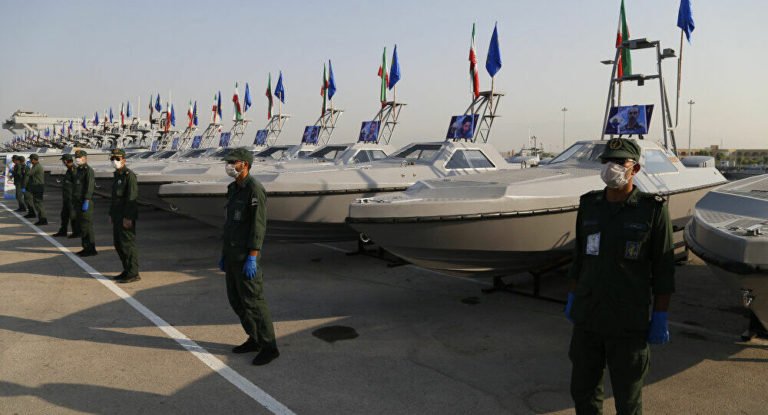
TEHRAN, May 28 (Xinhua) — The naval forces of Iran’s Islamic Revolution Guards Corps (IRGC) on Thursday received 112 missile-launching speedboats to boost the offensive power in the country’s southern territorial waters, Press TV reported.


Iran's IRGC receives 112 missile-launching speed boats
The naval forces of Iran’s Islamic Revolution Guards Corps (IRGC) on Thursday received 112 missile-launching speedboats to boost the offensive power in the country’s southern territorial waters, Press TV reported.


During a ceremony attended by Iran’s senior military officials, the new-generation of homemade speedboats were delivered to the naval forces of the IRGC.

The speedboats feature hydrodynamic function, low radar cross-section and high level of offensive power, according to the report.

“Defense is our logic in war but not in the sense of passivity against the enemy,” Hossein Salami, chief commander of the IRGC, said at the ceremony.

Read more

Second Iranian Oil Tanker Arrives At Venezuela’s Largest Refinery

0
Second Iranian Oil Tanker Arrives At Venezuela's Largest Refinery
                            Second Iranian Oil Tanker Arrives At Venezuela’s Largest Refinery


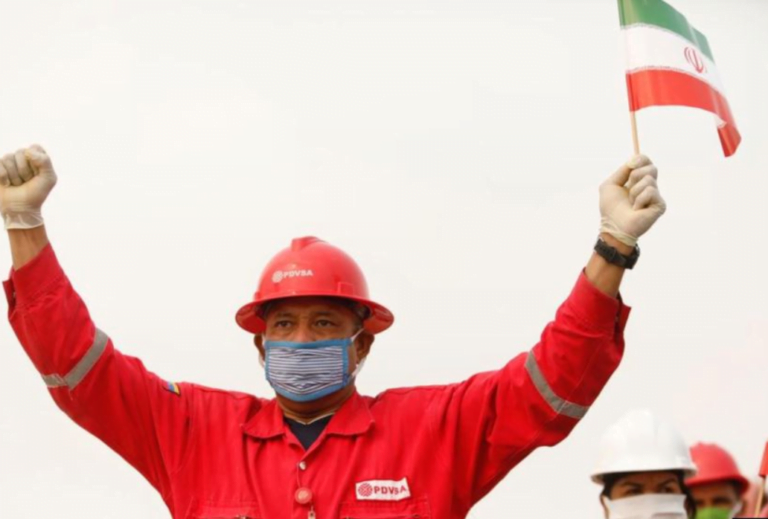
A second Iranian tanker carrying gasoline and oil derivatives has arrived at crisis-stricken Venezuela’s main oil refinery, amid escalating tensions between Washington and the two U.S.-sanctioned countries.


The Forest docked at the Paraguana refinery complex in northwest Falcon state on May 26, Oil Minister Tareck El Aissami wrote on Twitter, also sharing photos of the vessel at the dock.


Data from the website Marine Traffic confirmed the location of the ship, which entered Venezuelan waters on May 25.


Unilateral U.S. sanctions have targeted Iran and Venezuela’s oil industry and other sectors, depriving Tehran of much-needed cash and adding pressure on Venezuela’s badly managed economy.


The Paraguana refinery, the largest in Venezuela and one of the largest in the world, can process 950,000 barrels of fuel per day, but its production has plummeted alongside the country’s crude supply.


Falling oil prices since 2014 have aggravated Venezuela’s economic crisis.


The price of Venezuelan crude fell to its lowest level in more than two decades last month, at less than $10 a barrel, according to the country’s government, after averaging $56.70 last year.

Read More


Also Read: Iran is running a custom-made strategy in the Levant

The first tanker, Fortune, had anchored 24 hours earlier at El Palito refinery on Venezuela’s northwest coast, which is able to process 140,000 barrels a day. A third tanker, Petunia, entered Venezuelan waters on May 26, military officials announced, and two other tankers — Faxon and Clavel — are expected in the next two days.
The ships carry a total of 1.5 million barrels of gasoline, according to press reports. The five vessels have encountered no immediate signs of U.S. interference after Washington said earlier in May it was considering “measures” to take in response to the shipments, prompting warnings from Iran against U.S. action.

Venezuelan President Nicolas Maduro on May 25 praised the “solidarity and cooperation” between his country and Iran, accusing the United States of imposing its will by force.

Iran is running a custom-made strategy in the Levant

0
Iran is running a custom-made strategy in the Levant


Since the US killing of the Quds Force commander, Qassem Soleimani, in January, the Iranian regime has been gradually shifting to a custom-made strategy in the Levant with mixed political and military tactics in Lebanon, Syria, and Iraq.


This approach is accruing liabilities as well as paying dividends in a critical year of Iran’s economic difficulties resulting from the repercussions of US sanctions and the coronavirus outbreak.


With no breakthrough anticipated in the nuclear talks, Washington and Tehran have de-escalated their tensions in recent months despite close encounters in the Gulf and Iraq.


Last week the Trump Administration withdrew Patriot missile batteries from Saudi Arabia that were deployed after a series of attacks on Saudi oil facilities, for which the Iranian regime was blamed.


This move came after Iranian gunboats harassed American warships last month for the first time since 2018, which prompted President Donald Trump to direct the US Navy to “shoot down and destroy” Iranian gunboats if they repeat their harassment.


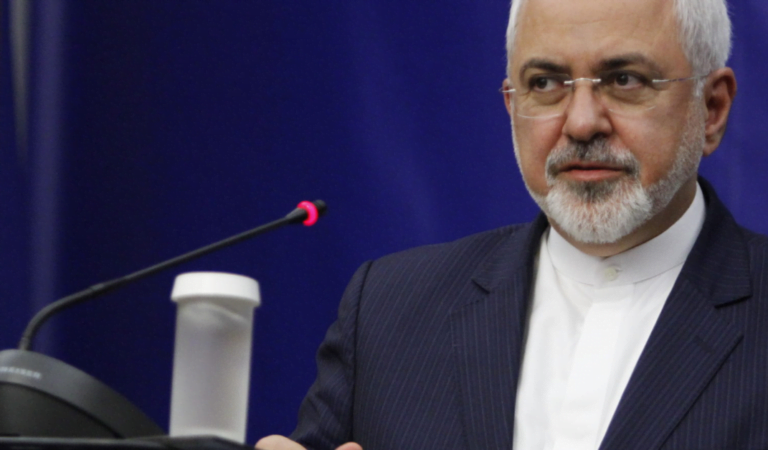
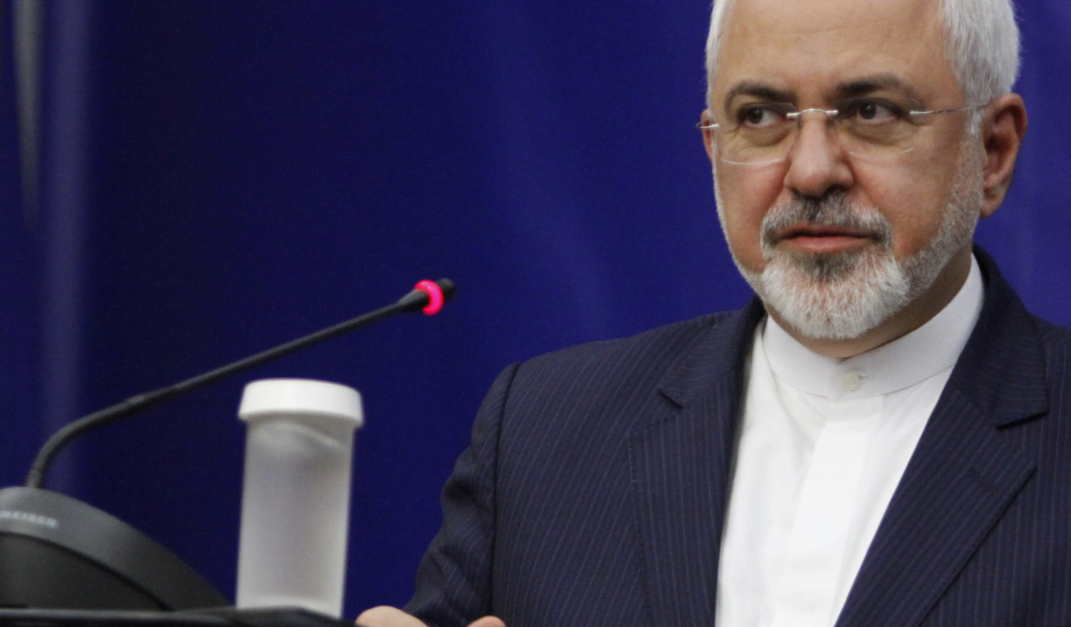
Tehran responded with a tweet by Iranian Foreign Minister Mohammad Jawad Zarif asserting that “US forces have no business 7,000 miles away from home, provoking our sailors off our OWN Persian Gulf shores.”


Zarif has recently been the most vocal Iranian official in responding to the Trump Administration, which shows that Tehran is primarily resorting to diplomatic means instead of the traditional language of military threats.


Moreover, and beyond the rhetoric, there is enough evidence that both Washington and Tehran want at least to keep communication channels open.


There are ongoing talks to explore the possibility of securing the release of an American Navy veteran held by Iranian authorities and an Iranian American doctor detained by US authorities.


Against this background, the Iranian regime is facing difficult questions regarding how to deal with tremendous challenges in Lebanon, Iraq, and Syria.


While there are common themes and tactics, the Trump Administration is positively responding—except in Syria—to this emerging Iranian strategy that seems to be customized to fit the condition of each country.


Read More


Also Read: IRGC General Says US Military Presence ‘Coming To An End’ In Persian Gulf

IRGC commander Soleimani to Hamas: Iran will never abandon Palestine

0
IRGC commander Soleimani to Hamas: Iran will never abandon Palestine


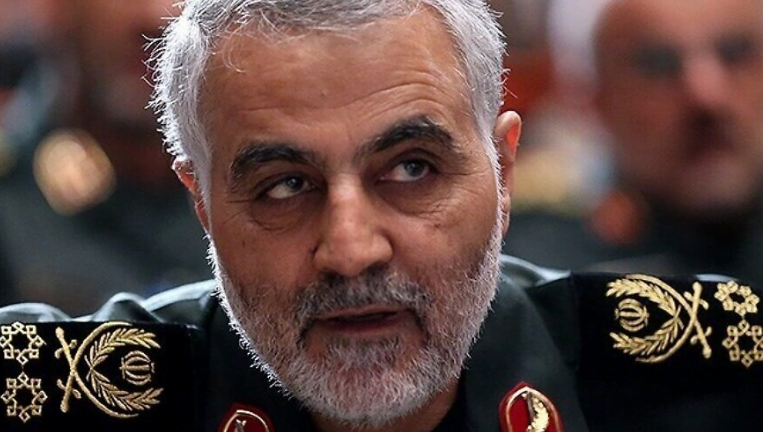
Prior to his death in a U.S. drone strike in Iraq in January, IRGC commander Qassem Soleimani wrote a letter to Muhammad Deif, the commander of the Izz ad-Din al-Qassam Brigades, Hamas’s military wing, promising him that Iran would never abandon Palestine, “the pearl of the Islamic world.”


In the letter, published on the the website of the Al-Mayadeen television channel, the Iranian commander conveyed his greetings to Hamas’s fighters and to the Palestinian people as a whole, and promised them that Iran would not abandon them under any circumstances.


He added that “the death knell of the invading Zionists will soon be heard,” and expressed hope to die as a martyr for the sake of Palestine.


The letter is further evidence of the close relations between Iran, which calls for the annihilation of Israel, and Hamas, and in particular of the ties between Soleimani and Deif.


It should be noted that Hamas officials have recently made many statements in praise of the Iranian regime and its ties with their movement. On May 20, for instance, in a speech on the occasion of Quds Day—a day of solidarity with Jerusalem and the Palestinians marked by Iran on the last Friday of Ramadan—Ismail Haniyeh, the head of Hamas’s political bureau, said that “Iran has never hesitated to support the resistance and assist it financially, militarily and technologically.”


Read More


Also Read: IRGC General Says US Military Presence ‘Coming To An End’ In Persian Gulf

the Haniyeh’s deputy, Saleh al-Arouri, said in an interview with the Al-Mayadeen channel that “the relations between Hamas and Iran are strong,” and that “Iran has given Hamas and the resistance movements all the support and weapons they need.” IRGC commander IRGC commander IRGC commander IRGC commander

IRGC General Says US Military Presence ‘Coming To An End’ In Persian Gulf

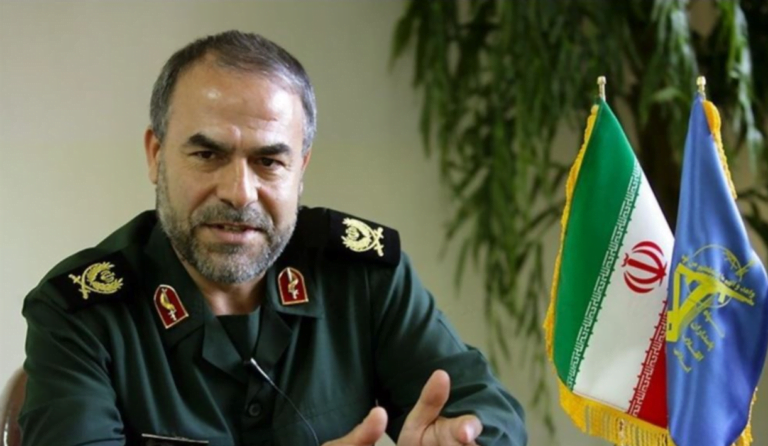
Iran’s Revolutionary Guard deputy in political affairs, Brigadier General Yadollah Javani has dismissed U.S. military drills in the Persian Gulf saying these will not intimidate the Islamic Republic. IRGC General 


The United States military conducted training exercises with live ammunition in the Persian Gulf between May 19 and 21 and integrated Marine AH-1W Super Cobra helicopters with the U.S. Air Force AC-130W gunships and U.S Navy ships. IRGC General 


Javani said, “What Americans call military exercises for strengthening security in the Persian Gulf region and as assistance to their allies in fact are attempts to solidify their presence in the area”. He went on to claim that regional nations “are waking up” and “the resistance front” supports the Islamic Republic. IRGC General 


The resistance front is Iran’s label for a host of state and non-sate allies, including the Lebanese Hezbollah, Houthi forces in Yemen, Shiite militia in Iraq and others; all supported financially and militarily by Tehran. IRGC General 

Read More


Also Read: Protests For Lack Of Drinking Water Turns Into Hot Discussion Among Iranians

This is one of the reasons the United States insists Iran must change its behavior if it wants to reach an agreement and avoid heavy economic sanctions. Javano also claimed that “the Islamic Republic is an established regional power and is in the process of becoming a world power. America today does not have the power it used to wield and is not capable to achieve what it wants”. 
While Iran has boosted its missile power in recent years, it is vulnerable to much superior U.S. military power and its economy is in serious crisis due to Washington’s sanctions. Nevertheless, the Islamic Republic Revolution Guard Corps (IRGC) general said the U.S. is miscalculating if it thinks military exercises can impact Iran’s resolve. He also claimed that America’s presence in the region is coming to an end and the longer they stay in the Middle east the worse it will be for them.

Rouhani Concerned About New Hardliner-Dominated Parliament

Rouhani Concerned About New Hardliner-Dominated Parliament


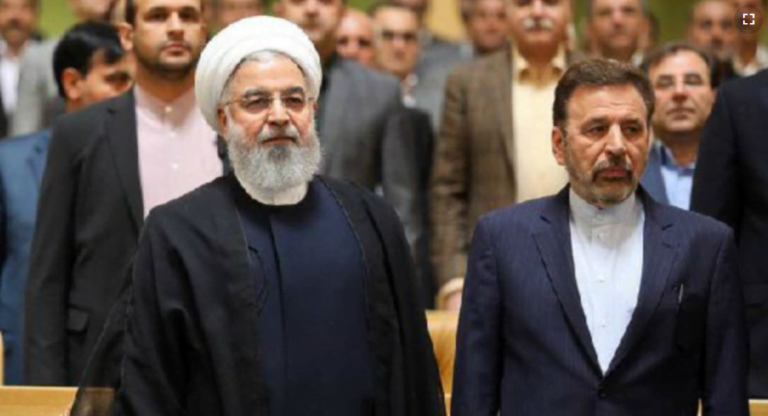
Iran’s President Hassan Rouhani and his Chief of Staff Mahmoud Vaezi have been sending mixed messages to the country’s new Islamic Republic Parliament ahead of its opening on May 28.


Rouhani tweeted on Monday: “As the Majles turns 40, and starts the fifth decade of its activity, the people are looking forward to the cooperation between the Majles and the administration during the next year. The administration is reaching out to the new Majles for friendship.”


On the same day, Vaezi warned the next Majles not to intervene in the affairs of the administration.


Some of the conservatives who dominate the new Majles had vowed during their election campaign to question Rouhani’s performance once in the legislature. Some have even threatened to impeach Rouhani for his poor performance during the past seven years and particularly for his reaction to major events such as the nationwide protests in November 2019.


Rouhani’s last year in office as Iran’s President coincides with the first year of the 11th Majles. Several political analysts in Tehran have said that Rouhani is likely to have a hard time in his dealings with the Majles once the parliament leaves its first few weeks behind and elects its speaker and presidium members.


At least three of the four conservative factions, the ultraconservative Paydari and Pro-Ahmadinejad groups as well as the pro-Qalibaf neoconservatives have made it clear that they oppose the Rouhani administration and will stand against it once the Majles starts its business.


The administration’s media outlet, Iran daily in its May 26 issues extensively covered the administration’s expectations of the new Majles, however, it did shy away from highlighting Rouhani and his administration’s concerns about the possibility of damaging confrontations with parliament.

Read More


Also Read: Protests For Lack Of Drinking Water Turns Into Hot Discussion Among Iranians

Protests For Lack Of Drinking Water Turns Into Hot Discussion Among Iranians

0
Protests For Lack Of Drinking Water Turns Into Hot Discussion Among Iranians


A clash between protesters demanding drinking water and security forces in southwestern Iran has turned into the hottest issue on Iranian social media.


On Saturday May 23, security forces fired tear gas and “plastic bullets” into a crowd of residents in Gheizaniyeh in Iran’s oil-rich Khuzestan province who were protesting lack of drinking water.


According to the web monitoring website Best Farsi, #Gheizaniyeh was the top hashtag in Persian Twitter Monday morning May 25.


Many have reacted to the news of clashes attributing the shortage of fresh water in the area to the government’s incompetence. Khuzestan is rich with rivers and water reservoirs and was inundated by floods last year.


The clash between police and protesters started after demonstrators blocked the road between Ahvaz and Mahshahr, another city in the province which was the scene of a massacre during the nationwide protests in Iran in November 2019.


Leila, a twitter user, wrote that the situation of water supply in Khuzestan never returned to normal after the Iran-Iraq war in the 1980s.


Leila was responding to a tweet by Dariush Zand who posted a picture of the brown liquid that came out of the water tap in his house. Zand wrote that “Except Andimishk which has a decent water supply from the nearby Dez Dam, no other place in Khuzestan Province has access to proper drinking water.”


What has enraged Khuzestanis is the fact that their province has most of Iran’s oil and provides most of the hard currency the Islamic Republic needs to pay for tens of billions of imports and pursue its costly foreign policy.


Read More


Also Read: Iran picks cyber fight with Israel as both sides target critical infrastructure

What has enraged Khuzestanis is the fact that their province has most of Iran’s oil.

In veiled warning to Iran, U.S. tells Gulf mariners to stay clear of its warships

0

In an alert that appeared aimed squarely at Iran, the U.S. Navy issued a warning on Tuesday to mariners in the Gulf to stay 100 meters (yards) away from U.S. warships or risk being “interpreted as a threat and subject to lawful defensive measures.”


Exclusive: In veiled warning to Iran, U.S. tells Gulf mariners to stay clear of its warships


The notice to mariners, which was first reported by Reuters, follows U.S. President Donald Trump’s threat last month to fire on any Iranian ships that harass Navy vessels.

“Armed vessels approaching within 100 meters of a U.S. naval vessel may be interpreted as a threat,” according to the text of the notice, which can be seen here. (bit.ly/36msOL2)

A U.S. official, speaking on condition of anonymity, said the new notice to mariners was not a change in the U.S. military’s rules of engagement.

The Pentagon has stated that Trump’s threat was meant to underscore the Navy’s right to self-defense.

The Bahrain-based U.S. Naval Forces Central Command said in a statement that its notice was “designed to enhance safety, minimize ambiguity and reduce the risk of miscalculation.”

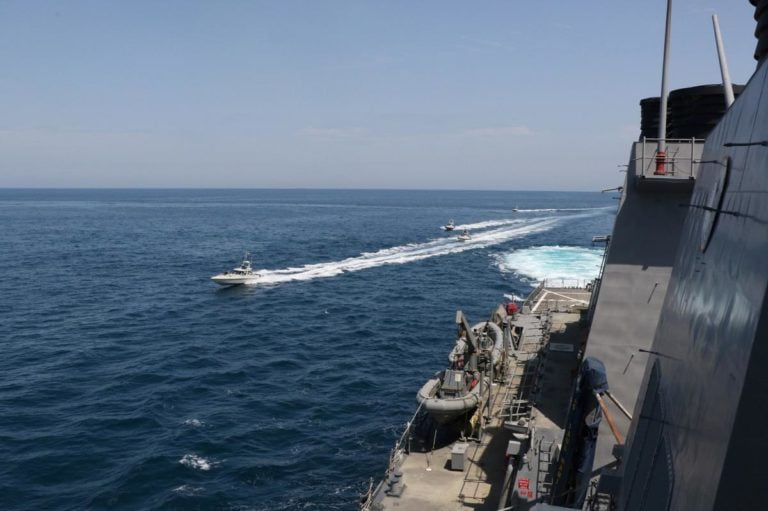
It follows an incident last month in which 11 Iranian vessels came close to U.S. Navy and Coast Guard ships in the Gulf, in what the U.S. military called “dangerous and provocative” behavior.

At one point, the Iranian vessels came within 10 yards (9 meters) of the U.S. Coast Guard cutter Maui, the U.S. military said.

Trump’s threat followed that incident, which Tehran, in turn, said was the fault of the United States.

The head of Iran’s elite Revolutionary Guards responded to Trump by threatening to destroy U.S. warships if its security is threatened in the Gulf.

The back-and-forth is just latest example of razor-sharp tension between Washington and Tehran, which has steadily escalated since 2018, when Trump withdrew from Iran’s 2015 nuclear deal with six world powers and reimposed crippling sanctions. Read more


Iran leader says Israel a ‘cancerous tumor’ to be destroyed

0
Iran leader says Israel a ‘cancerous tumor’ to be destroyed
Iranian  leader Ayatollah Ali Khamenei says Israel a ‘cancerous tumor’ to be destroyed


Iran’s supreme leader on Friday called Israel a “cancerous tumor” that “will undoubtedly be uprooted and destroyed” in an annual speech in support of the Palestinians, renewing threats against Iran’s archenemy in the Middle East.


Supreme Leader Ayatollah Ali Khamenei’s speech marked a subdued Quds Day for Iran, which typically sees government-encouraged mass demonstrations in Tehran and elsewhere in the Islamic Republic, as well as Iranian-allied nations. “Al-Quds” is the Arabic name for Jerusalem.


Due to the coronavirus pandemic, Iran largely asked demonstrators to stay home.

Khamenei spoke to the nation in a 30-minute speech aired on state television, a rare address by the supreme leader as other officials in the past gave the keynote speech. He repeatedly referred to Israel as a “cancer” or “tumor” during the speech, criticizing the U.S. and the West for equipping it with “various kinds of military and non-military tools of power, even with atomic weapons.”


“The Zionist regime is a deadly, cancerous growth and a detriment to this region,” Khamenei said. “It will undoubtedly be uprooted and destroyed.”


Read More


Also Read: Iran picks cyber fight with Israel as both sides target critical infrastructure

Iran under the U.S.-allied Shah Mohammad Reza Pahlavi had relations with Israel. After the 1979 Islamic Revolution, Ayatollah Ruhollah Khomeini ordered the first Quds Day be held on the last Friday of the holy Muslim fasting month of Ramadan to criticize Israel. The late Palestinian Liberation Organization leader Yasser Arafat was among the first people invited to Iran after the revolution.
Today, Iran and Israel remain enemies and Israel is believed to be behind airstrikes targeting Iranian forces in Syria. Iran meanwhile supports the Lebanese militant group Hezbollah. Responding to Khamenei, Israeli Prime Minister Benjamin Netanyahu said in a statement that “whoever threatens Israel with destruction puts himself in similar danger.”