
Ready for Prisoner Swaps, Iran Says US Holding 20 Iranians
Ready for Prisoner Swaps, Iran Says US Holding 20 Iranians
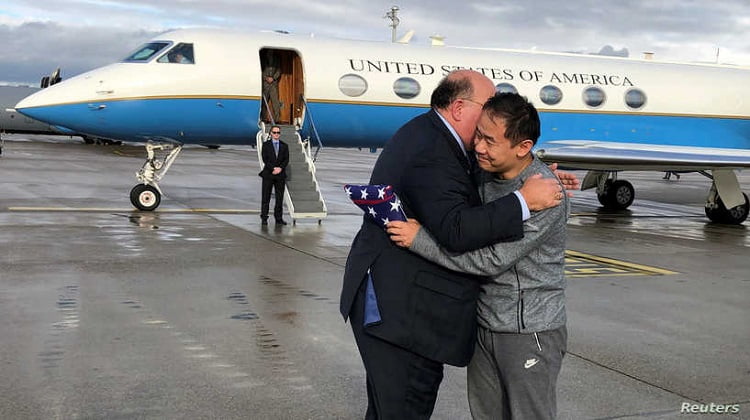
Ready for Prisoner Swaps, Iran Says US Holding 20 Iranians

Hundreds believed killed in Iranian protests since mid-November

Even with Tehran facing internal pressure, Iranian expansionism and the formation of a ‘Shi’ite Crescent’ remain Israel’s top concerns.
At the start of the weekly cabinet meeting in Jerusalem Israeli Prime Minister Binyamin Netanyahu again addressed the issue of the growing Iranian threat to Israel and the region as a whole.
After mentioning his recent conversations with Russian President Vladimir Putin and US Secretary of State Mike Pompeo, the PM spoke about the situation in Iraq where Iran’s proxy al-Hashd al-Shaabi this weekend killed up to 25 unarmed demonstrators in Baghdad after creating an electricity black-out.
Netanyahu again called upon the European countries to increase, not decrease as six European countries did last week, the pressure on the Islamic Republic.
Apparently, the Israeli caretaker premier mentioned the situation in Iraq on purpose to show that Israel sees Iran’s activities in that country, as well as Lebanon, Syria, Gaza, and Yemen as one huge Iranian plot to create the Shiite Crescent.
Netanyahu also threatened again to launch a wide-scale military operation in Gaza after four rockets fired from the enclave caused thousands of Israelis to run for their life on Shabbat the Jewish day of rest.
If we take a look at the larger picture Netanyahu has in mind the conclusion should be that the Israeli leader is rightly concerned about Iran’s increasing belligerent activities and about the possibility Iran could launch an attack on Israel.
To start with the latter, the Israeli government is sending signals to Iran it better not crosses “red lines” as the new Defense Minister Naftali Bennett put it.
Bennett indicated he intends to change the equation in the conflict with Iran and its many proxies.
While cautioning it will take time he warned Israel’s enemies “will realize that they cannot shoot at Jews anymore.”
Foreign Minister Yisrael Katz sent another message to Iran when he bluntly said that the Israeli government could retort to military action to stop Iran’s nuclear weapons program after news broke that Iran announced it would introduce a new type of centrifuge to enrich uranium.
Another Israeli message was sent to Iran last Friday when the Israeli air force test-launched a, what seemed to be, a long-range ballistic Jericho 3 missile which is capable of carrying a nuclear warhead.
Contrary to usual protocol when the Israeli military tests missiles, the Defense Ministry in Tel Aviv was deliberately vague about the test launch from the IAF base Palmachim.
“The defense establishment conducted a launch test a few minutes ago of a rocket motor system from a base in the center of the country,” a statement read adding that the test was planned in advance and had been successful.
The IAF also used a telemetry plane and at least two Israeli AF G550 AEWC Shavit spy planes which flew to all the way to Crete to monitor and handle the test with the Jericho missile.
Iran got the message, which apparently touched a raw nerve.
Foreign Minister Javad Zarif fired off a Tweet in which he claimed the “nuke-missile” was “aimed at Iran” and castigated four Western world powers for not complaining “about the only nuclear arsenal in west Asia.”
Iran Briefing | News Press Focus on Human Rights Violation by IRGC, Iran Human Rights
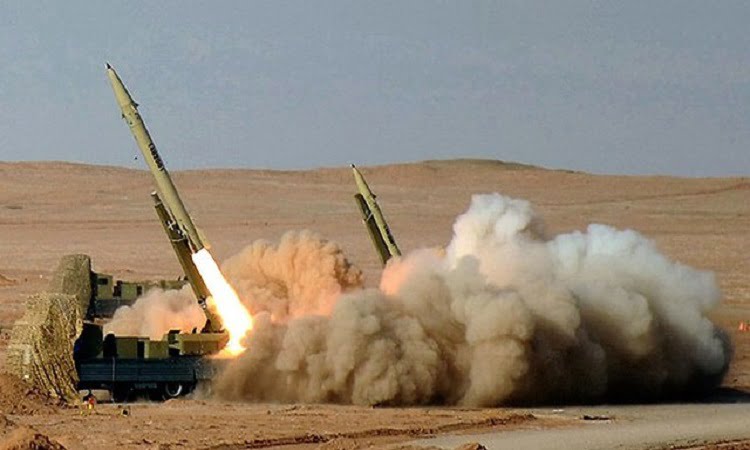
France, Germany and the United Kingdom say “Iran’s developments of nuclear-capable ballistic missiles” go against a U.N. Security Council resolution calling on Tehran not to undertake any activity related to such missiles.
Ambassadors from the three European nations urged U.N. Secretary-General Antonio Guterres in a letter circulated Wednesday to inform the council in his next report that Iran’s ballistic missile activity is “inconsistent” with the call in a council resolution endorsing the 2015 nuclear deal with Iran.
The letter cites footage released on social media April 22, 2019, of a previously unseen flight test of a new Shahab-3 medium-range ballistic missile variant “equipped with a maneuverable re-entry vehicle.” It says: “The Shahab-3 booster used in the test is a Missile Technology Control Regime category-1 system and as such is technically capable of delivering a nuclear weapon.”
The Europeans noted that a 2015 report by the International Atomic Energy Agency on possible military dimensions of Iran’s nuclear program concluded “that extensive evidence indicated detailed Iranian research in 2002-2003 on arming the Shahab-3 with a nuclear warhead.”
Officials in the Trump administration also have said Iran is working to obtain nuclear-capable missiles, something the Iranians deny.
U.S. President Donald Trump withdrew from the nuclear agreement in May 2018. But it is still supported by the five other parties — France, Britain, Russia and China, which are all veto-wielding Security Council members, and Germany, which is currently serving a two-year term on the council.
The letter says “France, Germany and the United Kingdom assert once again our firm conclusion that Iran’s development of nuclear-capable ballistic missiles and related technologies is inconsistent” with the missile provision in the council resolution.
That provision urges Iran “not to undertake any activity related to ballistic missiles designed to be capable of delivering nuclear weapons.” But it does not require Tehran to halt such activity, and the Iranian government insists all its missile activities are legal and not nuclear-related.
The Europeans’ letter says they used the Missile Technology Control Regime “performance characteristics” that a rocket system would need to be capable of delivering at least a 500-kilogram payload to a range of at least 300 kilometers (185 miles) to be nuclear capable.
Iran Briefing | News Press Focus on Human Rights Violation by IRGC, Iran Human Rights
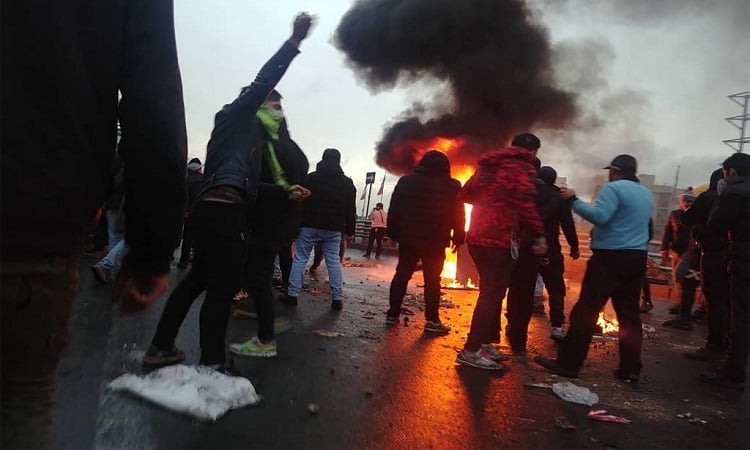
To another story now – the U.S. says Iran may have killed more than a thousand protesters in recent weeks. That number is far higher than other estimates. It is one of many concerns the Trump administration has been raising about Iran. Here’s NPR’s Michele Kelemen.
MICHELE KELEMEN, BYLINE: U.S. Special Representative Brian Hook says his office has received videos and messages from Iranians describing the crackdown. In one town, in mid-November, he says protesters tried to flee the Iranian Revolutionary Guard Corps.
(SOUNDBITE OF ARCHIVED RECORDING)
BRIAN HOOK: The IRGC tracked them down and surrounded them with machine guns mounted on trucks. They then sprayed the protesters with bullets. Between the rounds of machine gun fire, the screams of the victims can be heard.
KELEMEN: Hook did not provide the video or explain how the U.S. came up with its death toll.
HOOK: And as the truth is trickling out of Iran, it appears the regime could have murdered over a thousand Iranian citizens since the protests began.
KELEMEN: A spokesman at the Iranian mission to the U.N. says in a written statement that any casualty numbers at this point are, quote, “purely speculative and highly inaccurate.” The spokesman describes the protests as foreign-motivated and instigated riots. The Trump administration has repeatedly encouraged the Iranian people to rise up against the government and criticize the Obama administration for not supporting protesters enough in the past. Amnesty International has put the recent death toll at just over 200.
Hadi Ghaemi, who runs the New York-based Center for Human Rights in Iran, says one thing is clear.
HADI GHAEMI: We know that the government wanted to shoot to kill from moment one, and the killing was very widespread. So 1,000 may be slightly high, but definitely hundreds are plausible, and we need to investigate and find out the truth.
KELEMEN: Ghaemi is glad that the U.S. is speaking out but worries that it could feed into Iranian claims that the protests are part of a U.S. plot. Iran recently detained several protesters, accusing them of ties to the CIA. Ghaemi says the U.S. needs to mobilize others.
GHAEMI: This is about the international community, including the EU and the U.N. stepping up to their roles. And the U.S. should show leadership.
KELEMEN: President Trump hosted U.N. Security Council ambassadors over lunch today, telling them it is a horrible situation in Iran. Europeans have been raising other concerns, urging Iran this week to halt its ballistic missile program. Iran points out that the tests do not violate the 2015 nuclear deal. U.S. envoy Brian Hook calls that a mistake the Obama administration made in negotiating the deal, which the Trump administration left.
Iran Briefing | News Press Focus on Human Rights Violation by IRGC, Iran Human Rights
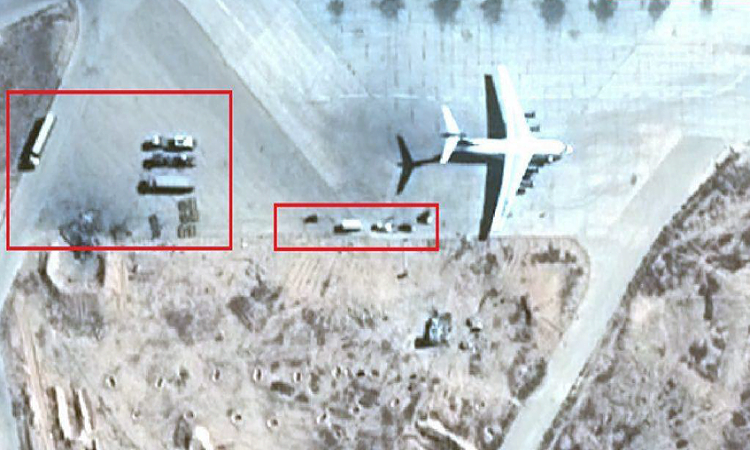
Cargo deployment came one day after the Israel Air Force (IAF) conducted strikes on several Iranian targets
New satellite images of an apparent cargo transfer from Tehran to Syria containing a variety of missiles last month suggest Iran may in fact be planning a “revenge attack”, as estimated by Israeli and US intelligence.
The images dated November 21, 2019, provided by “Intelli Times ” and “Satellite Pleiades from Airbus Defense & Space”, show a large cargo trailer on the runway of the Iran-operated T4 military base located in the Homs District in central Syria.
The images were taken after a plane left the Iranian capital in the early morning hours and landed at the base, unloading three containers onto semi-trailer trucks generally used by the Iran Revolutionary Guard Corps (IRGC) in Syria to move and deploy air, ground and cruise missiles.
Over the last two weeks Iran has been moving around heavy cargo to the T4 base, as part of its preparation for an attack the likes seen back in September on the Saudi oil fields.
The cargo deployment came one day after the Israel Air Force (IAF) conducted strikes on several Iranian targets that reportedly killed some 23 people, the majority of them Iranian.
Israel reportedly refrained from targeting the T4 base due to its division into three areas controlled by the Russian, Iranian and Syrian army – raising challenges that would require precise coordination with Moscow, on top of the base’s more formidable security arsenal that includes S-300 anti-aircraft missiles.
Israel reportedly refrained from targeting the T4 base due to its division into three areas controlled by the Russian, Iranian and Syrian army – raising challenges that would require precise coordination with Moscow, on top of the base’s more formidable security arsenal that includes S-300 anti-aircraft missiles.
Iran Briefing | News Press Focus on Human Rights Violation by IRGC, Iran Human Rights
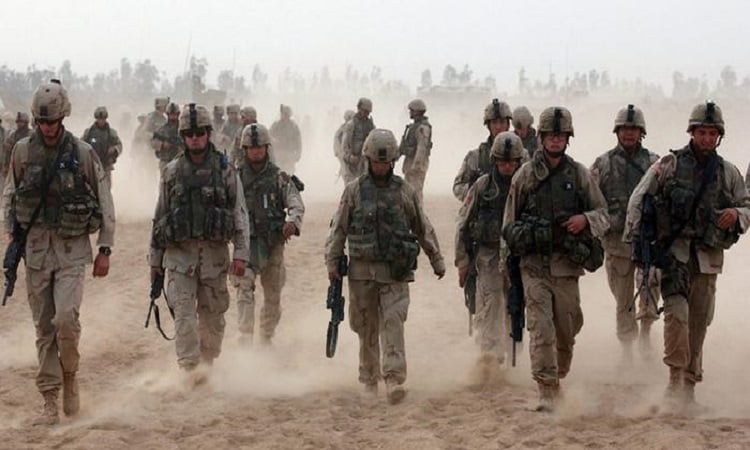
The Pentagon is considering sending several thousand additional troops to the Middle East to help deter Iranian aggression, amid reports of escalating violence in Iran and continued meddling by Tehran in Iraq, Syria and other parts of the region.
John Rood, defense undersecretary for policy, told senators Thursday that Defense Secretary Mark Esper “intends to make changes” to the number of troops deployed in the region. Other officials said options under consideration could send between 5,000 and 7,000 troops to the Middle East, but they all stressed that there have been no final decisions yet. The officials spoke on condition of anonymity to discuss internal deliberations.
The troop deliberations follow several decisions since spring to beef up the U.S. presence in the Middle East because of a series of maritime attacks and bombings in Saudi Arabia that the U.S. and others have blamed on Iran.
President Donald Trump has approved those increases, even though he also routinely insists that he is pulling U.S. troops out of the Middle East and withdrawing from what he calls “endless wars” against extremists. In October, Trump told his supporters that despite the sacrificing of U.S. lives in Iraq and other parts of the Middle East, the region is less safe and stable today. “The single greatest mistake our country made in its history,” he said, “was going into the quicksand of the Middle East.”
Asked about a possible troop increase, Trump told reporters Thursday: ”We’ll announce whether we will or not. Certainly there might be a threat. And if there is a threat, it will be met very strongly. But we will be announcing what we may be doing — may or may not be doing.”
Later Thursday, Trump’s national security adviser Robert O’Brien said the president was open to sending more troops to the Middle East. “If the troops are needed to deter Iran, we have the capacity to move them into the region — although I don’t think that’s happening right now,” O’Brien said on Fox News Channel’s “Special Report with Bret Baier.”
Military leaders have argued that the U.S. needs to increase its presence in the region in order to deter Iran from conducting more and broader attacks. Rood provided no details to back up why the additional troops are needed, but said the U.S. is concerned about recent intelligence indications suggesting an increased threat from Iran.
Iran Briefing | News Press Focus on Human Rights Violation by IRGC, Iran Human Rights

Iran has been transferring missiles and munitions via Iraq for years, including short-range ballistic missiles. The latest reports on Thursday come almost a year and a half after reports that similar missiles had been sent to Iranian-backed Shi’ite militias in Iraq and that Iran was laying the infrastructure across Iraq and Syria to threaten Israel, deter attacks and project its power.
In August 2018 Reuters reported, based on three Iranian officials, two Iraqi intelligence sources and two Western intelligence sources, that Iran’s short-range ballistic missiles were traveling to Iraq. The concept of Tehran was to do what it has done already in Yemen and Lebanon and Gaza, send its weapons technology to allies and proxies. The report at the time claimed that Iran also wanted these militias in Iraq to be able to build their own rockets.
In August 2018 the situation in the region was different than today. In June of 2018 an airstrike hit the headquarters of Iraq’s Kataib Hezbollah in Syria. Kataib Hezbollah is a militia run by Abu Mahdi al-Muhandis, who the US views as a terrorist. But Muhandis is also the deputy of the Popular Mobilization Units, a group of Iraqi Shi’ite militias that was created in 2014 to fight ISIS. Muhandis has a long-time association with Iran’s Islamic Revolutionary Guard Corps and Qasem Soleimani.
His group had fought ISIS but was then building a base near Albukamal on the Syrian side of the Iraqi border. In September 2017 another Shi’ite militia commander, Qias Khazali, went to Lebanon to meet Hezbollah and also went to an area near the Israeli border. He signaled that Iraqi militias, backed by Iran, would aid Hezbollah in a war against Israel.
The context then of the Kataib Hezbollah attempt to move into Syria was to build a waystation along Iran’s “land bridge” or “road to the sea” that stretches across Iraq and Syria to the Golan border and Hezbollah in Lebanon. Image Sat International published photos of the June airstrike in early July 2018. It shows how this was part of an Iranian network for facilities including a border crossing.
Iran Briefing | News Press Focus on Human Rights Violation by IRGC, Iran Human Rights

Unidentified aircraft bombed an Iranian-controlled weapons storehouse in eastern Syria on Wednesday night, causing a massive explosion, a Syrian opposition news site reported.
According to the Step News agency, the planes fired several missiles at warehouses belonging to Iran’s Islamic Revolutionary Guard Corps at the al-Hamdan airport, outside Deir Ezzor, in the Abulkamal region of Syria, an area that has reportedly been targeted several times by Israeli airstrikes on Iranian facilities in the past year.
Troops on the ground fired anti-aircraft weapons at the attacking planes, the news site reported.
There were no immediate reports of casualties.
The Israeli military as a rule does not comment on its airstrikes in Syria, save for those that are in retaliation to attacks on Israel.
Syria’s Abulkamal region, near the border with Iraq, is seen as a crucial region for Iran and its plans to establish a land corridor to the Mediterranean Sea in order to more easily transport materiel and fighters throughout the Middle East.
The reported attack on the IRGC weapons caches on Wednesday came some two weeks after a flareup between Jerusalem and Tehran, during which Iranian troops fired several rockets at northern Israel from Syria and the Israel Defense Forces retaliated with a series of airstrikes on Iranian and Syrian military targets.
According to the IDF, four rockets were fired at the Golan Heights and northern Galilee regions from Syria in the predawn hours of November 21. The Iron Dome missile defense system intercepted all four incoming projectiles, the military said.
In reprisal raids the following morning, the Israeli Air Force bombed several Iranian facilities in Syria, including a building at the Damascus International Airport used by the IRGC that had Iranian operatives in it at the time, as well as a number of Syrian air defense batteries.
“We struck a building staffed by Iranians at the Damascus airport. We assess that there are Iranians killed and injured,” an Israeli defense official said at the time, on condition of anonymity.
Iran Briefing | News Press Focus on Human Rights Violation by IRGC, Iran Human Rights
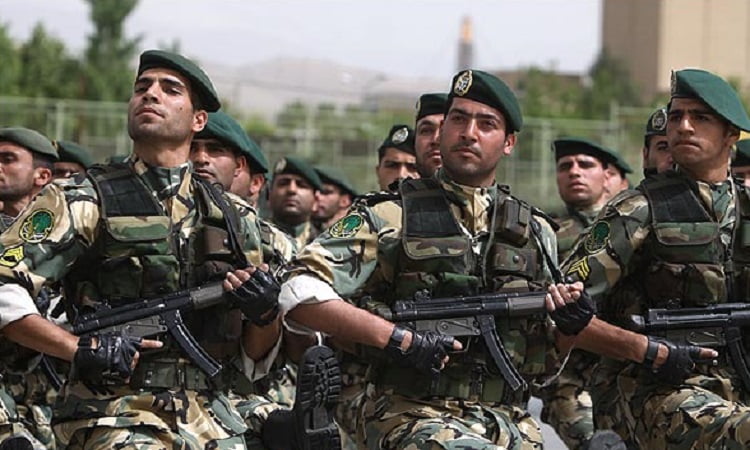
Since 2017, the Defense Intelligence Agency (DIA) has produced a series of unclassified reports on “the major foreign military challenges facing the United States.” Recently, it released its newest report on “Iran Military Power.”
The report lays out Iran’s military strategy and goals, as well as the structure and capabilities of its armed forces and the country’s enabling infrastructure and industrial base.
For the last two decades, the U.S. has been largely engaged in fighting asymmetrical conflicts, many of which involved large-scale, extended counterinsurgency operations. The Trump administration’s National Defense Strategy released in January 2019, however, reoriented America’s focus to “the return of big power rivalry in an increasingly multipolar world.”
The renewed focus on American military competition with near-peer rivals like Russia and China was characterized by many as a return to the era of Cold War competition. While this description is partially true, it obscures the rise of hybrid, at times anonymous, warfare capabilities that have been evidenced by Russia, during the Crimean invasion; China, in the South China Sea; and most extensively by Iran.
In that sense, the organization of Iranian military forces into different parallel institutions — the Islamic Republic of Iran Army (Artesh); the regular armed forces; and the Iranian Revolutionary Guard Corps (IRGC), which includes both official (conventional) military forces as well as (unconventional) proxy and non-officially state sanctioned “anonymous forces” — represents a hybrid approach that is also being evidenced at the level of near-peer rivals.
The Iranian military strategy relies on a combination of deterrence and the ability to use unconventional and proxy forces, both anonymous and state-sanctioned, to advance its interests and to retaliate against an opponent.
Tehran’s deterrence capabilities are based on its ballistic missile forces and its ability to use its naval forces to interdict traffic on the Persian Gulf, especially in the Straits of Hormuz. These capabilities will be further enhanced if Tehran succeeds in obtaining nuclear weapons.
In addition, it can employ the IRGC and, through them, a broad array of proxies, non-state actors like local militias and militant groups, and state-funded but anonymous actors. These forces are often the first employed by Tehran when it is attempting to project military power or dissuade an opponent from taking actions it disapproves of. The use of non-state and anonymous actors preserves Tehran’s ability to deny responsibility and to de-escalate a confrontation, should it need to.
Iran Briefing | News Press Focus on Human Rights Violation by IRGC, Iran Human Rights