Home Blog Page 374

Kasra Nouri is sentenced to 52 months imprisonment

Kasra Nouri the Gonabadi dervishes’ rights activists and co-worker of Majzoobane-Nour website has been sentenced to 4 years and 4 months imprisonment.

According to a report by Majzoobae-Nour website, Kasra Nouri was tried in branch 3 of Shiraz revolutionary court by judge Rashidi and sentenced to 4 years and 4 months imprisonment on charges of propaganda against regime, acting against national security, insulting the supreme leader of Iran and membership in Majzooban group.

This Gonabadi dervish is sentenced to 4 years and 4 months imprisonment whereas the consequences of his acting in society described as “promoting innovation in doctrinal matters” and “insecurity in society and promoting superstitions” and the reason of issuing this sentence called as “preventing the irrecoverable consequences in society especially among youth”.

It is written in a part of the issued sentence: “As promoting innovation in doctrinal matters and promoting specific spirituality results insecurity in society and promoting superstitions and innovations in society especially among youth and it might having irrecoverable consequences then the accusations on his dossier will sentence him.”

Also Kasra Nouri is sentenced to one year suspended imprisonment in Shiraz criminal court on charge of disturbing the public order and roorback.

Kasra Nouri was arrested twice until now by security forces. This Gonabadi dervish was arrested once on January 11, 2012 and after 46 days being under arrest in Shiraz intelligence and Adel Abad prison was released on the bail of 50 million Thomans and second time on March 14 of the same year on charge of interviewing with enemies’ medias and he is under arrest for 14 months.

Also Kasra Nouri with Saleh Moradi in protest to transferring the dervishes lawyers to solitaire cells and ward 209 of Evin prison were started hunger-strike and ended their hunger-strike after 90 days when the dervishes lawyers transferred back to public ward of Evin prison called 350.

Following is a part of verdict of court that given to the lawyer of this prisoner:

Referred to accusations on Kasra Nouri, 22, the son of Masoud from and resident of Shiraz based on propagandas against Islamic Republic regime, the court processed all the documents and attachments on the dossier such as reports of officers and the investigations in Shiraz revolutionary court that resulted issuing the indictment.

Because establishing such groups with intention of achieving their goals is  in their agenda such as establishing a website called Majzoobanenour that conducting by a group and referring to the activities of Gonabadi dervishes against Islamic Republic regime through cyber medias and the accused is one of the main administrators of the activities and helped in this matter; And as promoting innovations in doctrinal matters in society and promoting specific spiritual orientations results insecurity in society and might have the irrecoverable consequences then the accused wil b sentenced to one year imprisonment based on accusations in the dossier as membership in subversive groups against Islamic Republic regime, insulting on supreme leader of Iran and propaganda against regime and to 34 months imprisonment on charge of membership in subversive groups against Islamic Republic regime through establishing the specific websites that working on this particular matter and to six months imprisonment on charge of insulting on supreme leader.

Source: HRANA

Appreciating the Role of IRGC in Suppressing Oppositions: Statement of the General Staff of the Armed Forces on Anniversary of IRGC Formation

Iran Briefing – The General Staff of the Armed Forces in Iran has issued a statement on Monday, April 22, 2013 due to the anniversary of IRGC formal formation which has been released in domestic and foreign Media. In this statement, the role of IRGC has been called the warrantor of Iranian government and the factor of defecting west powers that Iranian regime considers them as enemy who are plotting against Islam and Muslims.

In another part of this statement, the role of IRGC in suppressing oppositions who are called “anti-revolution” by Iranian authorities has been appreciated and mentioned that IRGC has been successful in “physical, half- physical and soft-wars”.

The street protests has been called domestic and foreign enemies’ plot in this statement and has mentioned IRGC as the main factor to eliminate oppositions since the beginning of the 1978 revolution to the end of Iran-Iraq war and also student protests in June 1999 and 2009 post election protests.
In the statement, there has been emphasized on “pro-Khamenei” aspect of IRGC and its political insightfulness which is the result of following the Supreme Leader’s commands.

At the end of the statement, also has been emphasized that the prerequisite for the victory of IRGC over enemies is obeying the orders of the Supreme Leader, Ali Khamenei.

Iran planned Boston bombings for 2 years


Qasem Soleimani, the head of Iran’s Quds Forces, ordered reconnaissance and intelligence gathering on various events and public gatherings in the United States years ago, culminating in the bombings at the Boston Marathon one week ago, WND has learned.

According to a source within Iran’s intelligence services, the Islamic regime’s Quds Forces, a special unit of the Revolutionary Guards in charge of extraterritorial operations, have done extensive planning on gatherings, events and high-value targets in the United States for some time, but for two years focused on events such as the Boston Marathon.

The source had earlier provided information that tied the Islamic regime to the Boston attack and pointed to the collaboration of the regime’s Quds Forces with the Lebanese terrorist group Hezbollah and elements of al-Qaida with links to an operational center in South Asia. He said that under Quds Force guidance, Hezbollah recruited sympathizers through collaborators connected to South Asia for terrorist activities in the U.S.

Another source in December told WND that the Quds Forces had drawn up plans for terrorist attacks in the U.S. starting within six months and that an operational team was in the United States to prepare for the attacks. He also said then that suicide bombers and potential terrorists were ready to attack Canada and European countries, including France and England.

In Canada, police said today they had foiled a terror plot. They reported that the two accused in the case were getting “direction and guidance” from al-Qaida elements in Iran.

The plan was to be automatically launched if America did not accept Iran’s nuclear program, if sanctions increased or a military confrontation took place. The regime felt it must act because current sanctions, which have already devastated Iran’s economy, could spark civilian rioting.

“Jihad in America: The Grand Deception,” is what to read when you really need to know the enemy’s strategy.

Another worry for the regime, the December source said, was that the push to oust Syrian President Bashar Assad would be a big blow to the Islamic regime and its activities in the region.

Editor’s note: Because of its importance, this writer immediately contacted Congressman Peter King at home and informed the New York Republican of the imminent threat. He urged that I contact his office the next day. The conversation was held with his aide, Kevin Caroll, who was not receptive and mostly dismissive.

Ultimately the information was shared with two U.S. agencies, which took the warning seriously. However, despite weeks of extensive work with the agencies, the informant could not provide accurate details of any specific operation.

But days before the Boston bombing, the source said, “My words will be proven.”

The new source in the Guards intelligence unit said the regime’s Quds Forces collaborated with Hezbollah and their operational centers in Sri Lanka and Bangladesh. The operational support teams on the Boston bombings can be linked to those centers, he said.

He also said those centers are actively recruiting a new wave of terrorists from non-Arabs and from Islam’s Sunni sect to avoid any trace back to Shiite Iran and Hezbollah and to either present an apparent link to al-Qaida or individuals acting on their own.

Their goal, he said, is to divert attention to Saudi Arabia and other Sunni countries that are in a proxy war with Iran over leadership in the region. As Iran is trying to destabilize Bahrain, Yemen and Saudi Arabia itself, those countries are trying to destabilize Syria, where Saudi Arabia and other Sunni states hope to oust Assad and confront Hezbollah.

Iran is prepared to continue such attacks within the U.S. homeland to create fear and uncertainty and divert America’s push to stop Iran’s nuclear program and oust Assad, he said.

In that regard, Iran extended its recruitment operations to the Caucasus, Dagestan and Chechnya, a move that Russia has denounced. Iran also has a major operational center in Azerbaijan, where tensions between that government and the Islamic regime remain high. Many terrorists have been arrested within Azerbaijan.

As previously reported, the two brothers who set off the bombs at the Boston Marathon were assets of a bigger network and were set up to be burned so there would be no link back to their handlers – and Iran. The source added that in the view of the Islamic regime, the terrorist attack in Boston was a success because U.S. homeland security was breached, much fear was created, and international media spread details of the attack — all with no direct link to the regime itself.

Based on information from a former member of Iran’s Revolutionary Guards intelligence unit who defected to a Scandinavian country, it was reported last year that the Islamic regime’s agents were active in the U.S. and were working to acquire intelligence that might be useful in terror attacks. The agents work on Americans who have converted to Islam with offers of a trip to the Iranian city of Qom, the site of hotbed seminaries and the center of Shia theology, where they are brainwashed and offered collaboration. The agents also use Islamic centers and mosques in the U.S. and other countries to recruit assets. The information was shared with U.S. officials.

An Iranian media site connected to the Quds Forces today reacted to WND’s exclusive report on April 16 that blamed the regime for the Boston attack, without denying the connection between the Chechen brothers to networks related to Hezbollah and the Quds Forces. The site likened the WND report to previous “claims” by the Obama administration about the terror plot on a Saudi diplomat in America, which it claimed was mocked internationally.

The source said the lack of a serious response by the Obama administration to that terror plot by Iran had only emboldened the regime to become more aggressive with its terrorist activities.
Read more at http://www.wnd.com/2013/04/quds-forces-planned-boston-bombings-for-2-years/#8gizOVRbK1JlXsWV.99

Arrests and Absence of Information On Prisoners

Arrests continue in the province of Khuzestan and in the words of a rights activist Karim Dahimi more than 280 people have been arrested in the province recently. The family members of those arrested have told Rooz that they have no information about the condition or whereabouts of their loved ones behind bars. These prisoners are kept in the prisons of Karoon, Amaliyat Karoon, Sepidar Ahvaz, and the detention centers belonging to the ministry of intelligence in the towns of Ahvaz, Hamdie and Shadghan.

Speaking to Rooz, activist Dahimi, an Iranian Arab who lives in Khuzestan province, said he has obtained the names of 280 people who have been detained but quickly adds that others say the actual number are higher.

“Every year on the anniversary of a letter that Mr. Abtahi is attributed to have written, demonstrations break out in the province. And on the anniversary, a security atmosphere is created by the state while some people also engage in protests. This results in arrests. This year, the number of arrests is much higher than previous years and the security atmosphere is more intense,” Dahimi explains. Mohammad Ali Abtahi was the chief of staff to the then-president who apparently wrote a letter about changing the composition of the Arabs in Iran’s Khuzestan province. He denied having written such a letter at the time. But he also points out that the government did not officially deny the existence of such a government circular. Dahimi points out that regardless of whether such an interdepartmental note had been sent or not, people demonstrate on a date that is attributed to it every year.

People were killed in the 2006 demonstrations and the number of death on the 2011 anniversary of the protests stood at 12. Dahimi believes that this year’s arrests were made with the goal of preventing demonstrations. Individuals who have a record of demonstrations or arrest are the targets of the current arrests.

Asked about whether he knew of any person who had been released after arrest, Dahimi said that only a number of under-age youngsters were released on bail. He also explained how his own son who lives in Ahvaz had been summoned to the ministry of intelligence and interrogated on what he did, where he went etc. He was then released but at 3 am that very night, security agents raided the house and arrested him. “All we know about his whereabouts is that he had been initially taken to the ministry of intelligence’s detention center in Ahvaz and then transferred to the Ghods Sepahdar prison.

Another victim of the arrests is Beyt Hardan, a political activist who spent 13 years in prison but now lives outside Iran told Rooz that his son who had not engaged in any political or social activities had been arrested seven times. He explained, “Every time some problem comes up, they come and arrest his son.”

Mohammad Heidar is Ahmad Heidari’s brother says that his brother and 4 nephews were arrested on March 26th this year and there has been no news about them since then. He added that the prisoners have no access to defense attorneys and that they were not engaged in political activities, while some could not even speak proper Persian. The only reason why they have been arrested he implied is that they participated in poetry gatherings at the time.

Source: Roozonline

Accused of Waging “Soft War,” Christian Pastor Beaten in Iran’s Evin Prison

Between July and December 2012, Iranian authorities continually told Saeed Abedini’s family not to get him a lawyer nor to speak to the media about his situation, alternately threatening the family and promising his swift release. The family received news that he had been brutally beaten in prison September 2012, and hired a lawyer in December. Pictured: Saeed Abedini, Naghmeh Abedini, and their children. Photo courtesy of the Abedini family.

Christian pastor Saeed Abedini was conducting a routine visit to the non-profit orphanage his family helped to start in Rasht when Iranian security forces arrested him and seized his passport in July 2012. Five months later, Iranian courts convicted him of “undermining national security,” accusing him and other Christian converts of waging a “soft war” against the Iranian government through their practice of Christianity in informal house churches.

Saeed Abedini’s wife Naghmeh spoke with the International Campaign for Human Rights in Iran in an interview about her husband’s ill-treatment in prison, the so-called “soft war” he and other Christians are accused of waging, and religious freedom in Iran.

“They had arrested him in 2009 because of work he had done [as a Christian pastor] from 2000 to 2005, but they’d let him go because he was no longer involved with house churches,” Naghmeh Abedini told the Campaign. “They had let him go in 2009 promising that they would not do anything against him . . . if he did humanitarian efforts like orphanages,” she added. Three years later, Revolutionary Guards seized him during a trip he took to visit the orphanage and took him to Evin Prison.

Between July and December 2012, Iranian authorities continually told Saeed Abedini’s family not to get him a lawyer nor to speak to the media about his situation, alternately threatening the family and promising his swift release. The family received news that he had been brutally beaten in prison September 2012, and hired a lawyer in December. His conviction came in January 2013, and his family is currently awaiting the appeals court decision from Branch 36.

“In early March [2013], Saeed was examined by doctors in prison, and they did confirm that Saeed needed to be hospitalized for his internal bleeding,” resulting from his time in prison, Naghmeh Abedini said. On April 15, “he was taken early in the morning to the hospital, they said there was no doctor, and sometime in that day he was beaten” again, she added.

Saeed Abedini converted to Christianity in Iran in 2000. At the time, the conversion was legal and recognized by the government, which sanctioned his legal Christian marriage to Naghmeh shortly thereafter. From 2000 to 2005, he worked with both “building churches,” established churches with government licenses, and “house churches,” informal churches that meet at members’ homes. With the election of President Mahmoud Ahmadinejad, official attitudes towards Christian converts became more strained (please see our report, The Cost of Faith: Persecution of Christian Protestants and Converts in Iran, for more information).

Abedini stopped working with house churches, and instead worked with his family’s non-profit Setareh Derakhshan, “Morning Star,” which helps orphans with housing and education. After moving to the United States, Abedini became an American citizen in March 2010, but continued to travel to Iran to work with the orphanage. Between 2009 and 2012, he visited Iran upwards of 10 times, his wife told the Campaign.

“His heart goes out to those who are in prison with him,” Naghmeh Abedini told the Campaign.

The full interview with Naghmeh Abedini is below.

International Campaign for Human Rights in Iran (ICHRI): After Saeed Abedini was arrested, when was the first time he contacted his family?
Naghmeh Abedini (NA): He was arrested September 26, which I believe is a Wednesday. . . . He was arrested on a Wednesday. We didn’t get a call until Sunday afternoon, and that’s because . . . we didn’t get any news from him, and so on a Sunday afternoon one of his family members went to a building church that knew Saeed, inside of Iran. That was a government-approved building church, and he told the pastor because he knew the pastor was in contact with [the] Iranian government. So he told the pastor to try to get a message across to a police, intelligence police of some sort. He told the pastor if his wife doesn’t know where he is, or if [he]’s alive, then she’s going to cause a lot of drama and media, she’s going to go to [the] media. So pretty much soon after he told the pastor to try to find . . . an intelligence police and tell them that, within a few hours Saeed called and he said, ‘I’m in Evin Prison; I’m in solitary confinement; I’m okay.’ That was the first time we heard where he was and how he was doing.

ICHRI: How was he, when you first spoke to him?
NA: He was confused. We were confused. We didn’t know what…. Because they had arrested him in 2009 because of work he had done from 2000 to 2005, but they’d let him go because he was no longer involved with house churches, so they had let him go in 2009 promising that they would not do anything against him if he did not, if he did humanitarian efforts like orphanages, . . . if he discontinued with the house church. They told him he could do efforts to help the country, to help the poor. So we were confused why he was arrested because he was doing exactly what the government was allowing him to do and approving. He was working—Saeed believes in obeying the law of the land, as a Christian, so he didn’t try to do anything that the government didn’t allow him to do.

ICHRI: What was he convicted of?
NA: He’s ‘undermining the Iranian security of government,’ the Iranian government, undermining the actual security, ‘through starting networks of house churches.’ And, what I’ve learned recently is that they said that it’s a ‘soft war.’ That’s what they call it, his Christian activity is a ‘soft war.’

ICHRI: Is this the only charge?
NA: Yes. This is the only charge that was brought up. We knew there [were] other charges that they were trying to bring against him but we’re not 100% what that is. The lawyer hasn’t really…. We know there was, at the proceeding, there [were] other charges that the prosecutor was trying to bring up against him. We don’t know exactly what that is. We know when we presented an appeal to the court . . . there was also an appeal sent by the prosecutor. We don’t know what that appeal is. His lawyer is trying to find out, but he believes that appeal by the prosecutor is that there should’ve been more charges. He was not happy with that one charge. But up to now there’s only that one charge.

ICHRI: But he hasn’t been involved in any business related to house churches, right?
NA: Yes, he wasn’t involved. The time he was involved, what people don’t understand is at the time he was involved with house churches it was legal, it was allowed. He became a Christian when [Mohammad] Khatami was president, in 2000, and when Saeed and I married, we had a legal Christian marriage. In our marriage certificate it says ‘Christian.’ So the government approved our conversion under Khatami. We had a Christian wedding and his house church movement was conducted under the government-approved building church. So the government was well aware of him going to a government-approved building church for Bible school, and through that Bible school is when he started the house churches.

So what they’re saying, they’re convicting him for what they call a ‘crime’ he did when it was legal! At that time the president allowed Saeed and I to convert; the conversion was approved by the government. The house church movement started under a building church. It wasn’t a network of house churches that was illegal, it was started from a building church that the government controlled, and the government was well aware of what the building church was doing. Only in 2005, when Ahmadinejad became president, is when we saw everything change. So the crime they’re trying to charge Saeed with happened when it was legal. It was allowed by the government; the government was more liberal.

ICHRI: Did the authorities allow him to have a lawyer?
NA: No. We were told from day one, we were told, I was in contact with some pretty good lawyers, human rights lawyers in Iran, and we were told the government was aware that I was trying to get a lawyer. They continually told and threatened us, they said, ‘Tell his wife,’ and they also told his family, ‘If you try to get any lawyers, they will be in prison as well. Don’t think lawyers can help you.’ So we didn’t really get a lawyer until a few weeks, actually maybe a month before we went to [the] media, because we decided to go with the lawyer when the situation for Saeed kept getting worse, and the accounts kept getting worse.

ICHRI: What changed your mind about getting a lawyer?
NA: We heard that he’d been beaten, that he was being threatened in prison, so that’s when we decided to not listen, not follow, not listen to the Iranian government anymore. We were hoping as we followed their requests of not getting a lawyer, not going to [the] media, we were hoping that this would actually help bring Saeed home quickly. But three months passed from their empty promises that they were going to let him out on bail, and if we didn’t go get a lawyer he would come out quickly, but three months had passed and he was beaten…. When we found out about his beating that’s when we decided to get a lawyer. They were making empty promises to us. They had no intention of releasing Saeed, they were just making us wait and not go to [the] media.

And Saeed had also told his family at one of the phone calls after solitary confinement—he was in solitary confinement from end of September until end of October—after solitary confinement he was able to make more phone calls to his family, and he told them, ‘They have no intention of letting me out.’ So they were just making empty promises and in December we decided to go to [the] media and get a lawyer.

ICHRI: You mentioned he was beaten. How is his health?
NA: Before the Iranian New Year [March 21, 2013], in early March, Saeed was examined by doctors in prison, and they did confirm that Saeed needed to be hospitalized for his internal bleeding. And the government promised they would do that last week. But because it was Iranian New Year so it took longer. Last week on Monday [April 15], so exactly a week ago, they took Saeed to a hospital to treat him, but it was—I believe it was a game, because they said there was no doctor there and even afterwards when the family was able to talk to Saeed, they learned that Saeed figured out it was a game too, because from the conversations between the guards you could tell they had no intention of treating him. So last week on Monday they took him to a hospital to be treated, they said there’s no doctors, and then they beat him. So we know there’s at least two beatings: one happened when he was in [Ward] 209 and they were interrogating him, and we know at least this one last week happened, too. The day they were supposed to take him to the hospital they beat him, and he’s suffering from more internal bleeding. And we know the name of the person who beat him, too, it’s Rafiee, he’s the head of that section [Ward 350]. It’s the best, I guess, ward to be in.

ICHRI: Do you have more specifics about the beatings?
NA: The recent one, we know the person who beat him, his name is Rafiee. If that’s his real name. It wasn’t slaps, it was actual blows into his stomach, where he was already bleeding. It was actual beating. What he was able to describe, there was three or four guards, they told him, ‘Come out, we’re going to take you to the hospital,’ and he could tell from their talking that there was something weird, they weren’t going to take him to the hospital. But from the beating, what he said was there was the head, he said his name was Rafiee, and he said I think there was at least three or four people. They actually had him down on the ground and beating him and especially in the area he was already bleeding, his stomach area.

ICHRI: And he was not treated afterward? He was taken to the prison afterward?
NA: The same day he was taken, he was taken early in the morning to the hospital, they said there was no doctor, and sometime in that day he was beaten.

His bleeding got worse, he told his family that there blood in his stool, he had a lot of pain in his stomach, and he was fainting even more. So he could tell the bleeding had gotten worse, because of the same thing, because of the blood in his stool. The family did immediately try to get treatment but they said it takes another one month or two months for the paperwork before they can take him to a hospital again. They said it could take another three months before they try to take him to the hospital again.

ICHRI: What is his current situation?
NA: We’re waiting for the appeals. We’re hoping, from what I hear from the lawyer we should have answers soon. So we’re hoping within the next week or two weeks we’ll have some answers on what our appeals court has decided. Medically he’s not doing very well. We need to get him treated to a hospital, but they’re saying that the paperwork will take another couple months. And what we heard from what happened in the court, his charge again ‘undermining national security’; they’re calling it a ‘soft war.’

ICHRI: Do you know about the appeals court date?
NA: I heard there was a hang-up, because he was supposed to get answered within a month after his conviction. [He was convicted in January and the family submitted the appeal the same week.] His lawyer followed up and we found out there was a hang-up: there was a prosecutor also turning in an appeal, but then there [were] also letters coming from Iranian representatives to the UN and different organizations, letters about Saeed. So that’s what caused the hang-up. This caused it to take a longer time, and that’s where it’s at right now. What we hear is that it’s taking a longer time to process because of all these requests that are coming from the UN and other organizations that are reaching out about Saeed. Recently, Argentina also got involved, and their president.

ICHRI: What is the latest development regarding the case?
NA: The last two months there’s been a lot of movement with different governments, more than 20 different governments. Their top officials, their presidents, vice presidents, have contacted Iran specifically in regard to Saeed. Recently Argentina was added to that list. [US] Secretary [of State John] Kerry has spoken, and there’s a lot of pressure being put by the UN and different governments to release Saeed. And also, I spoke at a [US] Congressional hearing in March about religious freedom in Iran in general. So there’s been a lot of movement in terms of bringing awareness to religious freedom in Iran.

ICHRI: Since his conviction, does he have regular visits with his family?
NA: Yes. For a while he was in [Ward] 209 I believe, the political prison [ward], but it wasn’t general yet. But he could have visitors every other Thursday, so twice a month. But since his conviction in January he’s been moved to a better cell. It’s in general prison, it’s much better, and he has weekly visitations every Monday from his family.

ICHRI: Do you have any plans to go to Iran, too, to visit and follow up with the case?
NA: No, unfortunately when all of this happened, me and one of his sisters were out of the country. And we had planned to go back and visit him and we got serious threats that they would arrest us as well if we set foot into Iran. As a mother of two kids, I haven’t risked going back.

ICHRI: If you could talk to the Iranian authorities, to Sadeq Larijani, the head of the Judiciary, what would be your request? What would you ask for?
NA: Not just regarding Saeed, but really a lot of what I know from those who are in prison, there are actually people, especially the religious people, I’m sure there are other ones as well, especially the religious people they are very peaceful, and they have not done anything against the government. It’s unfortunate that the Iranian government and those in authority see any other religion other than their version as threats, and there’s all these religious minorities in prison, including other Muslims, and Baha’is, and Christians, and that the Iranian government would see it for what it is.

These people just want to practice what they believe, and the Iranian government I’m hoping would start changing their own laws and their behaviors towards religious minorities and allow for religious freedom. And realize these are not people who are a threat to the government, these are not where they should be focusing on. They should not be focusing on arresting and torturing these people. Their efforts should go elsewhere. These people are peace-loving people who want to practice what they believe. And it’s just not my husband. My husband has a heart for the Baha’is that are there, for the other Muslims that are there. There’s many different people that are in that prison unfortunately. I would ask the Iranian government authorities to reevaluate and reconsider their policy of treating them as political threats, which they are not. This is not about political threat, this is about religious freedom and human rights.

Source: Iranhumanrights

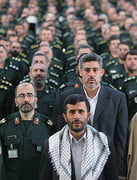
Report: Iran’s military chief accuses Ahmadinejad of manipulating public opinion

0

Iran’s armed forces joint chief of staff is accusing President Mahmoud Ahmadinejad of trying to manipulate public opinion. It is the latest exchange of harsh rhetoric between outgoing Ahmadinejad and his conservative opponents ahead of the June election.

The conservative Khabaronline news website on Tuesday quoted Gen. Hasan Firouzabadi as saying that recent remarks made by Ahmadinejad were “unacceptable.”

On Monday, the Iranian president — without naming names — complained that some people in power had tied the “hands and feet of his administration,” while expecting it to work properly. Then on Tuesday, Ahmadinejad promised to disclose more against his opponents in the future.

Under Iranian law, manipulating public opinion is punishable by up to two years in prison.

Source: InsideofIran

Flogging one political prisoner despite his back disease

Although Hassan Ark (Ali Hajabulu) suffers from back disease the authorities of Tabriz prison are insisting on flogging him which is a part of his former sentence.

According to a report, the authorities of Tabriz central prison have called Hassan Ark, the civil activist to flog this Azerbaijani activist.

This is done while he suffers from back disease and needs to takes rest according to specialist doctors.

The authorities have brought him to Forensics to confirm his disease, so if the Forensics doesn’t confirm his diseases he will be flogged.

Hassan Ark, the journalist and civil activist was sentenced to 50 lashes by the section 106 of Tabriz court on charge of insulting the leader and the Police.

He is now serving his 1 year imprisonment sentence which was because being arrested with 28 other civil activists in a gathering in Tabriz to find a solution for the revival of the Urmiye Lake.

He was sentenced on charge of assembly and collusion against national security to 2 years of prison of which 1 years is suspended for 5 years.

Source: HRANA

One more year of imprisonment for Ahmad Karimi

0

Ahmad Karimi the exiled political prisoner in Gonbad Kavoos prison who was sentenced to 15 years and 3 months of imprisonment, is sentenced to one more year imprisonment during a new trial.

According to a report, lately the Tehran court in Vanak formed a new dossier for Ahmad Karimi the exiled political prisoner in Gonbad Kavoos prison and sentenced him to one year imprisonment on charge of crossing border illegally.

During the trial session Ahmad’s lawyer was not present and all the accusations were repeated which is forbidden according to the laws to sentence someone to an accusation twice.

On the other hand Ahmad Karimi’s family has complained about the way prison authorities are dealing with them and the very short duration of their visits with Ahmad.

One of Ahmad’s relatives said to HRANA corespondent that “During the Iranian new year holidays Ahmad’s family traveled to Gonbad Kavoos from Tehran despite of long distance and costly trip to visit Ahmad but the prison authorities just let them to visit Ahmad for 15 minutes and while they had permission letter from prosecutor office they were waiting from 8 A.M. till 1:30 P.M to be allowed to visit Ahmad.”

“Each time his family visiting him they should get permission from head of the prison and at least an agent will be present during the visit. The authorities are very harsh with this family and their rigor annoying Ahmad’s family a lot”, He continued.

Ahmad Karimi the political prisoner who sentenced to 15 years and 3 months exiled imprisonment in Gonbad Kavoos prison is in the worst ward of this prison and his family could not visit him weekly because of long distance.

Also Ahmad Karimi, Hadi Ghaemi and Jamal Aminzade are the only political prisoners who are imprisoned without considering categorization of prisoners’ rule.

Source: HRANA

Canada arrested two people who were supported by by al-Qaeda elements in Iran

0

Two people have been arrested in connection with a plot to derail a passenger train in Canada that was supported by al-Qaeda elements in Iran, police said.


Chiheb Esseghaier, 30, and Raed Jaser, 35, were allegedly planning to carry out an attack on a Via Rail passenger train in the Toronto area, an official told reporters.

The pair are expected to appear in court on Tuesday for a bail hearing. Charges include conspiring to carry out an attack and conspiring in association with a terrorist group to murder individuals.

The Royal Canadian Mounted Police told a news conference the suspects “were receiving support from al-Qaeda elements located in Iran” but added “there’s no indication that these attacks were state-sponsored.”

The duo received “direction and guidance” from al-Qaeda, officials said.

Source: Telegraph

Prison authorities denying Hamed Rouhinezhad’s medical vacation

0

Despite suffering from weak-sighted and MS Hamed Rouhinezhad the exiled political prisoner in Zanjan prison has deprived of medical vacation.

According to a report, Hamed Rouhinezhad the exiled political prisoner in Zanjan prison suffering from weak-sighted and MS but the prison authorities denying his medical vacation.

Problems in his eyesight was realized when he passed Payame Noor University -PNU- entrance exam and was supposed to continue studying from prison and because of weak-sighted was unable to study. The doctors of the prison just recommended spectacles and the prosecutor has not granted medical furlough for this prisoner till now.

He was sentenced to 10 years imprisonment in exile in Zanjan prison and later his verdict changed to 11 years imprisonment but since last passover Eid with counting the passed imprisonment days his verdict reduced to 4 years and six months imprisonment.

Hamed Rouhinezhad with three of other asylum seekers in Arbil- Iraq, was arrested in April of 2009 a few months after a pre-coordinated return to Iran. They were arrested after the wave of public protests against the result of tenth presidential election and trialed in mass and unfair courts as they were supposed to do bombings and creating chaos in the country.

As a shock on public thoughts Mohammadreza Ali Zamani and Arash Rahmanipour two of the arrested ones were hanged in January 2010 in Tehran and then the verdicts of some others such as Hamed Rouhinezhad changed to imprisonment.

Source: HRANA