Home Blog Page 379

Heaviest Pressures; Highest Costs

The Iranian calendar year turned into a new year on the first day of spring – March 20th – as it does every year. So this is a time of reflection on many issues and for many people in the country. For students and university professionals, this was the year when they witnessed unprecedented onslaught on the student movement and activities. But even though the battles between students and the establishment are not new the situation is neither settled nor calm. Students have had to pay with greater costs for every change that has come about, they had been arrested, expelled, denied the right to continue or launch a university education, or have even been murdered.

The establishment’s confrontations with student activists and the judicial orders against them, the official closure of critical student organizations, and the narrowing of activity fields for students have resulted in the birth of new methods of confrontations. Today, a presence on Facebook can be viewed to be a crime, the efforts to identify Bahais and prevent them from getting higher education have grown, and the trend to deny the highest education levels to students who in the past had been active is on the rise. Women too last year were confronted with a discriminatory change that denied them access to many study fields and subjects.

At the same time, while some student activists who felt threatening pressure from authorities were forced to leave the country altogether, others set aside all student activities because of court orders while still others are served prison time.

And as the tub of war between the establishment and the university and students continued, it was the latter who paid the price for striving to remain independent.

The pace and intensity of violating university rights was so great last year that UN’s special rapporteur on human rights conditions in Iran, Ahmad Shahid, devoted a whole section on this in his report to on the country and named the presidents of two specific universities by name, Polytechnic University and Alame Tabatabai University.

Nowruz New Year Celebrations Behind Bars

Nowruz is always a time of joy for Iranians but this spring was yet another season without their loved ones. Some student activists such as Abdollah Momeni, Zia Nabavi, Majid Tavakoli, Majid Dori, Siavosh Hatam, Arash Sadeghi, Shabnam Madadzadeh, Ighan Shahidi, Habib Latifi, Omid Kokabi, Davar Hosseini-Vojdan, Hamed Roohinejhad, Fereidun Seydirad, Amir Garshasbi, Jamal Ghadernejad, Misagh Yazdannejad, Soroosh Sabet, Vahid Asghari, Saeed Jalalifar, and Yashar Darolshafa spent the turn of the year in prison.

A small group of student activists such as Mehdi Khodai, Emad Bahavar and Ali Akbar Mohammadzadeh were luckier and managed to get special leaves from prison and spent the new year with their families after years of being denied any leave.

Stars Over Universities

The practice of marking university student activists with starts which began in the first Ahmadinejad administration has now turned into a controversial debate. The government refrained from granting BA degrees to student activists despite their graduations, thus barring them from continuing theireducation. This practice continues despite a ruling by the government’s administrative court declaring the practice unlawful. The practice continued even after Ahmadinejad personally denied the practice during a televised interview in 2009.

Denial of access to higher education continued last year and in fact took new forms. In addition to reports by the ministry of science, the ministry of intelligence and other intelligence agencies, even the national educational testing center that conducts annual university placement and entrance examinations also joined the ranks in disqualifying students from continuing their education aspirations.

An example of such denials is the case of Roozbeh Hossein Tehrani. This student activist attained the sixteenth highest score in the national placement test last year but was denied admission to a university for the third consecutive year while his passing grade records were taken off the official Azad University website. The words “no such applicant” appeared for his name on the site.

Yazdan Mohammadbeighi is another student who passed the first test for a doctoral program and the subsequent two interviews but who was denied admission to a university after he was summoned by the ministry of intelligence and interrogated over his political and social activities.

Another event in this regard last year was the creation of a special disciplinary committee at the Shahr Kord University which issued warnings to students for “membership in Facebook.”

Seyed Ahmadi Hosseini, an MA student in Orumieh University was expelled from the university by an order of the disciplinary committee of the institution after he made a 2 minute speech in the Chamran auditorium of the school.

But these deprivations were not confined to student activists. Many students who followed the Bahai faith were also denied access to universities. The Bahai online university had been shut a few years earlier while some of the institution’s officers were arrested. These actions were taken by referencing a decision of the supreme council of the cultural revolution which specified that only individuals who belonged to the four religions specified in the constitution had the right to attend a university.

The group of students who had been denied higher education formed the “council for the defense of the right to education” did not envisage that they would bring forth such anger from the authorities.

A key member of this group seyed Ziaodin Nabavi, was himself arrested last May/June. He had been arrested earlier in 2007 and banned from higher education for two terms. And despite his high grades in the test for the MA program, he was denied admission. After spending 7 months in prison, he was sentenced to 15 years of prison. After this, the notion was spread that members of the council for the defense of the right to education had affiliations with the Mojahedin Khalq organization, an exiled opposition group.

Majid Dori is another member of the council who was arrested on July 9 last year and kept in Evin prison. He was sentenced to 11 years of prison, 10 of which were announced to be for cooperating with the Mojahedin Khalq organization. His sentence includes five years of exile in the town of Izeh. Other members of the group too have been arrested and sentenced, some of which have completed their sentences.

Former Student Activists Still Out of Favor

Such bans and punishments have not remained limited to current student activists. Some former activists continue to be held behind bars. Abdollah Momeni, the former head of the Daftare Tahkime Vahdat, the largest student organization in the country, and also the spokesperson of the student alumni association (Sazemane Advar Tahkim Vahdat) has been behind bars for years and was denied any leave last year. He was resumed to prison in 2011 where he has remained despite medical orders for the treatment of his illness. After returning to prison, Momeni wrote an open letter to the supreme leader of Iran describing the tortures he had been subjected to. According to his wife, this letter was the reason why prison authorities repeatedly denied his requests for a leave.

Hassan Asadi Zeidabadi is another former student activists who has been subjected to similar treatment. He too was resummoned to prison after being released. Ali Jamali is yet another former activists with similar circumstances, but he was ultimately released after serving his full term.

Ban on Teaching

The practice of retiring university teachers which began with Ahmadinejad’s first administration also continued last year. If in the past such university lecturers as Hossein Bashirie, Hadi Semati, Mojtahed Shabastari, Morteza Mardiha, and Mohammad Sarifar were forcefully retired, last year Mir-Hossein Mousavi’s daughter was added to the list of banned teachers.

Prior to this, former prime minister Mousavi himself had been barred from teaching. In addition, a number of other university professors who were deemed to be close to Mousavi too were barred. These professors were not only not among dissident teachers prior to the 2009 presidential elections, but were in fact among the staunchest supporters of the regime.

Last year’s arrest of 58 students, 21 expelled or barred students from continuing their higher education and the forced retirees demonstrate that the university continues to be the target of harshest policies of the Islamic republic.

Source: Roozonline

What the IRGC is Looking for in Iran’s Pharmaceutical Drug Market?


Dr. Akbar Karami is an Iranian physician, author, and researcher in the field of religion and social issues. In the aftermath of the fraudulent Iranian election in 2009, he was arrested from his clinic by the IRGC intelligence members and jailed for 8 months. Later he was convicted in closed door court for 11 years in prison and exile, as well as 80 lashes.  He was accused of insulting Iranian Leader Khamenei and President Ahmadinejad and destabilizing the Iranian regime.  His other accusations were publishing articles and holding interviews related to gender equality and sexual freedom.  مقاله به فارسی


By: Dr. Akbar Karami

Iran Briefing: The fact that the Iranian Revolutionary Guard Corps (IRGC) is heavily involved in the black market and smuggling is neither a new phenomenon nor a matter of surprise for Iranian readers. Contrary to what is being stipulated in the Iranian constitution, the IRGC has long been interfering in all affairs of the state. This disturbing and illegal interference dates back to the period of Ali Khamenei’s leadership (second absolute Ruler of the Jurisprudence or Vali Faqih) and was due to his heavy dependence on the military and security forces, and in particular to the IRGC, for marginalizing his traditional foes and clamping down on his new rivals. This interference is so far-reaching and obvious that even President Ahmadinejad – whose presidency tenure is a product of the leader and IRGC – calls the revolutionary guards “our smuggling brothers.”

After the 8-year-long Iran-Iraq war, and during the so-called “Construction Era” of Hashemi Rafsanjani’s presidency, the IRGC, with the president’s extensive support, entered into economic activities. The ground was paved for the IRGC to capture major national financial resources as the leader of the Islamic Republic was and still is, more than ever, in dire need of the IRGC to clamp down, quell and silence the masses with a view to advance the notorious coup d’etat of 2009 (bringing Ahmadinejad to power with the rigged presidential election). Therefore, today the IRGC has transformed into an institution that not only is economically independent but also tries to take control of state economy and the government as a whole.

Despite Ahmadinejad’s occasional scuffles with the IRGC, one shouldn’t forget that the Ministry of Petroleum (Iran’s economic engine) and giant Telecommunication Company of Iran are only small gifts offered by the president to the IRGC and his coup committers.

One shouldn’t be confused and fooled by Iran’s political and economic elite who wear suits and are present at the top decision making centers. These white collars are mostly, or used to be, from security and IRGC backgrounds. The supreme leader has lost his legitimacy, if any, and without the military and intelligence forces, he cannot run the country anymore. Thus, it is no surprise that only those who were involved in the mass killing of the dissidents and who played a role in consolidation of the leader’s autocratic power can pass the different checks-and-balances layers of the system. It is not surprising if the parliament, the cabinet of ministers, and many low and high profile officials in the Islamic Republic are coming from IRGC or intelligence agents, since the Islamic Republic has transformed and been reduced to an entity with different layers of IRGC and intelligence agents (who are mostly members of IRGC too). Even many cleric statesmen have experienced working for IRGC and security institutions, or at least they have a history of flirting with Imam Sadiq Brigade.

Enjoying such a status and setting, and as chief tycoons of Iran’s economy, politics and security, the IRGC members are involved in a vast amount of financial and ethical corruption as well as illegal transactions. This interference emanates from two sources:

First, according to Transparency International, Iran is among the most corrupt nations of the world, and, as a result, it is not surprising that out of all petrodollars and other revenues that are poured into IRGC’s pockets, only a small part of it goes to the low-ranking guards. But this doesn’t mean that they (the low ranking revolutionary guards) lag behind their commanders and won’t exploit security and intelligence rents by interfering in the wider, lucrative black market and smuggling. A lot of low-level IRGC members who have no considerable share of economic and political interests of IRGC are, like those in other strata, involved in major illicit activities such as embezzlement, land confiscation, bribery, money laundry, drug trafficking, underground sex industry, selling university admission exams and even smuggling pharmaceutical drugs.

Second, the pervasive meddling of IRGC in all state affairs has basically paralyzed the legal control and counter-control systems of the society. Consequently, involvement in corruption and illicit activities is easy and cheap, at least for the IRGC members. Dossiers such as 300-Billion-Tuman Embezzlement are just the tip of an iceberg that rarely comes to light.

We shouldn’t forget to add illicit activities to the exhaustive list of official functions of IRGC. Also, in case the IRGC is a clear accomplice to international mafias all over the world and involved in new cases of transgression and wrongdoing, this should come as no surprise.

These days there are speculations about the role played by the IRGC in Iran’s pharmaceutical drug market, as there are reports indicating IRGC’s intervention for increasing pressure on the general public. To my understanding, however, there are other factors involved in this issue. There are news stories showing that the IRGC plays essential role in controlling and confining Iran’s pharmaceutical drug market. Hence, contrary to what IRGC and its parallel forces try to prove, importing foodstuff and medicinal and medical products are not subject to sanctions imposed on Iran, and the countries implementing embargos have repeatedly stipulated that food and pharmaceutical drug related items are not among sanctions, and that the Islamic Republic can easily provide them.

It seems that a faction within the IRGC, by controlling and managing the pharmaceutical drug market, tries to attribute the popular and public resentment over economic crisis to the sanctions and its perpetrators, intentionally fueling the medicinal and medical bottlenecks to discredit the sanction-imposing countries in the public opinion of Iran.

The IRGC, which is omnipresent at every corner of Iran’s politics and economy after the 2009 presidential coup (sham election), tries to scapegoat and play a blame game by blaming sanctioning countries and, if failed, blaming Ahmadinejad for all problems. The IRGC tries to distance itself and the Supreme Leader from the decay and degeneration which is an outcome of tyranny and illegal intervention of the IRGC in all affairs. The IRGC strives to prove, at least to the advocates of Khamenei, that he is still an able leader and the problems of the country, as Khamenei repeatedly says, has to do with the US hostilities against Iran.

‘My father’s at imminent risk,’ says son of jailed blogger Khazali

The life of imprisoned Iranian blogger, publisher andphysician Mahdi Khazali is at imminent risk, his son has warned.

Mohammad Saleh Khazali, son of dissident blogger Mahdi Khazali, says his father faces an imminent threat to his life after more than 86 days of hunger strike.

In a Facebook post, Khazali wrote, “My father’s heart can stop beating at any moment, release my father.”

“We’re expecting to hear a dreadful news at any moment … The authorities are aware of this and are familiar with my father’s condition better than me … The leader [Ali Khamenei] is also aware of the situation and my father’s condition.”

According to opposition website Kaleme, Mahdi Khazali is currently in solitary confinement and has noaccess to news or visitation.

This is not the first time Khazali goes on hunger strike. After his violent arrest in January 2012, he went on a hunger strike to protest his illegal detention. He was released from prison after seventy days of hunger strike.

The Khazalis are a familiar name in Iran. Mahdi, best known for the anti-government views he regularly expressed on his weblog, has been imprisoned a number of times in the past three and a half years.

His father, Ayatollah Abolghasem Khazali, is an influential cleric and member of the Assembly of Experts, the body with the authority to dismiss or appoint the leader. In strike contrast to his son’s critical views, Ayatollah Khazali is seen as a staunch supporter of Iran’s ruling elite, especially the Supreme Leader Ali Khamenei. He has openly distanced himself from his son’s positions on a number of occasions.

Source: Irangreenvoice

Espionage ring in Saudi Arabia linked to Iran: interior ministry

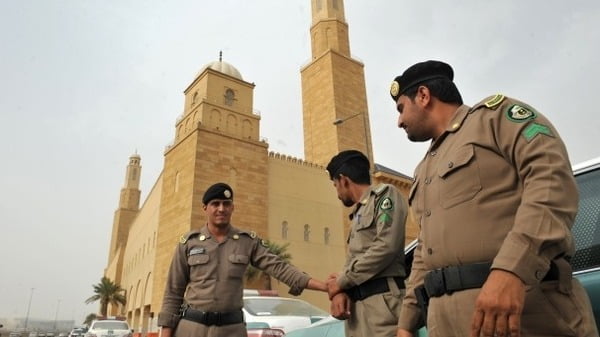
Initial investigations with the 18 people accused of espionage revealed they have a connection to Iranian intelligence, Saudi’s interior ministry said Tuesday.

An interior ministry spokesperson said last week that 16 of those arrested were Saudi, one Lebanese and one Iranian, adding they were captured in four different areas of the kingdom.

According to the Saudi Press Agency, the suspects were found in Mecca, Medina, Riyadh and Eastern Province – where the country’s Shi’ite minority is concentrated.

The General Intelligence Presidency and the Saudi interior ministry caught the men in a joint operation, said the report, adding the ministry “received information on Saudis and expats spying for another country.”

The men were collecting data on “vital installation,” said the state news agency.

In an interview with Al Arabiya, Saudi journalist Jamal Khashoggi said most of those arrested were from one sect, adding that they were spying for the Islamic Republic of Iran.

“Among those involved is a doctor and another is a Shi’ite cleric,” he said. “Others were working at [the Saudi oil company] Aramco.”

There are an estimated two million Shi’ites in the Sunni-dominated kingdom of about 27.5 million people.

Meanwhile, Iran’s foreign ministry denied on Sunday the alleged accusation Saudi Arabia made of the country’s involvement in the linked group of alleged spies.

Iran’s foreign ministry spokesman, Ramin Mehmanparast, denied that an Iranian national was involved in the alleged spying and called the allegations a “repetitive scenario,” according to Iran’s English-language Press TV on Sunday.

“Raising such baseless issues at the media level is merely for domestic consumption,” he said, according to Press TV.

Source: Insideofiran

REVEALED! EVIDENCE IRAN CROSSED NUCLEAR ‘RED LINE’

Iranian scientists are working on nuclear warheads – and trying to perfect them – at an underground site unknown to the West, according to a high-ranking intelligence officer of the Islamic regime.

The officer, who has been assigned to the Ministry of Defense, not only provided the coordinates to this vast site but also details of its operation.

The site, approximately 14 miles long and 7.5 miles wide, consists of two facilities built deep into a mountain along with a missile facility that is surrounded by barbed wire, 45 security towers and several security posts.

The new secret nuclear site, named Quds (Jerusalem), is almost 15 miles from another site, previously secret but exposed in 2009, the Fordow nuclear facility. The power to this site comes from the same source as Fordow – the Shahid Rajaei power plant – with high power towers surrounding the site.

Construction of the site started about the same time as Fordow, and in the second half of 2010 all industrial tests were completed. The site became 60 percent operational in 2011.

Gen. Ahmad Vahid Dastjerdi, who works in the supreme leader’s office to protect the regime’s information and counterintelligence, manages the site. His deputy, Hojatolislam Ramezani, was appointed to the protection of intelligence at the Defense Ministry after several leaks about the country’s nuclear operations.

Quds, built about 375 feet under the mountain and accessible by two large entrances reinforced with concrete, has 12 emergency exit tunnels and spreads around the mountain.

The site has a capacity of 8,000 centrifuges and currently has three operational chambers with 19 cascades of 170 to 174 centrifuges enriching uranium. As of three months ago, the source said, there were 76 kilograms of 20 percent enriched uranium stock at the site and 48 kilograms of over 40 percent enriched uranium.

Though the regime has long succeeded in enriching uranium to 20 percent, which is 80 percent of the way to weapons grade, enriching to over 20 percent would be a clear sign of an intention of building a nuclear bomb.

One chamber is specifically allocated to laser enrichment research and development, and Iranian scientists have seen great progress, the source said.

Source: WND

Political activist Mahdi Motamedi-Mehr arrested

Authorities in Iran have arrested a member of the Freedom Movement of Iran.

According to opposition site Mizan Khabar, Mahdi Motamedi-Mehr, a member of the FMI’s political bureau and head of the groups’ Education and Research Committee, was arrested by security forces at his home on Saturday.

Previously, the activist had been sentenced by Branch 28 of the Revolutionary Court to five years in prison for his membership in the outlawed FMI, “propaganda against the Islamic Republic of Iran” as well as “assembly and collusion to act against national security.” The charges against Motamedi-Mehr were based on his human rights activities, his role in the release of statements by the FMI and proposing for an international group of observers to monitor June 2009 presidential election.

Motamedi-Mehr was imprisoned both before and after the widely disputed 2009 presidential election.

In a letter to Iran’s Intelligence Minister, the activist provided an account of the torture he experienced at the hands of ministry agents and called for an end to the illegal abuse faced by prisoners.

Source: Irangreenvoice

Iranian Kurdish Businessman Detained Without Contact

Two Iranian Kurds, including the brother of acclaimed filmmaker Bahman Ghobadi, were arrested in Sanandaj on November 3, 2012, on non-specific national security accusations. While Behrouz Ghobadi was released a few weeks later, his business partner Rahmatollah Moadi remains at Evin Prison with no visitation rights and no official charges, his brother Nemat Moadi told the International Campaign for Human Rights in Iran.

“When Behrouz was released, he told us that [security forces] had arrested them on charges of ‘acting against national security.’ But Evin Prison officials told my family that Rahmatollah remains under interrogation, and we don’t know exactly what his charges are, so that we may hire a lawyer for him. My family have not been allowed any contact or visitation with him,” Nemat Moadi, the Kurdish prisoner’s brother, told the Campaign.

Asked what charges his brother is facing, Rahmatollah’s brother told the Campaign, “If we knew his charges, we would get him a lawyer. The truth is that when Behrouz returned to Soleimanieh, I called him and he was in a state of shock and he was crying, because Behrouz and Rahmat lived in the same building and worked together in the same shop for a whole year. He said, ‘We don’t know why they arrested us. They told us ‘acting against national security.’ They were unable to get anything out of Behrouz, but my brother has been there for 3.5 months.”

Nemat Moadi told the Campaign that his family has been unable to have any contact with his brother Rahmatollah at Evin Prison. “Before Behrouz was released, we used to think all the time that they were inside the Sanandaj Prison. Rahmat’s wife and my sisters went to the Intelligence Office, the Hall of Justice, and the Sanandaj Court several times in order to pursue his situation, but they only told them, ‘Don’t look for anything now,’ and they didn’t provide any other answers. After Behrouz’s release, when we realized that he is at Evin, my younger sister and her husband went to Evin Prison, but they were told there that because he is still in the interrogation phase, he is not allowed to have visitation or telephone calls, and when he is transferred to the General Ward, he will be allowed to make calls. They were told, ‘Don’t worry, he is here.’ That’s all,” Nemat Moadi said.

Nemat Moadi described the circumstances of Rahmatollah Moadi and Behrouz Ghobadi’s arrest. “My brother and Behrouz had a shop in Soleimanieh, Iraq. About two years ago, because my brother’s business had not taken off in Sanandaj, he went to Soleimanieh and worked odd  jobs. I own an herbal cosmetics company, Aramina, in Vancouver. Last year I went to Soleimanieh and, with the help of my brother, we established two other branches of my company in Erbil and Soleimanieh in Iraq. He managed the two branches from over there and I was here in Canada. Rahmatollah decided later to go to Georgia with Behrouz Ghobadi, so that the two of them could do business there,” Nemat Moadi told the Campaign.

“They went to Sanandaj first, because they wanted to meet with their families and then travel to Georgia. My mother is 82 and suffers from heart disease, and my sister has cancer. My brother wanted to see them before leaving. He used to go to Sanandaj once every few months, and he didn’t have any problems. After visiting with their families, they hired a car at 2 a.m. to take them to Tehran, because they needed to catch a flight to Georgia the next day at 12 noon; but they were stopped 12 kilometers outside Sanandaj and were returned to Sanandaj, where they were detained for three weeks before they were transferred to Evin Prison. But no one knew any of this until a little over a month ago when Behrouz was released and he told us,” Moadi continued.

Relating Behrouz Ghobadi’s description of the incarceration, Nemat Moadi said, “I hope nobody ends up in prison in the Islamic Republic, but if anyone ends up in prison, he will not be the same for a long time and his mouth is shut. All Behrouz says is that they were arrested on charges of ‘acting against national security.’ In the short period I was able to talk to him, he cried and told me, ‘I put my hand on the Qoran in front of the Judge [and swore] that we were both innocent and that we hadn’t done anything wrong.’” Rahmatollah Moadi remains at Evin Prison.

“Rahmat is innocent and he did not have any political activities. He was just a shopkeeper who went to Kurdistan, Iraq, because his business failed. His whole occupation was a normal life and a healthy income. I even researched with the Soleimanieh Information Office in Iraq: he had not done any negative or wrong thing. I would like to ask the Iraqi Kurdish authorities to strive for my brother’s release, because when someone dedicates himself to commerce in his land, he should be supported,” said Nemat Moadi.

Source: Iranhumanrights

Iranian commanders now authorized to open fire

0

The words and deeds coming out of Washington in the last three days bring little comfort to the Israeli government as it prepares for Barack Obama’s first visit as president Wednesday, March 20.

According to an authoritative leak, Washington has effectively cancelled the Europe-based missile shield system that was designed to protect that continent and Israel against Iranian ballistic missile attack. The cancellation was part of the plan announced by Defense Secretary Chuck Hagel last week to install 14 additional missile interceptors in California and Alaska to build up United States defenses against a threatened North Korean attack.

Not only has the Obama administration reduced its missile defense commitment to Europe and Israel, DEBKAfile notes that Washington persists in overlooking the tight coordination in tactics and diplomacy on nuclear issues between Pyongyang and Tehran.
The European-based missile shield has been put forward by Moscow repeatedly as a major obstacle to Russian-US cooperation on nuclear arms reduction and “other issues” – meaning the really hot-button ones of a nuclear Iran and the Syrian civil war.
By meeting Moscow’s complaint, Barack Obama was gambling heavily on coming out of the understandings he reached with Russian President Vladimir Putin with an acceptable settlement of the Iranian nuclear controversy and the future of the Assad regime in Syria.

So far, his winnings are slim.
Russian officials are not rushing forward to welcome the reshuffling of missile shields between Europe and America. Kremlin circles were quoted Sunday by The New York Times as commenting stiffly that there would be no reaction until they were fully briefed by American officials next week.
In any case, Tehran wants no part in the diplomatic softball game the Obama administration is playing with Moscow. Indeed, Iranian officials are behaving exactly like their North Korean partners – with threats.

Saturday, March 16, Deputy Chief of Staff of the Iranian Armed Forces Brig. Gen. Massoud Jazayeri broadcast two bellicose messages on the Revolutionary Guards website sephanews.com:
1 “Our commanders have been authorized to respond to any kind of hostile move by the enemy.”
DEBKAfile’s military sources note that this message appeared two days after Iranian Air Force fighters tried to shoot down a US Predator drone flying over the Strait of Hormuz. It also comes at a time that Iranian officers are found on field combat duty in Syria and Lebanon as well.

2.  The Iranian general went on to declare: “Mr Obama, do not make a mistake: we too have all our options on the table. Before you get deeper in the region’s quagmire, go back home!”

This was Tehran’s answer to the US President’s comment Thursday in an Israeli TV Channel 2 interview:
“I have been crystal clear about my position on Iran possessing a nuclear weapon – that is a red line for us. If we can resolve it diplomatically that’s a more lasting solution, but if not Icontinue to keep all options on the table.” Obama added that Tehran is “over a year or so” away from getting a nuclear bomb.

In Tehran’s tightly controlled publicity environment,  General Jazayeri would not have dismissed the prospect of the US activating its military options with such contempt without authorization from the highest level, i.e. supreme leader Ayatollah Ali Khamenei.

He was effectively telling the US president that, after pulling American forces out of the Middle East and relegating the handling of the Syrian issue to Moscow, “Mr.Obama” had burned his military options in the Middle East and should go home.
Our Iranian sources add that that Jazayeri’s remark was addressed equally to Israel. If Obama’s main purpose in his visit is to hear what Israelis have to say – as he himself has stressed – then he is wasting his time. , In Tehran’s view, the Israelis too have no place in the Middle East and should get out – as Iran’s leaders often declare..

Source: DEBKA

Reformist figures arrested, no reason given

Opposition websites report that a group of top reformist figures has been arrested by Iranian authorities.

The Kaleme website reports that former lawmaker Hossein Loghmanian and four other reformist activists were arrested en route from Hamedan to meet former president Mohammad Khatami in Tehran.

The four others, according to Kaleme, include three men and one woman who are currently at the Ministry of Intelligence office in Hamedan, and the reason for the arrests has not been announced.

Loghmanian is a former member of parliament that ran Mehdi Karroubi’s camapgin headquarters in Hamadan.

The embattled Iranian reformists are testing the waters to see if they can safely participate in the coming June presidential election. Many top reformist figures are currently serving prison terms for their activities in the last election. The two reformist candidates, MirHosein Mousavi and Mehdi Karroubi, have been under house arrest since February 2011 for challenging the legitimacy of the election vote count.

A group of reformists met with Supreme Leader Ayatollah Khamenei earlier this month in order to find some grounds for renewed reformist activity in the political arena. Some conservative elements in the establishment remain hostile to the idea of reformists returning to the fray while others have been more welcoming.

Many have suggested that former reformist president, Mohammad Khatami should run in the coming elections but no official announcements have so far been made about a reformist candidate in the elections.

Source: Radiozamaneh

Iran and Hezbollah ‘have built 50,000-strong force to help Syrian regime’

Israeli military intelligence chief says Iran hopes to prolong life of Assad regime and maintain influence after his fall.

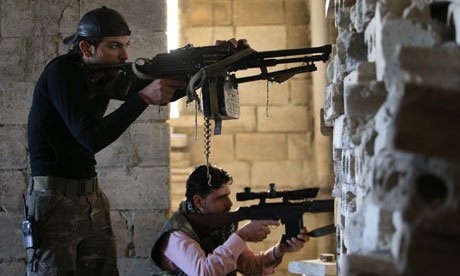
Iran  and Hezbollah have built a 50,000-strong parallel force in Syria to help prolong the life of the Assad regime and to maintain their influence after his fall, Israel’s military intelligence chief has claimed.

Major General Aviv Kochavi said Iran intended to double the size of this Syrian “people’s army”, which he claimed was being trained by Hezbollah fighters and funded by Tehran, to bolster a depleted and demoralised Syrian army.

Kochavi, the director of military intelligence in the Israel defence forces (IDF), also said Assad’s troops had readied chemical weapons but so far had not been given the order for them to be used.

At the same time, he warned of the increasing sway of extremist groups in the opposition, particularly the al-Nusra Front, which he claimed was beginning to infiltrate Lebanon and was making connections with a Sinai-based militant organisation, Ansar Bait al-Maqdis, which is focused on attacks on Israel.

Israel opposes the western arming of Syrian rebels because of its fears that the weapons will end up in the hands of such groups.

Defence officials say they are focused on Assad’s sizeable arsenal of chemical weapons and missiles and they are prepared to carry out more air strikes to stop such arms being transferred to Hezbollah, even at the risk of what a senior official predicted would be an ugly new war in Lebanon.

Western and Israeli governments have long alleged that members of the Iranian Revolutionary Guards are advising Assad’s generals, and that Hezbollah guerillas are fighting alongside Syrian government troops. Israeli officials say the commander of the Revolutionary Guards’ elite Quds Force, Qassem Suleimani, has been in Damascus to oversee operations.

In his speech on Thursday, Kochavi went much further and claimed that since last June Tehran had been using Hezbollah to build up a large Syrian militia that would be Iranian-controlled even in the event of Assad’s fall from power.

“The damages of the imminent fall of Syria are very high for both Iran and Hezbollah. Iran is losing a sole ally in the region surrounding Israel. It will lose the ability to transfer weaponry through Syria to Hezbollah. Iran and Hezbollah are both doing all in their power to assist Assad’s regime.

“They support Assad operationally on the ground, with strategic consultation, intelligence, weapons,” Kochavi told the Herzliya Conference, a meeting of security officials and analysts in Israel.

“Most recently, they are establishing a ‘people’s army’ trained by Hezbollah and financed by Iran, currently consisting of 50,000 men, with plans to increase to 100,000. Iran and Hezbollah are also preparing for the day after Assad’s fall, when they will use this army to protect their assets and interests in Syria.”

He said the Syrian regular army was crumbling, claiming that several successive recruitment drives had failed, realising only 20% of their targets as young men had fled rather than join up. The International Institute of Strategic Studies yesterday reported that from a notional strength of 220,000, the army had withered to a core of about 50,000 the regime could rely on. The Institute for the Study of War in Washington estimated the loyal core at 65,000.

Israel has warned the UK and France against arming Syrian rebels, arguing there will be no guarantees that sophisticated weapons such as portable anti-aircraft missiles will not ultimately find their way to al-Qaida affiliates and other extremist groups, and be turned against Israel.

Kochavi claimed the al-Nusra Front had sent “subsidiaries” into Lebanon and had forged connections with Ansar Bayt al-Maqdis (also known asAnsar Jerusalem), which has launched attacks into Israel from the Sinai. He said al-Nusra intended to help the group establish cells in Lebanon.

Israel’s immediate focus is on preventing any of Assad’s stockpile of chemical weapons and anti-aircraft and anti-ship missiles reaching Lebanon.

Israeli officials say they have “intimate co-operation” with US intelligence on tracking these weapons. In February Israeli planes bombed a convoysuspected of transferring modern anti-aircraft missiles from Syria to Hezbollah, and Israeli officials, while not formally acknowledging them, would not hesitate to strike again.

“There is a readiness to strike again and an awareness that this could escalate. Israel is heavily focused on this, but worried that the rest of the world is not,” an Israeli security source said.

A senior IDF official said there were an estimated 50,000 rockets of various ranges in Hezbollah hands, of which a few thousand were capable of reaching Tel Aviv. He acknowledged that Israeli air strikes could trigger a war which neither Israel nor Hezbollah wanted at this time, in which Hezbollah would use much of this arsenal, forcing the IDF to launch another invasion of southern Lebanon, as he said only ground troops could root out the rockets and launchers that were hidden in south Lebanese villages.

“Hezbollah will give a house to a fighter in a village. It will be a three-storey house and one storey is for the storage of missiles,” the IDF official said.

“In a future war, we would have to bomb and to send troops into the village. Unfortunately, it is not getting to be surgical. We will do everything we can to evacuate the area of civilians, but I think it’s going to be ugly.”

Source: Guardian