Home Blog Page 390

The Assadi Basij

It seems that the advice of Iranian General Qasim Sulaimani, commander of the Qods Force, has now begun to be applied in Syria. The Assad regime has announced the formation of a new military force named the National Defense Army, which will serve as a reservist force for the Assad regime forces. According to Russia Today, this army will be made up of civilian elements carrying out their military service, in addition to popular committees formed in the wake of the Syrian conflict. Russia Today said that this army’s mission will be to protect neighborhoods from attacks by the armed opposition, adding that its cadres will wear uniform and be paid a monthly salary. As for this force’s numbers, it will be made of ten thousand youth from different provinces across the country.

Of course, the opposition rushed to describe this as a re-branding of the pro-regime Shabiha militia; however the fact of the matter is that this National Defense Army is closer to the Iranian Basij militia. Basij, in Farsi, literally means mobilization. The Basij was formed by Imam Ruhollah Mostafavi Musavi Khomeini in November 1979 and falls under the command of the Iranian Revolutionary Guard Corp (IRGC). The Basij is made up of volunteers who strongly believe in the concept of velayat el-faqih (Guardianship of the Jurists) and they played an important role in crushing Iran’s Green Revolution during the last presidential election. In this case, the formation of a force like that of the National Defense Army, or shall we say the Assadi Basij, represents proof that Assad has begun to lose confidence in the conventional Syrian army, particularly in light of the huge number of defections from this. This has forced the Assad regime to avoid providing Syrian regular army soldiers with heavy weapons and sophisticated equipment for fear that they could defect, taking these arms and equipment to the opposition Free Syrian Army (FSA). In fact, the FSA is now seeking to destroy Assad regime tanks, for example, particularly as they are aware that these tanks are not fully armed—being provided with 5 or less shells—which makes it easier to destroy such tanks than attempt to capture them.

The formation of the Assadi Basij also shows that the regime is seeking to utilize sectarianism to reestablish itself, particularly as it has begun to seek to attract cadres with strong resolve, not just loyalty to the regime. This is because many of those loyal to Assad have now been convinced of his inevitable demise. The regime is therefore seeking to ensure that its latest military force is comprised of fighters who are aware that their fate and that of Bashar al-Assad are inexorably linked and will consequently defend him to the death.

We say that this new force, the Assadi Basij, is an Iranian idea because it comes at a time when Assad does not even have sufficient funds to pay the salaries of his soldier or rescue the Syrian economy, particularly as the revolution is said to be costing him one billion dollars every month. Therefore, it is clear that the Assadi Basij was formed thanks to Iranian support and advice, and this is in line with the security plan being implemented in Damascus, namely to divide the capital into four security sectors. This is the same approach that was taken to suppress the Green Revolution in Iran when the Iranian security forces divided Tehran into different security sectors to disperse the crowds and prevent any security breaches.

The Assadi Basij exposes the extent of Iran’s involvement in Syria, as well as the depth of the crisis that Assad is facing, to the point that he no longer trusts his own military forces. This also demonstrates the extent of the destruction that Assad has visited on Syria. More than this, the formation of this Assadi Basij also indicates the dangers that we may face in the post-Assad period, as he is now seeking to create terrorist groups and sectarian militias whose mission will be to destabilizing a post-Assad Syria.

Source: Inside of Iran
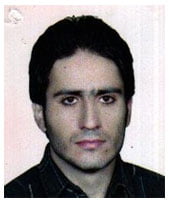
Vahid Asghari’s Death Sentence Was Confirmed

The death sentence of Vahid Asghari which was rejected by the branch six of Supreme Court was confirmed again by Tehran’s Revolutionary Court and referred to the Supreme Court.

Vahid Asghari is an Iranian blogger and an information technology student who was sentenced to death by the Islamic Republic’s government in 2012. In spite of many problems in his case and lack of his presence in the court, Judge Salavati confirmed his verdict again unlawfully and sent back his case to the Supreme Court.

Studying in India, Asghari was arrested in 2008 at Tehran Imam Khomeini International Airport and hold in custody since. He was sentenced by Abdolqassem Salavati, president of the 15th chamber of the Revolutionary court for allegedly hosting a pornography network.

Asghari has also been accused of spying in collaboration with blogger Hossein Derakshan, and wrote that he was forced under torture to state that Hossein was an agent of the CIA.

Source: HRANA

Political Prisoner Illegal Transferred to Prison for Hardened Criminals

0

In an interview with the International Campaign for Human Rights in Iran, the wife of political prisoner Abolfazl Ghadyani said that Judge Salavati plans on transferring her husband to Ghezel Hessar Prison. Marzieh Rahimi told the Campaign that the letters Ghadyani has been writing in prison may be the reason for the transfer.

Ghadyani’s family were not allowed to visit with him on Monday, January 14, and they were told that he is banned from having visitors because he will be transferred to another prison. Ghadyani’s wife told the Campaign that she plans to file a grievance with the Special Judges’ Court against Judge Salavati for his illegal ruling.

Asked when the transfer would take place, Marzieh Rahimi told the Campaign, “We have no idea. He was scheduled for a February 14 trial for one of the letters he wrote. I’m not sure which letter this trial was about. But the trial session was suddenly held on Monday, January 7. The Judge said, ‘I was having a slow day and decided to hold the court on that day!’ Of course, like other times, Ghadyani did not appear at his court session, because he regarded it as illegal, and only his lawyer went.”

Ghadyani’s wife explained, “Judge Salavati told my husband’s lawyer that he wishes to send Ghadyani to another prison. He also said that he had received [Ghadyani’s] December 29 letter, but he didn’t give any exact reasons for this illegal transfer.”

Rahimi continued, “This move is completely illegal. Of course, we know that Judge Salavati is a nobody and he receives his orders from somewhere else. Now, I want to go the Special Judges’ Court and complain about him, because any lawyer I asked told me that his conduct is against the law. Thelawyers said that when a suspect is brought to court in Tehran, and he goes on to serve his sentence in a prison in Tehran, it is illegal to transfer him to another prison. Ghezel Hessar Prison is a prison for drug addicts, traffickers, and murderers. In my opinion, by transferring him there they want to destroy him, otherwise why would they want to take him to a prison that does not even have one political prisoner? They want to send an elderly prisoner with a heart problem to Ghezel Hessar Prison.”

Rahimi described how the family learned about Ghadyani’s impending transfer. “This morning (Monday, January 14), like any other week, we went to Evin Prison and filled out the visitation application form and waited. Then they told us that he was sent to Ghezel Hessar Prison. We asked why, and they said they didn’t know. We were about to go to the other prison when a group of prisoner families who were returning from the visitation hour told us that Abolfazl was still inside Ward 350 [of Evin Prison], according to their relatives. The families also said that the guards were going to take Ghadyani out of the ward today, but his cellmates prevented it and he is still in there. This is all we know. We returned and said that we know Abolfazl is still in the prison, and we want to see him. But this time they told us that because he is being transferred, he is prohibited from visitation. The Prison’s computer system showed that Ghadyani in being sent to Ward 209 [of Evin Prison] and then to Ghezel Hessar Prison,” she told the Campaign.

“After this incident, we went to the Prisons Organization and spoke with an official, but he expressedcomplete lack of knowledge about why this has happened. I will go to the Tehran Prosecutor’s Office tomorrow. Nobody has answered us. Everybody expresses lack of knowledge, from the Evin Prison authorities to the Prisons Organization,” Marzieh Rahimi added.

“My expectation is that the authorities should act according to the law. I am a former prisoner of the Shah’s era myself. We used to go to prison for the same kind of lawlessness. And now we have to tolerate the same kind of things. So, what has changed? Every year, when it gets around February 10 [the anniversary of the Islamic Revolution], they ask political prisoners to describe the events of the Shah’s era on the state television. But I am amazed that the same stories are being repeated again. Some 30 years have passed since then and instead of moving forward, we have moved backward,” she said about her expectation from the country’s authorities.

Abolfazl Ghadyani, a member of the Central Council of the Islamic Revolution Mojahedin Organization, was arrested on January 9, 2010, and was sentenced to six years in prison. Currently, he has three open court cases for writing critical letters to the country’s authorities from inside the prison. Ghadyani wrote a statement on December 29, 2012, which was published on Kaleme website, asking the Iranian nation to name the following day a day of “theocratic misery.”

On December 30, 2009, three days after Ashura Day 2009 during which many street protesters were killed and arrested, pro-government forces took to the streets to demonstrate. Referring to this day, Abolfazl Ghadyani says in his letter, “It would be appropriate for us, the supporters of the Green Movement, to call December 30, a day that is a complete portrayal of the humility and failure of despotism against the Iranian nation’s demands for freedom, the ‘day of theocratic misery.’”

Source: Iran Human Rights

U.S. Christian faces death in Iran trial

A 32-year-old Iranian-born American Christian convert, Saeed Abedini, was arrested in September on his return visit to Iran.

A Tehran court will next week put on trial an Iranian American Christian on charges that could carry the death penalty, his wife said Thursday, in a case that has raised concern among U.S. officials.

Saeed Abedini, a naturalized U.S. citizen who converted to Christianity, was arrested in September on a return visit to Iran and in a recent letter said he suffered beatings in prison, his wife and his U.S.-based lawyer said.

His wife said that the 32-year-old will face charges of harming national security starting Monday at a trial under Abbas Pir-Abassi, a revolutionary court judge who has been criticized overseas for harsh verdicts.

Naghmeh Abedini voiced hope that international pressure would benefit her husband but said it was “highly possible that put under pressure (by Iran’s leadership) they would give a very long sentence and possibly the death penalty.”

State Department spokeswoman Victoria Nuland recently said the United States had “serious concerns” over the case and urged Iran to grant Abedini access to an attorney. His wife said he has not seen a lawyer since his arrest.

Iran’s constitution following the 1979 Islamic revolution recognizes the rights of several religious minorities including Christians, but the regime has targeted former Muslims for leaving the faith.

Naghmeh Abedini said her husband, with whom she has two children, was detained in 2009 and released after an agreement not to engage in religious activities in Iran, such as working with underground churches.

She said that Saeed Abedini had returned nine times to Iran since 2009 and did not violate the agreement. She said he was building an orphanage near the northern city of Rasht out of a conviction that the Bible teaches helping widows and orphans.

“He had no worries that he would be arrested, believing that he kept his end of the promise and that the government would keep their end,” she told AFP from the western state of Idaho.

Abedini said that the arrest showed an increasingly hard line in Iran. She quoted an interrogator as telling her husband that the regime was worried that “if the country is not following Islam, then we have less control over them.

“So in a way they connect people becoming Christian to politics,” she said.

Jordan Sekulow, executive director of the American Center for Law and Justice, a conservative legal advocacy group that is representing Abedini, said the case illustrated an internal shift in Iran.

The case has moved from the jurisdiction of police and intelligence services under the control of Iran’s president to a revolutionary court that reports to the nation’s supreme leader, Ayatollah Ali Khamenei.

“That’s going to be harsher and it’s going to be more tense and it’s going to be less restricted,” Sekulow said of the revolutionary court. “They kind of can do as they want.”

The American Center for Law and Justice said that 49 members of Congress have urged the State Department to press for Abedini’s release, saying that the United States can do more to support him despite the absence of diplomatic relations with Iran.

The U.S. Commission on International Religious Freedom, a panel that advises U.S. policymakers, called on Iran to release Abedini “immediately and unconditionally.”

“The national security charges leveled against Mr. Abedini are bogus and are a typical tactic by the Iranian government to masquerade the real reason for the charges: to suppress religious belief and activity of which the Iranian government does not approve,” the commission’s chair, Katrina Lantos Swett, said in a statement.

Source: Alarabiya

Mohammad Ali Amoori, who sentenced to death, deprived to meet his lawyer

0

Karoun prison officials on Monday, January 14th, refused Mohammad Ali Amoori’s meeting with his lawyer.

According to a report, while Dr. Ehsan Mo’azedi was going to meet his client Mohammad Ali Amoori, the prison officials prevented the meeting.

Branch 32 of supreme court under the administration of judge Reza Farajollahi and the other judges including Qaem Maqami and Lotfi, informed the death verdict of Mohammad Ali Amoorinezhad, Hadi Rashedi, Hashem Sha’baninezhad, Mokhtar Alboshokeh and Yabar Alboshokeh to their lawyers.

Banning their visit is considered by the prison officials without any reason and until now nobody is responder to the prisoners objection.

Engineer Mohammad Ali Amoori, born on 1978 is a weblogger and graduated of natural resources – fisheries and aquaculture from Esfahan industrial university, also one of the founders of Alterath student magazine which was publishing in Esfahan industrial university. He was also teacher in Rashir’s high-schools.

Source: HRANA

Two citizens from Dehgolan detained by the security forces

0

Two citizens who are from the same family have been arrested by the security forces.

Two brothers whose names are Shirzad Hossain Panahi and Fayeq Hossain Panahi from Qorochai village belongs to Dehgolan in Kurdistan province have been arrested by security forces on Wednesday morning, January 16th.

Till releasing this news, there is no news of the accusation of them.

Also, last week Sirwan Hossain Panahi, another Hossain Panahi’s family member arrested in this village.

Source: HRANA

Iranian judiciary sentences earthquake aid workers to 16 years in prison

0

A revolutionary court in Tabriz, the capital of Iran’s East Azerbaijan Province, has sentenced twenty humanitarian aid workers to sixteen years in prison.

According to opposition website Kaleme, Branch 1 of the revolutionary court has sentenced twenty aid workers to sixteen years in jail for their role in the spontaneous relief efforts that sprung up after two strong earthquakes struck north-western Iran in August 2012. The individuals were all found guilty of “assembly and collusion for committing crimes against national security.”

Angered by the Iranian government’s weak and inadequate response to the earthquakes, many Iranian activist and ordinary citizens spontaneously organised relief efforts in the disaster areas.

During the humanitarian operations in the village of Sarand, a group of aid workers present at the sight of the devastation was rounded by the police and the Intelligence Bureau in Tabriz.

At the time, East Azerbaijan’s prosecutor Malek Ajdar Sharifi said the aid workers had been arrested for their role in the distribution of expired goods in the quake-stricken region.

One of the detainees, well-known blogger Hossein Ronaghi Maleki, wrote a letter to the head of the judiciary accusing authorities of beating the arrested activists. He called for the offenders to be brought to justice. He also dismissed the charges against the group as baseless.

Ronaghi Maleki, who had been serving a fifteen-year prison term and was on sick leave, received an additional two years for his involvement in the relief efforts. Vahed Kholousi and Bahram Shojaei both received two-years terms. Behrouz Alavi and Hamid Reza Mosibian were sentenced to 27 and 30 months in jail respectively.

The following individuals were sentenced to six months: Farid Rohani, Hasan Ronaghi Maleki, Shayan Vahdati, Masoud Vafabakhsh, Houman Taheri, Sepehr Saheban, Danial Hasani, Ali Mohammadi, Morteza Esmailpour, Mohammad Arjomandi Rad, Mohammad Esmailpour, Mohammad Amin Salehi, Mohsen Samei, Milad Panahipour and Amir Rounasi.

Source: Iran Green Voice

Shahin Negari, Baha’i virtual university professor arrested

0

Shahin Negari, a Baha’i citizen and one of the Baha’i virtual university professors has been arrested and there is no news of the location.

Around midday of Sunday 13th of January, Shahin Negari, Baha’i citizen who is resident of Tehran and one of the professors at Baha’i virtual university, has been arrested at his home by security forces in excuse of transferring him for enforcement of 4 years imprisonment verdict.

Also, there is no information about where Shahin Negari is.

He is one of the Baha’i virtual university professors which called private science center institute who had been arrested during the invasion of the security forces to the homes of the Baha’i colleagues of the Baha’i virtual university on May 22nd of 2011 and been released after 40 days of being detained on bail.

Source: HRANA

A Kurdish political prisoner from Salmas has been sentenced to death

0

The execution verdict of Reza Mollazadeh, Kurdish political prisoner from Salmas has been confirmed by supreme court and the confirmation of the execution verdict by the supreme court, makes him in danger of execution.

Reza Mollazadeh 25 year old, the son of Ahmad Mollazadeh from Ashnak village belongs to Salmas city has been arrested lately summer of 2011 when he was entering to Paveh by Iranian revolutionary guards and been transferred to one of the Iranian revolutionary guards’ detention center in Kermanshah.

Since his detention despite the following up of his father through Iranian Intelligence and security sections, his family could not find out about his situation until last week that Reza Mollazadeh called his family from Evin prison and informed them about his execution verdict in accusation of PJAK membership.

Meanwhile, his father, Ahmad Mollazadeh has been summoned to Salmas intelligence office many times and been interrogated and threatened. During the interrogations his father has been threatened that if he will follow up his son’s situation anymore, it will have bad consequences for him.

Source: HRANA

Iran could reach key point for nuclear bomb by mid-2014: U.S. experts

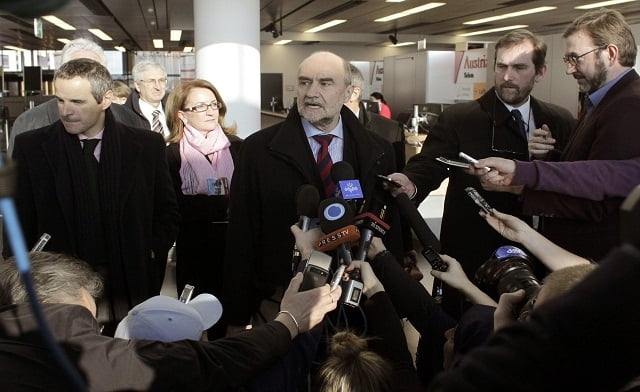
Iran could produce enough weapon-grade uranium for one or more nuclear bombs by mid-2014, and the United States and its allies should intensify sanctions on Tehran before that point is reached, a report by a group of U.S. nonproliferation experts said.

President Barack Obama should also clearly state that the United States will take military action to prevent Iran from acquiring a nuclear weapon, the report said.

The U.N. nuclear watchdog, the International Atomic Energy Agency, has expressed concern that Iran’s nuclear program has a military dimension. Tehran, which says its nuclear program is for peaceful energy purposes, calls those allegations baseless.

The 154-page report, “U.S. Nonproliferation Strategy for the Changing Middle East,” produced by five nonproliferation experts, was expected to be released on Monday.

“Based on the current trajectory of Iran’s nuclear program, we estimate that Iran could reach critical capability in mid-2014,” the report said.

It defined “critical capability” as the point when Iran would be able to produce enough weapon-grade uranium for one or more bombs without detection by the West.

By mid-2014, Iran would have enough time to build a secret uranium-enrichment site or significantly increase the number of centrifuges for its nuclear program, said David Albright, one of the project’s co-chairs and president of the Institute for Science and International Security.

“We don’t think there is any secret enrichment plant making significant secret uranium enrichment right now,” he told Reuters. But there is “real worry” that Iran would build such a plant, he said.

The report recommends that the United States and its allies intensify sanctions pressure on Iran prior to that point because once Tehran acquires enough weapon-grade enriched uranium it would be “far more difficult to stop the program militarily.”

International embargo

The report recommends that the U.S. government should announce its intention to use sanctions to impose a “de facto international embargo on all investments in, and trade with, Iran” if Tehran does not comply with U.N. Security Council resolutions.

It also recommends sending a “crystal clear” message to Iran’s leaders that U.S. military action would prevent them from succeeding in the pursuit of a nuclear weapon.

“The president should explicitly declare that he will use military force to destroy Iran’s nuclear program if Iran takes additional decisive steps toward producing a bomb,” the report said.

On the civil war in Syria, the report said that the U.S. government should emphasize to the opposition trying to oust President Bashar al-Assad that once it comes into power, it will have to work with the international community to destroy Assad’s chemical weapons stockpile.

Failure to do so would lead to sanctions and other measures at a time when a new government would need external assistance to consolidate control and develop the economy, the report said.

It also recommended stressing to the Assad government that it should destroy the chemical weapons rather than use them and face prosecution or have them fall into the hands of its opposition.

In addition to Albright, the other project co-chairs were Mark Dubowitz, executive director of The Foundation for the Defense of Democracies; Orde Kittrie, law professor at the Sandra Day O’Connor College of Law; Leonard Spector, deputy director of the James Martin Center for Nonproliferation Studies; and Michael Yaffe of the Near East, South Asia Center for Strategic Studies at the National Defense University. They were not representing their institutions in this project.

Source: Alarabiya