Home Blog Page 558

Azeri Activists Arrested In Iran Over Lake Protest

0


RFE/RL – Several Azeri activists in Iran have been arrested after calling on people to participate in the latest protest over the drying up of Lake Orumieh, RFE/RL’s Radio Farda reports.

The Association for the Defense of Azerbaijani Political Prisoners in Iran (ADAPP) said on September 14 that the activists were detained after distributing leaflets urging people to take part in a protest in the northwestern city of Ardebil on September 19.

ADAPP said that activists Abbas Lesani, Asgar Akbarzadeh, Moslem Akbarzadeh, Ebrahim Rashidi, Hassan Karimzadeh, Isa Azizi, Nosratollah Valizadeh, Rahim Gholami, Hamid Ghovati, Ali Kheirjou, Mehdi Osouli, Ali Babaie, and Babak Javanshir were among those taken into custody.

Akbarzadeh, who is also a student activist, was arrested by security forces on September 8, while Lesani, a civil activist and former political prisoner, was detained by security forces on September 9 without an arrest warrant.

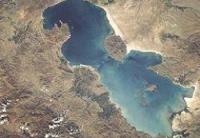
Lake Orumieh, a salt lake located in Iran’s East Azerbaijan and West Azerbaijan provinces, is drying up and turning into a salt marsh.

There have been repeated demonstrations by several thousand people in recent weeks in the two provinces against the increasing aridity of the lake.

Security forces used violence to disperse those protests and arrested dozens of participants.

Activists say that if the present process continues the lake could disappear completely within three years, leaving billions of tons of salt that will pose a health hazard to the local population and make parts of the region uninhabitable for the some 14 million people who live there.

Environmentalists believe the construction of hydroelectric dams on rivers that are tributaries of the lake is the primary cause of the reduction in its size.

Environmentalist Esmail Kahrom told Radio Farda recently that some 35 dams have been built on 21 rivers that feed Lake Orumieh, and 10 more are currently under construction.

“This means Lake Orumieh has been deprived of 5.5 billion cubic meters of water annually,” Kahrom said.

Kahrom also mentioned evaporation, drought, and the construction of a highway which crosses Lake Orumieh as other contributing factors to the decrease in its water levels.


Source

‘News Of A Kidnapping’ A Hit In Iran After Opposition Leader’s Recommendation

0


By — Golnaz Esfandiari, RFE/RL

“If you want to understand my situation, read Gabriel Garcia Marquez’s ‘News of a Kidnapping,'” Iranian opposition leader Mir Hossein Musavi was quoted as having said in a recent meeting with his daughters.

Musavi, who together with his wife, Zahra Rahnavard, has been under house arrest for more than six months, reportedly made the comments some three weeks ago. Opposition websites posted an account of the meeting and Musavi’s comments last week.

Since then, a number of Iranian websites and blogs have made an electronic version of the book in Persian available for download. Green Movement activists and supporters claim the book has already been downloaded more than 4,000 times.

News of a Kidnapping” is a nonfiction account of the 1990 abduction of 10 Columbians by drug traffickers and the terror they endure during their captivity. It also describes the suffering and the efforts by the family to free the hostages.

A Facebook page has also been launched on which Musavi supporters share their thoughts or quotes from the book that they believe give a good picture of the plight of the former prime minister.

The Facebook page, titled “News of a Kidnapping: The Mood of a President under Arrest,” has so far been “liked” by some 1,000 people.

Meanwhile, the website of the Iranian daily “Shargh” reports that “News of a Kidnapping” is among the best-selling “rare books” nowadays in Iran.

Kaveh Kiayian, a manager of one of Iran’s biggest publishing houses, Nashr-e Cheshmeh, told “Shargh” that the book has had “phenomenal” sales recently. Kiayian said he expected “News of a Kidnapping” to make the top ranks of the publishing house’s bestseller list by next week.


Source

Britain will push for Iran sanctions at UN, says Hague

0


AFP – Foreign Secretary William Hague has vowed to confront Iran’s “repressive” human rights record by pushing for tough sanctions at next week’s United Nations General Assembly.

But in any case, the Islamic Republic would not be able to resist the popular pressure for reform sweeping the region, he predicted.

Hague promised to support a “strong resolution condemning abuses” at the UN meeting after accusing Tehran of being “completely unwilling” to address claims of oppression.

In a speech to a seminar organised by the Times newspaper on Tuesday, Hague said sanctions would be be lifted if Iran improved its rights record, but increased if it failed to do so.

In 2009, Britain and other Western countries condemned Tehran for crushing protests that followed the controversial re-election of President Mahmoud Ahmadinejad.

Iran denounced the Western condemnations as meddling in its internal affairs.

Dozens of people were killed in the opposition demonstrations protesting what they said was massive election fraud.

But Hague suggested that sooner or later, the tide would turn against the regime.

“2011 has shown that demands for human dignity are irrepressible. Iranians should take solace from this,” he said.

“The lessons of the Arab revolutions hold true for Iran just as they apply to repressive countries across the world,” continued Hague.

“Simply refusing to address legitimate grievances about human rights or attempting to stamp them out will fail.”

The Times organised Tuesday’s “Imprisoned in Iran” seminar to bring attention to the victims of oppression, including Sakineh Mohammadi Ashtiani, the woman sentenced to death by stoning.

Lawyer Mohammad Mostafaei, who was forced to leave Iran for having represented her, was one of the speakers.


Source

Leftist labor activists in Tabriz sentenced to a total of 22 years in prison

0


Shahrokh Zamani, Mohammad Jarahi, Nima Pouryaghoub, and Sasan Vahebivash are students and labor activists in the city of Tabriz. Branch 1 of the Tabriz Revolutionary Court sentenced these 4 individuals to a total of 22 ½ years behind bars while a fifth defendant was found not guilty.

According to Human Rights House of Iran, the prime suspect, Shahrokh Zamani was sentenced to 10 years imprisonment for “creating groups against the regime” added by another year behind bars for “propaganda against the regime”, totaling 11 years in prison.

The second defendant, Mohammad Jarahi, was sentenced to 5 years for the charge of “organizing a group against the regime.” The third denfendant, Nima Pouryaghoub was sentenced to 5 years for “organizing a group against the regime” and an additional year for “propaganda against the regime” totaling 6 years in prison.

The forth defendant, Sasan Vahebivash was sentenced to 91 days in prison stemming from the charges of “membership in an opposition group” and 91 days for “propaganda against the regime,” totaling 6 months behind bars.

The fifth defendant Buick Sidler was acquitted of all charges.

The trial for these 5 defendants was held on August 18, 2011 in Branch 1 of the Tabriz Revolutionary Court. Prior to the court session, 3 of the defendants, Nima Pouryaghoub, Sasan Vahebivash, and Buick Sidler had been allowed out of prison with heavy bails. Nima’s bail was 100 million tomans (approximating $95,000) and the other two paid 30 million tomans (approximating $30,000) before being temporarily released from Tabriz prison.

In recent years it has been unprecedented for verdicts this heavy to be handed down to political prisoners in the city of Tabriz.


Source

U.S. Religious-Freedom Report Singles Out Iran, Uzbekistan, China

0


RFE:RL – The United States has singled out Iran, Uzbekistan, and China as among the worst violators of religious rights — countries where it says abuses are “egregious, ongoing, and systematic.”

The designations are made in the State Department’s latest “Report on International Religious Freedom,” which identifies widespread challenges in its survey of nearly 200 countries.

The stated goal of the Congressionally mandated report is to “bear witness to those who are persecuted because of their faith and shine a light on governments and societies that promote or tolerate such abuses.”

In unveiling this year’s report — which spans July to December 2010 — U.S. Secretary of State Hillary Clinton said state-sponsored repression of religious rights marginalizes vulnerable populations, emboldens extremists, promotes and sectarian violence, thereby undermining a society’s stability.

On the other hand, she said, government respect for religious freedom aids security and prosperity.

“When governments respect religious freedom, when they work with civil society to promote mutual respect, or when they prosecute acts of violence against members of religious minorities, they can help turn down the temperature,” Clinton said. “They can foster a public aversion to hateful speech without compromising the right to free expression. In doing so, they create a climate of tolerance that helps make a country more stable, more secure, and more prosperous.”

‘Particular Concern’

The report identifies eight countries — including Iran, Uzbekistan, China, North Korea, and Saudi Arabia — as “Countries of Particular Concern.”

The designation is applied to countries that have “engaged in or tolerated particularly severe violations of religious freedom,” and where the abuses are “egregious, ongoing, and systematic.”

It also allows the State Department to initiate sanctions against those so named.

Clinton said that in Iran, authorities continue to repress Sufi Muslims, evangelical Christians, Jews, Baha’is, Sunnis, Ahmadis, and other religious minority groups.

The top U.S. diplomat also noted that threats to religious expression do not always come from governments.

She cited a September 12 attack in Iraq that appears to have had sectarian roots.

“Just yesterday we heard reports that gunmen, masquerading as security officers, waylaid a bus of Shi’a pilgrims traveling throughout western Iraq. The women were abandoned by the side of the road, but the 22 men were shot and their bodies left in the middle of the desert. This sort of hateful, senseless violence has no aim other than to undermine the fabric of peaceful society.”

Michael Posner, the assistant U.S. secretary of state for democracy and human rights, also spoke at the report’s release.

He said Uzbekistan had been named a “Country of Particular Concern” for reasons that include, among others, the fact that it is illegal to proselytize in the country and “dangerous for a Muslim to even discuss religious issues outside of state-sanctioned mosque.”

The report also notes China’s continuing crackdown on Tibetan Buddhists, Muslim Uyghurs, and other minorities.

Promoting Freedoms

Beyond the worst offenders, the report identifies nations including Afghanistan, Iraq, Pakistan, Russia, Tajikistan, and Turkmenistan as facing significant challenges in upholding religious freedoms.

According to the report, religious minorities continue to be persecuted in Pakistan through anti-blasphemy laws.

The report also noted the continuing plight of Iraqi Christians and the first case in Russia of the government bringing charges against individuals in possession of banned religious literature.

Clinton also warned that recent popular uprisings in the Middle East and North Africa had exposed religious and ethnic minorities to new dangers, raising the specter of sectarian strife:

“The people of the region have taken exciting first steps toward democracy, but if they hope to consolidate their gains, they cannot trade one form of repression for another,” Clinton said.

The report also outlines steps the U.S. government has taken to promote religious freedoms around the world.

Posner conceded that in countries like Iran, which does not have diplomatic relations with Washington, the task is particularly difficult.

He said the report itself is one of the tools the United States can use.

“We raise these issues [and] we continue raising these issues,” Posner said. “We have, obviously, a difficult relationship with that government [as with] North Korea [and] other places that are on the list, but I think it is, again, important for us to be clear about the facts [and] to hold every government to the same standard. It does reinforce people in those societies who understand and know that the United States government is listening and paying attention.”

Other trends cited by the report include anti-Muslim sentiment in “many parts of Europe” and expanding restrictions on Muslim religious attire.

The report also cited an increase in anti-Semitic actions and accusations “on every continent in the last year.”


Source

Student Activist Shahin Fazli Began Serving Sentence

0


Student activist Shahin Fazli was arrested at his house in Tabriz and was released on bail after 95 days of detainment.

According to the Human Rights House of Iran, he was sentenced to 6 months in prison by collabeartng with anti-regime groups and anti-regime propaganda.

On Monday, he appeared at Tabriz Court to begin serving his sentence.


Source

Iranian judiciary denies release of U.S. citizens


The Iranian judiciary announced today that the two U.S. citizens imprisoned in Iran have not yet been granted release on bail.

Iranian media are reporting that the judiciary’s communications office has denied recent reports that Shane Bauer and Josh Fattal have been granted leave on bail. The office says the request for release on bail has been received and is being considered, and any report to the contrary is not valid.

Mahmoud Ahmadinejad said in an interview with NBC yesterday that the two U.S. nationals would be released within two days.

Bauer and Fattal were sentenced to eight years in prison last month for “illegal entry and spying for U.S. agencies.”

Their defence lawyer, Massoud Sahfii, also announced that he had informed his clients’ parents and the Swiss embassy of the judiciary’s decision to release the U.S. citizens on bail.

Parviz Sarvari, the head of Parliament’s Internal Security Commission, told Mehr News Agency: “If the Islamic Republic is to release the two U.S. spies without getting something in return from the U.S. government, this would be against the essence of the Islamic Revolution.”

“For the president to promise the release of the two spies without coordination with the judiciary is interference in the business of the judiciary,” Sarvari added. “According to the constitution, the executive branch has no power to decide the fate of people accused of espionage.”

Yesterday, reports indicated that the appellate court had decided to allow Bauer and Fattal to return to the U.S. on bail of $500,000 each, as their companion Sarah Shourd did last year. However, Ahmadinejad’s recent disputes with the executive and judicial branches of the government have apparently collided with this case, leaving the fate of the two Americans in limbo once again.


Source

Heavy Prison Terms for Labor Activists & Students in Tabriz

0


HRANA News Agency – Shahrokh Zamani, Nima Pouryaghob, Mohammad Jarahi and Sasan Vahebivash have been sentenced to heavy prison terms in Tabriz, Iran.

According to a report by Human Rights Activists News Agency (HRANA), the aforementioned individuals are labor activists and students in the city of Tabriz. The Revolutionary Court, Branch 1, has issued verdicts sentencing them to a total of 22 years and 6 months in prison. A fifth defender, Buick Sydler, was found not guilty.

Shahrokh Zamani was sentenced to 11 years in prison on charges of organizing an opposition group and propaganda against the regime.

Mohammad Jarahi received a 5 year prison term for organizing an opposition group. Nima Pouryaghob was sentenced to 6 years in prison on charges of organizing an opposition group and propaganda against the regime.

Sasan Vahebivash received a 6 month prison term on charges of the membership in an organization opposing IRI and propaganda against the regime.

The Revolutionary Court, Branch 1, tried and convicted these leftist labor activists and students on August 18, 2011. Prior to this trial, a bail approximately equivalent to $94,000 was set for Nima Pouryaghob while Sasan Vahebivash and Buick Sydler each posted approximately $30,000 bail to be temporally released from Tabriz Prison.

The verdicts issued against these political activists are unprecedented in Tabriz in the recent few years.


Source

Iranian Cultural Figures Call For Release Of Detained Colleagues

0


More than 80 Iranian cultural figures are calling for the release of jailed fellow artists and the review of the verdicts handed down to them, RFE/RL’s Radio Farda reports.

The writers, poets, painters, photographers, actors, and musicians say in a statement that so many cultural figures are being held in Iranian jails that some prisons could be called “the house of artists.”

The statement, published on the opposition website Jaras on September 12, specifically criticizes the detention of actress Marzieh Vafamehr, actor Ramin Parchami, directors Jafar Panahi, Mohammad Rasoulof and Mahnaz Mohammadi, actress Pegah Ahangarani, and photojournalist Maryam Majd, some of whom are still being held in prison.

Parchami was arrested in Tehran on February 14 during the protests in solidarity with the democratic uprisings in Egypt and Tunisia. He is being held in Tehran’s Evin prison.

Vafamehr was taken into custody in July. Her husband, Nasser Taghvai, a prominent film director and screenwriter, told Radio Farda at the time that the charges against her were nonpolitical and are related to the movie “My Tehran For Sale,” in which she played the lead role. Taghvai said Vafamehr is being held at Gharchak prison in a Tehran suburb.

The signatories to the statement include novelist Shahrnoush Parsipour, poet Majid Nafisi, cartoonist Mana Neyestani, and photographer Hassan Sarbakhshian.


Source

Jaras: Security Forces Launch Heavy Crackdown on Protestors in Ardebil

0


Jaras: There have been reports of the heavy presence of security forces in Ardebil, a city in north-western Iran. These reports come in the wake of an invitation extended by civil rights activists to protest against parliament’s rejection of a bill for the revival of Oroumieh Lake.

According to the sources close to Jaras, a news site run by supporters of the opposition in exile, Ardebil’s central avenues have remained

half-closed, and there have been reports of the heavy presence of law enforcement personnel, plainclothes militias, and anti-riot forces in the city.

According to eye witnesses, severe restrictions were imposed on vehicles in the city, and all those who carried mobile phones with themselves were attacked by security forces and plainclothes militias.

There have also been reports of service disruption of mobile phones and internet in the city, a tactic constantly used by the Iranian authority in times of unrest.

Many of Ardebili’s citizens have been attacked by security forces and plainclothes militias in Shariati, Danesh, Sareyn Station streets and

Aghghezi Bazar. At least 10 people have been arrested, and numerous others have been physically attacked and intimidated by the security forces.


Source