Home Blog Page 600

Tehran Prosecutor urged to investigate death of political prisoners

Sat, 07/02/2011

A group of Iranian human rights activists and court attorneys has called on the Tehran Prosecutor to investigate the “moving and painful” deaths of Haleh Sahabi and Reza Hoda Saber.

The Jaras opposition website reports that their letter to the prosecutor describes the deaths as “apparent crimes” and says it is the prosecutor’s duty to pursue such cases.

Reza Hoda Saber, a Nationalist-Religious activist, died on June 12, 10 days into a hunger strike at Evin Prison. The Iranian opposition contends that his death was precipitated by beatings on the eighth day of his strike and later by the delay in transferring him to hospital.

Haleh Sahabi suffered a heart attack on June 1 when Iranian government forces overran her father’s funeral. She had been on a temporary furlough from Evin Prison to care for her ailing father.

The letter indicates that several witnesses are ready to testify in court, so the Tehran prosecutor should “immediately” begin his investigation.

In an earlier letter, 64 prisoners testified that Saber was beaten at the prison infirmary during his hunger strike.

Habibollah Peymon and several other people present at the funeral of Ezzatollah Sahabi have also testified that Haleh Sahabi was assaulted by security forces.

The signatories to this latest letter decry the lack of action in earlier cases of violence in Iranian prisons, writing: “We are of the belief that if the deaths of Zahra Kazemi and Zahra Bani Yaghoub had been given an impartial investigation that held the perpetrators accountable, our society would not have witnessed such lamentable events such as what happened at the Kahrizak detention centre. And if the perpetrators in that instance had been dealt with firmly, we would not have witnessed the deaths of Haleh Sahabi and Hoda Saber.”

Zahra Kazemi, an Iranian-Canadian photo-journalist, died in 2003 at Evin Prison. An investigation initiated by then-president Mohammad Khatami found that Kazemi had suffered a skull fracture during interrogation by the Ministry of Intelligence. A year later the judiciary charged Mohammadreza Aghdam Ahmadi, a Ministry of Intelligence staff member, of “semi-intentional murder.” However, he was later discharged for “lack of evidence.”

Zahra Bani-Yaghoub was arrested by Basij forces while she was strolling in a park in Hamadan with her fiancé. She was later pronounced dead while in custody.

Shirin Ebadi, the Iranian Nobel Peace laureate who was Bani-Yaghoub’s attorney at the time, has said she is certain her client did not commit suicide, despite what authorities claimed. Ebadi said the authorities invented the suicide scenario to cover up her murder.

The Kahrizak Detention Centre was closed in the summer of 2008 by the order of the Iranian Supreme Leader, after news emerged of the torture and murder of detainees by prison authorities. While Ayatollah Khamenei cited “sub-standard” conditions as the reason for the closure, a parliamentary probe later reported that at least three detainees had died at the facility due to injuries sustained during questioning.


Source


Concern over detained Iranian photojournalist

Fri, 07/01/2011

The family of Iranian photojournalist Maryam Majd has expressed concern for her safety after her recent arrest.

The International Campaign for Human Rights in Iran quotes a source close to the Majd family, saying they are seriously concerned for Majd, who is currently being held in Evin Prison.

“When the security forces took her away from her home, they did not offer any explanations,” the report says, adding that no charges have been laid against her so far.

The source says the family was only told: “‘It is nothing. She will return this week. Just go and return next week.’ Then the following week they said come back the next week.”

Majd was arrested on June 21 at her home, where she lives with her parents.

She was arrested the day before she was scheduled to fly to Germany to cover the women’s World Cup of Soccer and to collaborate with German former soccer player Petra Landers on a book about female athletes.

The International Campaign for Human Rights in Iran reports that Majd has contacted her family twice since her arrest. In the first telephone conversation, she briefly indicated that she was fine. However, in the second conversation, she reportedly sounded more concerned, telling her family, “Just do something to get me out.”

The Kaleme opposition website has reported that Majd was taken to Ward 2A of Evin Prison, the ward run by the Revolutionary Guards.

Yesterday, German Human Rights Commissioner Markus Loening expressed outrage at Majd’s arrest, calling on Iranian authorities to immediately release the photojournalist.


Source


US suspects Iran behind increase in troop deaths in Iraq

0

July 1, 2011

BAGHDAD – American troop deaths in Iraq reached a two-year high in June, and US military officials are blaming Iran for the spike in violence.

Three US soldiers were killed Wednesday in a rocket attack at a US base near Iran, the officials said, bringing the month’s death toll to 15 and marking the bloodiest month since 15 military personnel died here in June 2009, according to iCasualties.org, a website that tracks US military deaths. Fourteen of the deaths were combat-related, the highest since 23 soldiers and Marines were killed in action in June 2008, the site said.

For months, US commanders have said they feared that an uptick in violence would accompany the planned withdrawal of most troops by the end of the year. Military officials in Baghdad and at the Pentagon said the mounting death toll can now be directly attributed to the growing sophistication of the weapons that insurgents and Iranian-backed militia groups are using in their attacks.

Those weapons include powerful rockets, armor-piercing grenades, and jamming-resistant roadside bombs, military officials say.

Officials caution that they do not have evidence that President Mahmoud Ahmadinejad of Iran or his government is ordering Shi’ite militias to strike US forces in Iraq.

But they believe that those groups are being trained and equipped by Iranian Revolutionary Guard special forces.

“All of them receive at least indirect support from elements in Iran,’’ said Major General Jeffrey Buchanan, chief spokesman for the US military in Iraq. “Primarily, we are talking about the IRG Quds Force.’’

The new dangers facing troops mark another point in their eight-year engagement in Iraq, underscoring the country’s volatile security situation and the ongoing debate both here and in Washington about whether any American troops should remain in the country past the end of the year.

During much of the insurgency that followed the 2003 US-led invasion of Iraq, American commanders blamed Sunni-dominated terrorist groups such as Al Qaeda in Iraq for many of the attacks.

But as the US military adjusted tactics, largely withdrew from Iraqi cities, and boosted technology to limit exposure to roadside bombs and suicide tactics, officials say, it has become far harder for loosely organized Sunni militias to strike out against the roughly 46,000 US troops remaining in Iraq.

Now, Buchanan said, the primary threat to the Americans comes from three Shi’ite militia groups operating in Iraq: the Promised Day Brigade, Ahl al-Haq, and Kataib Hezbollah. All appear to have been supplied with the weapons and training needed to penetrate US defenses.

In early June, a sophisticated rocket slammed into a joint Iraqi-US military base in eastern Baghdad, killing six American soldiers in the deadliest single attack on forces here in more than two years.

In addition, roadside bombs that were able to resist jamming devices killed four US troops in June.

Last week, an American contractor for the US Agency for International Development was killed when suspected Shi’ite militants attached a bomb to a car he was riding in near a Baghdad university.

On Sunday, two US troops were killed when an apparent armor-piercing grenade was lobbed at their vehicle.

Although the US military did not release specifics of Wednesday’s attack pending notification of next of kin, officials familiar with the assault said the rocket was so powerful that it also wounded more than a dozen soldiers, several critically.

There was no immediate claim of responsibility for that attack.

However, Kataib Hezbollah asserted in June that it fired on Camp Loyalty, which Iraqis call Baladiyat base, in an attack that killed six US soldiers in eastern Baghdad.


Source

UK condemns arrest of Iranian female activists

07/01/2011

Britain says Iran’s government has recently arrested several female activists as part of a campaign to stifle dissent.

The U.K. Foreign Office named photographer Maryam Majd, filmmaker Mahnaz Mohammadi, journalist Zahra Yazdani and women’s rights advocate Maryam Bahrman as being among those who have been detained in the past weeks.

Foreign Secretary William Hague said in a statement released late Thursday that the women join a host of journalists, bloggers, students and human rights defenders behind bars in Iran.

Hague says that the arrests “are truly disturbing.”

Iranian officials have made no comment on the arrests.


Source

Iran Again Arming Iraqi Groups Attacking U.S. Troops, Gates Says

0

THURSDAY, 30 JUNE 2011
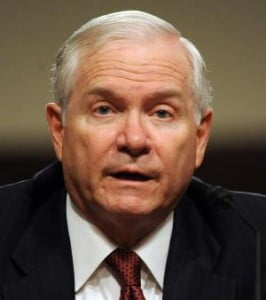
Bloomberg – is furnishing new, more deadly weapons to Shiite militia groups targeting U.S. troops in Iraq as part of a pattern of renewed attempts to exert influence in the region, Defense Secretary Robert Gates said.

About 40 percent of the deaths of American soldiers since the official end of U.S. combat operations almost 10 months ago have occurred in the past few weeks as a result of the attacks, Gates said yesterday in a Bloomberg News interview at the Pentagon that also touched on Iran’s nuclear program.

The U.S. has raised the attacks with Iraqi Prime Minister Nuri al-Maliki and others, said Gates, who leaves office today. Gates will be succeeded by Leon Panetta, the director of the Central Intelligence Agency.

Iran is “facilitating weapons, they’re facilitating training, there’s new technology that they’re providing,” Gates said. “They’re stepping this up, and it’s a concern.”

Iran is supporting radical Shiite groups intent on “killing as many as possible in order to demonstrate to the Iraqi people that, in effect, they drove us out of Iraq at the end of the year,” he said.

The attacks are increasing as the U.S. and Iraqi governments are discussing politically acceptable ways to extend the American military presence beyond December. Iraq’s nascent security forces have struggled to combat Sunni al-Qaeda affiliates and Shiite militias, and the country lacks the military capability to defend its borders.

Iranian Influence

The aid to radical allies inside Iraq reflects Iran’s stepped-up efforts to wield influence in the Middle East and the Persian Gulf region, Gates said. The pattern has become particularly evident since populist revolts began against authoritarian rule in TunisiaEgypt and elsewhere, collectively known as the Arab Spring.

“They didn’t create the Arab Spring or start it, but they are clearly trying to exploit it wherever they can,” said Gates.

In Iraq, more than 100,000 U.S. troops left in the year leading up to the Sept. 1 transition from combat operations to a mission that primarily advises and supports Iraqi troops. The goal was to withdraw the remaining 50,000 soldiers at the end of this year.

The Pentagon has recorded 28 soldiers killed in action since the start of the new mission, called Operation New Dawn. Almost 3,500 previously had been killed since the 2003 U.S.-led invasion.

The department two days ago announced the latest Iraq troop deaths, two soldiers killed in Diyala province when their unit was struck by a roadside bomb. Staff Sergeant Russell J. Proctor, 25, of Oroville, California, and Private First Class Dylan J. Johnson, 20, of Tulsa, Oklahoma, were with the 4th Squadron, 9th Cavalry Regiment, 2nd Brigade Combat Team, 1st Cavalry Division from Fort Hood, Texas.

Roadside Bombs

The Iranian threat to the U.S. forces has increased “in the last three or four months,” Gates said. Iran is supplying bigger “explosively formed penetrators,” a particularly powerful type of roadside bomb known as EFPs, and “improvised rocket-assisted munitions,” or IRAMs, he said. IRAMs are bombs capable of creating a more powerful explosion than a conventional mortar.

The U.S. also is concerned about growing supplies of advanced rocket-propelled grenades, Gates said. The weapons, popular with insurgent groups, are effective against U.S. armor.

“So they are really making this as difficult as they can,” Gates said. The weapons are manufactured in Iran, he said.

Focus on Technology

One of the achievements Gates has touted for his 4 1/2 years in office is wrestling with the Pentagon to focus on the wars in Iraq and Afghanistan, particularly in developing technology to better protect U.S. forces from roadside bombs.

He pressed to speed purchases of mine-resistant, ambush- protected vehicles, or MRAPs, in part to counter Iranian-made EFPs. He then bore down to get all-terrain versions of the vehicles, called MATVs, for Afghanistan’s rugged terrain. He also established a task force to find other ways of intercepting and countering the devices.

The issue of Iran supplying powerful roadside bombs capable of penetrating the thickest armor flared in 2006, when the U.S. repeatedly accused Tehran of seeking to undermine Iraq and the foreign coalition in the country.

The U.S. said the Quds Force of Iran’s Revolutionary Guard Corps was providing the aid. Iranian leaders publicly denied the allegations.

The issue began to wane in late 2007, when the U.S. military acknowledged a decline in the number of Iranian- supplied bombs.

Gates said at the time that he doubted the credibility of assurances from Iranian officials that they would stop facilitating the deadly roadside bomb attacks.

Iranian Aid

During a Nov. 1, 2007, news conference at the Pentagon, Gates said Iran’s most senior leaders “probably” are aware that elements of their military are helping the bombers, adding that he hadn’t seen definitive intelligence on that point.

He said the Iranians had given assurances to Iraqi officials that they would try to halt such aid.

Gates said yesterday that there had been a decline in attacks with EFPs until the recent resurgence.

On Iran’s nuclear program, the defense secretary said he still believes the country’s leaders are intent on building an atomic weapon and are “getting closer,” Gates said.

“There is, I think, a general view that they may be seeking what people call a threshold capability, which means not really having an assembled weapon but the capability to move quickly to a weapon should they choose,” Gates said.

It would be difficult to verify that point, he said. “If they get that close, then you have to assume that they have the weapons themselves,” Gates said.

IAEA Scrutiny

Iran’s nuclear program, which the country’s leaders say is intended solely to generate energy, is under the scrutiny of inspectors from the United Nations International Atomic Energy Agency.

“The real threshold is when will they have enough low- enriched uranium to make it worth their while to throw out the IAEA and then enrich that uranium to weapons-grade so that they would have several weapons,” Gates said. The question, he said, is “At what point could they do that?”

Iran also would need to develop a weapon to employ the uranium.

Still, the window of time in which Iran might achieve a nuclear weapon remains one to three years, Gates said, declining to comment on overt or covert efforts to throw a wrench into the program.

U.S. officials, including Secretary of State Hillary Clinton, have said international sanctions and technical difficulties have slowed Iran’s nuclear progress.


Source

 

Yosef Nadarkhani’s Death Penalty for Apostasy Confirmed

THURSDAY, 30 JUNE 2011

HRANA News Agency – On June 28, 2011, Iranian Supreme Court confirmed Yosef Nadarkhani’s death penalty and refused his objection to the sentence issued by the lower court.

According to a report by Human Rights Activists News Agency (HRANA), Yosef Nadarkhani has been charged with apostasy at the age of nineteen and converting to Christianity. Iranian judicial authorities also state that Yosef Nadarkhani has preached Christianity for years.

Accordingly, Gilan Province Court, Branch 11, has sentenced Yosef Nadarkhani to death penalty on charges of apostasy and preaching Christianity.

Yosef Nadarkhani has been locked up in Rasht Prison since October 12, 2009. If the death penalty is carried out, it will be the first official hanging for apostasy and conversation to Christianity in the last twenty years.

On December 3, 1990, Pastor Hussein Sodmand was hanged in Mashhad Prison for refusing to give up his Christian faith. Pastor Sodmand is the only priest who has been officially executed by the Islamic Judiciary Branch for apostasy and conversation to Christianity.

Further reports will be released when more details become available.


Source

Yazd University Student Arrested for Preaching Christianity

THURSDAY, 30 JUNE 2011

HRANA News Agency – Mustafa Zangavaei Boshahri, a twenty-four year old college student born in Gachsaran, was arrested when he left his house.

According to a report by Human Rights Activists News Agency (HRANA), Iranian intelligence agents have contacted Mustafa Zangavaei Boshahri’s family and informed them that he has been arrested.

Mustafa Zangavaei Boshahri has been charged with preaching the reincarnation of Christ and the coming of the Savior at the University of Yazd.


Source

Deaths and injuries in Kurdish regions of Iran

0

Wed, 06/29/2011

In recent days nine Iranian citizens in the border regions of Kurdistan Province have been killed or injured by Islamic Republic security forces.

Zamaneh’s correspondent reports that Jamal Ghaznavei, a trader in Oshnouyeh, was shot by security forces, and three other citizens injured in the same incident are currently in hospital. Several transport horses were reportedly killed as well.

In a similar incident on Monday in Sardasht, three porters were wounded and transferred to hospitals in Iraq.

Eyewitnesses report that in this case, government officials set fire to the goods and the beasts of burden consfiscated from the porters.

Kurdistan media also reported that two more porters in Baneh, Osman Banei and Zardasht Rahimi, were shot to death by Iranian security forces.

Porters in the border regions of Kurdistan carry goods on their backs, often without the help of any beasts of burden. They are hired by traders to transport goods across the border.

Human rights activists report that over the past two years, security forces have killed more than 150 Kurds in Iran’s border regions.


Source

Political Prisoner Kamal Sharifi Transferred to Prison Hospital

WEDNESDAY, 29 JUNE 2011

HRANA News Agency – Following four weeks of ongoing hunger strike, political prisoner Kamal Sharifi has been transferred to the prison hospital in Minab Prison, Hormozgan Province. It has been reported that he is in critical condition.Kamal Sharifi is a journalist and political activist from the city of Saghez, Kurdistan Province.

According to a report by Human Rights Activists News Agency (HRANA), Kamal Sharifi began his hunger strike four weeks ago to protest prison conditions. Subsequently, he has been the target of prison official’s wrath and ill-treatment.

Iranian Security forces arrested Kamal Sharifi in the city of Saghez and charged him with the attempt to overthrow the government and acting against the national security. Kamal Sharifi has been sentenced to 30 years in prison and exiled to Hormozgan Province. Currently, he is serving his third year in prison with rapidly deteriorating physical health.  During the last three years of incarceration, Kamal Sharifi has not been permitted to have any visitors.


Source

Political prisoners in Gohardasht Prison put under extreme pressure

June 29, 2011

According to reports, prison officials have cut off political prisoners’ ‘fresh air’ time. They were also threatened that they would be transferred to solitary cells in the notorious cellblock 1. Officials had intentionally scheduled the political prisoners’ fresh air time to 3pm which is the hottest time of the day to put more pressure on them.
On the other hand, political prisoners who are on hunger strike are in poor health and two of them were taken to the prison infirmary yesterday and then brought back to their cell.
Political prisoners are isolated in a hall which is very warm and are denied minimum cooling facilities. There is no water cooler in their cellblock and they are forced to drink warm water. Despite the fact that [prison officials] took money from political prisoners more than a month ago to buy an air conditioner and refrigerator which was to be provided and installed for them, no measures have been taken to this end.
A number of prisoners are in very critical condition but they are denied serious treatment. Political prisoner Jafar Eqdami has been suffering from a muscle injury for more than a month and walks with a crutch. Political prisoners Allah Verdi Rouhi, Mashallah Haeri are suffering from a prostate tumor, heart and respiratory problems. (Human Rights and Democracy Activists in Iran – Jun. 27, 2011)


Source