Home Blog Page 83

Iran’s Regime Organized Smuggling Network

While the Iranian regime kills deprived porters under the pretext of smuggling, the Revolutionary Guards (IRGC) and other regime institutions control the entire organized network of smuggling.

According to the regime’s parliamentary investigation board’s 2020 report, more than a third of imported goods are smuggled into the country by institutions affiliated with the regime.

“In its investigations, the Investigation Board obtained 31 methods of smuggling, which, despite officials’ statements, including the officials of the Customs Organization, more than 95% of these cases are carried out in the form of official procedures from official sources,” wrote the State-run IRNA News Agency on May 16, 2020.

“According to the report, “about 95% of smuggled goods enter the domestic market. The volume of smuggling can make more than 35% of imports,” the report adds.

On April 29, 2021, the regime’s Judiciary Chief, Ebrahim Raisi, also acknowledged the systematic and official smuggling and said, “Commodity smugglers are more organized today than ever before.”

The regime’s parliamentary investigation board’s 2020 report underlines the weak reaction of 12 institutions in dealing with the organized smuggling. These institutions include Chamber of Commerce, Customs Organization, Ministry of Economy, Secretariat of Free and Special Economic Zones, Chamber of Trade Unions, Ministry of Foreign Affairs, Organization for the Collection and Sale of Proprietary Property, Chamber of Cooperation, Ministry of Interior, Radio and Television Organization, State Security Force and Ministry of Health.

The question is why these institutions act “weak” in combatting smuggling? How powerful are the smugglers that these 12 governmental institutions are unable to confront them?

The reality is that the IRGC dominates Iran’s smuggling network due to its domination of the entire economy. The IRGC controls 114 ports and 25 airports and uses them for smuggling goods to Iran or other illicit activities.

According to a report published by the Iranian Resistance in 2017, “State-linked institutions, including the Revolutionary Guards (IRGC), have taken control over Iran’s ports, and are meddling in customs affairs, literally transforming these economic centers to transits used to smuggled goods. The IRGC, by taking control over the country’s most important economic routes and establishing a major financial empire, has taken full control over large portions of Iran’s imports/export.”

Read the complete article at: NCRI

Also Read: Iran Regime’s Systematic Corruption and Iran’s Economic Crisis

Iranian pro-government media celebrates Hamas rocket strikes

0

Coverage of Israel’s bombing of Gaza and Hamas rocket strikes on Israel reflected the allegiances and priorities of the various Farsi-language media platforms, with pro-government outlets expressing support for Hamas, and opposition channels slower to cover the escalating violence.

On Wednesday, as the second day of deadly attacks on Gaza continued, there was no mention of Israeli air strikes and the rising death toll in the enclave on the front pages of most reformist dailies published inside Iran.

At the other end of the spectrum, dailies and news agencies affiliated with Iran’s Islamic Revolutionary Guard Corps (IRGC) and conservative political institutions accused Israel of savagery while commending Hamas’ rocket attacks on Tel Aviv and other Israeli cities.

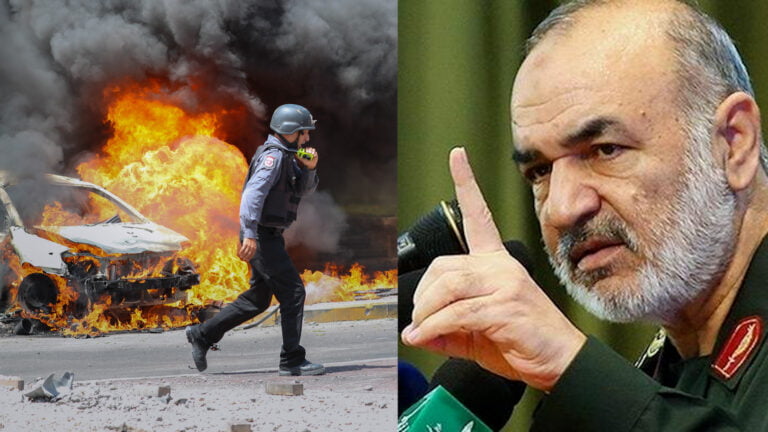
The Khorasan daily, for instance, on its front page, published an image of burnt-out cars in an Israeli city, with the headline: “Largest missile attack on Tel Aviv.”

The conservative Kayhan daily also praised the attacks by Palestinian factions and wrote: “The Palestinian resistance groups have finally made true on their threats and have turned the occupied territories into hell for the Zionists.”

Opposition media, based outside of Iran, did not cover the attacks during the first two days of the conflict. Later, they blamed the Palestinians for the Israeli bombardment of Gaza.

On Wednesday morning, BBC Persian published a news piece about the attacks on Gaza, under the headline: “Rocket attacks from Palestinian paramilitaries in Gaza on Tel Aviv”. The British broadcaster later changed this headline into: “Rocket attack on Tel Aviv, following the destruction of tower in Gaza.”

The Iran International TV channel and website also framed the recent conflict as a consequence of Hamas rocket strikes on Israel.

“Following the launching of over 200 rockets by Hamas, and the retaliatory attacks by Israel, 24 persons were killed in Gaza,” Iran International wrote on Tuesday.

Read the complete article at: Middle East Eye
Also read: Iran is Taking Advantage of the Palestinian Issue to Advance its Own Agenda

Iran is Taking Advantage of the Palestinian Issue to Advance its Own Agenda

0

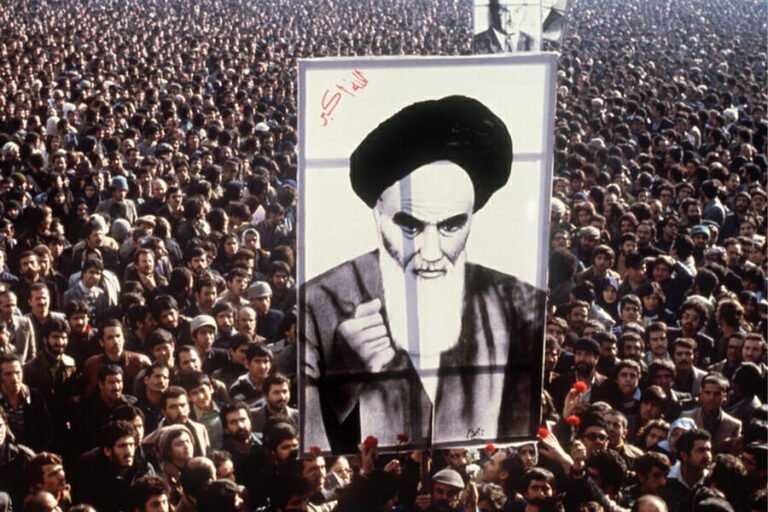
Some experts have called Ayatollah Khomeini one of the most important individuals of the twentieth century, who used every opportunity to consolidate and strengthen his position and that of his regime.

For example, at a time when his regime was under pressure internationally, he exploited the feelings of Muslims by issuing a fatwa for the assassination of Salman Rushdie on the charge of blasphemy and tried to divert attention elsewhere to free his regime from pressure.

Another case was the designation of the last Friday of Ramadan as Quds Day, calling on Muslims around the world to demonstrate in support of the Palestinian people. This seemed to be a legitimate move in solidarity with the Palestinian people, and that is why, at first, when Khomeini’s identity was not known either in Iran or among the Muslims of the world, he was welcomed, and the masses responded by holding large demonstrations in support of the Palestinian people.

It is now clear to the Palestinians and most Muslims around the world that the policies of Khomeini and his successor, Ayatollah Ali Khamenei, have done the most damage to the Palestinian people.

Khomeini first sought to expand his influence by going to war against Iraq that killed more than 2 million people and caused hundreds of billions of dollars in damage to both countries.

When he failed to achieve his goal, he began supporting proxy forces in the region, and in opposition to Yasser Arafat, Khomeini threw his support behind Hamas and by doing so, caused divisions among the Palestinian people that practically led to the division of Palestine into two parts, further weakening the Palestinian state.

Now, 40 years later, the Iranian regime is still trying to portray itself as a supporter of the Palestinian cause, but their claim has no buyer among the Iranian people, the Palestinian people, and the wider Muslim world.

Now, 40 years later, the Iranian regime is still trying to portray itself as a supporter of the Palestinian cause, but their claim has no buyer among the Iranian people, the Palestinian people, and the wider Muslim world.

Read the complete article at: International Policy Digest

Also Read: Is massive Hamas attack on Israel the assault Iran warned of?

Twitter users slam platform for not banning Iran’s Ayatollah Khamenei

0

The call on Twitter by Iran’s Ayatollah Khamenei for Palestinians to “stand strong” and “confront” Israel has sparked outrage about the platform, which has banned former President Donald Trump but not the Islamic Republic’s supreme leader.

“Palestinians are awake and determined. They must continue this path. One can only talk with the language of power with these criminals,” Khamenei declared in a tweet on Tuesday amid the escalating hostilities between the two sides.

“They must increase their strength, stand strong, confront the enemy, and force them to stop their crimes,” he added just before the Israeli military announced that air raid sirens in Tel Aviv warned of an impending barrage of rockets from Hamas in Gaza.

A senior adviser to Israeli Prime Minister Benjamin Netanyahu wasted no time in slamming Twitter for not targeting Khamenei over his inflammatory missive.

“How has Twitter not banned Ali Khamenei over the below post outright inciting terrorism against Israelis? His tweet is a virtual signal to Iran-backed Palestinian jihadists,” Aaron Klein tweeted.

Users on the platform echoed the Israeli official’s complaint.

“Why is @khameni_ir still the fu*k on Twitter? If this isn’t incitement, idk wtf is!!!” @JeremyKossen wrote.

“Why Is Twitter Letting Iran’s Ayatollah Khamenei Incite Rocket Attacks on Israeli Civilians?” @RFederle asked.

Another user addressed Twitter CEO Jack Dorsey directly.

“Why on Earth aren’t you banning @khamenei_ir and all his other accounts?” @eL3CT10n wrote.

The platform permanently banned Trump following the Jan. 6 Capitol riot, when he was still the commander-in-chief.

At the time, Twitter defended its suspension as “due to the risk of further incitement of violence.”

The company’s continued position that it will not consider allowing him back on its platform, even if he were to return to public office, has rubbed many the wrong way, including some of Trump’s political opponents.

Many of the social media users expressing disgust with Twitter linked to an editorial published Tuesday in the National Review.

Read the complete article at: NY Post

Also Read: Is massive Hamas attack on Israel the assault Iran warned of?

Iran is ‘greatest, single threat’ to stability in Middle East: US general

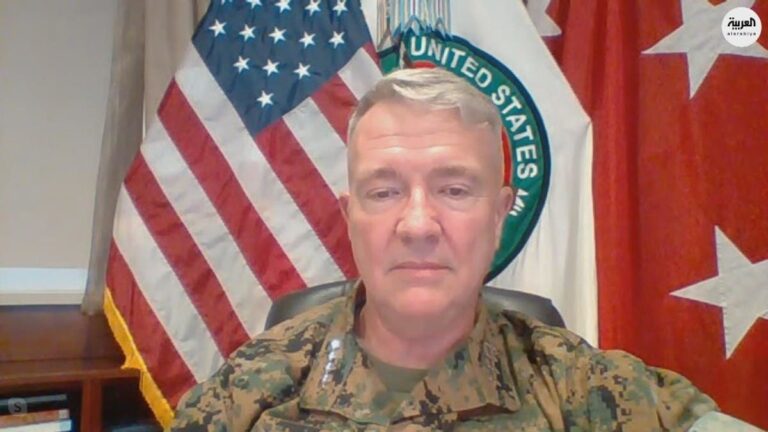
Iran is still the “greatest, single threat” to stability in the region, the top US general for the Middle East said Tuesday.

“And they still pursue a wide variety of malign activities, both directly and through proxies, that threaten not only us but our friends and partners across the region,” head of US Central Command (CENTCOM) Gen. Frank McKenzie told Al Arabiya during a televised interview.

Despite the continued malign activities of Iran and its proxies across the region, Washington is not looking for war with Iran.

“What we would like for them to do is actually return to the family of nations in a responsible manner,” the US general said, noting the current nuclear talks in Vienna between US and Iranian officials via European, Russian and Chinese mediators.

The Biden administration, which has been adamant on reaching a nuclear deal with Iran, is currently engaging indirectly with Tehran. But McKenzie warned: “While our diplomats do their work … it’s not in Iran’s interest to disturb this to some kind of military adventure.”

McKenzie added that “nothing is off the table” when it comes to options of dealing with Iran and any potential attacks it may carry out on US interests.

Iraq

Iranian-backed militias continue to target bases in Iraq that host US forces and contractors.

US troops are in Iraq at the invitation of the government in Baghdad to help fight ISIS.

McKenzie said Iran had tried and was continuing its attempts to push US troops out of Iraq by carrying out attacks through its proxies and militias. “I believe we’re going to be able to stay in Iraq … and the future will be decided between the United States and the government of Iraq, not by some third party like Iran,” he said.

Afghanistan

Asked about the decision by President Joe Biden to withdraw US troops from Afghanistan, McKenzie said the military was “fully committed” to carrying out the orders.

Read the complete article at: Al Arabiya English

Also Read: A new study on the Middle East takes the wraps off Iran’s militia doctrine

Berlin security service blames Iran for cyber attack on German companies

0

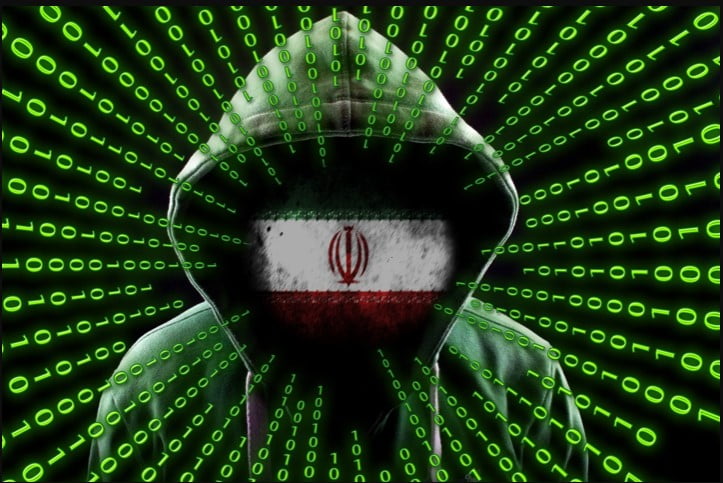
Berlin security services say Iranian hackers were behind a cyber attack that targeted German companies by duping their employees into installing malware.

The attack was part of a wider effort by Iranian operatives to gain access to sensitive information in Germany, an intelligence report said.

In the latest breach, workers at German companies received phishing emails that purported to be messages offering them a job.

When they clicked on the corresponding links, they unwittingly installed malware on their computer.

The emails came from fake addresses and were designed to obtain information from the companies in question.

The breach was described as a “major cyber attack campaign” in a report by Berlin’s Office for the Protection of the Constitution.

“The reason for the increase in Iranian cyber operations in Germany probably lies in the political tensions in the Gulf,” it said.

“For one thing, Iran has a fundamental interest in acquiring political and economic information.

“On the other hand, the purpose of the attacks may also lie in circumventing the current sanctions against Iran.”

The Berlin intelligence report did not say what kind of information Iran might have sought from the latest attack.

However, security services in Germany believe that Iran is trying to acquire expertise and technology from Europe needed to build weapons of mass destruction.

A separate intelligence report last week revealed a series of “conspiratorial methods” used by Iran to cover up illegal weapons activity in Europe.

These included setting up fake companies, using middlemen and dividing exports into numerous small transactions so as not to attract suspicion.

Iran’s activities came to the attention of Dutch intelligence too, which said Iran had tried to acquire critical goods and technology from the Netherlands.

Sweden also accused Iran of carrying out industrial espionage aimed at products that could be used to make nuclear weapons.

Read the complete article at: The National News

Also Read: Iran cyber misinformation campaign takes aim at Scottish independence

Is massive Hamas attack on Israel the assault Iran warned of?

The attack on Israel involving some 600 rockets from Gaza in a 24-hour period, reaching the crescendo of hundreds of rockets fired around nine in the evening, blanketing central and southern Israel – may be linked to Iran’s warnings about a single, large operation.

Iran’s IRGC head Hossein Salami warned last week that Israel was vulnerable to one large tactical operation because the country is so small. He pointed to the S-200 fired from Syria near Dimona and other threats to Israel as an example of how vulnerable the country is. 

The massive rocket fire launched on May 11, an unprecedented series of barrages targeting Ashkelon, attempting to test the abilities of Israel’s multi-layered air defenses, appear to be part of an Iranian-inspired plan. This is because Islamic Jihad, an Iranian proxy, is involved in the rocket fire and because Hamas is backed by Iran.

Iran pays close attention to Israel’s internal politics and media. Nasrallah also does. He was watching the story about the dozens of Israelis killed on Mount Meron. Iran has been studying Israel’s method of retaliation and also its ability to manage the conflict with Hamas. This “management” has gone on for years since the 2014 war. It has involved numerous rounds of attack on Israel in which Israel would carry out airstrikes, but would avoid a ground operation.

Hamas is setting the pace – and that pace may be one that is being watched or even guided from Iran. This may be due to the fact that Hezbollah wants to know what it looks like when Israel is faced with a large amount of rocket fire. They will be paying attention to every instance where rockets made it through.

Hamas has also shown over the years, firing rockets out to sea, that it has kept itself limbered and ready for the next round. Many had said Hamas was ossifying after 14 years in power with little to show for it. It wanted elections in the Palestinian Authority to break out of Gaza, but t didn’t get to have those elections. Its rockets are what it has left.

However, it has also shown it can dictate the tempo, a tempo and a tactical operation that Iran predicted a week ago in a Quds Day message. That message reached Gaza and Islamic Jihad; it now has reached Tel Aviv and Jerusalem through rockets.  

Read the complete article at: JPOST
Also read: What is Iran’s goal in the Jerusalem crisis?

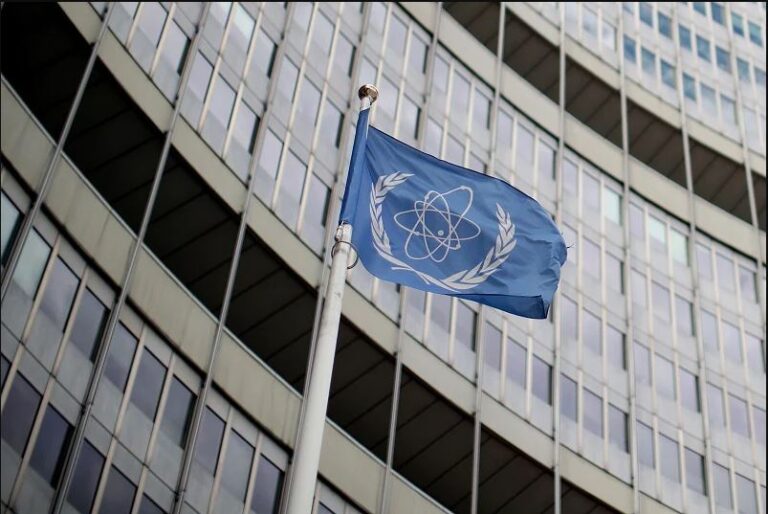
Iran has enriched uranium to up to 63% purity, IAEA says

“Fluctuations” at Iran’s Natanz plant pushed the purity to which it enriched uranium to 63%, higher than the announced 60% that complicated talks to revive its nuclear deal with world powers, a report by the U.N. nuclear watchdog said on Tuesday.

Iran made the shift to 60%, a big step towards nuclear weapons-grade from the 20% previously achieved, last month in response to an explosion and power cut at Natanz that Tehran has blamed on Israel and appears to have damaged its enrichment output at a larger, underground facility there. 

Iran’s move rattled the current indirect talks with the United States to agree conditions for both sides to return fully to the 2015 nuclear deal, which was undermined when Washington abandoned it in 2018, prompting Tehran to violate its terms.

The deal says Iran cannot enrich beyond 3.67% fissile purity, far from the 90% of weapons-grade. Iran has long denied any intention to develop nuclear weapons.

 “According to Iran, fluctuations of the enrichment levels… were experienced,” the International Atomic Energy Agency (IAEA) said in the confidential report to its member states, seen by Reuters.

“The agency’s analysis of the ES (environmental samples) taken on 22 April 2021 shows an enrichment level of up to 63% U-235, which is consistent with the fluctuations of the enrichment levels (described by Iran),” it added, without saying why the fluctuations had occurred.

A previous IAEA report last month said Iran was using one cascade, or cluster, of advanced IR-6 centrifuge machines to enrich to up to 60% and feeding the tails, or depleted uranium, from that process into a cascade of IR-4 machines to enrich to up to 20%. read more

Tuesday’s report said the Islamic Republic was now feeding the tails from the IR-4 cascade into a cascade of 27 IR-5 and 30 IR-6s centrifuges to refine uranium to up to 5%.

Source: Reuters

Also Read: Iran says it will enrich uranium to 60 percent purity after Natanz attack

US ship fires warning shots in encounter with Iranian boats in the Persian Gulf’s Strait of Hormuz

A U.S. Coast Guard cutter fired two volleys of warning shots Monday as a group of 13 Iranian fast boats sped toward U.S. Navy vessels in the Persian Gulf’s Strait of Hormuz in what the Pentagon called “unsafe and unprofessional” maneuvers by the naval arm of the Islamic Revolutionary Guard Corps.

Pentagon press secretary John Kirby said the Iranian vessels maneuvered at high speed toward six Navy ships that were escorting the guided missile submarine USS Georgia through the Strait. After the Coast Guard cutter Maui unleashed a second volley of warning shots, the Iranian boats backed off, Kirby said.

“They were acting very aggressively,” Kirby told reporters at the Pentagon. He said they got within 150 yards of the U.S. ships, which included the guided missile cruiser USS Monterey. A day earlier, the Monterey had intercepted an arms shipment aboard a dhow in the Arabian Sea apparently headed for Yemen, whose Houthi rebels are supported by Iran.

Kirby said the Maui fired two rounds of warning shots from its .50-caliber machine gun — the first round when the Iranian boats got to within 300 yards of the U.S. ships, and the second when they got within 150 yards.

“After the second round of warning shots the 13 fast attack craft from the IRGC-N broke contact,” he said, ending the encounter.

Kirby said he had no further details about the incident.

Source: Sun Sentinel 


“They were acting very aggressively,” Kirby told reporters at the Pentagon. He said they got within 150 yards of the U.S. ships, which included the guided missile cruiser USS Monterey. A day earlier, the Monterey had intercepted an arms shipment aboard a dhow in the Arabian Sea apparently headed for Yemen, whose Houthi rebels are supported by Iran. Kirby said the Maui fired two rounds of warning shots from its .50-caliber machine gun — the first round when the Iranian boats got to within 300 yards of the U.S. ships, and the second when they got within 150 yards.

US seizes Iran weapons to Houthis amid nuke talks

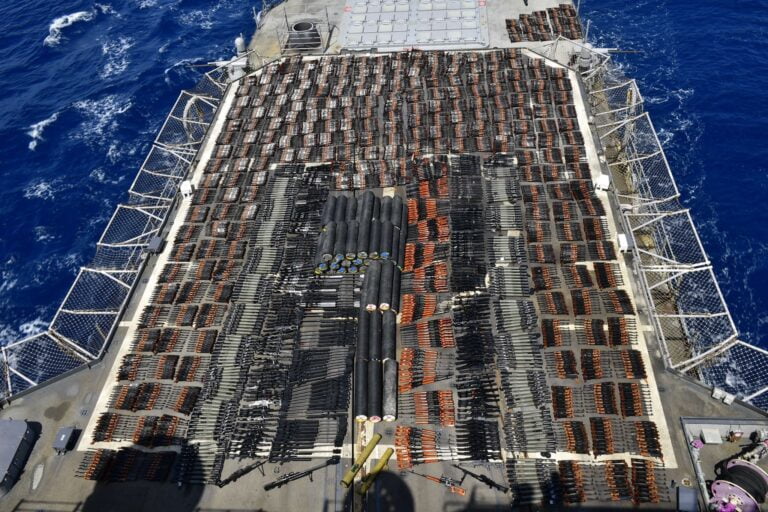
The US Navy announced Sunday it seized an arms shipment of thousands of assault weapons, machine guns and sniper rifles hidden aboard a ship in the Arabian Sea, apparently to support the Houthi militias.

The seizure comes as the world power and Iran continue in their talks to revive the 2015 nuclear deal.

An American defense official told The Associated Press that the Navy’s initial investigation found the vessel came from Iran, again tying the country to arming the Houthis despite a United Nations arms embargo.

“Sailors found nearly 3,000 Chinese Type 56 assault rifles, a variant of the Kalashnikov. They recovered hundreds of other heavy machine guns and sniper rifles, as well as dozens of advanced, Russian-made anti-tank guided missiles. The shipments also included several hundred rocket-propelled grenade launchers and optical sights for weapons,” Asharq Al-Awsat reported late on Sunday.

Based on interviews with the crew and material examined on board, the sailors determined the vessel came from Iran, said the official, who spoke on condition of anonymity to discuss the ongoing investigation.

“After all illicit cargo was removed, the dhow was assessed for seaworthiness, and after questioning, its crew was provided food and water before being released,” the Navy’s 5th Fleet said in a statement.

Source: AVA Today

Also Read: Yemeni minister: Iran’s Quds Force commander acting as de facto ruler of Houthi-held areas

The US Navy announced Sunday it seized an arms shipment of thousands of assault weapons, machine guns and sniper rifles hidden aboard a ship in the Arabian Sea, apparently to support the Houthi militias. The seizure comes as the world power and Iran continue in their talks to revive the 2015 nuclear deal.   An American defense official told The Associated Press that the Navy’s initial investigation found the vessel came from Iran, again tying the country to arming the Houthis despite a United Nations arms embargo.