Home Blog Page 84

Iran talks peace while arming the Yemeni Houthi rebels

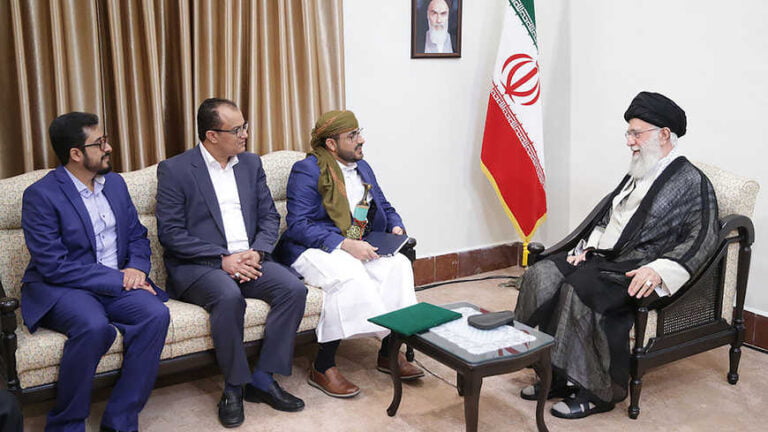
The Iranian government has begun signaling that it wants to start a new chapter with Saudi Arabia, expressing hope that the holy month of Ramadan could be the beginning of the end of insecurity and instability in the region. However If the Iranian government genuinely wants to mend its relationship with Saudi Arabia, one of the most important steps it could take would be to halt its support for the Yemeni Houthi terror group.

While Yemen does not pose a national security threat to the Islamic Republic, it does to Saudi Arabia, since it shares a border with the Gulf state. Therefore, it follows that the Iranian leaders must admit and take responsibility for their role in the devastating conflict in Yemen. Unfortunately, instead of acknowledging Iran’s destructive role, Khatibzadeh said: “By presenting proposals and initiatives for dialogue and cooperation in the Gulf region, including the Hormuz Peace Endeavor (HOPE), the Islamic Republic of Iran has been a pioneer in the path of amity and regional cooperation.”

There is a plethora of evidence linking the Iranian regime to the war in Yemen. The latest UN annual report revealed that not only are the Houthis receiving weapons from the Iranian regime, but they are also being trained by Iran’s military apparatuses. It stated: “An increasing body of evidence suggests that individuals or entities in the Islamic Republic of Iran supply significant volumes of weapons and components to the Houthis. The Panel is also investigating a group of individuals who travelled to Oman on ‘mercy flights’ in 2015 and onwards to the Islamic Republic of Iran. One later publicly stated that he had received naval training in Bandar Abbas and went on to facilitate maritime smuggling for the Houthis.” Iranian weapons shipments bound for war-torn Yemen have also been frequently seized.

Iran’s weapons are being deployed for offensive purposes by the Yemeni Houthi rebels. For example, just last month, Houthi forces launched a drone at a military airbase in the southern Saudi Arabian city of Khamis Mushait. And last week they used missiles and drones to attack Najran and King Khalid military base. The Houthis reportedly launched more than 40 drones and missiles at Saudi Arabia in February alone. Previously, the Houthi rebels also claimed responsibility for the 2019 attacks on two Aramco plants at the heart of the Kingdom’s oil industry — the world’s biggest oil processing facility at Abqaiq near Dammam and the country’s second-largest oilfield at Khurais.

Read the complete article at: Arab News
Also read: What is Iran’s goal in the Jerusalem crisis?
Military candidates in Iran elections raise worry of further IRGC control

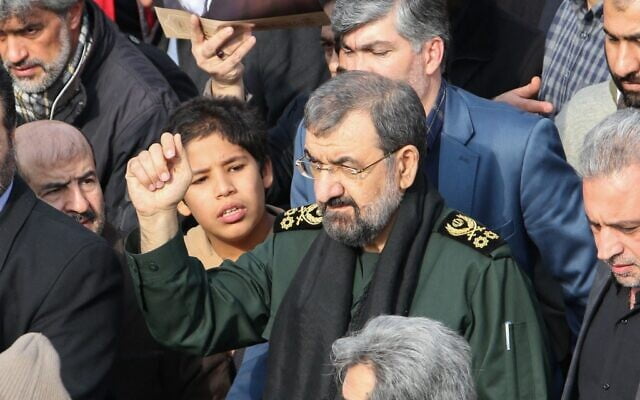
A string of military figures on the list of Iranian presidential hopefuls is stirring unease over a possible further militarization of the Islamic Republic’s politics.

Registration for the June 18 poll runs from Tuesday to Saturday, after which names will be handed to the conservative-dominated Guardian Council for vetting.

State news agency IRNA has pointed to “the longest-ever list [of potential candidates] in a presidential election with a military background.”

The participation of candidates with a military background “is not new,” said Ahmad Zeidabadi, an independent journalist in Tehran.

However, none of them were serving members of military forces during their candidacy, said Habib Torkashvand, a journalist with the Fars news agency which is close to Iran’s ultra-conservatives.

This time around, hopefuls include Saeed Mohammad, an adviser to Guards commander Major General Hossein Salami, and former oil minister Admiral Rostam Ghasemi, an economic affairs aide to the head of the Guards’ elite Quds force.

Two members of Iran’s Revolutionary Guard Corps — parliament speaker Mohammad Bagher Ghalibaf and his predecessor Ali Larijani — have both run for president in the past.

So has Admiral Ali Shamkhani, secretary-general of the Supreme National Security Council.

The three have been touted as possible candidates for this year’s race too, although they have yet to declare their intentions.

‘No chance of militarization’

The field also includes Ezzatollah Zarghami, a former Guards member, and General Hossein Dehqan, who was defense minister in outgoing President Hassan Rouhani’s first government.

Moderate daily Jomhouri-e Eslami has warned the election of a “military figure to head the government” could have “negative consequences” for the country.

Read the complete article at: Times of Israel

Also Read: The IRGC’s Dark Horse for Iran’s 2021 Elections: Saeed Mohammad

What is Iran’s goal in the Jerusalem crisis?
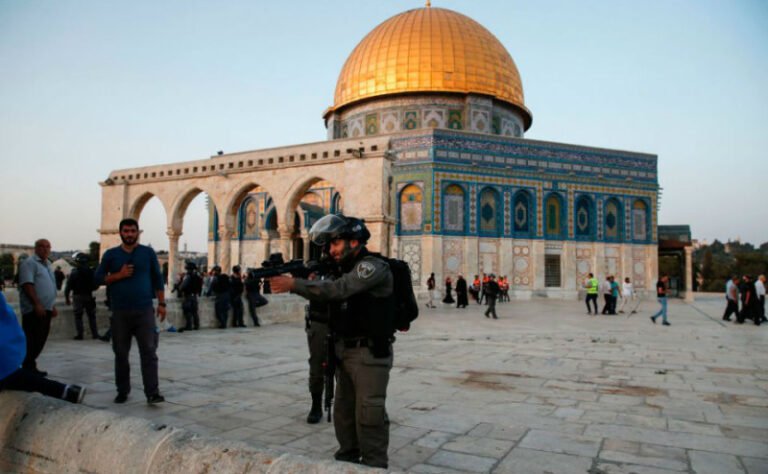
Iran has been fanning the flames of the Jerusalem crisis and confrontations.

Days before the latest clashes developed, Iran’s Ayatollah Khamenei and its IRGC head, Hossein Salami, prepared speeches and media engagements in which they pushed messages throughout the region, arguing that Israel is in a “downward spiral” and destined to fall apart. This message was given to Hassan Nasrallah in his Lebanon bunker where he would also emphasize Israel’s internal divisions in a Quds Day speech on Friday, May 7.

This message discipline of Iran and its proxies was clear. Days later, however, as the Jerusalem crisis worsens and western powers have joined the chorus condemning Israel, as well as countries in the Gulf, who have increased concerns. Iran has been more quiet. So what happened? Why isn’t Iran’s regime riding the chaos, exploiting it, increasing tensions in Syria?  

While tensions simmer in Jerusalem on Monday, Iran’s Tasnim, which is linked to the IRGC, ran an all-important story about bureaucracy in Iran. “Why should an entrepreneur go to 18 places to get a license?” Good question, but not the usual “Zionism is ending” dogma. What other news from Tehran? The regime is talking about the Vienna nuclear talks and discussing the pandemic. At Fars News the stories revolve around the high cost of vaccines and reduction in smuggling.  

Iran may be fumbling a bit in trying to ride the chaos in Jerusalem. It has long backed Hamas and Hezbollah, but as usual, Iran has no real plan to confront Israel. It prefers the propaganda of claims that Israel is falling apart from within, rather than take direct action. This is because Iran knows its own capabilities fall short of confronting Israel on the battlefield, or even with its proxies. It sought to fan the flames of chaos on Quds Day, but beyond that, it has nothing to show for it. Despite its propaganda, it has made no real inroads with the Palestinians and so far it is struggling to exploit the violence.

Read the original article at: TJP
Also read: Iran’s Supreme Leader directly intervenes in presidential election

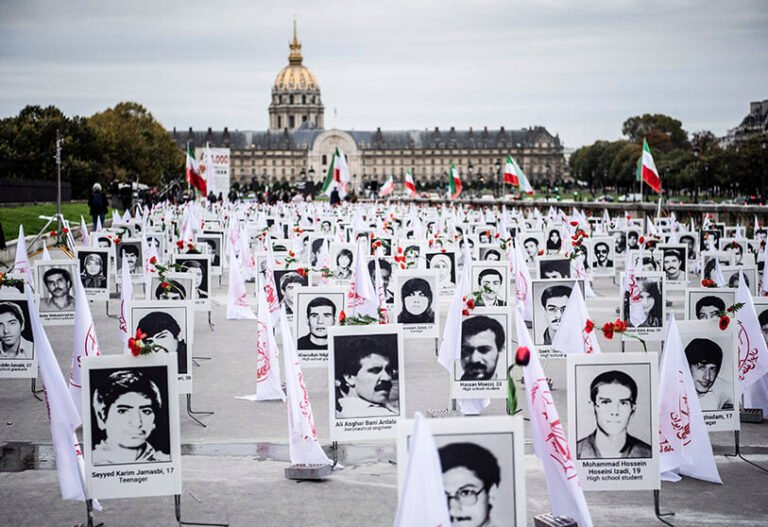
Human rights experts call for UN inquiry into 1988 Iran executions

Some 150 human rights experts, including former UN officials, have called for an international inquiry into the mass execution of dissidents by Iran’s regime in 1988.

In a letter to the United Nations on Tuesday, the 150 signatories urge the “establishment of an international investigation” looking into the executions, and appeal to the UN to end the “culture of impunity” in Iran.

The letter stated that around one thousand officials, many of whom still hold top positions in Iran, including the current Minister of Justice Seyyed Alireza Avaei, were involved in the mass killings.

“There is a systemic impunity enjoyed by those who ordered and carried out the extrajudicial executions,” the letter said.

“We appeal to the UN Human Rights Council to end the culture of impunity that exists in Iran by establishing a commission of inquiry into the 1988 mass extrajudicial executions and forced disappearances,” it added.

Activists said thousands of extrajudicial executions were carried out in 1988 upon the order of the Islamic Republic’s then supreme leader Ayatollah Khomeini.

Source: Ava Today

Also Read: Iran Regime to Destroy 1988 Massacre Grave

Some 150 human rights experts, including former UN officials, have called for an international inquiry into the mass execution of dissidents by Iran’s regime in 1988. In a letter to the United Nations on Tuesday, the 150 signatories urge the “establishment of an international investigation” looking into the executions, and appeal to the UN to end the “culture of impunity” in Iran. The letter stated that around one thousand officials, many of whom still hold top positions in Iran, including the current Minister of Justice Seyyed Alireza Avaei, were involved in the mass killings. Some 150 human rights experts, including former UN officials, have called for an international inquiry into the mass execution of dissidents by Iran’s regime in 1988. In a letter to the United Nations on Tuesday, the 150 signatories urge the “establishment of an international investigation” looking into the executions, and appeal to the UN to end the “culture of impunity” in Iran. The letter stated that around one thousand officials, many of whom still hold top positions in Iran, including the current Minister of Justice Seyyed Alireza Avaei, were involved in the mass killings.

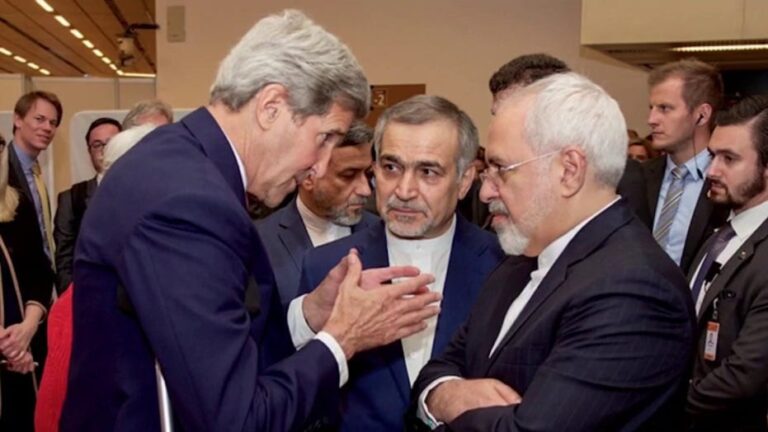
John Kerry to be quizzed under oath in the House about alleged revelations of Israeli secrets to Iran

GOP lawmakers are expected to press Biden administration climate envoy John Kerry on his dealings with Iranian Foreign Minister Mohammad Javad Zarif during a hearing before the House Foreign Affairs Committee next Wednesday.

Kerry will testify at the hearing, dubbed “Driving a Global, Whole-of-Society Response to Climate Action.” The hearing will utilize a hybrid format, raising the possibility that Kerry will appear in person.

The hearing will focus on steps to combat climate change as the Biden administration moves forward with its goal of cutting U.S. carbon emissions in half by 2030. But the event will mark Kerry’s first public appearance since reports surfaced of an audio file in which Zarif purportedly claimed that Kerry had leaked sensitive information about Israel while serving as secretary of state under the Obama administration.

Republicans are planning during the hearing to ask Kerry about his conversations with Zarif, Fox News’ Rich Edson reported.

In leaked audio first published by London-based Iran International and later obtained by the New York Times, Zarif said Kerry had informed him that Israel attacked Iranian interests in Syria at least 200 times. The claim prompted an outcry among Republicans.

“The reports that Secretary Kerry essentially threw Israel under the bus, and ratted on them to Iran is deeply troubling,” Rep. Ken Buck, R-Colo., told Fox News. “Israel is one of our strongest allies, Iran is one of our biggest adversaries. Equally concerning is the reports that the Biden Administration will re-enter the disastrous Iran Deal. I plan on asking Secretary Kerry about this under oath.”

A group of 19 GOP senators demanded the Biden administration suspend Kerry’s access to sensitive information and conduct an investigation to determine if the claim was authentic.

“Secretary Kerry has a long history of employing transactional diplomacy against the best interests of the United States or our allies – often trading long-term national security for a flawed short-term political agenda – which has ultimately endangered our allies and emboldened our adversaries,” the senators said.

Read the complete article at: Fox News

Also Read: In Leaked Audio, Iran’s Foreign Minister Criticizes Influence Of Revolutionary Guards

Iran’s Supreme Leader directly intervenes in presidential election

The Guardian Council, a twelve-member body hand-picked by Iran’s supreme leader and tasked with vetting election candidates, announced on May 5 that it was amending its criteria for those running for president. Among the changes: candidates must be between forty and seventy-five years old at the date of registration. That effectively disqualifies Minister of Information and Communications Technology, Mohammad-Javad Azari Jahromi, who turns forty a month after the June 18 vote.

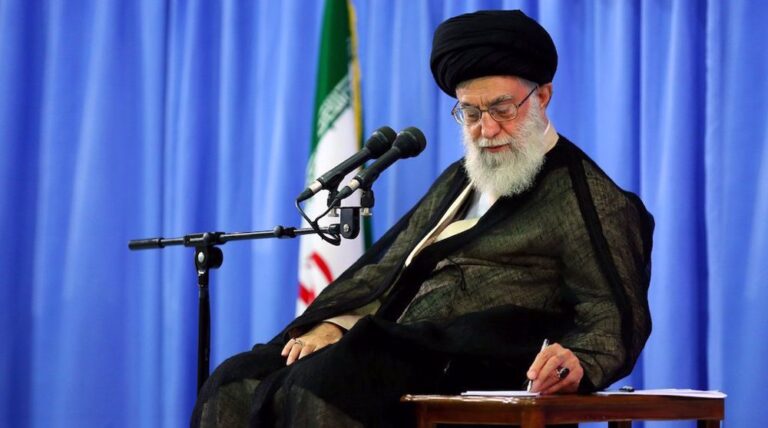
This is the third move in less than a month either directly by Supreme Leader Ayatollah Ali Khamenei or by his hand-picked Guardian Council to intervene in the election in favor of the hardliner camp.

On April 10, Khamenei told a grandson of Ayatollah Ruhollah Khomeini, the late leader of the 1979 revolution, that he should not run. Hassan Khomeini, who had already chosen a well-known revolutionary catchphrase of his grandfather—”All of us together”—as his campaign slogan, had perhaps the best potential to increase turnout in the election and provide a victory to the embattled reformist-pragmatist camp.

With Khomeini out of the game, this faction convened in late April to choose alternative candidates. Among the fourteen people it chose were Foreign Minister Mohammad Javad Zarif, who topped the list with thirty-seven votes, current First Vice President Eshaq Jahangiri with thirty-five votes, and Mostafa Tajzadeh, a former top aide to President Mohammad Khatami who was jailed for seven years after 2009 protests against election fraud, with thirty-two votes.

The hardliners and Khamenei have several reasons to interfere so brazenly in the election. One is that their own camp is in disarray. Forty-five days before the election and only days before candidates’ registration is to begin, it is still unclear which members of the camp will seek to run. The Judiciary Chief Ebrahim Raisi appears to be the most promising candidate because he ran before and got more than fifteen million votes in the 2017 elections. Yet, so far, he has not received a nod from Khamenei. Saeed Jalili, Khamenei’s representative on the Supreme National Security Council and a member of the Expediency Council that resolves disputes among government branches, has conditioned his candidacy on Raisi not running. The parliament speaker and former Tehran mayor, Mohammad Baqer Qalibaf is also waiting to see if Raisi will run before registering and trying to fulfill a sixteen-year ambition of becoming president. There are other less well-known figures who are likely to register if Raisi does not step forward.

Read the complete article at: Atlantic Council
Also read: Top IRGC commander: Quds Force has mastered the art of defeating US policy

Yemeni minister: Iran’s Quds Force commander acting as de facto ruler of Houthi-held areas

Iran’s Quds Force commander, Hassan Erlo, is acting as de facto ruler of areas controlled by the Houthi militia, a senior Yemeni official has said.

Erlo’s movements are highlighted by the Houthis’ media outfit, which confirms that he is acting as a leader, Muammar Al-Eryani, Yemen’s minister of information, culture and tourism, said on Wednesday.

Eryani was quoted by state news agency SABA as saying that the Quds Force commander’s actions show that the Houthi leadership takes political, military and administrative orders from the Tehran regime.

Iran sends its orders through Erlo, the minister added.

He claimed that this highlights Iran’s attempts to impose its control on Yemen as part of an “expansion project in the entire region,” adding that the Houthi militia is “a dirty tool to implement this aim.”

Without tough punitive measures from the international community and military pressure on the ground, Iran-backed Houthis will not offer concessions and will continue rejecting initiatives to end the war, Yemen experts said.

UN Yemen envoy Martin Griffiths said on Wednesday that a peace deal was not in sight and his latest intensive efforts to find common ground between warring factions in Yemen have yielded no fruit.

Officials close to the talks told Arab News that diplomatic initiatives reached a deadlock when the Houthis refused to stop their deadly offensive on Yemen’s central city of Marib before the opening of Sanaa airport and Hodeidah ports and a complete cessation of Arab coalition airstrikes.

Read the complete article at: Arab News

Also Read: U.S. says Iran giving Yemen’s Houthis ‘significant’ and ‘lethal’ support

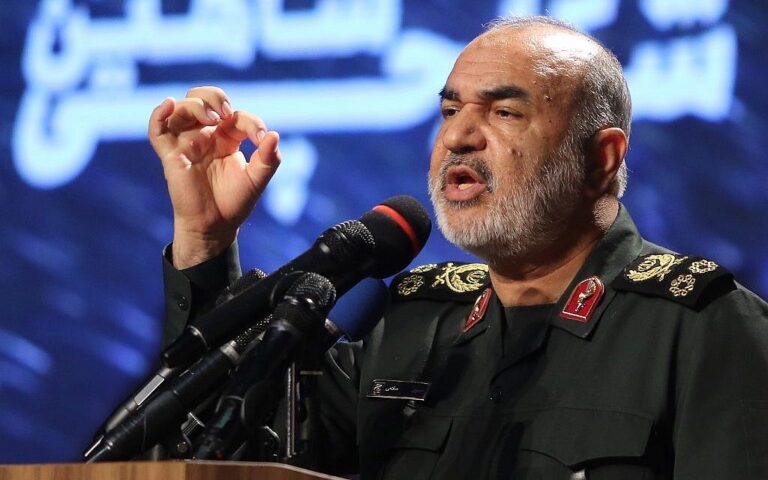
Iran IRGC head: Israel can be destroyed in one operation

Iran’s Islamic Revolutionary Guard Corps commander Maj.-Gen. Hossein Salami said that Israel “security” has been eroded, and its safety “bubble” burst in the last few months in a wide-ranging television interview.

He bragged at length about how the “Zionist regime” is supposedly in the midst of security, political and social disintegration. He then claimed that Israel has suffered strikes against its maritime interests, cybersecurity vulnerabilities and other security setbacks, including mysterious explosions and a rocket that flew over Dimona.

Salami pointed to a string of incidents over the last several months, appearing to take credit for them. He said that a mysterious explosion in Israel, allegedly at a rocket factory on April 20, was a huge explosion that he said “resembled that of a nuclear explosion.”

This is part of a domino effect, which has included cyberattacks on Israel, “the killing of Mossad operatives in northern Iraq” and threats to a chemical factory in Haifa and Ben-Gurion Airport. His interview was headlined in most major Iranian media on Thursday, receiving front-page coverage.

The long list of incidents provided by Salami indicates that he wants Iran to be seen as somehow responsible. He pointed to the list, as well as cyberattacks on 80 companies. He also said that 90% of Israel’s trade is maritime and that Israel is vulnerable at sea. He noted that it is a relatively narrow country and has no strategic depth.

THE EXTRAORDINARY interview is not the first time Iran has bragged about attacks on Israel. Tehran likes to show that it is retaliating against the Jewish state, even if there is no evidence of the various examples even happening. Most of these Iranian “attacks” which have been reported in Iranian media have been revealed to be accidents or even total myths.

Read the complete article at: JPost

Also Read: Suspected Iranian Ransomware Group Targets Israeli Firms

Top IRGC commander: Quds Force has mastered the art of defeating US policy

Iran’s Quds Force has mastered the art of diminishing America’s power and influence, Iran’s IRGC commander said on Wednesday.

Speaking with Iran’s Channel 2 television on May 5, Islamic Revolutionary Guard Corps Commander-in-Chief Maj. Gen. Hossein Salami called the United States “the most unique empire in human history.”

“Diminishing that power, eroding it, making it void, depleting it from within and forcing it to disintegrate along wide fronts, is a great thing,” he said. “It is a form of art to create power while the enemy invades, and when there is no classic and organized [military] power,” he added.

“Look, this is the art of [the Islamic Revolutionary Guard Corps’] Quds Force. Perhaps it has not been declared so far. This is the art of defeating America’s policy, strategy and power. All together. Quds Force does this. It continues to do this,” he said.

The Quds Force is the branch of the IRGC tasked with unconventional warfare and military intelligence, and it is responsible for the Islamic Republic’s overseas military operations.

According to the United Nations Security Council Resolution 1747, sanctions were imposed on Salami on March 2007.

On 8 April 2019, the US inflicted economic and travel sanctions on the IRGC and organizations, companies, and individuals affiliated with them. Salami said the IRGC was proud that Washington named them as a terrorist group. It was later remarked that Salami was included on the sanctions list as he had been promoted on 21 April commander of the IRGC.

Turning to Israel, Salami threatened the country’s commercial shipping, saying, “A month or two ago,  all the vulnerabilities of the Zionist entity [Israel] were demonstrated. For example, it was shown that the commercial shipping of the Zionist regime is vulnerable anywhere in the world.”

On April 13, the Israeli-owned cargo vessel Hyperion Ray sustained light damage in what was believed to have been an Iranian missile strike off the coast of the United Arab Emirates.

The incident was the third suspected case of an Iranian attack against an Israeli-owned commercial vessel, in the context of a series of reported tit-for-tat strikes at sea between the two countries.

Read the complete article at: JNS
Also read: Iranian Citizens Bearing The Cost of Religious Institutions in Syria

Congressional leaders urge Biden to take tough stand on Iran

Leaders of the US Congress urged President Joe Biden and the UN Security Council to hold Iran accountable for its abuse of diplomatic freedoms to support violence.

More than 220 members of Congress have endorsed HR 118, a resolution expressing support for “the Iranian people’s desire for a democratic, secular, and non-nuclear republic of Iran” while condemning “violations of human rights and state-sponsored terrorism” by Tehran.

The Organization of Iranian American Communities (OIAC) hosted a public zoom conference supporting the resolution on Tuesday, one day before Biden is scheduled to deliver his first address to a joint session of Congress.

“HR 118 delivers a truly urgent message to the Biden administration within its first 100 days, that the Congress urges it to hold Iran’s corrupt regime accountable for its crime against its people and its continued sponsorship of global terrorism,” said Republican sponsor Tom McClintock (D-CA), who noted that more than 120,000 civilians have been murdered by the Iranian regime.

“This resolution expresses self-evident truths, not wishful thinking into the discussion over Iran’s conduct against its own people as well as against the peaceful nations of the world. It cites so many instances of human rights abuses and terrorist acts.”

McClintock said the bipartisan house majority “is telling the Iranian people and the world that it stands with the freedom fighters of Iran and it stands against the tyrannical rulers who have wrecked that country and vexed the Middle East through terrorism and brutality.”

Congressman Brad Sherman (D-CA) praised the efforts of the OIAC and the National Council of Resistance of Iran (NCRI), which has spearheaded the resistance to the Iranian regime.

“HR 118 calls for the United Nations Security Council to work with the US partners and allies to condemn the ongoing human rights violations perpetrated by the Iranian regime and establish a mechanism by which the UN Security Council can monitor human rights violations,” Sherman said.

Read the complete article at: Arab News

Also Read: Biden Must Put Human Rights Front and Center in Iran Policy