Home Blog Page 11

Iranian politician says IRGC does whatever it wants to prisoners

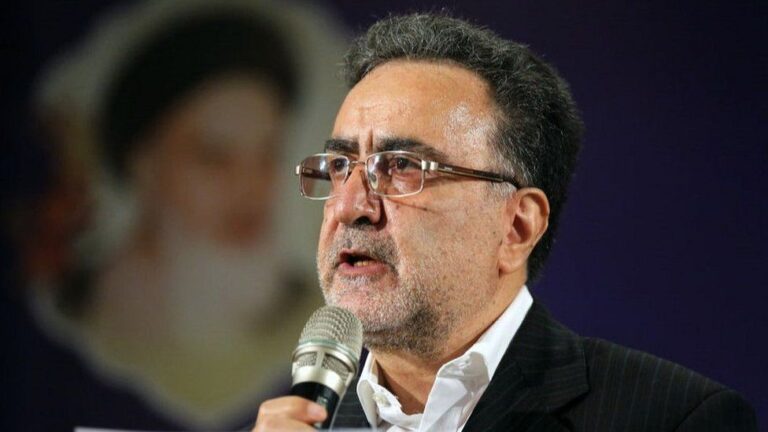
Leading ‘reformist’ Iranian politician, Mostafa Tajzadeh, who has been jailed since July, has written to Iran’s ruler Ali Khamenei to protest how IRGC intelligence agents treat prisoners.

Tajzadeh was arrested early on charges of “assembly and collusion against state security,” an accusation routinely used to jail critics, even those who do not oppose Islamic Republic in principle.

In the letter published Monday, he criticized his “illegal” detention in solitary confinement in ward 2-A of Evin prison, which is under the control of the intelligence agents of the Revolutionary Guard, saying he wanted to inform Khamenei about the “arbitrary actions of these agents.”

He further stressed the lack of respect for the “legal rights of prisoners” and said that despite the court’s orders and verdicts, “the intelligence officers have full authority to break the law and not comply with the current regulations.”

Tajzadeh was deputy-interior minister during the presidency of reformist Mohammad Khatami in 2000s and became an outspoken critic of hardliners’ policies in recent years. He spent seven years in prison after months of nationwide protests to the results of 2009 presidential elections reinstating Mahmoud Ahmadinejad in a second term.

In the past three years, Tajzadeh has become even more critical of hardliners and even Khamenei. From his public comments it was apparent that he remained loyal to the concept of an Islamic Republic but otherwise criticized almost every aspect of the political system Khamenei has nurtured.
Iran’s brutal crackdown on Kurdish cities as unrest continues

0

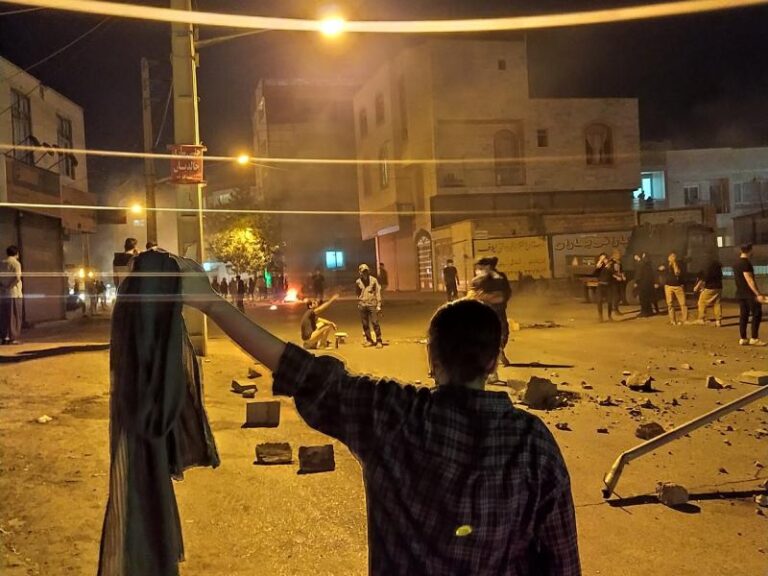
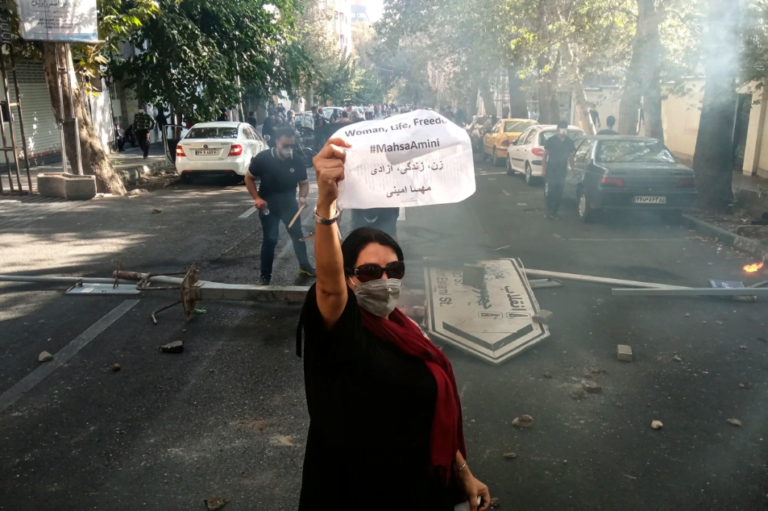
Iranian security forces intensified a crackdown on anti-government protests in several Kurdish cities on Monday, social media posts and videos showed, pressing efforts to quell unrest ignited by the death of a woman in morality police custody.

Protests have swept Iran since Mahsa Amini, a 22-year-old from Iran’s Kurdish region, died on Sept. 16 while being held for “inappropriate attire”, marking one of the boldest challenges to the Islamic Republic since the 1979 revolution.

While people across Iran have been protesting, tensions have been especially high between authorities and the Kurdish minority which human rights groups say has long been oppressed – a charge the Islamic Republic denies.

Human rights group Hengaw reported a heavy presence of armed security forces in the Kurdish cities of Sanandaj, Saqez and Divandareh on Monday. It said at least five Kurdish residents were killed and over 150 injured in protests since Saturday.

Videos shared on social media showed protests in dozens of cities across Iran early on Monday, with fierce clashes between protesters and riot police in cities and towns across Amini’s native Kurdistan province.

The Iranian authorities have blamed the violence on an array of enemies including armed Iranian Kurdish dissidents, with the Revolutionary Guards attacking their bases in neighbouring Iraq a number of times during the latest unrest.

Iran has a track record of putting down unrest among its more than 10 million Kurds, part of a Kurdish minority whose aspirations for autonomy have also led to conflicts with authorities in Turkey, Iraq and Syria.

Heavy gunfire could be heard in several videos shared on Twitter by the activist 1500tasvir. A video showed several explosions creating blinding flashes in a neighbourhood of Sanandaj, the capital of the Kurdistan province.

Activists said on social media that several people, including two teenagers, were killed by security forces in the province. Reuters could not verify the videos and posts.

Protests also continued more widely across Iran on Monday.


More than 200 unarmed Iranian protesters killed by IRGC & police

0

Iranian police and paramilitary enforcers have killed more than 185 Iranian protesters since unrest erupted against the regime last month, according to a human rights group.

Iran Human Rights says at least 19 of those killed have been children. Unrest has spread across the country for weeks following the death of Amini, who suffered severe injuries while in the custody of Iran’s morality police. Iranian protesters have set fire to the police station and even killed pro-government enforcers as they demand an end to the Islamist regime.

IHR states that police killings have taken place in 17 provinces across Iran, but the violence has been heaviest in Sistan and Baluchistan in the country’s southeast.

The Iranian regime denies responsibility for Amini’s death, claiming that she collapsed of her own accord while in police custody.

Morality police first arrested the woman for wearing her hijab incorrectly. The incident has led to tens of thousands of Iranian women casting off their own hijabs, with some even burning them in the street.

Iran’s government has responded with deadly military crackdowns and a widespread shutdown of internet access, making it difficult to verify casualty estimates.

Multiple unconfirmed videos have circulated on social media appearing to show students defying the regime. Other videos appear to show pro-government forces firing on demonstrators. While Iranians have protested the regime before in recent years, observers say the current unrest is different.

“The Iranian people have continued their protests for over two weeks. This time around, it’s different. We have never seen such courage on the part of the Iranian protesters who are burning Basiji headquarters, police cars, even attacking and killing regime forces,” Iranian analyst Lisa Daftari told Fox News Digital last week.

Crowds across the country have chanted “Death to Khamenei!” and “Death to the dictator!” referring to Iran’s supreme leader.

Supreme Leader Ali Khamenei has condemned the protests as “riots” and blamed the U.S. and Israel for inciting the unrest.

Al-Qaeda using Iranian weapons in south Yemen

0

Security forces in southern Yemen have reportedly encountered Iranian weapons and explosives used by extremist groups that were manufactured in areas controlled by the Houthis, with Iranian expertise, Yemeni officials said.

This strongly suggests that Iran is using terrorist groups such as al-Qaeda and the “Islamic State of Iraq and Syria” (ISIS) to serve its agenda in Yemen, as it is doing with the Houthis, they said.

Forces backed by the United Arab Emirates (UAE) have been leading security campaigns in Shabwa and Abyan provinces to hunt down al-Qaeda elements.

The Iranian weapons and explosives that terrorist groups have used against the southern forces in Abyan and Shabwa provinces were manufactured in Houthi-controlled areas, Frontline Human Rights director Wedad al-Doh said in an August statement.

In a video report titled, “Killer under the sand”, released in August, the rights group reveals that explosives and mines used by Iran’s proxies in the Shabwa districts of Bihan, Usaylan and Ain are identical to those used by terror groups.

Southern forces in Abyan and Shabwa encountered these Iranian weapons, explosives and mines during security campaigns they are carrying out in pursuit of ISIS and al-Qaeda.

Al-Doh called on Yemen’s Ministry of Human Rights to request that international human rights bodies send international analysts to examine the samples.

These analysts would help determine the extent of the link or relationship that exists between the Houthis and terror groups with regard to the use of these types of mines and explosives that target the lives of Yemeni civilians, she said.

Recent incidents in Abyan and Shabwa confirm the correlation between the release of a number of al-Qaeda detainees from Houthi prisons and a spike in terrorist attacks and bombings, said Mohammed.

“Iran is involved in supporting terrorist groups in Yemen and is taking advantage of al-Qaeda and ISIS activity in the south to serve its agenda,” said Deputy Minister of Justice Faisal al-Majeedi.

Canada bars entry to Iranian IRGC members in new sanctions push

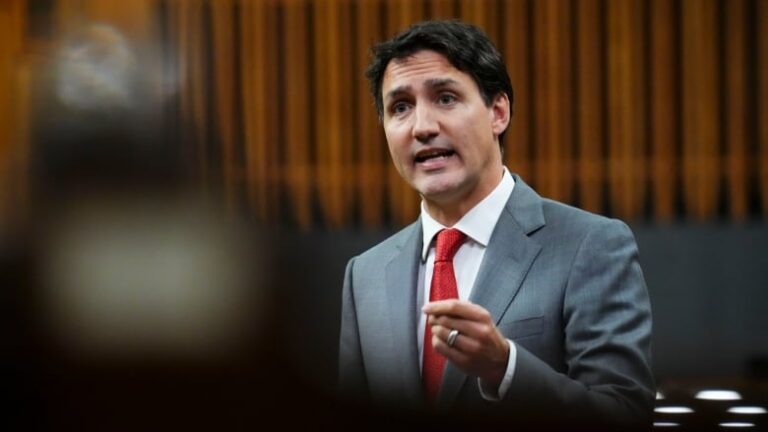
Canadian Prime Minister Justin Trudeau has announced plans to bar about 10,000 IRGC members and officers of Iran’s Islamic Revolutionary Guard Corps from entering Canada, as international pressure on Tehran builds amid ongoing anti-government protests.

During a news conference on Friday, Trudeau said the top 50 percent of the IRGC’s leadership would get lifetime entry bans under new penalties imposed through Canada’s Immigration and Refugee Protection Act.

The IRGC is a branch of the Iranian military that ultimately answers to Supreme Leader Ali Khamenei. It is responsible for the Iranian government’s covert foreign operations and military support for regional allies.

Trudeau also said his government would invest $55m (76 million Canadian dollars) to enforce its sanctions regime, while expanding its capacity to prevent individuals and groups affiliated with Iranian state authorities from laundering money in Canada, among other curbs.

Iran has faced growing international condemnation following the death of Mahsa Amini in Iranian police custody. The 22-year-old died after she was detained last month in Tehran by the country’s so-called “morality police” for her attire.

Dozens of people have been killed in the ensuing demonstrations, while many others have been arrested.

Canada’s Iranian sanctions push came amid frayed relations between the two countries, which worsened in the aftermath of the downing of a Ukrainian International Airlines plane over Tehran in early 2020.

The IRGC said it shot down Flight PS752 by accident after mistaking it for a missile at a moment of heightened tensions over the killing of Iranian General Qassem Soleimani in a US strike in Baghdad, Iraq.

The incident – which killed all 176 passengers and crew on board, dozens of whom had connections to Canada – spurred global anger and the Trudeau government has led international efforts to seek accountability.

Iranian-Canadian lawyer and human rights activist Kaveh Shahrooz said Friday’s announcement was “underwhelming.”

“Making 10,000 members of the IRGC inadmissible to Canada is good, but it doesn’t go far enough and I don’t think it recognizes the sheer monstrosity of this organization,” Shahrooz said.

Iranian students chant ‘get out’ at IRGC official visiting school

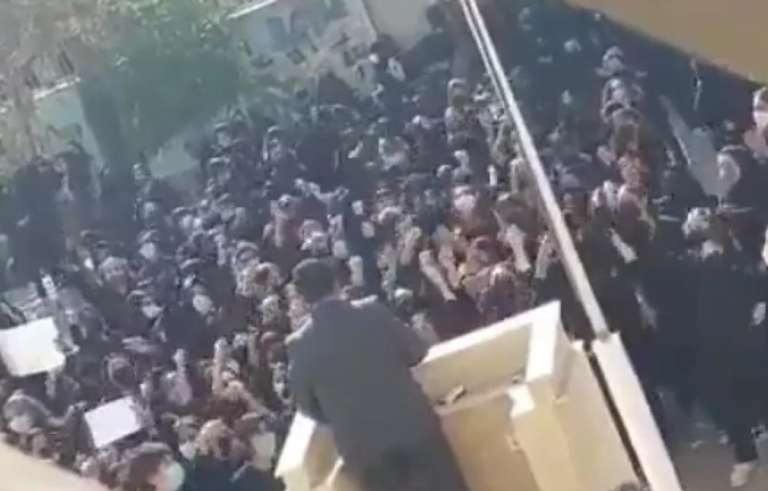
Video has circulated on social media of Iranian students waving their headscarves and chanting “get out” at a member of the Islamic Revolutionary Guards Corps (IRGC) during a talk at their school.

“Get out, Basiji!” shout the pupils, referring to a faction of the IRGC that often enforces internal security in the country.

The video is the latest in a series of wildcat demonstrations by pupils and students against government officials in the country.

Protests have continued across the country over the death in custody of 22-year-old Iranian Kurdish woman Mahsa Amini following her arrest by the “morality police” for an alleged “bad hijab”.

Schools and university campuses have emerged as a key hub for the demonstrations, with clashes breaking out between Iranian students and security services.

Iran’s government has responded to the demonstrations with violence, blaming them on foreign agitators, and arresting hundreds.

The Norway-based Iran Human Rights group reported that by 2 October, 133 people had been killed during three weeks of protests.

Iran’s Supreme Leader Ayatollah Ali Khamenei on Monday gave his full backing to security forces confronting protests, comments that could herald a harsher crackdown to quell the ongoing unrest.

Although Khamenei said he was “deeply heartbroken” by the death of Amini, which he labeled a “tragic incident”, he said the demonstrations and “rioting” had been “planned”.

“These riots and insecurities were designed by America and the Zionist regime, and their employees,” he told a gathering of police students, referring to Israel.

HRW: Iranian security forces firing on and killing protesters

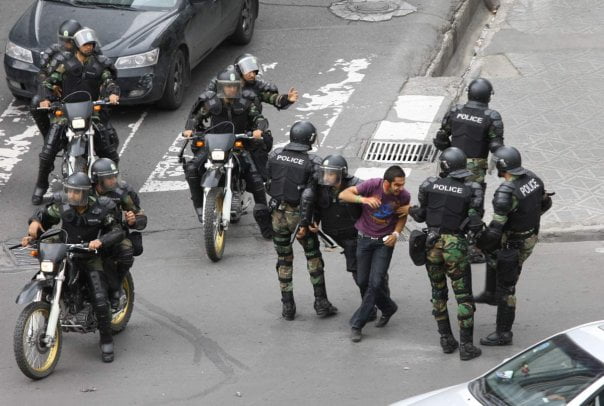
Iranian security forces have ruthlessly cracked down on widespread anti-government protests with excessive and lethal force throughout Iran, Human Rights Watch said today.

Based on videos of protests, and interviews with witnesses and a security force member, Human Rights Watch documented numerous incidents of Iranian security forces unlawfully using excessive or lethal force against protesters in 13 cities across Iran. Videos showed security forces using shotguns, assault rifles, and handguns against protesters in largely peaceful and often crowded settings, altogether killing and injuring hundreds. In some cases, they shot at people who were running away.

“The Iranian security forces’ brutal response to protests across many cities indicates concerted action by the government to crush dissent with cruel disregard for life,” said Tara Sepehri Far, senior Iran researcher at Human Rights Watch. “The security forces’ widespread shooting of protesters only serves to fuel anger against a corrupt and autocratic government.”

Protests began on September 16, 2022, after 22-year-old Mahsa (Jina) Amini’s death in the custody of Iran’s abusive “morality police”. Concerned governments should cooperate to increase pressure on Iran and undertake a United Nations-led independent inquiry into serious abuses committed during the protests and recommend avenues for holding those responsible to account.

Human Rights Watch verified 16 videos posted on social media that depict protests from September 17 to 22. The videos show police and other security forces using excessive and lethal force against protesters in Tehran, the capital, and the cities of Divandarreh, Garmsar, Hamedan, Kerman, Mashhad, Mehrshahr, Rasht, and Shiraz. They include instances of security forces using firearms, such as handguns and Kalashnikov-pattern assault rifles. Human Rights Watch also interviewed five witnesses to the crackdowns in Sanandaj, Marivan, Saghez, and Mashhad, and a security forces member.

Human Rights Watch also analyzed photos and videos showing grievous, and sometimes lethal, injuries to demonstrators. This research did not include the deadly crackdown by security forces in Zahedan on September 30, nor subsequent attacks against protesters, including on Sharif University Campus in Tehran on October 2.

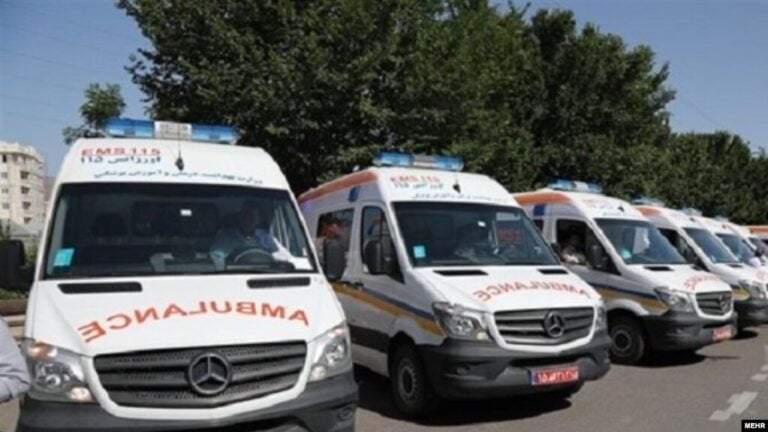
Iran security forces use ambulance to shoot at civilians

0

The use of ambulances by the Islamic Republic security forces to transport combatants and weapons, as well as shooting civilians and arresting them, is a war crime.

In the two weeks since the Iranian people have been protesting the murder of Mahsa Amini in morality police custody, social media users have repeatedly warned that security forces have used ambulances to arrest and transport protestors.

Several videos have been published that show ambulances standing in line in front of detention centers and police stations, or other facilities that are connected to the authorities in some way.

Some show arrested people being transported by ambulance. In one, young people recover several others who had been arrested and were going to be transferred to the detention center by ambulance.

A picture taken by a Twitter user shows a vehicle painted to look like an ambulance bearing a green number plate, which indicates that it belongs to the military and security forces.

Pro-government forces and official media have reported that ambulances have been set on fire, calling protesters vandals and rioters.

Health minister Bahram Einollahi claimed on Tuesday that during the first 10 days of protests, 72 ambulances had been destroyed.

“The country is facing a shortage of ambulances and difficult conditions have been created,” he said.

At the same time, many users on social networks, especially Twitter, have warned about the potential violation of international laws, asking the International Committee of the Red Cross to prevent this practice.

Why and how does the security apparatus of the Islamic Republic use ambulances to capture transport its detainees – and is this a new practise?

Along with the increasing number of reports about the security forces using ambulances for cover, some users have called the issue to be addressed by the International Committee of the Red Cross (ICRC), which aims to safeguard humanitarian law during conflict.

Coalition strikes in Syria paralyze IRGC and Iran-backed militias

0

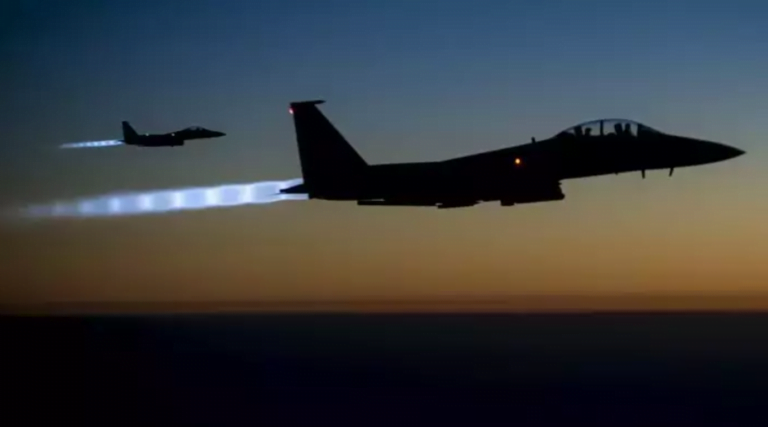
Iran-backed militias operating in eastern Syria are isolated and fearful after a succession of international coalition air strikes targeted their infrastructure, weakened their missile arsenal and forced them into hiding, local sources said.

The air strikes significantly restricted the movement and activities of the Islamic Revolutionary Guard Corps (IRGC) and its proxies and forced them to take precautions to avoid further losses, they added.

A series of coalition air strikes on August 24 targeted infrastructure facilities used by groups affiliated with the IRGC in north-eastern Syria, including ammunition caches, missile platforms and logistical support equipment.

The strikes targeted sites on the outskirts of Deir Ezzor city, including al-Saiqa military camp, the IRGC’s Ayash weapons depots and positions of Lebanese Hezbollah and the Fatemiyoun Division.

They also targeted fortified Iran-backed militias positions in the desert around al-Mayadeen and Hawija-Sakr.

The strikes came in response to continuous threats to the headquarters of the international coalition forces tasked with curbing attacks carried out by “Islamic State of Iraq and Syria” (ISIS) remnants in Syrian territory.

On August 15, international coalition forces repelled multiple drones targeting al-Tanf garrison, in the tri-border area of southern Syria.

Iran-backed militias operating in the area have staged regular attacks on the garrison and on other bases hosting international coalition personnel.

On September 18, indirect fire struck in the vicinity of Green Village in eastern Syria, an incident the international coalition described as “an attempted attack on our coalition forces and partners”.

There were no casualties or damage to infrastructure.

Green Village also was attacked on August 16, and on January 5, coalition forces at Green Village were attacked by Iran-backed malign actors with eight rockets.

“The coalition and our partner forces are committed to the mission — maintaining the ongoing defeat of ISIS,” international coalition commander Maj. Gen. Matthew McFarlane said in a statement.

“Reckless actions such as this will not distract us.”

Iran IRGC vows continued attacks on Iraq despite civilian casualties

0

The Iran IRGC forces warned they will continue attacks on bases in neighboring Iraq until Kurdish rebels they accuse of spreading unrest nationwide are disarmed.

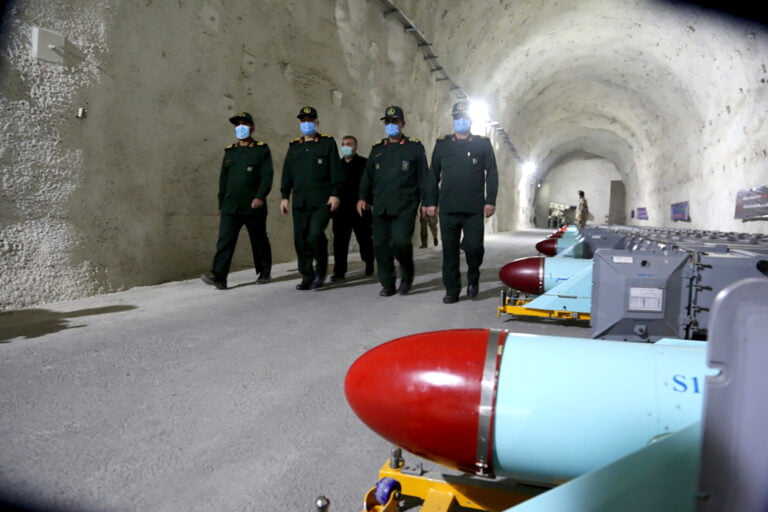
The Iran IRGC force launched a barrage of missile and drone strikes on Iraq’s autonomous Kurdistan region on Wednesday, killing 14 people, including a US citizen.

In a statement late Thursday, the Guards said they were using “all kinds of missiles, kamikaze and combat drones” in the operations against bases and headquarters of what they called “terrorists.”

“These operations will continue until the terrorist groups are disarmed and we ask the central government and the government of the northern region of Iraq to show more seriousness in their responsibilities towards Iran as a neighbor,” the statement added.

The Iran IRGC forces accused Iraq-based Kurdish groups of “attacking and infiltrating Iran… to sow insecurity and riots, and spread unrest.”

The IRGC attacks against the Parti Azadi Kurdistan, aka PAK (Kurdistan Freedom Party) have killed five and injured several others.

The IRGC claims its Ground Force has used pinpoint accuracy missiles and suicide drones to attack the positions in Iraqi Kurdistan which “played the most important role in the recent riots in Iran.”

On Wednesday, US State Department spokesman Ned Price said Washington “strongly condemns” Iran’s “brazen attacks” across the border, followed by Germany’s rejection of “attempts to locate the causes of the Iranian protests in” Iraq.

A wave of unrest has rocked Iran since Mahsa Amini, a 22-year-old from Iran’s Kurdistan province, died three days after her arrest by the morality police in Tehran for allegedly not observing the mandatory dress code for women.

Street violence led to the deaths of dozens of people – mostly protesters but also members of the security forces – and thousands of arrests.

Protests have been particularly well observed in Kurdish communities in western Iran that share strong connections with Kurdish-inhabited areas of Iraq.