Home Blog Page 12

State Department: IRGC missile strikes killed American citizen

0

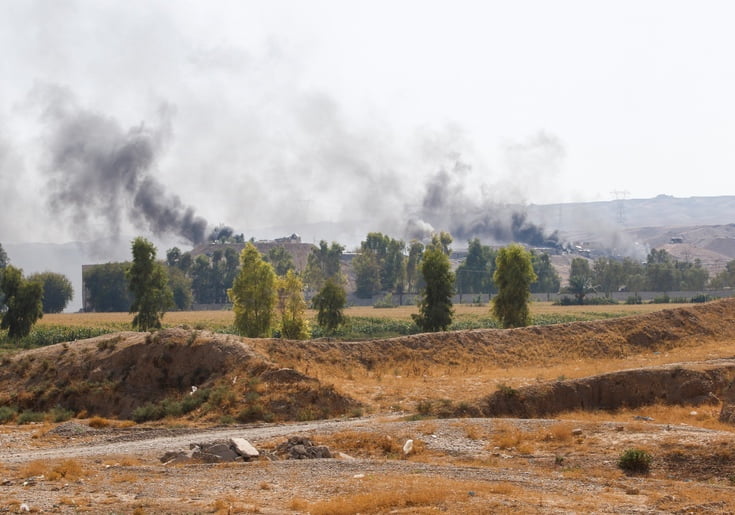
An American citizen was killed on Wednesday during a series of Iran-orchestrated IRGC missile strikes in Iraq, the State Department confirmed on Thursday.

“We can confirm that a U.S. citizen was killed as a result of a rocket attack in the Iraqi Kurdistan region yesterday, but due to privacy considerations I don’t have any further comments to provide,” State Department deputy spokesman Vedant Patel told reporters during Thursday’s press briefing.

Reports emerged late Wednesday that an American citizen was killed after Iran-backed militants sponsored by the country’s Islamic Revolutionary Guards Corps (IRGC) launched a spate of IRGC missile attacks in Iraq’s Kurdistan region. The State Department criticized the attacks, but would not say if it is taking any punitive measures, such as sanctions, as a result. The IRGC is one of the region’s top terror sponsors and has killed hundreds of Americans over the years.

Iran International, a regional media outlet, posted on Twitter what it said is a picture of the dead American citizen’s passport, which identified the individual as Omer Mahmoudzadeh.

The State Department would not confirm any of these details.

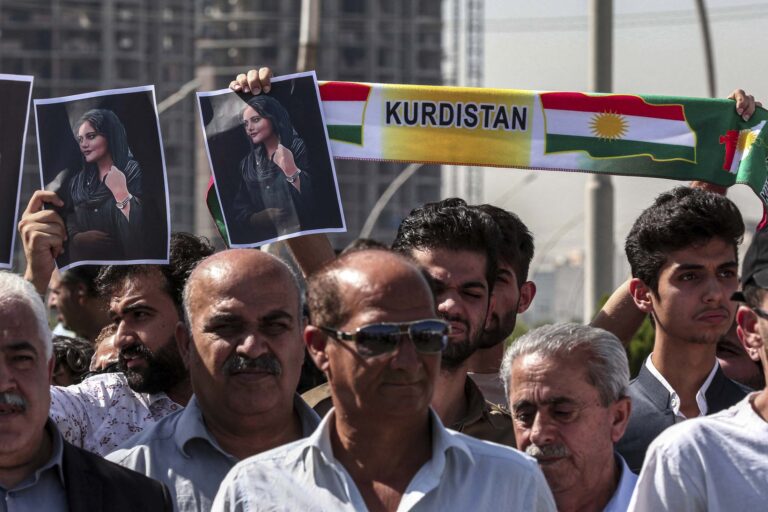
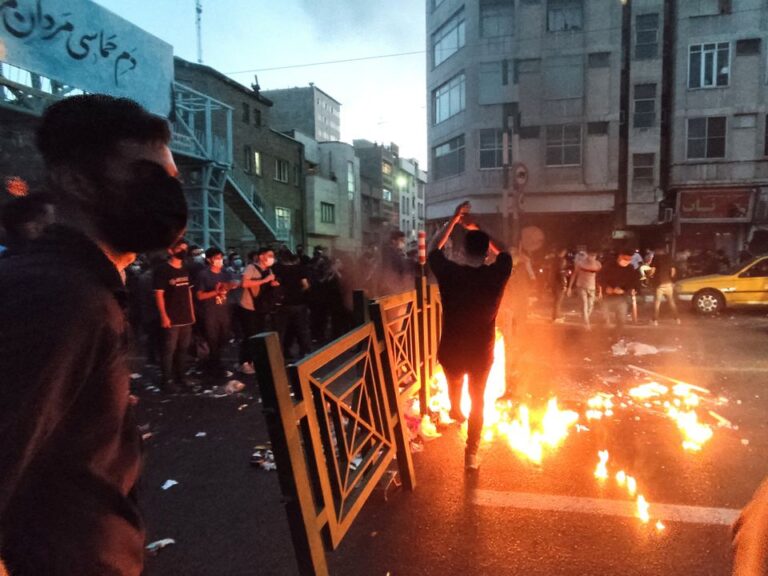
The Iranian bombing took place amid protests that erupted nearly two weeks ago in Iran over the death of Mahsa Amini, 22, who died on September 16 three days after being detained in Tehran by the morality police for allegedly breaching Iran’s strict rules on head scarves.

The wave of protests and a crackdown that followed have left scores of demonstrators dead over the past 12 nights.

The IRGC has accused Iraq-based Kurdish groups of “attacking and infiltrating Iran to sow insecurity and riots and spread unrest.”

IRNA said the IRGC targeted bases of a separatist group in the north of Iraq with “precision missiles” and “suicide drones.”

The attacks targeted the political offices of Kurdish parties as well as the Iranian Kurdish refugee camp.

U.S. Central Command said it downed an Iranian drone while it was on its way to Irbil, adding that the drone appeared to pose a threat to U.S. personnel in the region.

Ex-IRGC officer releases evidence about Mahsa Amini murder

0

New audio footage released by a former IRGC commander has provided further evidence that Mahsa Amini, the young girl whose death sparked an uprising in Iran, died due to blows to her head.

In the audio tape published on Youtube on Thursday, Mohammad-Bagher Bakhtiar, a former commander of the Revolutionary Guard during Iran’s 1980-88 war with Iraq, quoted informed sources at the Forensic Medicine Organization as saying that Amini died because of a “blow to her skull”.

According to Bakhtiar’s “reliable sources,” after she was transferred to Tehran’s Kasra Hospital and examined, evidence of internal bleeding and damage to her spleen was found. The spleen was removed to stabilize her condition, but her skull injuries caused her to fall into a coma and die.

He added that if the government had “common sense,” and accepted responsibility for this incident, “maybe they would have suffered less consequences”.

The former IRGC commander also accused the Iranian government of hypocrisy and called on the young people of Iran to unite against the regime.

Iran International had earlier published Mahsa’s skull CT scan which showed a bone fracture, hemorrhage, and brain edema.

An eyewitness told Iran International last week that Mahsa Amini had told her in a detention room that an officer had hit her on the head.

13 Killed in Iraqi Kurdistan following Iranian bombing campaign

0

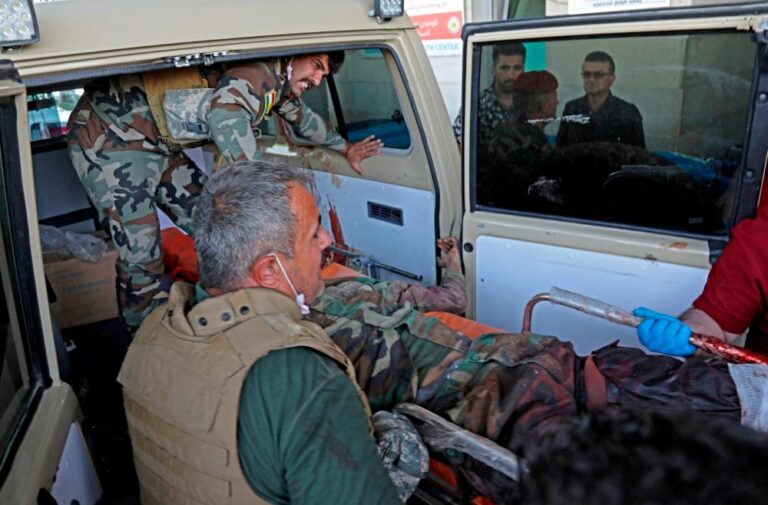
An Iranian bombing campaign targeted Iraq’s northern Kurdish region on September 28, killing least 13 people and wounding 58 others, Iraq’s state news agency said.

The Islamic Revolutionary Guards Corp (IRGC) fired on targets in Iraq’s northern Kurdish regional capital of Irbil and the eastern Iraqi city of Sulaymaniyah, the Iranian state news agency IRNA reported.

The Iranian bombing took place amid protests that erupted nearly two weeks ago in Iran over the death of Mahsa Amini, 22, who died on September 16 three days after being detained in Tehran by the morality police for allegedly breaching Iran’s strict rules on head scarves.

The wave of protests and a crackdown that followed have left scores of demonstrators dead over the past 12 nights.

The IRGC has accused Iraq-based Kurdish groups of “attacking and infiltrating Iran to sow insecurity and riots and spread unrest.”

IRNA said the IRGC targeted bases of a separatist group in the north of Iraq with “precision missiles” and “suicide drones.”

The attacks targeted the political offices of Kurdish parties as well as the Iranian Kurdish refugee camp.

U.S. Central Command said it downed an Iranian drone while it was on its way to Irbil, adding that the drone appeared to pose a threat to U.S. personnel in the region.
“No U.S. forces were wounded or killed as a result of the strikes and there is no damage to U.S. equipment,” it said in a statement.

A senior member of Komala, an exiled Iranian Kurdish opposition party, told Reuters that several of their offices were struck.

Tariq Haidari, the mayor of the Iraqi Kurdish city of Koye, told Reuters that two people, including a pregnant woman, were killed and 12 wounded. Some of the wounded were rushed in critical condition to a hospital in Irbil, he said.

The United Nations refugee agency in Iraq said on Twitter that the attack “caused damage to the Iranian refugee camps in Koye,” and Iranian refugees were among the casualties.

Iran IRGC: 185 militia members injured in suppressing protests

0

The commander of Iran IRGC Mohammad Rasouloullah Brigade has announced that 185 Basij soldiers were injured during the “mission” to suppress protests in Tehran during the 12 days since nationwide demonstrations erupted after the murder of Mahsa Amini in moral police custody.

A previous commander of Iran IRGC forces, Hossein Hamedani, played a decisive role in suppressing protests in Iran in 2009 during the Green Movement and is referred to as the “controller of 2009 sedition”. The brigade has also been praised by the Iranian authorities for suppressing public protests. Hamedani was later killed in action in Syria during Iran’s intervention in its civil war.

Hassan Hassanzadeh, the current commander of Tehran’s Mohammad Rasoulollah Brigade, said on Wednesday that five of the injured Basij agents were in critical condition. The skull of one was broken, he said.

Hassanzadeh claimed that the injured Basij members were targeted “in dark alleys with small pistols”.

Mehr News Agency also claimed in a news report that 80 police and Basij forces were injured during the recent protests in Mazandaran province.

Mehr quoted a Basij soldier, who was said to be injured and hospitalized in one of the medical centers in Sari, as saying: “We volunteered to be on standby, and on the third night it was my turn to be on shift and to go on patrol with other troops. We stopped at Imam Hassan Street in Sari and took turns resting [between patrols]. It was my turn to rest, but suddenly something hit me and, when I was changing my clothes, I realized that I had been shot and injured.”

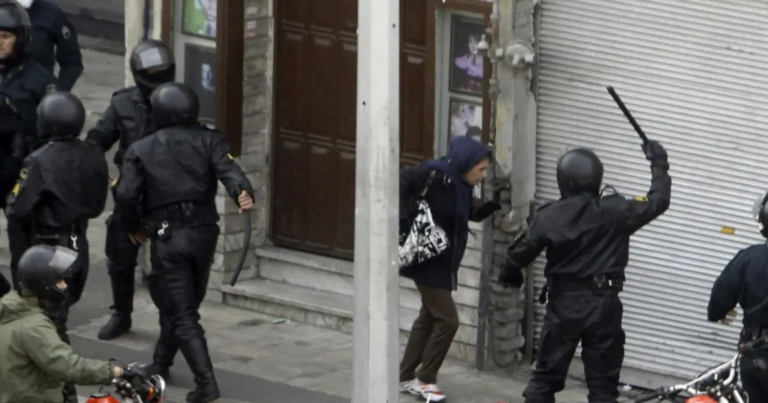
These claims have been published even as hundreds of videos have emerged showing unbridled violence by armed plainclothes officers and police forces against unarmed protesters and sometimes bystanders.

Iran IRGC trains Houthis in Syria before sending them to Yemen

0

According to a recent allegation, the Iran IRGC force has been surreptitiously transporting Houthi troops to Syria for military training along with mercenaries of other nationalities, and then return both groups to Yemen in preparation for combat.

The clandestine operation, which was described in a Nedaa Post report that was published on September 2, further demonstrates the involvement of the Syrian government and the Iran IRGC force in the conflict in Yemen.

The study indicates that despite a ceasefire mediated by the United Nations (UN), which has been in force since April 2, the Houthis and their ally Iran have continued to prepare for military mobilization.

According to Nedaa Post, Cham Wings, a private Syrian airline located in Damascus that is subject to US sanctions, was used by Houthi troops to fly into Syria’s Damascus airport in the latter part of August.

Issam Shammout, the owner of the Cham Wings airline and allegedly a close associate of Russian President Vladimir Putin, is included on a no-fly list by the European Union.

According to the allegation, 60 foreign mercenaries also landed at Damascus International Airport on August 24 and were transported to al-Dreij in rural Damascus with the Houthi forces.

Before going back to Sanaa, they were apparently supposed to complete a 45-day military training school at the al-Saiqa School in al-Dreij.

According to a report in the Nedaa Post, the Houthis are receiving extensive training from Iran IRGC special forces and the Radwan section of Hezbollah in Lebanon.

According to the study, this includes instruction in military tactics, urban warfare, guerilla warfare, as well as the placement and control of improvised explosive devices (IEDs).

According to political analyst Adel al-Shujaa, by giving the Houthis military equipment and training, Iran is moving its conflict with other nations in the area and throughout the world to Yemen.

Senior Iranian regime officials have openly admitted that they have already given the Houthis access to military technologies, he claimed, so “the topic is no longer a secret.”

Iranian IRGC attack Kurdish groups in Iraq for supporting protests

0

In response to countrywide demonstrations that originated in Kurdish regions, the Iranian IRGC claims it has begun a new series of strikes against Kurdish factions in Iraqi Kurdistan.

The Komala Party of Iranian Kurdistan and the Democratic Party of Iranian Kurdistan have been targeted by drone assaults, according to a statement released by the Iranian IRGC on Monday.

The Iranian IRGC has attacked Iraqi Kurdistan twice in less than a week, reportedly in reprisal for supplying troops and weapons for riots in Iran. This latest strike involved firing the positions of Kurdish militias.

In response to protests against Mahsa (Zhina) Amini’s death, which occurred while she was being held by Iran’s hijab police, the IRGC launched an attack on the offices of Kurdish opposition organizations in Erbil’s Sidakan district on Saturday. They claimed that the Kurdish organizations had incited “chaos” in Iran.

Amini was detained and assaulted while visiting Tehran; she came from the Kurdish village of Saqqez. Her hometown and other Kurdish cities were the first to start anti-government protests when she passed away in the hospital.

The IRGC-affiliated Tasnim news agency said that Komala and the Kurdistan Democratic Party of Iran’s headquarters were the targets of the bombardment because they sent “armed squads and a huge amount of weaponry… to the border cities of the nation to foment disorder.”

The Kurdish armed organizations in Iran’s western regions are labeled “terrorist groups” or “anti-revolutionary” by the Islamic Republic, while they claim that the purpose of their military struggle is “defending the rights of the Kurds.”

Kurdish parties generally support Kurdish autonomy within a federal Iran, notably Komala and the Kurdistan Democratic Party of Iran (KDPI).

Iranian IRGC targets footballer Ali Karimi for supporting protests

0

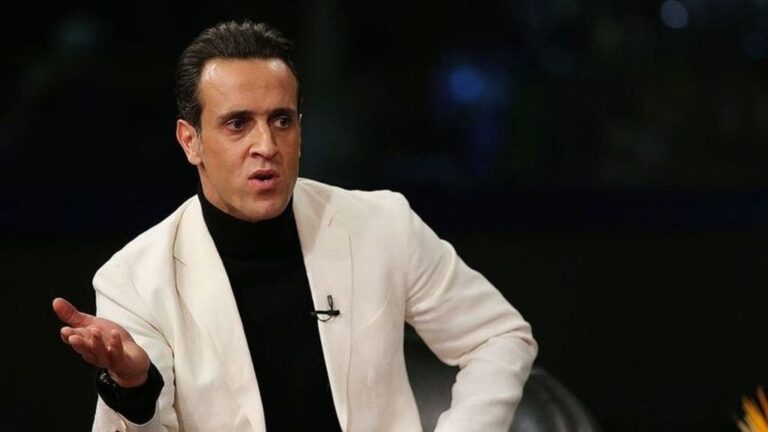
The football sensation Ali Karimi was criticized by the Fars News Agency, which is owned by Iran’s Islamic Revolutionary Guard Corps, for his social media posts endorsing the ongoing protests in Iran.

On Friday morning, it appeared that the agency’s official website was down, possibly as a result of the extensive hacking effort that Anonymous had started two days earlier. However, the piece once more referred to Karimi as a “rabble-rouser”—the label used by Tehran authorities to disparage civilians who are participating in the protests—and urged Iran’s security and judicial agencies to “deal with” him.

Since the passing of Mahsa Amini last Friday, Karimi has been very active online, posting messages against the Islamic Republic and in support of the protesters. Karimi is one of a small but growing number of well-known public figures in Iran who have repeatedly denounced the crimes of the regime going back years. A group of individuals was heard screaming his name last night in Tehran.’

Karimi released two posts on Thursday: one outlining several VPN services Iranians might use to circumvent the government’s internet censorship, and the other outlining how people could secure their online privacy. On Thursday, he also urged people to stop cooperating with Iranian people and organizations that were opposed to the protests. In a single tweet addressed to the military that received more than 140,000 likes, he simply stated, “A motherland is waiting for you. Don’t allow innocent people to die.

One of the most well-known Iranians supporting the demonstrations is Karimi. He formerly played for Persepolis, Al-Ahli Dubai, Bayern Munich, Qatar SC, and Tractor Sazi. From 1998 until his retirement in 2013, he also played for the Iranian national football team. In 2004, he was voted Asian Footballer of the Year.

Karimi has been despised by the Iranian political establishment, and the IRGC in particular, for more than a decade, since the first large-scale pro-democracy rallies in Iran broke out in 2009. Fars has already demanded his arrest several times.

The IRGC accuses Iranian protestors of being foreign agents

0

The IRGC reacted on Thursday by blaming and threatening Iranian protestors following five days of enigmatic quiet over the rallies in Iran.

The IRGC acknowledged “appreciation for the police force’s actions throughout recent days” in the first statement on Thursday, September 22. This was a tacit endorsement of the death of Mahsa Amini and the subsequent attacks that killed, maimed, and injured Iranian protestors. Additionally, it was a sign that the IRGC openly supported the bloody suppression of the protests in over 80 Iranian cities spread across the 31 Iranian provinces.

On the same day, a longer, more resolute statement hailed the police as the guardians of Iranians’ lives, property, and families. While this is happening, multiple videos uploaded on social media show police shootings and frequently hitting women and young people who are protesting.

The main variation in the police’s actions from prior protests since 2009 is that young Iranian men and women have begun to engage in combat for the first time. Videos show them shoving back their plainclothes operatives and highly armed police officers. Particularly in towns like Rasht, Qazvin, and Hamadan, the police force is frequently seen running from daring young people who stand up to them and the Basij militia.

The IRGC accused the demonstrators and frequent hardliners of “sedition,” a tired charge. The government’s strategic accomplishments, such as Iran’s membership in the Shanghai Cooperation Organization and President Ebrahim Raisi’s motivational trip to New York, are allegedly being undermined by the demonstrations, according to Iranian officials and clergy. While simultaneously government agents were assaulting and detaining demonstrators, Raisi participated in the UN General Assembly and spoke there, claiming that his administration was an advocate for justice.

The IRGC statement added insult to injury by equating Iranian demonstrators with fighters for the Islamic State. This occurs when the Iranian police and Basij militia imitated ISIS methods by dispatching soldiers in ambulances to put down protests. The way the hijab police treat women, moreover, is a perfect replica of how ISIS treated women it confronted in Syria and Iraq.

Iranian IRGC assassination campaign to control south Syria

According to Syrian activists, the Iranian IRGC has been methodically assassinating everyone who opposes its expansion in Syria’s Daraa province. This is part of Iran’s continuous efforts to take over the southern portion of the nation.

They said that prominent individuals have been assassinated in the southern region that borders Jordan, and that Iranian-rejecting villages and towns have been bombarded or are under siege.

According to Daraa activist Jumaa al-Masalmeh, there have been significant militia movements and activity over the past several months including Brigade 313, the al-Hadi Battalion, the al-Ghaith Forces, the 4th Division of the Syrian regime, and Liwa Usud al-Iraq.

He said that a worrying new development was the arrival of Fatemiyoun Division fighters near the town of Daraa al-Balad, where more than 350 Afghan gunmen were being supervised by Iranian officials.

According to Syrian attorney Bashir al-Bassam, “it has become evident that the Iranian IRGC has set its eyes on gaining control of the whole southern Syria region, especially given the diminishing of the Russian influence due to the Ukrainian war.” On February 24, Russia invaded Ukraine.

He informed that military and security units connected to the Syrian regime are helping the Iranian IRGC in this respect.

He pointed out that by looking at recent events, it is clear that Iran has been encroaching on Daraa province ever since it entered the conflict in 2014.

Nizar Bou Ali, an activist based in Sweida, says that “Iran is employing all means to strengthen its influence in southern Syria.”

It is “playing on the sectarian hostility between Sweida and Daraa regions, where kidnappings for ransom are common and many cases have resulted in death because the families were unable to pay the ransom,” according to the report.

The gangs responsible for these crimes eventually came to understand that they are “financed and protected by the IRGC and get direct commands from it,” he claimed.

Death tolls of protests in Iran rises as internet is cut off

0

Rising death tolls were claimed by Iranian authorities and a Kurdish rights organization on Wednesday as protests continued for the fifth day and new social media restrictions were implemented in response to the death of a lady who was held by the morality police.

Hengaw, a Kurdish rights organization, said that 10 protestors had died. In addition to the seven persons the organization claimed were slain by security forces on Wednesday, three more perished.

According to Hengaw, locals, and internet shutdown watchdog NetBlocks, officials reportedly imposed internet access restrictions when there was no evidence that the protests were abating.

Activists voiced worry that the internet blackout was a repeat of a government action before to a crackdown on the 2019 gasoline price demonstrations, which according to Reuters resulted in 1,500 fatalities.

Residents and NetBlocks said that several mobile phone networks had been shut down and that access to Instagram, the one significant social media platform that Iran typically permits and which has millions of users, had been banned.

Anger about topics like freedoms in the Islamic Republic and a struggling economy brought on by sanctions was released as a result of Amini’s passing. Women have been active in the protests, waving and burning their veils, and some have even had their hair chopped in the open.

A protester in the region of Kurdistan in northwest Asia claimed, “We are receiving threats from the security organizations to cease the protests or risk incarceration.”

In addition to the 10 demonstrators who perished, according to Hengaw, 450 others were also hurt during the protests, which largely took place in the northwest.

Social media users posted videos of protesters vandalizing Islamic Republic insignia and battling security personnel.