Home Blog Page 14

Iranian IRGC proxies expand influence in Syria

0

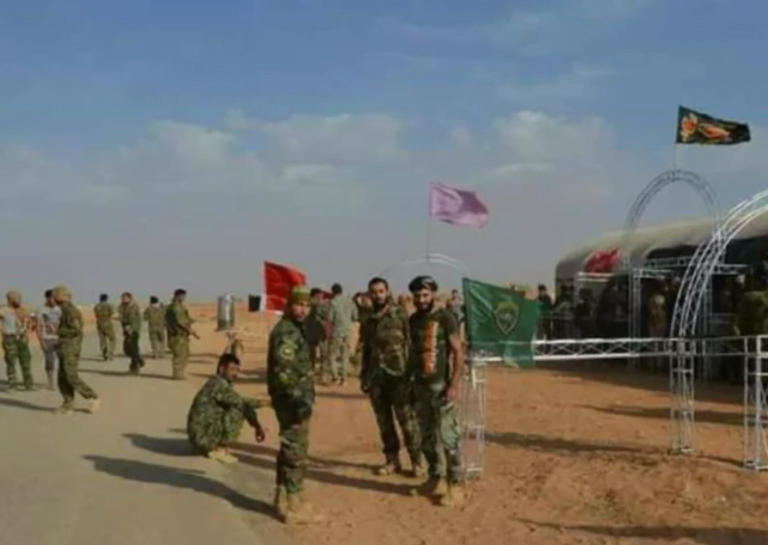
Iranian IRGC is sending more military and logistical reinforcements into northeastern Syria in an effort to take advantage of tensions between the Turkish Army and affiliated forces and the Kurdish-dominated Syrian Democratic Forces (SDF) along the northern Syrian border. Iran is doing this with the aid of its proxies on the ground. Notably, in recent weeks SAA battalions dispatched to reinforce Hasakah Province have included Iranian proxies’ personnel.

In the countryside south of the city of Qamishli, new recruiting offices have reportedly been established by Iran. These recruiting offices are run by Hajj Mahdi, the regional leader of Lebanese Hezbollah and the Iranian IRGC representative in Hasakah. They give prospective recruits compensation of $100 per month in an effort to get them to join the group. Over 1,200 people have already been enlisted into the so-called Hezbollah Task Force as a result of these efforts. Mahdi is attempting to establish two offices along the M4 Highway: a transportation office for Task Force commanders as well as an armaments depot and training facility for fresh recruits.

Mahdi appears to have overcome any obstacles to his recruiting campaign, albeit encountering some pushback from the NDF commander in Qamishli who is affiliated with Russia. Col. Ahmad al-Hasan was recently fired from the NDF and replaced by Hassan al-Salloumi, a known IRGC ally, thanks to a quick personnel move made possible by Mahdi. Despite criticism over Iran’s position in the area, such appointments show Mahdi’s expanding power.

Private sources from inside Hasakah City have recently confirmed that Saraya al-Khorasani, a group originally affiliated with the IRGC in Iraq, has opened a new headquarters inside the city with the aid of local NDF commander Abdulkadir Hamo. Prior to the inauguration, Mahdi visited the center alongside the Iraqi commanders Ahmed al-Kinani and Abu al-Hassan to facilitate its opening and strengthen his relationship with Hamo.
Iran reveals suicide drone designed specifically to hit Israel

0

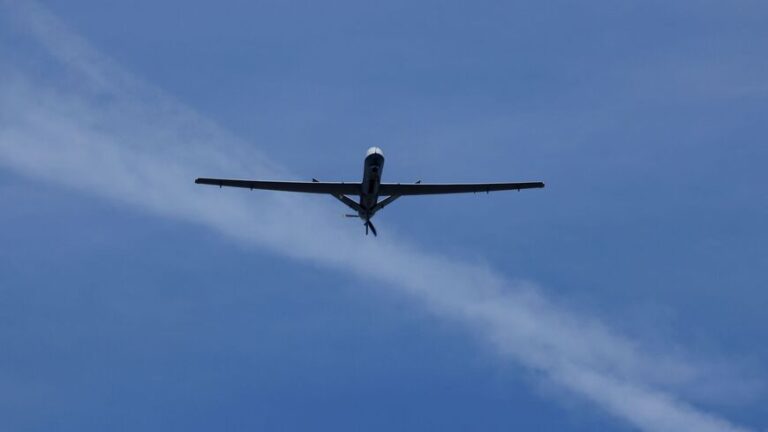
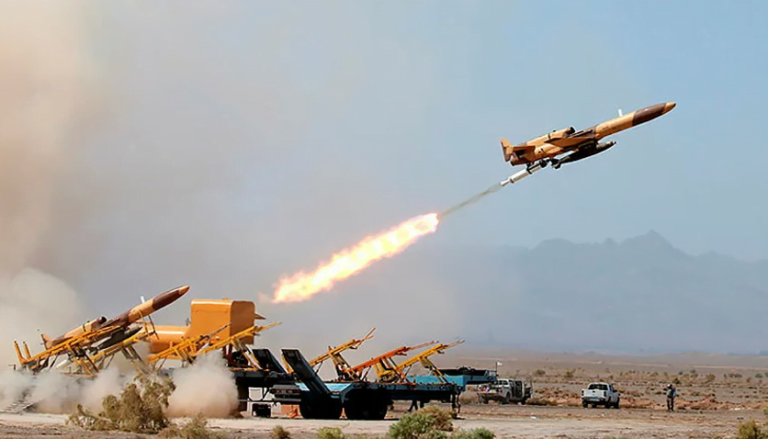
Iran said on Monday that it had created a suicide drone with the sole purpose of attacking Tel Aviv and Haifa in Israel, according to the semi-official Mehr News Agency.

The Arash-2 suicide drone is an improved version of its predecessor and is intended to target the cities of Iran’s fierce foe Israel, according to Kiomars Heydari, the commander of the Iranian army’s ground forces.

The drone has “special capabilities and can recover numerous times until it strikes the target,” Heydari stated, adding that “we have evaluated this drone specifically for the attack on Haifa and Tel Aviv.”

As part of his country’s ongoing attempts to threaten the restoration of the 2015 nuclear agreement, which it sees as faulty, Israeli Prime Minister Yair Lapid cautioned Iran on Tuesday not to test his nation’s “long arm” in a video while standing next to an F-35 stealth bomber jet.

Heydari affirmed that the drone had been added to the army’s inventory and that its capabilities would soon be made public.

As part of its ongoing efforts to guarantee that the nuclear agreement does not become a reality, Israel has promised to do all in its power to prevent its longtime foe from acquiring a nuclear weapon.

Lapid visited Germany on Sunday to persuade other European nations to oppose the agreement. His trip comes after a trio of European nations—Germany, France, and Britain—released a statement saying they had “serious reservations” about Iran’s seriousness in returning to the nuclear agreement.

The United Nations’ nuclear watchdog said that the European superpowers were “not in a position to give confidence that Iran’s nuclear program is entirely benign,” prompting the declaration from them.

Throughout Syria’s 11-year civil war, Iran’s archenemy has repeatedly targeted the forces it supports outside of its borders, launching hundreds of airstrikes on areas under regime control while frequently claiming to be attacking the bases and supplies of Iran-backed militias, like Lebanon’s Hezbollah organization, there.

Iran Probes $170 Million Fraud In Petrochemical Firm

0

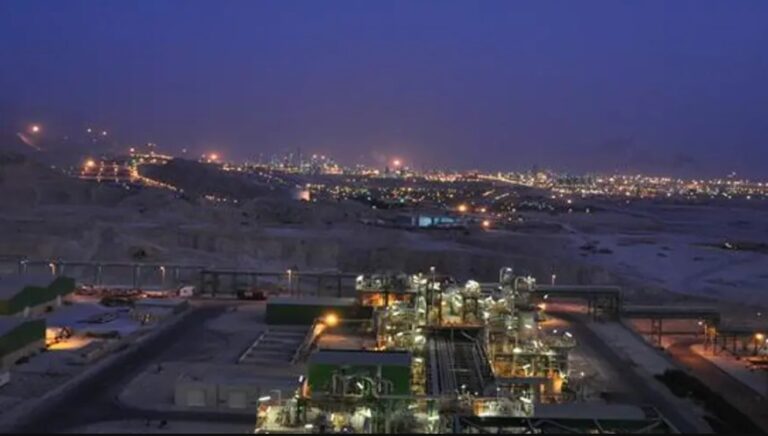
A $170 million apparent embezzlement case has left one of Iran’s natural gas producers in serious trouble and might reduce production at the onset of winter.

The issue of possible fraud or some sort of corruption is not straightforward as one might expect in a typical Western company. There are Iranian nuances in the case that makes it a bit different.

Mehr Petrochemicals produces the highest-grade polyethylene in the Middle East but it stands at the verge of bankruptcy, according to Eghtesad Online (Economy Online) a recognized website in Iran reporting on economic issue.

The firm belongs to Persian Gulf Holding, a large Iranian quasi-governmental company that claims to be an independent entity, with 15 subsidiaries.

Mehr Petrochemicals, as an Iranian company is supposed to repatriate its foreign currency earnings according to law, as it exports products and receives government dollars at preferential rates when it for importing equipment or chemicals.

The problem is that it has failed to bring back $170 million to the country and apparently the money has simply vanished.

The Iranian Inspector General’s office has issued a report saying that Mehr owes close to $100 million locally and its export revenues are missing.

The danger in the company going bankrupt and shutting down is loss of gas output in the South Pars fields in the Persian Gulf, Iranian media say.

Mehr plays a role in gas production because it needs it for producing petrochemicals.

In the middle of the scandal stands a mysterious and unnamed foreign investor, reportedly a firm registered in Italy.

The story goes back seventeen years, when Mehr Petrochemicals was established with a 60-percent foreign stake by a Japanese-Thai consortium, with some management rights over the company.

In 2018, in the wake of renewed economic sanctions by the United States, the foreign investor decided to divest of its stake in the company.

Iran Accuses US Of Using Opposition Group For Cyberattacks

0

Tehran alleged Saturday that the US has trained and equipped opposition group Mujahideen-e Khalq (MEK) for “cyberattacks and psychological warfare” against Iran.

The United States Treasury Department Friday sanctioned Iran’s intelligence ministry and intelligence minister Esmail Khatib for alleged cyber operations against the US and its allies.

The sanctions were announced two days after Albania, a NATO member since 2009, broke off diplomatic relations with Iran alleging that Tehran was behind the disruption of Albanian government computer systems in mid-July.

“The US immediate support for Albania’s baseless accusation against Iran and Washington’s prompt action to repeat sanctions relying on the undocumented accusation against the Ministry of Intelligence indicate clearly that the maker of the scenario is not the Albanian government but the American administration,” the spokesman said.

Kanaani accused the United States of forcing Albania to host a “known terrorist cult”, MEK, on the government and people of Albania.

Kanaani added that the Islamic Republic would do everything within the framework of international laws to “fulfil the rights of its people and defend itself against sinister plots.”

In a new blog post September 8, Microsoft said its Security Threat Intelligence has assessed that the perpetrators of the cyberattack on Albania were a subgroup of Iranian threat actors.

“Microsoft assessed with high confidence that on July 15, 2022, actors sponsored by the Iranian government conducted a destructive cyberattack against the Albanian government, disrupting government websites and public services,” adding that Microsoft security intelligence assesses that a separate Iranian state-sponsored actor leaked sensitive information that had been exfiltrated months earlier through various websites and social media outlets.

“Microsoft assessed with moderate confidence that the actors involved in gaining initial access and exfiltrating data in the attack are linked to the EUROPIUM, which has been publicly linked to Iran’s Ministry of Intelligence and Security (MOIS),” Microsoft said.

Iranian Embassy doors forced open by police after expulsion

0

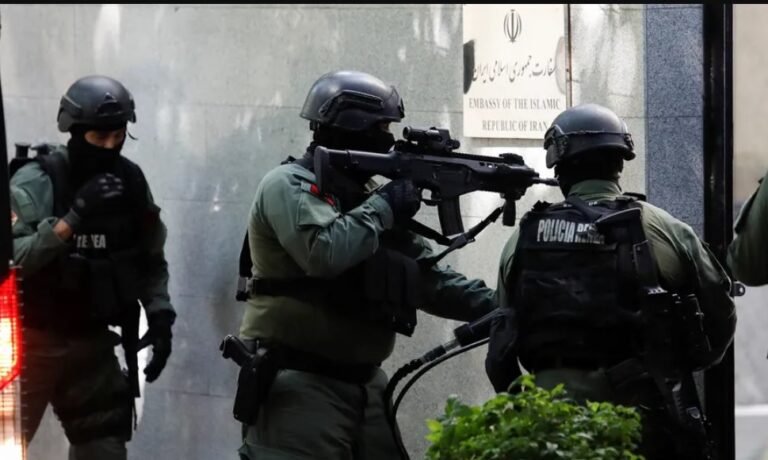
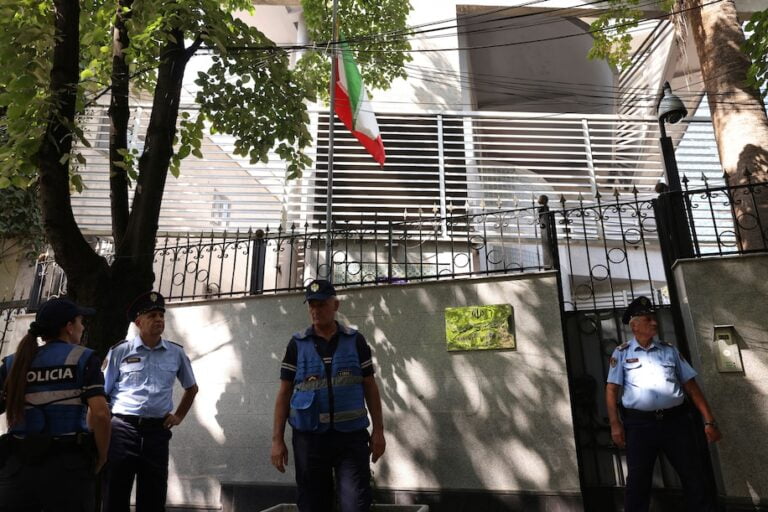
On Thursday, Albanian special forces police broke down the entrance of the Iranian Embassy in Tirana and encircled the building’s grounds just after the final employees had departed the structure after the government ordered their removal.

Other cops carrying equipment and being led by a dog then entered the premises after the officers wearing full fighting gear.

In response to a significant cyberattack that the Albanian government accuses Iran of carrying out, the Albanian government on Wednesday gave the embassy’s workers 24 hours to leave the country. It is the first instance that has been documented of a nation severing diplomatic ties over a cyberattack.

After a lot of activity within the building overnight, the final two embassy cars with roughly 10 occupants exited the premises on Thursday at about midday.

The Iranian embassy in Tirana had been bustling constantly all night. At one time an empty barrel was brought into the property where a fire was lit burning documents.

Numerous digital services and websites run by the Albanian government were momentarily unavailable due to a cyberattack on July 15. There is undeniable proof, according to Prime Minister Edi Rama, that the Iranian government was responsible for the attack.

Along with Albania, the European Union condemned the hack and pledged full solidarity.

The Iranian Foreign Ministry refuted in a statement that Tehran was responsible for any hack on the websites of the Albanian government, saying that Iran is the victim of such attacks on its vital infrastructure.

Iran and Albania have had tight relations ever since Albania provided asylum to over 3,000 MEK (Mujahedeen-e-Khalq), an Iranian dissident organization that had fled Iraq, in 2014.

Tirana dismissed four Iranian diplomats twice, in 2020 and 2018, for threatening national security.

Iranian IRGC builds advanced weapons base in eastern Syria

0

In an exclusive post published on Thursday, the Syrian opposition website Ayn Al-Furat (“Eye of Euphrates”) claims that the Iranian IRGC is building “a massive base to keep advanced weaponry” close to Ayn Ali in the eastern Syrian province of Deir Al-Zour.

The new base is being built in the desert, where the “second-largest concentration of Iranian forces in eastern Syria” is located, just like the Imam Ali base, which Iran recently established nearby Al-Bukamal, according to a report by MEMRI’s Jihad and Terrorism Threat Monitor (JTTM), which was exclusively shared with JNS.

On a recent trip from Damascus to the military base in Deir Al-Zour, thirty Iranian Revolutionary Guards officers of various positions and specialties arrived in the region.

The Iranian IRGC has allegedly started preparing the land for the base’s development and has also brought in heavy construction equipment from Al-Bukamal and Al-Mayadin under tight security.

It plans to build subterranean storage facilities for the weapons that routinely arrive from Iraq, disguised either in buses bringing pilgrims to Shi’ite holy sites in Syria or in refrigerated trucks for agricultural supplies, according to the JTTM report. A tunnel network linking all the missile and weapon installations in the Ayn Ali region is also being built by the IRGC.

Additionally, the militias built “a vast security fortress” with several locations outfitted with ground-to-ground missiles and heavy weapons in the Ayn Ali region.

IRGC linked individuals sanctioned for shipping weapons to Russia

0

The Office of Foreign Assets Control (OFAC) of the U.S. Department of the Treasury has designated an IRGC linked air transportation company for its role in the transfer of Iranian unmanned aerial vehicles (UAVs) to Russia for use in its conflict with Ukraine.

Additionally, the Iranian Navy, the Islamic Revolutionary Guard Corps (IRGC), and its Aerospace Force (IRGC ASF) are receiving a designation from OFAC against three companies and one person who is engaged in the development, manufacture, procurement, and research and development of Iranian unmanned aerial vehicles (UAVs) and UAV components, including the Shahed series of drones.

Russian military flights between Iran and Russia, including those involving the transfer of Iranian UAVs, troops, and associated equipment from Iran to Russia, have been organised by Tehran-based Safiran Airport Services (Safiran), which is IRGC linked. Information also suggests that the Russian Aerospace Forces want to use Iranian UAVs in their conflict with Ukraine alongside Russian UAVs after manufacturing and testing.

UAVs were built and tested for the IRGC Navy by Paravar Pars Company, which is closely related to the IRGC-controlled Imam Hossein University. The Iranian Shahed-171 UAV was created by the IRGC ASF, and Paravar Pars Company was engaged in its research, development, and construction. In the past, the IRGC ASF provided Paravar Pars Company with UAVs created in the United States and Israel, which were subsequently used to copy and reverse-engineer locally produced UAV models.

All property and interests in property owned by people or companies that are physically present in the United States or in the ownership or control of Americans must be prohibited and reported to OFAC because of today’s decision. The rules of OFAC typically forbid any transactions involving any property or interests in property of blocked or designated individuals by U.S. persons or within the United States (including transactions transiting the United States).

FIFA Demands Iran’s Explanation Over Banning Women From Stadium

0

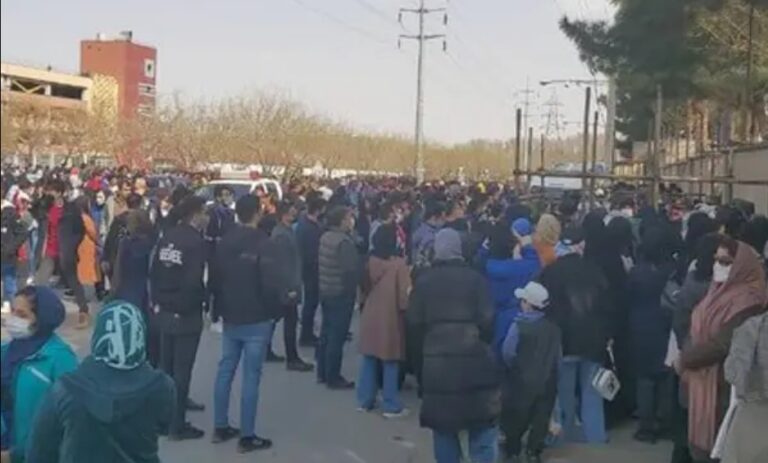
FIFA has asked Iran to explain the incidents surrounding a match in March in the city of Mashhad where women who wanted to watch the game were pepper sprayed.

The Disciplinary Committee of the international governing body of association football – or soccer — sent a letter to the Iranian Football Federation on Tuesday, and gave it a week to provide a response about the events at the FIFA World Cup qualifier between Iran and Lebanon on March 29, during which security forces denied women entry into the stadium and used tear gas and pepper spray to disperse them.

The letter stated five cases of violations of the body’s codes and regulations, adding that investigations are in progress about the incidents.

About 12,500 tickets were sold for the match, and 2,000 of them were allocated for women, but hundreds of women with tickets were not allowed into the Imam Reza stadium in the religious city of Mashhad.

Mashhad is home to numerous hardliner clerics who are against the presence of women in male dominated places.

Firebrand representative of the Supreme Leader in the city, Ayatollah Ahmad Alamolhoda has been banning concerts and cultural events for years.

The forceful banning of women’s entry into the stadium was reportedly ordered by the local clergy.

The world’s soccer authority had tried to convince Iran’s government — which has barred female spectators from stadiums for years claiming it would violate religious rules of decency — to lift the unwritten ban for nearly a decade.

The ban has led to many arrests, beatings, detentions, and abuses against women.

Mashhad is home to numerous hardliner clerics who are against the presence of women in male dominated places.

Firebrand representative of the Supreme Leader in the city, Ayatollah Ahmad Alamolhoda has been banning concerts and cultural events for years.

The forceful banning of women’s entry into the stadium was reportedly ordered by the local clergy.

IRGC hackers target Iran’s domestic and foreign adversaries online

0

According to a new study released on Wednesday, a team of prolific Iranian IRGC hackers has likely been crucial to Iran’s attempts to monitor its domestic and international foes in recent years by targeting US government officials, Iranian dissidents, and journalists.

According to research from US cybersecurity firm Mandiant, the hackers have attempted to hack into the mobile phones of Iranian dissidents as well as the email accounts of US government officials concerned with Iran policy. This emphasizes how heavily the IRGC’s surveillance apparatus is allegedly dependent on cyber operations.

The study was released a month after US prosecutors made public an indictment of an IRGC member for his alleged participation in a plan to kill former US national security advisor John Bolton. Iranian hackers are not connected to that scheme in the Mandiant report. Analysts do, however, connect the hackers to repression: in 2018, they are said to have targeted the Gmail account of an Iranian activist who had been detained by the Iranian government earlier that year.

The report claims that between March and June of last year, the hackers targeted US government officials concerned with the Middle East and Iran policy using a stolen email account belonging to a member of a US-based think group.

It’s not known whether the US government agency was the target of the hacking efforts or if they were successful. A representative at Mandiant declined to provide any context on the story. Regarding the suspected Iranian hacking attempts against US government accounts, CNN has asked the National Security Council for comment.

Based on the hackers’ objectives, which align with the IRGC’s goal of pursuing external threats to the regime and perceived domestic opponents, Mandiant researchers said they had “moderate confidence” that the hacking organization described in their study is affiliated with a spy agency inside the IRGC.

The Iranian government appears to have “trusted the hackers to rapidly react to geopolitical shifts by changing their flexible operations to targets of operational interest to Tehran,” according to Mandiant’s study.

Iranian IRGC behind missile attack in southern Syria

0

The latest drone strike on the al-Tanf air base in southern Syria is directly the fault of Iranian IRGC forces and militias, experts claimed, despite its attempts to shift blame to other parties.

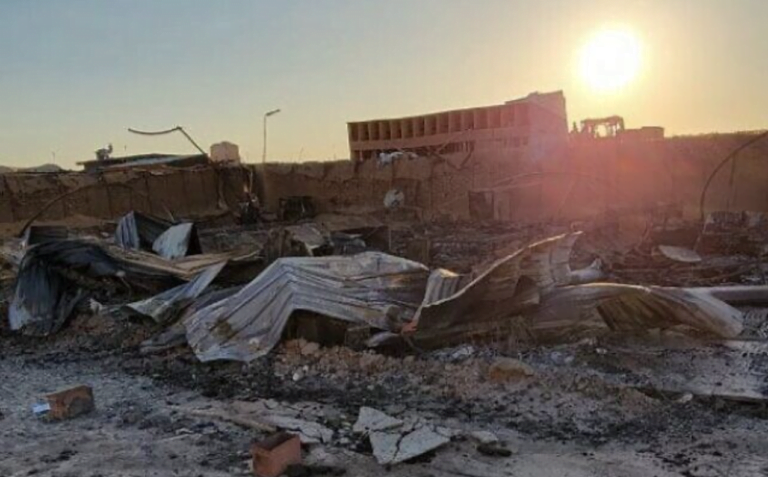
On August 15, US forces destroyed two drones that were aiming toward the al-Tanf outpost in the tri-border region between Syria, Jordan, and Iraq. There were no damages or injuries because of the attack.

Later investigations revealed that the Iranian Samad class drones, which were identified as unmanned aerial vehicles (UAVs), had been used, had been launched from the Jurf al-Sakhr complex in the province of Babil, south of Baghdad.

The compound is a completely closed “military zone” that is under the supervision of Kataib Hizbullah, the major Iraqi affiliate of the Iranian IRGC.

Iranian affairs expert Fathi al-Sayed of the Middle East Centre for Regional and Strategic Studies claimed that the strike that was directed at the al-Tanf facility was a clear Iranian attack on a US military installation.

According to him, this shows that the IRGC wishes to keep inciting conflict in the Middle East to forward its goals and ambitions.

He said that this “is a ploy we have seen before from the IRGC” as they sought to obscure their involvement by attributing the attack to the Syrian rebels.

He stated that these evasions had already been utilized in Lebanon, Iraq, and Yemen to avoid accountability for the [political or military] repercussions of the terrorist act they do.

He continued, saying that the shifting of responsibility reinforces the media’s claim that the strike was “an act of resistance by the Syrian people” against the West and its supporters.

This is just false, he continued, especially considering the US military’s and its regional partners’ significant contributions to the fight against ISIS and the liberation of the Syrian people.