Home Blog Page 143

Pakistan keen on highest level of trade with Iran: Pakistani Advisor

0
Pakistan keen on highest level of trade with Iran: Pakistani Advisor
        Pakistan keen on highest level of trade with Iran: Pakistani Advisor


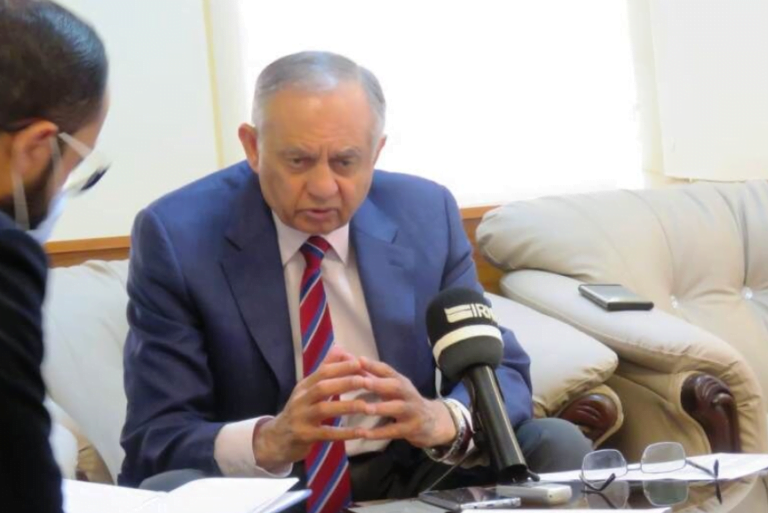
Pakistan’s Advisor to the Prime Minister on Commerce and Investment announcing his participation in the upcoming 9th meeting of Iran-Pakistan Joint Trade Committee, to be held in Tehran, says that Pakistan is determined to take trade relations with Iran to the highest level.


Abdul Razak Dawood a senior politician and a well known business personality made the remarks during an exclusive interview with IRNA on Saturday.


After the formation of the incumbent government of Pakistan, he was appointed as Prime Minister Imran Khan’s Advisor on Commerce and Investment.


He has served as Minister of Commerce in the cabinet of former Pakistani military ruler Pervez Musharraf from 1999 to 2002. In May 2019, he and Pakistani Prime Minister Imran Khan paid a two-day visit to Iran, during which he met with Minister of Industry and Trade Reza Rahmani.


The Advisor to the Prime Minister hosted the Iran’s Minister of Industry and Trade and delegation in Islamabad in mid-July last year, and the two countries held detailed talks on deepening trade and economic relations in the 8th round of the Joint Trade Committee.


**Tehran hosts Iran-Pakistan Joint Trade Committee meeting


Abdul Razak Dawood during the interview said he is looking forward to next Iran-Pakistan Joint trade Committee meeting and hopefully it would be held in the first week of October.


“Yes I will represent Pakistan in the next joint trade committee meeting in Tehran,” he noted. Pakistani Advisor


He said we have many ideas to enhance trade with Iran which we will discuss when the next joint trade committee meeting will be held.


He added that at the conclusion of the 8th Joint Trade Committee hosted by Islamabad we signed an MoU to enhance bilateral trade adding that Pakistan is willing to export more rice to Iran.


Read More


Also Read: IAEA Says Iran’s Stockpile Of Enriched Uranium Has Increased
IAEA Says Iran’s Stockpile Of Enriched Uranium Has Increased

0
IAEA Says Iran's Stockpile Of Enriched Uranium Has Increased

            IAEA Says Iran’s Stockpile Of Enriched Uranium Has Increased


Iran’s stockpile of enriched uranium has increased, and it now stands at more than 10 times the limit set down in the 2015 nuclear deal with world powers, the UN nuclear watchdog said in a report on September 4.


But the International Atomic Energy Agency (IAEA) also said that Iran has begun providing access to sites where the country was suspected of having stored or used undeclared nuclear material.


According to the IAEA quarterly report, Iran as of August 25 had stockpiled 2,105.4 kilograms of low-enriched uranium, up from 1,571.6 kilograms last reported on May 20.


Read More


Also Read: Zaghari-Ratcliffe: UK acknowledges debt owed to Iran over Shah’s tank order

The 2015 deal — known as the Joint Comprehensive Plan of Action (JCPOA) — allows Iran only to keep a stockpile of 202.8 kilograms.The IAEA said that Iran has also been continuing to enrich uranium to a purity of up to 4.5 percent, higher than the 3.67 percent allowed under the deal with world powers. It’s still far short of the 20 percent level it achieved before the deal.However, Iran’s stockpile of heavy water had decreased and is now back within the limits set by the JCPOA, the nuclear watchdog said.The nuclear deal – signed with the United States, Germany, France, Britain, China, and Russia — promised Iran economic incentives in return for the curbs on its nuclear program.In 2018, President Donald Trump pulled the United States out of the deal unilaterally, saying it needed to be renegotiated.Since then, Iran has gradually violated JCPOA restrictions. The remaining nations maintain that even though Iran has been violating many of the pact’s terms, it is important to keep the deal alive because Iran has continued providing the IAEA with critical access to inspect its nuclear facilities.The nuclear deal – signed with the United States, Germany, France, Britain, China, and Russia — promised Iran economic incentives in return for the curbs on its nuclear program.

Zaghari-Ratcliffe: UK acknowledges debt owed to Iran over Shah’s tank order

0
Zaghari-Ratcliffe UK acknowledges debt owed to Iran over Shah's tank order
          Zaghari-Ratcliffe: UK acknowledges debt owed to Iran over Shah’s tank order


The defence secretary, Ben Wallace, has for the first time acknowledged that he is actively seeking to pay a debt to the Iranian government that could finally help to secure the release of British dual nationals including Nazanin Zaghari-Ratcliffe.


Wallace assured lawyers acting for the families that the government was exploring every legal avenue to pay the debt, which for the first time he formally acknowledged the government owes.


The admission came in a letter to the lawyers acting for Zaghari-Ratcliffe, who has been detained in Iran in jail and then house arrest since 2016.


The UK is thought to owe as much as £400m to the Iranian government arising from the non-delivery of Chieftain tanks ordered by the Shah of Iran before his overthrow in 1979.


International arbitration in 2008 ruled the UK owed the debt, but in subsequent protracted court battles, lawyers acting for International Military Services, the Ministry of Defence’s now-defunct arms sales agency, have questioned not only the debt’s size, but at times whether any debt was payable.


Neither Iran nor the UK government formally acknowledges that the release of UK dual nationals in Iranian jails is linked to the non-payment of the debt, although the issue has been raised by Iranian judges and is privately seen as the chief roadblock.


Read More


Also Read: IAEA report creates constructive prospects for ties with Iran: Envoy

In his letter, Wallace writes: “With regard to IMS Ltd and the outstanding legal dispute the government acknowledges there is a debt to be paid and continues to explore every legal avenue for the lawful discharge of that debt.”Any payment must not, however, fall foul of EU or possibly US sanctions.Wallace, as defence secretary, is the 99% shareholder of IMS and so the lead decision-maker. 

IAEA report creates constructive prospects for ties with Iran: Envoy

0
IAEA report creates constructive prospects for ties with Iran Envoy
            IAEA report creates constructive prospects for ties with Iran: Envoy


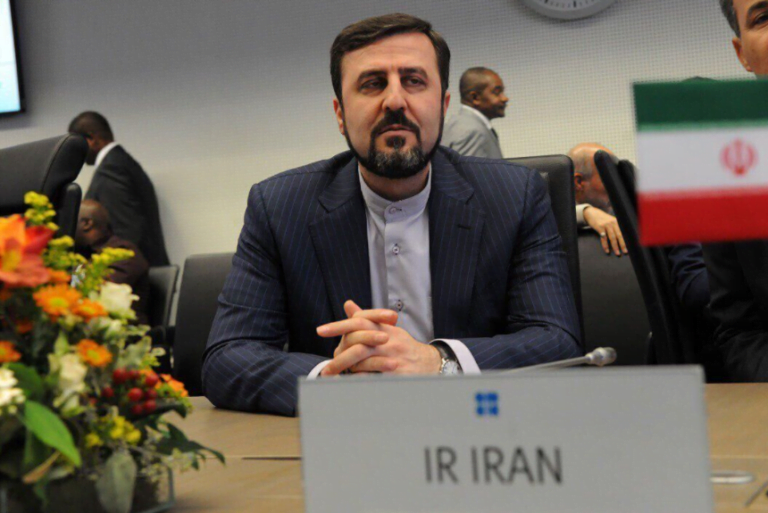
Iran’s Ambassador to the Vienna-based international organizations Kazem Gharibabadi hailed IAEA’s report on the Safeguards Agreement (NPT) with Iran, saying that the report creates positive and constructive prospects for relations with Iran and the UN nuclear watchdog.


Talking to reporters late on Friday, he added that the report is significant and can be scrutinized from two angles.


Formally, he said, this report deals with the developments and progress of relations and cooperation between Iran and the International Atomic Energy Agency (IAEA) over the past three months.


Read More


Also Read: Sweden Supports Call For Full Investigation Of Iran’s Torture Of Protesters

It indicates the constructive interaction of the two sides during the period to reach a common understanding and find solutions to issues, he said.In terms of content, this report clearly portrays a clear and positive image of the current state of cooperation and a positive and constructive outlook in relations between Iran and the IAEA, which is expected to be welcomed by the overwhelming majority of IAEA member states and the Board of Governors, the envoy added.Gharibabadi further noted that the report referring to the 11th of August meeting of the deputy director general of the agency for Safeguards affairs in Tehran, deals with the director general’s visit to Tehran on August 25-26, 2010 and meetings with the Iranian senior officials, as a result of which a joint statement was issued by Iran and the IAEA to strengthen cooperation and mutual trust.According to the report, the agency gained access to one of the two intended sites, and access to the second location is scheduled for this month, he said.Iran has shown goodwill in its interaction with the IAEA’s new director-general, and it expects the joint statement and director general’s report to be supported by members of the Board of Governors and other IAEA members.

Sweden Supports Call For Full Investigation Of Iran’s Torture Of Protesters

0
Sweden Supports Call For Full Investigation Of Iran's Torture Of Protesters
        Sweden Supports Call For Full Investigation Of Iran’s Torture Of Protesters


Sweden’s Foreign Minister Ann Linde said on Wednesday that her country supports Amnesty International’s call for a full investigation of alleged human rights violations following the 2019 protests in Iran


Linde tweeted that the Amnesty International report released Wednesday painted a grim picture of serious violations following the protests, adding, “[We] support the call for a full investigation into the allegations. Freedom of expression, association and peaceful assembly must be ensured.”


In the report, Amnesty International compiled testimonies from victims and victims’ families, eyewitnesses and lawyers, as well as verified video footage, reports from human rights defenders inside Iran and news and human rights organizations outside the country.


The report revealed that police, security, intelligence agents and prison officials inflicted torture and other atrocities on protesters and others detained in connection with the protests, both during arrests and in detention centers and prisons across the country.


Read More


Also Read: Coronavirus Ravaging Prisons in Iran, Human Rrights Group Says

According to the report, interrogators subjected detainees to extreme temperatures and the bombardment of light or sound over a sustained period, including at night; stripped them, sprayed them with cold water and exposed them to cold temperatures, including waterboarding; extracted nails from victims’ fingers or toes; used sexual violence and humiliation against them; applied pepper spray, chemical substances and electric shocks to victims’ face and genital areas; and staged mock executions.”In all cases documented by Amnesty International, victims also reported various forms of psychological torture aimed at obtaining forced ‘confessions,'” the report said.Linde also expressed deep concern about the deteriorating health of imprisoned human rights defender Nasrin Sotoudeh, who is currently on a hunger strike to protest conditions for political prisoners in Iran. “Reiterate the EU’s call for her sentence to be reviewed,” she said in her tweet.

Coronavirus Ravaging Prisons in Iran, Human Rrights Group Says

0
Coronavirus Ravaging Prisons in Iran, Human Rrights Group Says
            Coronavirus Ravaging Prisons in Iran, Human Rights Group Says


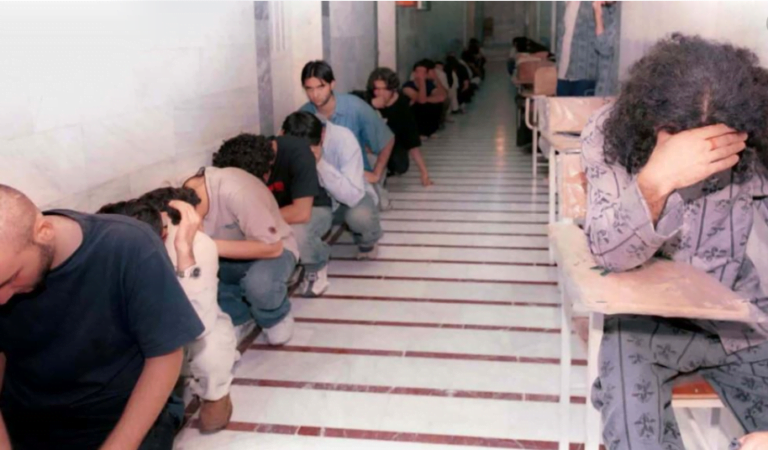
The Abdurrahman Boroumand Center for Human Rights in Iran (ABC), an international human rights organization, has accused Iran of hiding facts about the dire conditions in prisons across Iran amid the deadly coronavirus pandemic.


The ABC’s new report, published on Wednesday, September 2, on its website, is based on testimonies presented by dozens of inmates, attorneys, and informed sources in various Iranian prisons.


“Hygienic conditions in Iranian prisons, rather than improving, have significantly deteriorated” since April, the ABC report says, which accuses Iran of not releasing data showing the coronavirus spread in prisons, including the number of prisoners who have tested positive, been hospitalized or died of the virus.


The ABC NGO is named after an Iranian lawyer and politician who was assassinated in a 1991 Paris stabbing attack.


Following the report’s release, the executive director of the Boroumand Foundation, Roya Boroumand, told AFP that it was impossible to quantify the spread of coronavirus in Iranian jails, but that the information obtained by the ABC was troubling.


“If there is not a problem, then why don’t we know (the figures)?” Boroumand said. “We suspect that that’s really bad.”


Boroumand added that even at the height of the pandemic, Iran showed no mercy to detainees, be they political prisoners, drug users or members of the proscribed Bahai faith.


Read More


Also Read: Photojournalist: Iran’s Photographers are Forced to Work in Secret

In the first months of the coronavirus outbreak in Iran, reports circulated of prisoners being granted leave, while some inmates revolted against their health conditions.However, in the past few months, the process of granting leave has been canceled, with some judicial officials and prison officials claiming that the prisoners’ condition amid the deadly virus outbreak is “under control,” though they have so far refused to provide relevant statistics or details.”In August 2020, COVID-19 raged throughout Iran and spread inside overcrowded, aging, and unhygienic prisons,” the ABC report states.

Photojournalist: Iran’s Photographers are Forced to Work in Secret

0
Photojournalist Iran's Photographers are Forced to Work in Secret
Photojournalist: Iran’s Photographers are Forced to Work in Secret


An award-winning photojournalist who fled Iran in fear for his life says many young Iranians working for Iran’s state-sponsored press are now working “under the table” to ensure the truth about their country is made known.


Reza Deghati, 68, took his first photographs aged 14 and would “publish” his photos in secret by fixing them to the gates of Tehran University during the reign of the last Shah of Iran.


Like scores of other journalists he faced brutal suppression both in the Shah’s time and in the new Islamic Republic after 1979, which forced him to leave his country of birth for Paris in 1981.


IranWire’s new documentary, Iran’s Bloody Friday: A Photographer Remembers, sheds light on the untold story of two young journalists who had to do the same.


Javad Montazeri and Asieh Amini doggedly published photographs and reports about the July 9, 1999 attack by the security forces on Tehran University dormitory, during which a number of students were killed, and the clashes on the streets that followed.


For their efforts, they were harassed and intimidated by the authorities and eventually decided to begin a new life in Europe.


The incidents related in the film took place after the election of President Mohammed Khatami, which ushered in a fleeting period of hope that real democratic reforms might follow in Iran.


Deghati tells IranWire that on viewing the film, he was struck by the relative freedom Montazeri and Amini seemed to have enjoyed – despite the danger they were in.


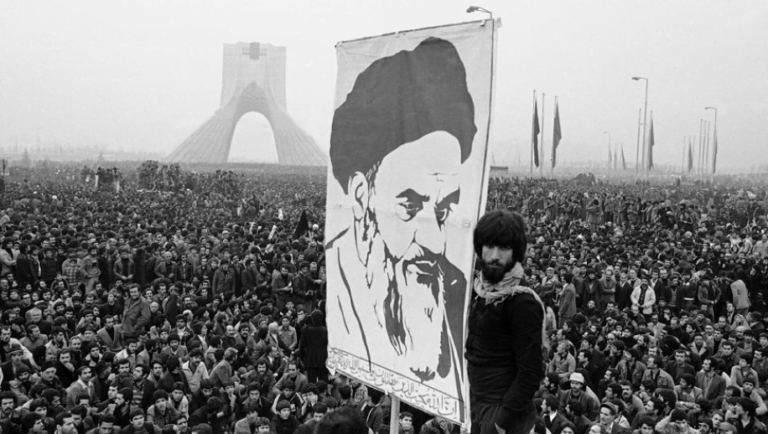
“After the Revolution,” he said, “we had a few months of total freedom. We photographers were going around and taking pictures, and everybody was happy and praising us for what we were doing. But three months later, the government suddenly had a total change of heart – against journalists. This came from [Supreme Leader] Khomeini himself.”


Read More


Also Read: Hezbollah shipped explosive chemicals to Lebanon prior to Beirut blast: Report

Hezbollah shipped explosive chemicals to Lebanon prior to Beirut blast: Report

0
Hezbollah shipped explosive chemicals to Lebanon prior to Beirut blast Report
      Hezbollah shipped explosive chemicals to Lebanon prior to Beirut blast: Report


Iran’s elite Quds Force shipped ammonium nitrate to Hezbollah in Beirut around the same time a Moldovan-flagged tanker arrived carrying 2,750 tonnes of ammonium nitrate – the same chemical substance that would later cause an enormous explosion and engulf Beirut’s port and surrounding area, German media outlet WELT reported Wednesday.


Previous reports have found that Hezbollah had stock of the substance in northwest London and Cyprus, while other reports also indicate that stockpiles were present in Germany and Kuwait, WELT reported.


WELT, citing Western security sources, reported that Iran-backed Hezbollah had received large deliveries of ammonium nitrate from the Islamic Revolutionary Guard Corps (IRGC) Quds Force – a US-designated terror organization.


Ammonium nitrate, commonly used in fertilizer, can also be used in weapon production.


On July 16, 2013, a total of 270 tonnes of ammonium nitrate was delivered from Iran to Lebanon, costing roughly 180,000 euros ($213,200, at today’s exchange rate).


Months later, on October 23, another 270 tonnes of the chemical were delivered, costing around 141,000 euros, WELT reported. The article added that a third shipment was made, but the amount delivered was uncertain.


Read More


Also Read: Iran Unveils ‘Soleimani’ Ballistic Missile with Range of 1,400km

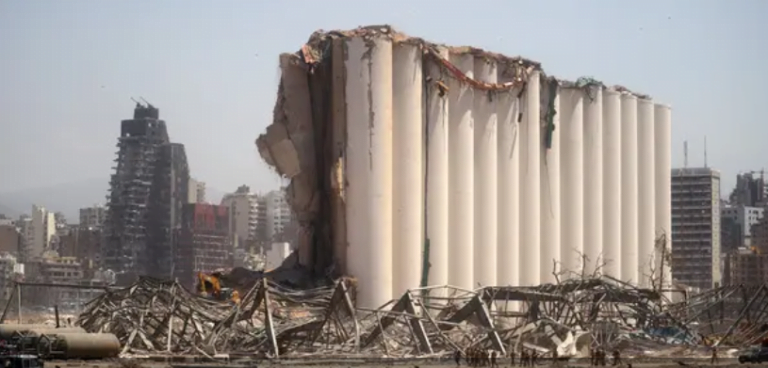
“A total of one billion Iranian rials was calculated for the delivery on April 4, 2014 (around 61,438 euros). Measured against the values of the other two deliveries, this could have been 90 to 130 tons. In total, the three deliveries are for a quantity of 630 to 670 tons of ammonium nitrate,” the WELT article conjectured.The cargo arriving in October 2013 was transported via plane, presumably on an Iranian airline, such as Mahan Air, which is sanctioned by the United States. The other deliveries were made via land or sea, the article alleged.The explosion at the Port of Beirut has left at least 178 dead, more than 6,000 injured and destroyed vast swaths of the city.A general view of the scene of an explosion at the port of Lebanon’s capital, Beirut, on Aug. 4.

Iran Unveils ‘Soleimani’ Ballistic Missile with Range of 1,400km

0
Iran Unveils ‘Soleimani’ Ballistic Missile with Range of 1,400km
              Iran Unveils ‘Soleimani’ Ballistic Missile with Range of 1,400km


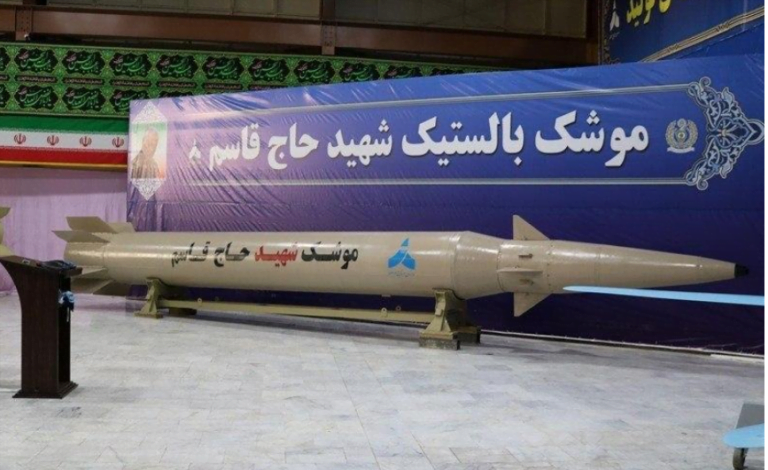
Iran’s Defence Ministry has unveiled a surface-to-surface ballistic missile, named after the late IRGC commander Lieutenant General Qassem Soleimani, with a range of 1,400 kilometers.


In a televised speech on Thursday, Defence Minister Brigadier General Amir Hatami said the country has also unveiled a new homegrown cruise missile.


“The surface-to-surface missile, called martyr Qassem Soleimani, has a range of 1,400 km and the cruise missile, called martyr Abu Mahdi, has a range of over 1,000 km,” Hatami said.


Read More


Also Read: Iranian DM: Cooperation between Army, IRGC Navies Strong Dam against Enemies

Pictures of the new missiles, which were unveiled on the National Day of Defence Industry, were shown on state TV.“The country’s achievements in the defense industry over the past four decades are not comparable to any other period,” said Hatami, describing the accomplishments as a “basis for military self-reliance and a must for [maintaining] the country’s independence.”Commenting on the new achievement’s features, Iran’s Deputy Defense Minister Brigadier General Qassem Taqizadeh said the speed of the Martyr Qassem Soleimani missiles makes their interception impossible.He added that the cruise missiles are capable of flying at a low altitude and getting around the enemy’s missile systems.The new ballistic missile is an upgraded version of the pinpoint-accuracy missile Fateh-110, according to Tasnim.General Soleimani, the commander of IRGC Quds Force, an Iraqi military commander Abu Mahdi al-Muhandis were assassinated in January in a US drone strike on their convoy in Baghdad airport.Earlier, the Iranian president had noted that “missiles and particularly cruise missiles are very important for us … the fact that we have increased the range from 300 to 1,000 in less than two years is a great achievement.”The new missiles were unveiled as the United States is pushing in vain to extend an UN-imposed arms embargo against Iran, which is due to expire in October under Tehran’s 2015 nuclear deal with the world powers.

Iranian DM: Cooperation between Army, IRGC Navies Strong Dam against Enemies

0
Iranian DM Cooperation between Army, IRGC Navies Strong Dam against Enemies
Iranian DM: Cooperation between Army, IRGC Navies Strong Dam against Enemies


Iranian Defense Minister Brigadier General Amir Hatami said that cooperation between the Army Navy and the Islamic Revolution Guards Corps (IRGC) Navy guarantees the security of the country against any aggression.


General Hatami made the remarks in a meeting with Iran’s Navy Commander Rear Admiral Hossein Khanzadi.


“Considering the importance of waterways in various sectors such as security, economy, and the traffic of merchant ships and oil tankers, ensuring the security of water routes is an inevitable necessity,” he said.


“Cooperation between Army Navy and the IRGC Navy is considered as a reliable support in fight against any aggressions and in preserving the deterrence power of the Islamic Republic of Iran in international waters,” General Hatami underlined.


Read More


Also Read: To Stop Executions in Iran Permanently, World Should Hold Mullahs To Account for 1988 Massacre

“Today, the Iranian Navy has the ability to use advanced equipment and weapons in the field of naval combat to have a powerful presence in maintaining security [in the region], from the shores of the Persian Gulf and the Sea of Oman to the Indian Ocean,” he said, adding, “Wherever there is a need for ensuring  security in international waters, the Iranian Navy can be present.”Iranian Navy has upgraded its position and role into a strategic force in the region, General Hatami added. He added that his ministry is determined to improve the naval combat power of Iranian Navy and Navy of IRGC.Rear Admiral Khanzadi, for his part, noted that thanks to its achieved experiences during the imposed war with Iraq and under the US sanctions, Iran Navy seeks to improve its capabilities in cooperation with the domestic defense industry.Earlier this week, General Hatami had asked the legislature to ratify an extra independent budget to boost research at his ministry, and stressed domestic capabilities to produce different strategic weapons to defend the country against any possible threat.