Home Blog Page 150

‘Flagrant violation’: Iran protests US jet approach at UN

0
'Flagrant violation': Iran protests US jet approach at UN
‘Flagrant violation’: Iran protests US jet approach at UN


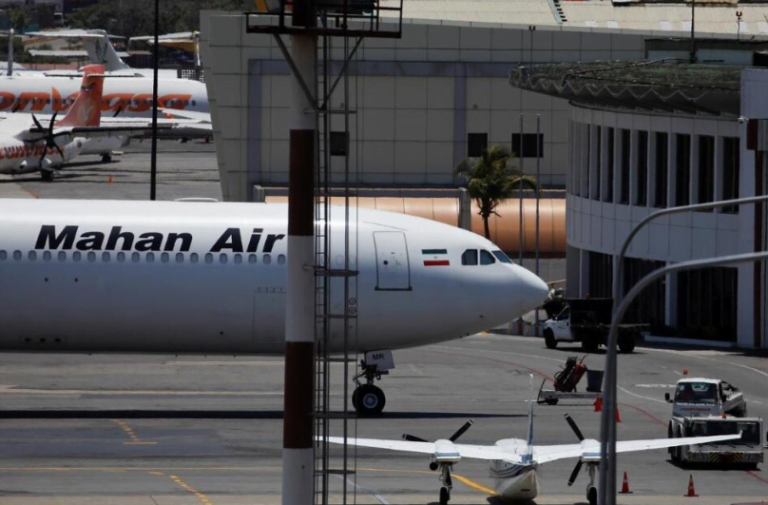
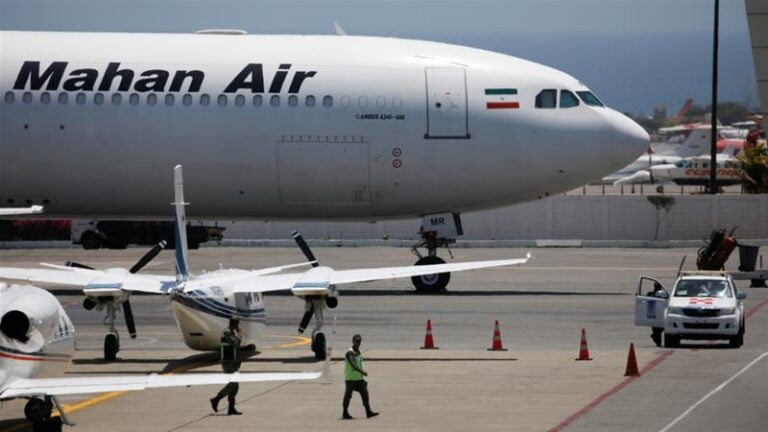
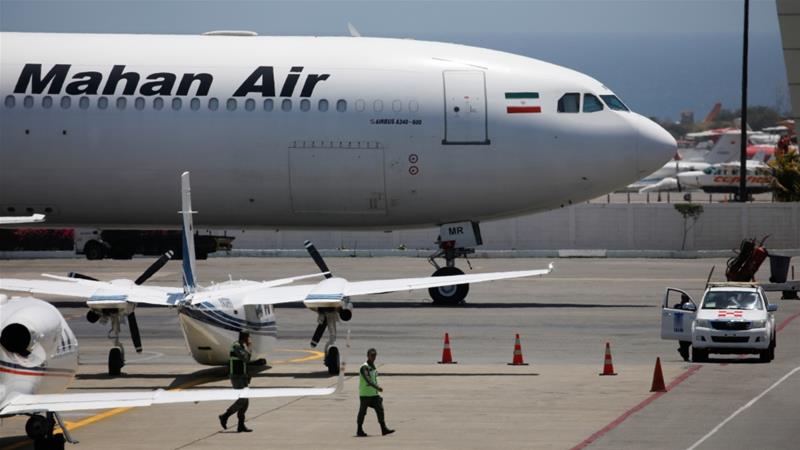
Iran has protested the “flagrant violation” of international law to the United Nations after it said United States fighter jets sparked panic on an Iranian passenger plane over Syria.


Iran’s state-run television broadcast footage of Thursday’s incident with passengers screaming as the pilot of a Mahan Air plane on a flight from Tehran to Beirut changed altitude to avoid collision with a US fighter jet.


A passenger with blood running down his forehead and another who had fallen to the floor were seen in the video, and one jet could be seen through the window in the video.


Iran’s official news agency IRNA said a protest letter would be submitted to the UN Security Council (UNSC) and secretary-general over “the threat posed to the Mahan Air passenger plane”.


On Friday, Iran’s foreign ministry said protest had been lodged with the International Civil Aviation Organization – a UN agency – and the Swiss embassy in Tehran that handles US interests in Iran since ties were cut in the aftermath of the 1979 Islamic revolution.


“If anything happens to the aircraft on its return flight, Iran will hold the United States responsible,” foreign ministry spokesman Abbas Mousavi told IRNA.


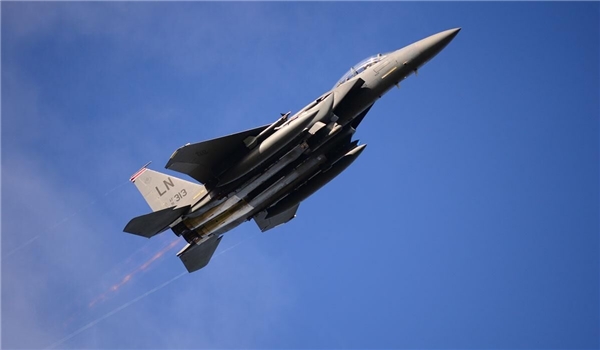
The US military said an “F-15 on a routine air mission … conducted a standard visual inspection of a Mahan Air passenger airliner at a safe distance of approximately 1,000 metres (yards)”.

Captain Bill Urban, the senior Central Command spokesman, said the “visual inspection occurred to ensure the safety of coalition personnel at Tanf garrison”.


“Once the F-15 pilot identified the aircraft as a Mahan Air passenger plane, the F-15 safely opened distance from the aircraft,” Urban added.


US CENTCOM, which covers the whole of the wider Middle East, insisted it was a “professional intercept … conducted in accordance with international standards”.


Read More

Also Read: Nuclear Gulf: Is Saudi Arabia pushing itself into a nuclear trap?
Official: US Fighters Harassed Iran’s Civil Plane in Lebanese, NOT Syrian Space

0
Official US Fighters Harassed Iran’s Civil Plane in Lebanese, NOT Syrian Space
Official: US Fighters Harassed Iran’s Civil Plane in Lebanese, NOT Syrian Space


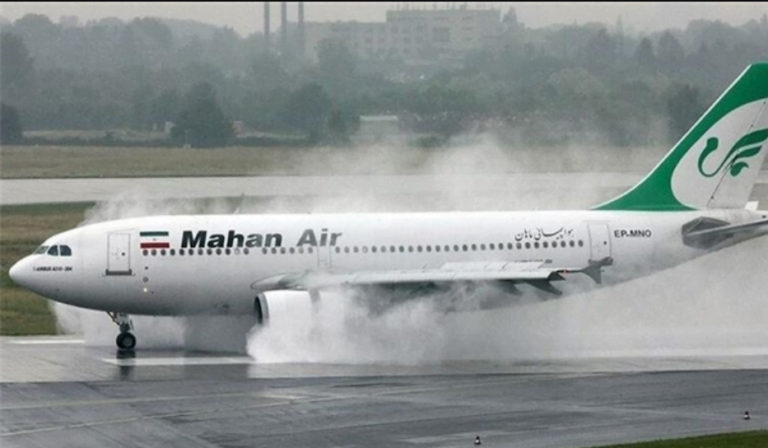
Contrary to remarks of United States Central Command (CENTCOM) Spokesman Bill Urban, US F-15 fighter jets were not on routine mission while intercepting Iran’s civil airliner and had taken the measure through violation of Lebanon’s space, an official said.


Nour news that is deemed close to Iran’s Supreme National Security Council (SNSC) quoted an unnamed official as denying the CENTCOM spokesman’s announcement that the US fighters had intercepted Iranian civil airliner in the Syrian space adjacent to al-Tanf base, adding that the interception had taken place in the Lebanese space while the passenger plane was reducing altitude to get ready for landing at Beirut airport.


“The Mahan Air Airbus pilot which was flying in the specified international corridor and flight path had warned the US fighter jets several times to distance from the passenger plane, but after the American fighters’ inattention to the warnings and persisting in dangerous maneuvers near Mahan airliner, the pilot, according to the flight instructions, has reduced altitude to escape the dangerous situation,” he added.


Two US fighter jets approached a Mahan Air Tehran-Beirut flight over the Syrian sky in a highly risky move and the captain of the Iranian passenger plane was forced to make a sudden change of direction and altitude, causing several injuries.


The captain of Mahan Air Flight No. 1152 later said the pilots of the two hostile planes have identified themselves as US army pilots during a radio contact.


Iran’s Mahan Airline in a statement on Friday announced that it plans to take legal and judiciary action against the US army after its fighter jets threatened Tehran-Beirut passenger jetliner in the skies of Syria on Thursday that ended up in several injuries.


“The Mahan Airline will launch legal and judicial pursuit into the threat against the Tehran-Beirut passenger plane,” the airline said in its statement sent to FNA.


Read More


Also Read: Blackbaud Hack: Universities lose data to ransomware attack

Blackbaud Hack: Universities lose data to ransomware attack

0
Blackbaud Hack: Universities lose data to ransomware attack


At least 10 universities in the UK, US and Canada have had data stolen about students and/or alumni after hackers attacked a cloud computing provider.


Human Rights Watch and the children’s mental health charity, Young Minds, have also confirmed they were affected.


The hack targeted Blackbaud, one of the world’s largest providers of education administration, fundraising, and financial management software.


The US-based company’s systems were hacked in May.


It has been criticised for not disclosing this externally until July and for having paid the hackers an undisclosed ransom.


In some cases, the data was limited to that of former students, who had been asked to financially support the establishments they had graduated from. But in others it extended to staff, existing students and other supporters.


The institutions the BBC has confirmed have been affected are:


  • University of York
  • Oxford Brookes University
  • Loughborough University
  • University of Leeds
  • University of London
  • University of Reading
  • University College, Oxford
  • Ambrose University in Alberta, Canada
  • Human Rights Watch
  • Young Minds
  • Rhode Island School of Design in the US
  • University of Exeter


All the institutions are sending letters and emails apologising to those on the compromised databases.


In some cases, the stolen data included phone numbers, donation history and events attended. Credit card and other payment details do not appear to have been exposed.


Blackbaud, whose headquarters are based in South Carolina, declined to provide a complete lists of those impacted, saying it wanted to “respect the privacy of our customers”.


“The majority of our customers were not part of this incident,” the company claimed. It referred the BBC to a statement on its website: “In May of 2020, we discovered and stopped a ransomware attack. Prior to our locking the cyber-criminal out, the cyber-criminal removed a copy of a subset of data from our self-hosted environment.”


Read More


Also Read: Nuclear Gulf: Is Saudi Arabia pushing itself into a nuclear trap?

Nuclear Gulf: Is Saudi Arabia pushing itself into a nuclear trap?
0
Nuclear Gulf: Is Saudi Arabia pushing itself into a nuclear trap?


When countries start dabbling in nuclear energy, eyebrows raise. It’s understandable. Stopping the spread of nuclear weapons while allowing countries to pursue civilian nuclear programmes has proven a tough and sometimes unsuccessful balancing act for the global community.


So when atom-splitting initiatives surface in a region with a history of nuclear secrecy and where whacking missiles into one’s enemies is relatively common, it is not just eyebrows that are hoisted, but red flags.


Right now, warning banners are waving above the Arabian Peninsula, where the United Arab Emirates has loaded fuel rods into the first of four reactors at Barakah – the Arab world’s first nuclear power plant.


Roughly 620 kilometres (388 miles) west, Saudi Arabia is constructing its first research reactor at the King Abdulaziz City for Science and Technology.


The UAE has agreed not to enrich uranium or reprocess spent fuel. It has also signed up to enhanced non-proliferation protocols and even secured a coveted 123 Agreement with the United States that allows for the bilateral sharing of civilian nuclear components, materials and know-how.


But that has not placated some nuclear energy veterans who question why the Emirates has pushed ahead with nuclear fission to generate electricity when there are far safer, far cheaper renewable options more befitting its sunny climate.


Like the UAE, Saudi Arabia insists its nuclear ambitions extend no further than civilian energy projects. But unlike its neighbour and regional ally, Riyadh has not officially sworn off developing nuclear weapons.

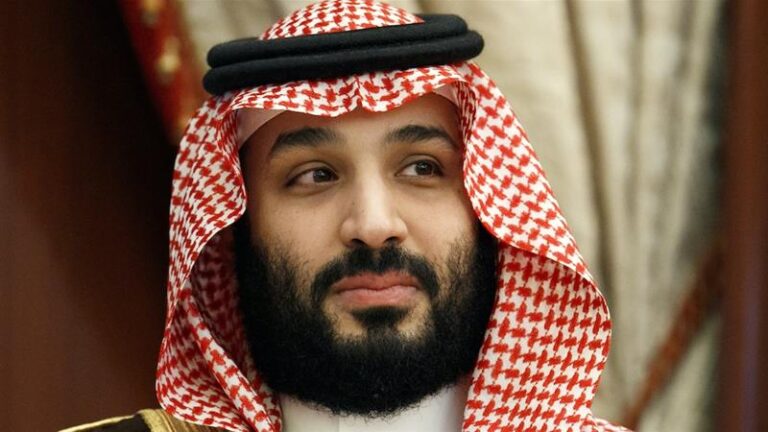
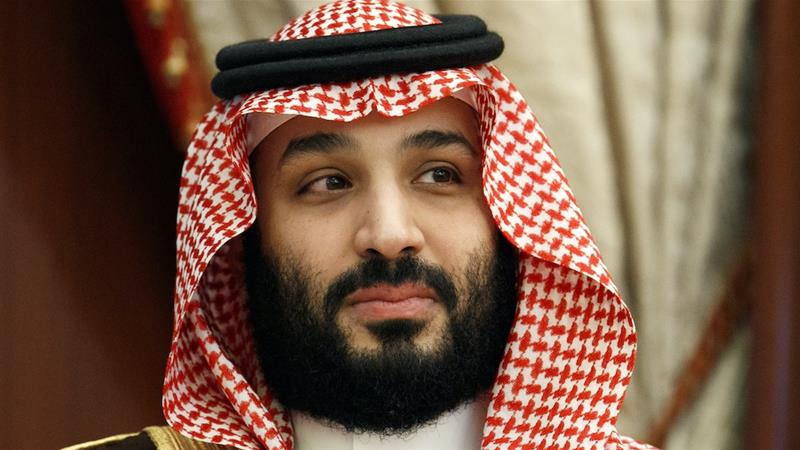
The kingdom’s de facto leader, Crown Prince Mohammed bin Salman (MBS), has publicly declared his intention to pursue nuclear weapons if Iran gets them first.


The spectre of the Saudi-Iran Cold War escalating into a nuclear arms race is not beyond the realm of possibility. There are growing concerns over the nuclearisation of the Arabian Peninsula and where it could lead the Gulf and the Middle East – a volatile region that experts warn could be opening itself up to superpower proxy fights on a nuclear scale.


Read More


Also Read: Kurdish-Iranian Refugee Author Granted Asylum In New Zealand

Kurdish-Iranian Refugee Author Granted Asylum In New Zealand

0
Kurdish-Iranian Refugee Author Granted Asylum In New Zealand


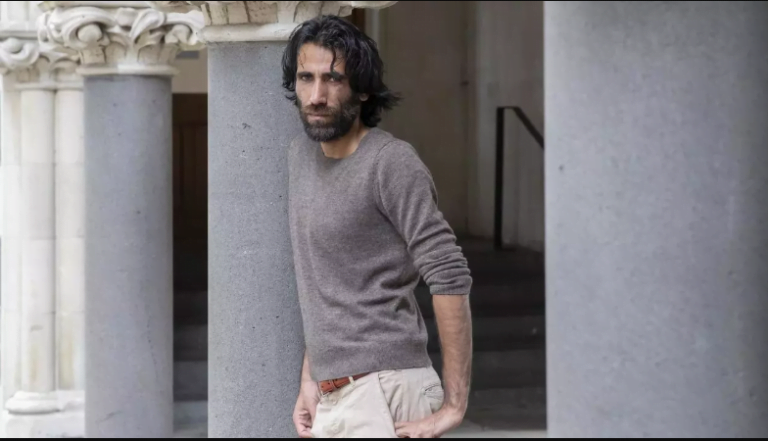
A Kurdish-Iranian refugee who wrote an award-winning book on his mobile phone while held in one of Australia’s notorious Pacific detention camps has been granted asylum in New Zealand, officials said Friday.


Behrouz Boochani has been in New Zealand since November when he applied for refugee status after attending a literary festival to speak about his six years in limbo under Australia’s hardline immigration policies.


Immigration New Zealand said Boochani’s application had been successful, which means he has the right to stay in the South Pacific nation indefinitely.


Read More


Also Read: Trade co-op discussed between Iranian, Italian businessmen

“Mr. Boochani has been recognised as a refugee under the 1951 Convention Relating to the Status of Refugees and its 1967 Protocol,” it said in a brief statement, refusing to release further details on privacy grounds.Reports said the decision was relayed to the author on Thursday, his 37th birthday.A relieved Boochani vowed to continue campaigning for refugee rights from his adopted homeland, where he will apply for permanent residency.”I now have certainty about my future, which is good, but I cannot fully enjoy this or celebrate while the Australian government is still unfairly detaining people in Port Moresby, Nauru and Australia,” he said in a statement.Boochani is currently working as a researcher at Canterbury University in the South Island city of Christchurch.He painstakingly tapped out his book “No Friend But The Mountains” on WhatsApp while detained in the Australian-run Manus Island migrant camp off Papua New Guinea, which is now officially closed.After being pulled from a sinking boat in Australian waters in 2013, Boochani was held in Papua New Guinea under a policy adopted by Canberra to prevent asylum seekers arriving by sea from setting foot on Australian soil.His account of his plight won numerous awards, including Australia’s richest literary honour, the Victorian Prize for Literature.

Trade co-op discussed between Iranian, Italian businessmen

0
Trade co-op discussed between Iranian, Italian businessmen
                   Trade co-op discussed between Iranian, Italian businessmen


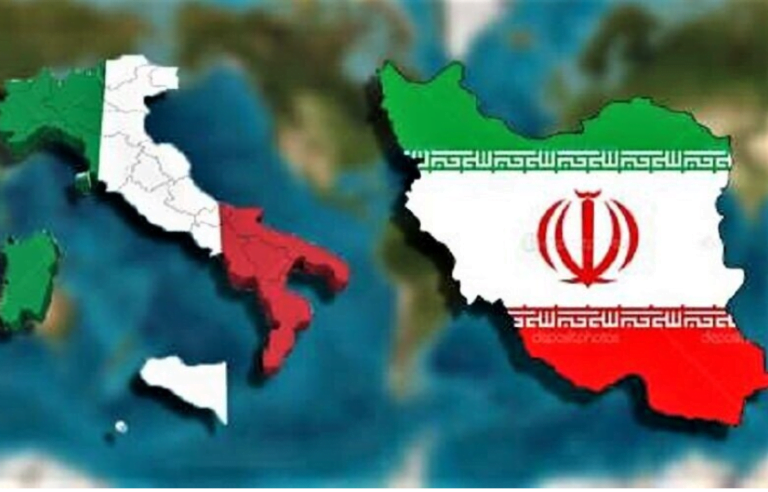
The think tank European House – Ambrosetti in partnership with the Italian Embassy in Tehran and the Tehran’s Chamber of Commerce – hosted a virtual Business Forum on “Economic relations between Italy and Iran in the current context: non-oil sectors, SMEs’ role, EU support” on Wednesday evening.


More than 800 Italian and Iranian representatives from the private sector, business consultants and professionals attended the online event, aimed at discussing avenues for economic cooperation, building on a longstanding tradition of friendly relations and vibrant economic bonds between Italy and Iran.


The online event offered participants the opportunity to analyze the current economic context and lay the premises for increased cooperation. Furthermore, a special virtual B2B session was held where participants established direct contact, with a view to exploring options for further cooperation and exchange.


Read More


Also Read: US fighter jets near Iranian passenger plane over Syrian airspace: Pilot

In his opening remarks the Italian Ambassador in Tehran, Giuseppe Perrone, highlighted Italy’s wish to bring economic and trade relations with Iran back on a positive trajectory.While appreciating the commitment and professionalism by the Iranian private sector, he pointed out the deep historical ties existing between the two countries as well as the significant number of Italian companies who over the years have built strong relationships in Iran and look forward to the opportunity of advancing their cooperation.On his part, the Chairman of Tehran’s Chamber of Commerce, Masoud Khansari, encouraged participants to bet on Iran’s important economic potential and to develop effective partnerships, including by seizing the opportunities available in the broader region.Khansari also recognized the special role Italy has always played as a key partner to the Iranian private sector in trade and investment activities, wishing that Italian companies continue to be a reference point for their Iranian counterparts.The event also included a presentation by experts from the European Union, of new tools made available at the EU level to facilitate trade relations between European companies and Iranian ones.

US fighter jets near Iranian passenger plane over Syrian airspace: Pilot

US fighter jets near Iranian passenger plane over Syrian airspace Pilot
         US fighter jets near Iranian passenger plane over Syrian airspace: Pilot


Several passengers on an Iranian airline were injured on July 23 over Syria after the pilot changed altitude to avoid collision with a U.S. fighter jet, according to Iranian media, but the U.S. military said its F-15 was at a safe distance.


The Iranian plane, belonging to Mahan Air, was heading from Tehran to Beirut when the pilot staged a safety maneuver, in an incident that Iran‘s Foreign Ministry said would be investigated.


Tensions have spiked between Tehran and Washington since 2018, when U.S. President Donald Trump exited Iran’s 2015 nuclear deal with six powers and reimposed sanctions that have battered Iran’s economy.


Read More


Also Read: COVID-19 Surging Death Toll Will Amplify Public Hatred Toward Iran Regime and Result in Uprising

Iran’s official IRIB news agency quoted a passenger describing how his head had hit the roof of the plane during the change in altitude, and video showed an elderly passenger sprawled on the floor.All the passengers left the plane, some with minor injuries, the head of the Beirut airport told Reuters.The plane arrived back in Tehran in the early hours of July 24, the Fars news agency reported.The U.S. military’s Central Command, which oversees American troops in the region, said the F-15 aircraft was conducting a visual inspection of the Iranian aircraft when it passed near the Tanf garrison in Syria where U.S. forces are present.Captain Bill Urban, the senior Central Command spokesman, said the F-15 “conducted a standard visual inspection of a Mahan Air passenger airliner at a safe distance of about 1,000 meters (3,280 feet) from the airliner this evening.””The visual inspection occurred to ensure the safety of coalition personnel at At Tanf garrison,” Urban said. “Once the F-15 pilot identified the aircraft as a Mahan Air passenger plane, the F-15 safely opened distance from the aircraft.”He added the intercept was carried out in accordance with international standards.The pilot of the passenger plane contacted the jet pilots to warn them to keep a safe distance and they identified themselves as American, IRIB reported.

COVID-19 Surging Death Toll Will Amplify Public Hatred Toward Iran Regime and Result in Uprising

COVID-19 Surging Death Toll Will Amplify Public Hatred Toward Iran Regime and Result in Uprising
  COVID-19 Surging Death Toll Will Amplify Public Hatred Toward Iran Regime and Result in Uprising


The COVID-19 death toll in Iran is rapidly surging, according to the Iranian opposition. The regime’s cover-up and inaction are accelerating the spread of the virus.


The catastrophe has reached a dimension that the regime’s officials are forced to admit to It. Yet, they desperately try to downplay it, only to avoid public outrage that could result in an explosion of social anger. 


 The People’s Mojahedin Organization of Iran (PMOI, Mujahedin-e Khalq or MEK) announced on July 22 that the COVID-19 death toll in Iran has surpassed 74,700 


The regime’s president Hassan Rouhani on July 18 acknowledged that nearly 25 million Iranian citizens have been infected with COVID-19 and that 30 to 35 million are in danger of being infected by this virus.”  


To this day 25 million Iranians have contracted the novel coronavirus, and we need to assume 30 to 35 million are in danger of being infected by this virus.


Over 200,000 persons were hospitalized. The number of people hospitalized in the future will be around twice the number we have witnessed in the past 150 days,” he said, quoting a report published by the regime’s Health Ministry.  


Yet, instead of acting against the rapid spread of the novel coronavirus, the authorities insist on resuming business activities. 


In this regard, on July 11, Rouhani said: “We might have this disease in front us for a long period of time. Taking any action that could possibly create problems for our social and economic activities is wrong. 


In his remarks, Rouhani admitted to the regime’s real concern which is eruption of protests and a new uprising. “The simplest way is to shut down activities. The next day people will be protesting due to starvation, pressure, and problems,” he said.  


Rouhani’s insisting on sending people back to work confirms that the abnormal rising trend of the COVID-19 death toll and infection rate are a direct results of the regime’s criminal policies of launching mass casualties as a barrier against the threat of a new uprising.   


Read More


Also Read: Iran Vows Harsh Revenge for US Assassination of General Soleimani

Iran Vows Harsh Revenge for US Assassination of General Soleimani

0
Iran Vows Harsh Revenge for US Assassination of General Soleimani


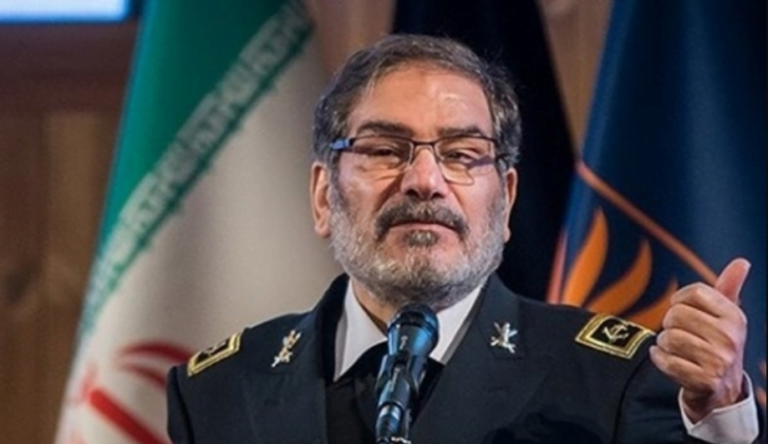
Secretary of Iran’s Supreme National Security Council (SNSC) Ali Shamkhani underlined that his country and Iraq will take revenge for the assassination of former IRGC Quds Force Commander Lieutenant General Qassem Soleimani and Deputy head of Iraq’s Popular Mobilization Units (PMU) forces Abu Mahdi al-Muhandis.


“Trump admits that the US military under his direct command, committed the assassination of General Soleimani and Abu Mahdi Al-Muhandis,” Shamkhani wrote on his Twitter account on Wednesday.


“Iran and Iraq are avenger of these martyrs and will not rest until the perpetrators are punished. Harder revenge is on the way,” he added.


In relevant remarks on Tuesday, Supreme Leader of the Islamic Revolution Ayatollah Seyed Ali Khamenei said that Iran will never forget assassination of General Soleimani and will definitely deal the US a counter-blow.


The Supreme Leader made the remarks in Tehran, while speaking to the visiting Iraqi Prime Minister Mustafa Al-Kadhimi.


“The US’ crime in assassinating General Soleimani and Abu Mahdi Al-Muhandis is an example of its presence. They killed your guest at your home, and they flagrantly confessed to this crime.


This is not a trivial thing,” he said, adding, “The Islamic Republic of Iran will never forget the martyrdom of Hajj Qassem Soleimani and will definitely deal a reciprocal blow to the US.”


Lieutenant General Soleimani was assassinated in a US drone strike on Baghdad International Airport in Iraq on January 3.


The airstrike also martyred Deputy Commander of Iraq’s Popular Mobilization Forces (PMF) Abu Mahdi al-Muhandis. The two were martyred in an American airstrike that targeted their vehicle on the road to the airport.


Five Iranian and five Iraqi military men were martyred by the missiles fired by the US drone at Baghdad International Airport.


Read More


Also Read: Trump’s maximum pressure strategy has not halted Iran’s tightening domestic repression

Trump’s maximum pressure strategy has not halted Iran’s tightening domestic repression

0


Trump’s maximum pressure strategy has not halted Iran’s tightening domestic repression
  Trump’s maximum pressure strategy has not halted Iran’s tightening domestic  repression


“Preservation of Nezam (‘the system’) is a momentous obligation”, said the founder of the Islamic Republic, Ayatollah Rouhollah Khomeini.


With these words, he set out the regime’s overarching policy, a necessity that is to be preserved at the expense of all else.


In practice, this has meant supporting Shia armed groups across the Middle East and a heavy dose of domestic oppression, mainly through issuing death sentences against dissidents.


Now, however, President Trump’s maximum pressure campaign is putting this system under severe strain.


It is achieving its aims in curbing some of Iran’s regional disruption through militias in Iraq and limiting the degree to which it can help finance the Houthi rebels in the Yemen.


The killing of the leader of the Quds Force, Qasem Soleimani, in January, was a bitter blow to the regime’s morale. And Israeli strikes at nuclear facilities inside the country have damaged the regime’s prestige as well as its infrastructure.


When this is added to the pressure from US economic sanctions, the regime is in a weak position in Iranian society.


This position raises big questions among the Islamic Revolutionary Guard Corps (IRGC) and among other hardline forces within the regime about the future of the system as it is currently constituted.


Amid all these ups and downs, the regime faces a significant challenge at home. Before Iran’s parliamentary election in March, I wrote for Radio Free Europe that the election was a prelude to tightening repression in the country.


I explained that the regime loathed domestically by many, riddled with corruption, moribund and incapable of finding real solutions to people’s concerns. Under these circumstances, ruthless oppression is the only option left. domestic repression


But increasing the number of executions, arresting activists, and aiming to intimidate people will become counterproductive in the long run.


In a rare show of unity among all Iranians, the hashtag “Don’t Execute” in Farsi trended worldwide, gaining about five millions tweets and retweets.


Read More


Also Read: Iran’s 1988 Massacre: U.S Calls for Independent Investigations