However, calls to refrain from killing Nasrallah: ‘He lives in a basement. Why eliminate him?’
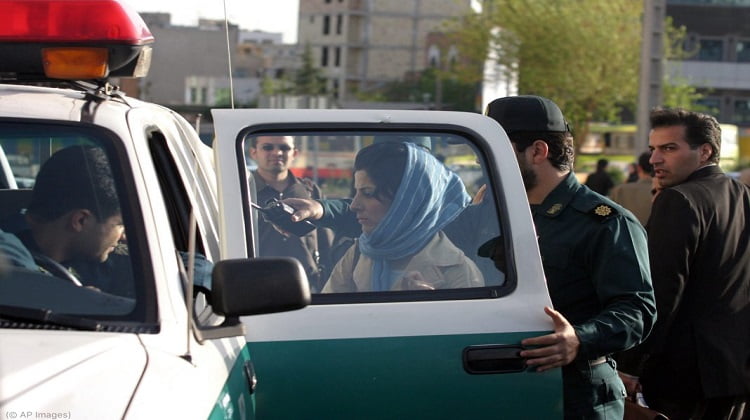
Iran Briefing | News Press Focus on Human Rights Violation by IRGC, Iran Human Rights
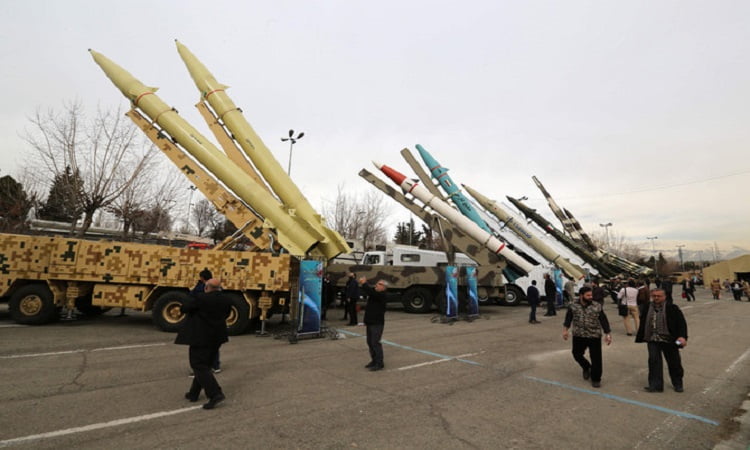
The Pentagon announced that Iran continues sending sophisticated weapons to the Houthis in Yemen, in violation of its international obligations, supporting these accusations with pictures of Iranian weapons that were allegedly transferred in two shipments seized by US forces in less than three months.

Commander Bill Urban, spokesperson for the US Central Command in the Middle East (Centcom), stated in a press conference, held at the headquarters of the Department of Defence in Washington, that the Quds Force, the elite force responsible for carrying out foreign operations in the Iranian Islamic Revolutionary Guard Corps (IRGC), “has consistently proven that it is trying to send weapons to the Houthis in Yemen.
Urban presented during the press conference pictures of weapons seized by the US forces on 25 November and 9 February, on board of two sailing boats that were sailing without raising the national flag of any country, stressing that these weapons were sent from Iran to the Houthis.
He explained that the second interception operation that took place on 9 February was carried out by the US cruiser USS Normandy in the Arabian Sea, during which 150 anti-tank missiles “Dahlawi”, an Iranian version of the Russian Cornet missile, and three 358 surface-to-air missiles, a weapon that Iran recently made, were seized.
As for the first interception operation in November, the US destroyer USS Forrest Sherman seized missiles of the same type, as well as a large number of cruise missiles components.
Urban stressed that “the United States is convinced that the seized weapons (…) were manufactured in Iran and were on the way to be smuggled to the Houthis in Yemen, in violation of numerous UN Security Council resolutions.”
He refused to answer questions related to the way the US Navy monitored these two sailboats, especially as large numbers of these small boats constantly roam the waters of the region, or in the location where they were loaded with weapons.
Urban only stated that the crew of the boat, which was seized on 9 February, was composed of Yemeni nationals, who were handed over to the Yemeni coast guard.
Tehran has consistently denied US accusations about providing military support to the Houthis fighting the government recognised by the UN-backed by the Saudi-led military coalition.
Iran Briefing | News Press Focus on Human Rights Violation by IRGC, Iran Human Rights
There are still some politicians, scholars and policy analysts who believe that imposing pressure and sanctions is not the answer to Iran’s aggressive policies and military adventurism in the Middle East.

It seems that they have forgotten recent history, where the policy of inaction and appeasement was tested during the eight years of the Obama administration. Five members of the UN Security Council lifted all four rounds of crippling sanctions that took decades to impose on the Islamic Republic. Former President Barack Obama revoked four previous executive orders against Iran — removing US unilateral sanctions and freeing up Iran’s assets, which were estimated to be worth between $50 billion to $150 billion.
The US Department of Treasury removed nearly 400 Iranian citizens from the blocked list, freed up their assets and permitted them to do business with the US. The US gave Iran the ability to re-enter the global financial system and export and import many commodities that were previously banned.
The rest of the Western world followed suit; the EU removed all nuclear-related economic and financial sanctions against Tehran and it began doing business with the theocratic establishment. The ruling mullahs were appeased through secret deals, such as the agreement, details of which were obtained by the Associated Press, revealing the fact that more significant restraints on Iran’s nuclear program were lifted even before the expiration of the nuclear deal. This shockingly allowed the Iranian authorities to install more advanced nuclear components than it ever possessed before.
Thanks to the lifting of US, EU and the UN Security Council’s sanctions, which allowed the Iranian regime and Iran’s Revolutionary Guard Corps (IRGC) to sell oil and do business freely in the international market, Tehran became financially and economically more powerful.
Upon the JCPOA’s agreement, Barack Obama said that he was “confident” the deal would “meet the national security needs of the United States and our allies.” Less than a year after pursuing this course of appeasement with Tehran, he added that the nuclear deal had helped in “avoiding further conflict and making us safer.”
But did inaction and appeasement policies genuinely turn the Islamic Republic into a civilized, rational and moderate state member of the international community?
Iran Briefing | News Press Focus on Human Rights Violation by IRGC, Iran Human Rights
Revolutionary Guard Corps (IRGC) will win a landslide in this Friday’s parliamentary elections in Iran, furnishing a new generation of theocratic courtiers for the Islamic Republic’s supreme leader, Ayatollah Ali Khamenei. His gatekeepers have already selected most of the new intake before a vote is cast.hardliners

Revolutionary Guard Corps (IRGC) will win a landslide in this Friday’s parliamentary elections in Iran, furnishing a new generation of theocratic courtiers for the Islamic Republic’s supreme leader, Ayatollah Ali Khamenei. His gatekeepers have already selected most of the new intake before a vote is cast.
Iran is under economic siege from the US after President Donald Trump last month ordered the assassination in Iraq of Qassem Soleimani, commander of the IRGC’s foreign legion. Consequently, Mr Khamenei and his praetorians are taking no chances.
It was supposed to be different. The 2015 nuclear containment deal Tehran struck with the US and five other world powers was intended to reintegrate Iran into the global economy and polite geopolitical society.
Already under President Barack Obama the US Treasury’s zealous and extraterritorial use of “secondary” sanctions against Iran was emptying his diplomatic triumph of substance. Mr Trump then unilaterally withdrew the US from the international accord and set the present collision course, handing hardliners in Tehran the initiative by unshackling Iran from its nuclear commitments.
The vested interests built up around Iran’s theocracy since the 1979 revolution, foremost among them the IRGC and its tentacular business empire, always saw the nuclear deal as the slippery slope to regime change.
Iranians who, against all odds, have kept voting for reformists and pragmatists in the hope of recovering their freedoms at home and re-engaging with a world to which they are digitally sensitised, elected the centrist Hassan Rouhani as president in 2013. He made the nuclear breakthrough his flagship policy aim.
Even as it became increasingly clear Iran was not going to be welcomed back into the international community (not least because of the rampages of Soleimani and his Quds Force from Syria to Yemen), Iranian voters ensured the ticket for change came first in the 2016 parliamentary elections and re-elected Mr Rouhani in 2017. That story now looks to be over.
Champions of change, from Mohammad Khatami (president from 1997-2005) to Mr Rouhani, the present incumbent, serve as shields for a regime that thrives on western hostility. They are easy to denounce as soft on the Great Satan of the US and Little Satans like the UK.
Iran Briefing | News Press Focus on Human Rights Violation by IRGC, Iran Human Rights
Four Hezbollah military operatives working alongside the Iran-backed Houthi militia east of the Yemeni capital Sanaa were killed by Saudi-led coalition airstrikes last week.

The operatives were in Al-Jawf and Nihm, areas that witnessed intense fighting at the start of the year. These locations, known to be heavily tribal, are strongly aligned with Yemen’s government and the majority of them are under its authority. Hezbollah’s involvement and cooperation with the Houthis in these areas point to Iran’s overall interest in sustaining violence in Yemen and increasing the Houthis’ territorial gains, as it relies on its proxies to bolster its overall position in its current standoff with the US.
This increased appetite for violence and expansion is at odds with the Houthis’ rhetoric of de-escalation, which it signaled in September last year. The activity points to a renewed calculus in Yemen’s war, dictated to a large extent by Iran’s interest in the region, especially since the death of Islamic Revolutionary Guard Corps (IRGC) member Qassem Soleimani, who was the commander of Iran’s expeditionary Quds Force that specializes in unconventional warfare outside of Iran’s borders.
Evidence to support Iran or Hezbollah’s military involvement in Yemen was challenging to come by at the beginning of the conflict. But this involvement has been uncovered gradually throughout the years, showing a series of sophisticated covert operations and military support that elevated the Houthis’ capability. IRGC operatives thrived in Yemen and were able to enter the country and travel freely using Yemeni passports issued to them by the Houthis, according to local sources. Abdul Reza Shahlai, the deputy commander of the Quds Force, was recently targeted by the US in Yemen. Shahlai and his comrades have been focused on external operations that would serve Iran’s overall regional interests, including hampering the Saudi-led coalition’s actions in Yemen and attacking the Kingdom’s oil and military installations.
Iran, through its IRGC operatives and Hezbollah strategists, has set an agenda in parallel to the Houthis’ in order to reach its objectives in the region. Within this context, Iran helped the Houthis expand to achieve Tehran’s broader regional vision, which extends well beyond the scope and capacity of the Houthi group. Through the “Axis of Resistance” network, which the Houthis openly flaunt their membership of, extremist Shiite groups are uniting under Iran as a rival to Saudi Arabia, choosing destruction and violence as their methods of resistance.
Iran Briefing | News Press Focus on Human Rights Violation by IRGC, Iran Human Rights
US CENTCOM reveals Iran’s role in smuggling weapons, Iran has been exporting drone technology to Yemen’s Houthi rebels over the last decade and similar components may link Iran to drone attacks in eight countries.

A report by Conflict Armament Research on Wednesday provided a rare window into the extent of Houthi use of drones and how the group revolutionized Iran’s drones. It also helped map out a much wider pattern of drone components used from Sudan to Afghanistan. The US also revealed new details Wednesday on a shipment of Iranian weapons seized in November last year. The new details appear to link Iran directly to the attack on Saudi Arabia in September 2019.
Let’s begin in Yemen where the Houthi rebels have revolutionized drone warfare, using drones against a Saudi Arabia-backed alliance. They’ve crashed them into radars and air defense technology, and attacked airports and military parades and infrastructure. CAR research has previously “concluded that the Qasef-1 UAV is not of indigenous design and construction, but rather manufactured in Iran and supplied in batches to Houthi forces in Yemen.”
In 2019 the Houthis showed off a number of drones, or UAVs, that they had been using. At least eight were being made and used. This included the Hudhed-1, Raqib, Rased, and Saamad 1 and the Qasef-1, Qasef 2k, Sammad 2 and Sammad 3. The first four are reconnaissance drones. The Houthis had taken the Iranian Ababil-T drone and turned it into the Qasef-1. The Houthis, who are relatively poor, were able to produce sophisticated drones. CAR concluded that the markings on electronic components point to “industrial production and quality control processes. Some internal components match those found in Iranian-made UAVs.”
Yet the Houthis acquired very complex technology. The Sammad drone that appeared in 2018 eventually reached a range of up to 1,500km. “The Sammad has the same exterior cast and print color as the imported Qasef-1,” the report says. UAE forces captured one of the drones in June 2018. The components look like those in a Qasef-1. How do the Sammad engines reach Yemen. According to the study they came from a German company, perhaps via Greece. This would have been an illegal export and the report makes it clear that the discovery of the German-made engines in drones in Yemen does not mean the original manufacturer is responsible.
Iran Briefing | News Press Focus on Human Rights Violation by IRGC, Iran Human Rights
U.S. Blacklists Five Iranian Officials for Impeding ‘Fair’ Elections
A history of injustice: How Iran’s regime mistreats its people
Newly leaderless, the Iraqi Hashd al-Shaabi paramilitary is being strained by a struggle for control between factions answering to two Shia religious authorities: Iraq’s Grand Ayatollah Ali al-Sistani and Iranian Supreme Leader Ali Khamenei.
Long overshadowed by Khamenei’s influence from the Iranian holy city of Qom, the Sistani-led religious authority based in Iraq’s Najaf is using a power vacuum to assert its own influence, and seize the powerful paramilitary umbrella group’s levers of power.
The tussle for power began seven weeks ago, with the killing of Hashd al-Shaabi leader Abu Mahdi al-Muhandis and top Iranian general Qassem Soleimani in a US drone strike in Baghdad.
Soon after, pro-Iran factions in the paramilitary nominated one of their leaders to be the chief of staff and director of operations for the Popular Mobilisation Authority (PMA), the body that oversees the Hashd al-Shaabi, and replace Iranian ally Muhandis.
Such a move was expected. However factions associated with Najaf threatened to withdraw from the PMA if the government did not work to limit Iranian influence within the body, several Shia commanders told Middle East Eye.
Sistani himself was responsible for encouraging the Hashd al-Shaabi’s formation in the first place, by issuing a fatwa in 2014 calling on Iraqis to mobilise and volunteer to fight the Islamic State group, who at that time had seized almost a third of Iraq.
That sparked the mobilisation of dozens of armed groups, which coalesced alongside older factions to create the Hashd al-Shaabi umbrella group, a governmental organisation protected by law.
Iranian-backed factions, such as the Badr Organisation, Asaib Ahl al-Haq and Kataeb Hezbollah, are the most powerful groups under the PMA. But the Hashd al-Shaabi’s true legitimacy lies with Sistani’s fatwa.
Analysts have suggested if forces linked to Sistani withdraw, the Iran-backed groups remaining will lose their ability to repel local and international criticism, and accusations of humanitarian abuses and wide-scale corruption.
“Najaf seeks to limit the penetration of Qom’s arms into Iraqi government institutions, in an attempt to distance Iraq from regional and international conflicts. So this is part of the ongoing struggle between Qom and Najaf,” Iraqi analyst Abdulwahid Tuama told MEE.
“[Sistani] sees the vacuum created after Soleimani and Muhandis’s killing as a great opportunity to regain control of an important military institution and extract it from the hands of leaders who believe in Wilayat al-Faqih [clerical rule by Khamenei], returning it to Iraqi authority in the process.”
Iran Briefing | News Press Focus on Human Rights Violation by IRGC, Iran Human Rights