Home Blog Page 169

Iran: The Source of Houthi Power

0

The Iran-backed Houthi rebel group claimed on February 15 that it shot down a Tornado fighter jet belonging to Saudi Arabia. Houthi spokesman Yahya al-Saree said on Houthi-run Al-Masirah television that the jet was downed in the Al-Jawf governorate in northern Yemen by an “advanced surface-to-air missile.”


Iran: The Source of Houthi Power


Later that day, Saudi Press Agency released an official coalition statement claiming that the Royal Saudi Air Force Tornado aircraft “crashed” while supporting the Yemeni government forces. One of Al Jazeera’s senior political analysts called the Houthis ability a “very significant” development, claiming that this new capability “would be a game-changer.”

Since 2017, Houthi rebel forces have shown a significant rise in military capabilities. Its ballistic missiles are capable of traveling over 800 miles before striking their target, its drones now carry explosive payloads, it has advanced sea mines to hinder travel through the nearby Bab el-Mandeb strait, and now the rebels may even have “advanced” surface-to-air missile batteries capable of shooting down Saudi jets.

This raises questions: Where are these technical advancements coming from? How could a group once dismissed as a “ragtag militia” comprised of shepherds and simple craftsmen now have such advanced military equipment?

The Houthi’s military power comes from one primary source: the Islamic Republic of Iran.

In 2017, an unnamed Iranian official told Reuters that Iran’s Islamic Revolutionary Guard Corps (irgc) held a meeting to discuss ways to “empower” the Houthi militia. At the meeting, the irgc “agreed to increase the amount of help, through training, arms and financial support.”

United Nations sanctions prevent Iran from openly exporting military equipment to the Houthi movement in Yemen. This has forced Iran to illegally smuggle the equipment, which makes the shipment process take even longer.

London-based Saudi newspaper Asharq al-Awsat reported on Aug. 13, 2019, that Iran summoned Saree and Houthi Foreign Minister Mohammed Abdel Salam Felita to Tehran where the Houthis were assigned a new terrorist mission in the Red Sea. 


Read more …

Iran Briefing | News Press Focus on Human Rights Violation by IRGC, Iran Human Rights


Jailed Iranian Activist Tortured, Rape-Threatened for 1,200 Hours

0

Niloufar Bayani, who’s serving a 10-year jail sentence, stated Iranian authorities threatened her with dying and rape, whereas additionally forcing her to make animal noises.Jailed Iranian Activist

 
Jailed Iranian Activist Tortured, Rape-Threatened for 1,200 Hours


The measures had been geared toward breaking her down till she confessed to costs introduced in opposition to her, together with “cooperating with the hostile state of the US”.

Bayani was amongst eight members of the Persian Wildlife Heritage Basis who had been detained in Iran in 2018 on costs of spying – an allegation routinely thrown round by Iranian authorities to carry Western guests, together with journalists and lecturers.

The staff had been detained after taking photos and monitoring a number of endangered species in a “strategic space”.

The director of the Persian Wildlife Heritage Basis, Kavous Seyed Emami, who was arrested alongside Bayani in 2018, died in detention simply days later. The reason for dying stays unknown, although authorities declare he had dedicated suicide.


Paperwork launched by BBC Persian detailed how interrogators had forces Bayani to carry out sexual acts.

“They’d…[force] me to finish their sexual fantasies,” Bayani had stated in paperwork seen and verified by the BBC.

“I used to be more and more terrified that if I did not write no matter [my interrogator] needed, he would sexually assault me,” Bayani wrote.

The staff had allegedly travelled again to Iran in a bid to assist the nation, however authorities had been fast to accuse them of spying. Because the group’s arrest, a number of senior Iranian officers have voiced the actual fact there was no proof to point the detained activists are spies. 

In February 2019, Tehran MP Mahmoud Sadeghi even tweeted he had acquired data that the Nationwide Safety Council, headed by President Hassan Rouhani, didn’t deem the environmentalists’ exercise to be spying.


In an earlier trial, Bayani stated “When you had been being threatened with a needle of hallucinogenic medicine [hovering] above your arm, you’d additionally confess to no matter they needed you to admit,” based on Human Rights Watch (HRW).

The worldwide rights group has slammed Iranian authorities for detaining the staff, noting the Islamic Republic has but to offer proof in opposition to them.

“Iran’s revolutionary courts are ‘revolutionary’ solely of their capacity to manufacture costs with out proof,” Michael Web page, deputy Center East director at HRW, stated in a February 19 assertion.


Read more … 

Iran Briefing | News Press Focus on Human Rights Violation by IRGC, Iran Human Rights
 

US claims Iran is stepping up support to Yemen’s Houthis

0

US claims Iran is stepping up support to Yemen’s Houthis 

US claims Iran is stepping up support to Yemen’s Houthis 

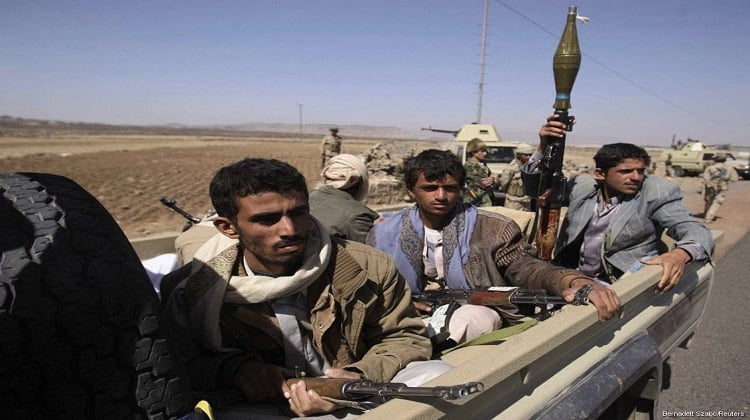
Iran might be advancing its support for the Houthi movement in Yemen, according to a senior US State Department official.

What’s Next for Hezbollah After Solemeini?

0

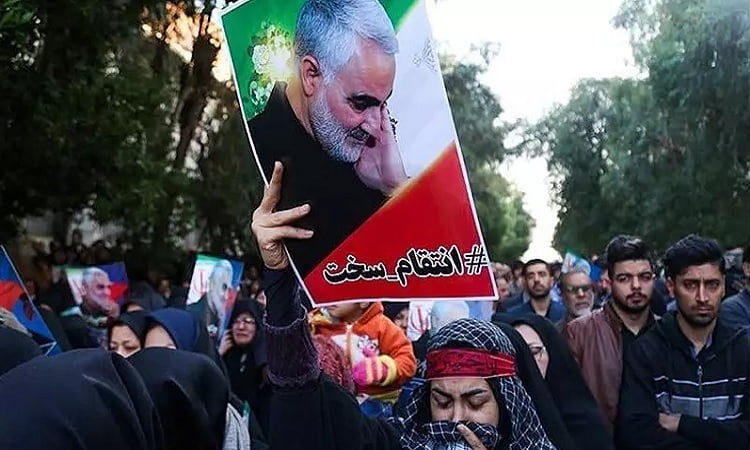
The death of Islamic Revolutionary Guard Corps (IRGC) commander Qasem Soleimani has caused aftershocks in the Middle East and farther afield. His assassination was surprising, with U.S. forces taking advantage of Soleimani’s presence in Baghdad to target his convoy with a fatal drone strike. Hezbollah 


What’s Next for Hezbollah After Solemeini?


Since his death, despite aggressive rhetoric from Tehran and its allies, the military response has been limited; Iranian missile strikes against two Iraqi bases that host U.S. forces that caused no deaths have been the extent of the Iranian response (Middle East Online, January 7).

Long-term repercussions have taken precedence over the short-term implications, as both the United States and Iran have moved away from direct military confrontation. One of the most pertinent questions is what impact Soleimani’s death will have on Tehran’s most important proxy ally—the Lebanese political and militant force, Hezbollah.

Hezbollah and Tehran – Proxy and Commander

The relationship between Hezbollah Secretary General Hassan Nasrallah and Soleimani was well documented. In a rare television interview in October 2019, Soleimani recounted how he and Nasrallah were almost killed in an Israeli drone strike during the Second Lebanon War in 2006, while officials have spoken of their “unique and close” friendship (Middle East Eye, January 17). Soleimani also had a close relationship with Imad Mughniyeh, a Hezbollah leader killed in Syria in 2008, and Mohammed Hejazi, who led IRGC forces in Lebanon. The three were at the heart of modernizing Hezbollah weaponry, with Tehran providing high-precision missiles under Soleimani’s direction (Jerusalem Post, January 22).

Soleimani described how he oversaw military operations in Lebanon throughout the 2006 conflict and was in constant communication with Tehran and Ayatollah Ali Khamenei (Asharq Al-Awsat, October 3, 2019). Hezbollah has remained under the direction of Soleimani and IRGC forces, with Nasrallah taking direction from Tehran. Soleimani coordinated Hezbollah’s intervention in the Syrian war to ensure pro-Iranian President Bashir al-Assad reasserted power over large swathes of the country while also ensuring a permanent presence for both Hezbollah and Iranian forces in south-western Syria (Asharq as-Awsat, October 2, 2019). A second front against Israel is one of many converging military goals for Hezbollah and the IRGC.


Read more … 

Iran Briefing | News Press Focus on Human Rights Violation by IRGC, Iran Human Rights


Assad almost resigned but Soleimani convinced him to continue

0

In an interview with a close friend of Soleimani who accompanied him on various visits to Iraq and Syria, Hasan Flark revealed that Bashar Assad was on the verge of giving up his reign in Syria.


Assad almost resigned but Soleimani convinced him to continue


Syrian President Bashar Assad almost gave up power and requested asylum in another country, but Iranian Revolutionary Guard Corps Quds Force Commander Qassem Soleimani allegedly convinced him not to, according to a report released by the Jerusalem Center for Public Affairs.

Flark, beyond his role as special assistant to Soleimani, was also responsible for the Quds Force in Iraq and the force buildup in the country. He is said to have worked with Soleimani for 41 years, serving alongside him in the Revolutionary Guard prior to the outbreak of the Iran-Iraq War in 1980.


His comments came as part of a special interview on the 40th day after Soleimani’s assassination, where Flark also noted the “special” role that the Revolutionary Guards play in the region, which he exclaimed “is to support liberation movements, fight for justice and all those who are facing global arrogance and working for the prestige of Muslims.” Flark also confirmed the presence of Quds Force operations in Lebanon, Syria, Iraq and Yemen, in addition to Afghanistan and countries in Central Asia.


Flark also shared Soleimani’s attitude toward US military capabilities, viewing it as “a paper tiger, and that Americans have bird brains.” In the case of Iraq, he said that Soleimani instructed Iraqi officials in Baghdad and elsewhere regarding operational needs for countering ISIS, “thus saving Baghdad in less than 12 hours.”


He also spoke of Soleimani’s daughter, saying that, “Zainab was very close to her father and even accompanied him on many of his travels, including to Iraq, Syria and Lebanon, and even learned good Arabic and had close ties with youth tied to Lebanon’s Hezbollah.”


In a comprehensive interview with a close friend to Soleimani who accompanied him on various visits to Iraq and Syria, Hasan Flark revealed that Assad was on the verge of giving up his reign in Syria and intended to take refuge in another country, likely Russia. Flark, who acted as a consultant and special assistant to Soleimani, noted that the latter implored Assad to remain in his position, telling him that “the one and only option facing us is a victory for the resistance, and with the help of God, we will achieve it. ”


Iran Courts Sentence Five November Protesters To Total Thirty Years Prison

0

Iran Courts Sentence Five November Protesters To Total Thirty Years Prison

Iran Courts Sentence Five November Protesters To Total Thirty Years Prison

An Iranian human rights group on February 25 reported that a court has sentenced five individuals arrested during November protests to a total of thirty years in prison as well as flogging and exile.

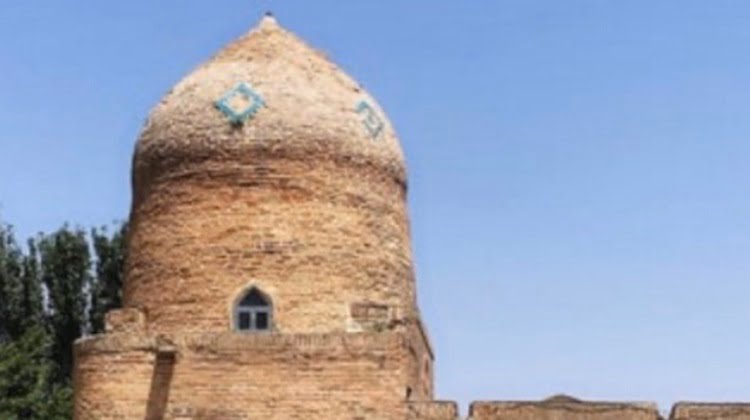
Iran threat to destroy tombs of Purim heroes Esther and Mordechai alarms US agency

0

Iran threat to destroy tombs of Purim heroes Esther and Mordechai alarms US agency

Iran threat to destroy tombs of Purim heroes Esther and Mordechai alarms US agency

Iranian leaders called for the tombs to be razed and replaced with a “Palestinian consulate” in revenge for Trump’s preferential treatment to the Israelis.

The Inevitable Middle East War

0

The assassination of Iranian General Qassem Suleimani, unlike what the Trump administration and the media expounded, is a logical extension to the heightening asymmetrical warfare between the US and Israel, on one side, and Iran and Hezbollah, on the other. Middle East


The Inevitable Middle East War


Arguably, it is also the outcome of American and Israeli intelligence cooperation, whereupon the two countries deemed the assassination of Suleimani critical to their national security. Whereas some hailed the murder of Suleimani, along with his colleague a leader of the Iraqi Mobilization Forces Abu Mahdi al-Muhandis, as a successful operation that thwarted potential terror attacks against U.S. national interests, some criticized the murder as hastening the march to war with Iran. To be sure, there is already a war and the prospects of terror attacks have increased. The killing of Suleimani has changed the dynamics of this ongoing asymmetrical war by expanding the theater of operations and substituting overt and covert operations for proxy warfare.  This has increased the prospect of regional war, regardless of the attitude of concerned countries to rule out a war.   

The asymmetrical warfare between Tehran and Washington began when Iranian revolutionaries held American hostages in the American Embassy in Tehran from November 1979 until January 1981. Ayatollah Ruhollah Khomeini, the founder of the theocracy in Iran, who split the world between oppressors and oppressed, depicted the U.S. as the great Satan for being the great oppressor in the world. Before long, the tension between the two countries intensified. Whereas Washington supported Iraq in its war against Iran (1980-1988), Tehran called on its revolutionary proxies to kidnap Western hostages in Beirut. The botched Carter administration’s attempt to rescue the hostages led the incoming Reagan administration to pursue a multi-pronged policy vis-à-vis Iran. The administration pursued a covert deal with Iran, the Iran-Contra affair, according to which Israel, at the behest of the U.S., would supply Iran with missiles. In turn, Iran would release the hostages and pay cash for the missiles, which would be transferred to the Contras fighting the socialist Nicaraguan government. At the same time, the administration engaged President Hafiz al-Asad of Syria to help free the hostages since his troops controlled Lebanese territories, while maintaining its support of Iraq’s war efforts against Iran.


Read more … 

Iran Briefing | News Press Focus on Human Rights Violation by IRGC, Iran Human Rights


Iran’s Sudden Spread Of Coronavirus Leads To Distrust In State’s Handling Of The Disease

0

Iranian officials have reacted to an outbreak of the coronavirus by announcing emergency measures amid public distrust over the government’s handling of the disease and concern that the number of infections is much higher than reported.


Iran's Sudden Spread Of Coronavirus Leads To Distrust In State's Handling Of The Disease
Iran’s Sudden Spread Of Coronavirus Leads To Distrust In State’s Handling Of The Disease


A total of 18 cases have been confirmed in the country, including four deaths in the holy Shi’ite city of Qom, where most of those diagnosed are also located. Two elderly patients died in the city earlier this week after testing positive for the virus, officials reported.

After only having five cases, Health Ministry spokesman Kianush Jahanpur announced 13 new cases on February 21 as Iranians went to the polls to choose their new parliament.

State television showed some voters wearing masks while standing in line to cast their ballots in Qom.

The new cases included seven people diagnosed in Qom, two in the northern Gilan Province, and four in the capital, Tehran, Jahanpur said on Twitter.

“Most of the cases were residents of Qom or had a history of returning from Qom in recent days and weeks,” Jahanpur added.

Iranian authorities have not explained how the virus has spread in the country.

A Health Ministry official suggested on February 21 that Chinese workers who traveled to China — where the virus emerged in December — were the likely origin of the virus.

“It’s clear that new [carriers] of coronavirus have circulated in the country and probably the source of this illness was Chinese workers [from] the city of Qom who had traveled to China,” ministry official Minou Mohrez told the official government news agency IRNA.

Mohraz added that the ministry has undertaken strong measures to control the spread of the virus.

Authorities have said all schools and seminaries have been closed in Qom and that a national committee for the prevention and fight against the virus has been created.


Read more …

Iran Briefing | News Press Focus on Human Rights Violation by IRGC, Iran Human Rights


Iranian cleric blames Trump for coronavirus outbreak in Qom

0

Saeedi claimed that the outbreak was Trump’s way of fulfilling his promise to hit Iranian cultural sites if the Islamic Republic took revenge for the killing of Soleimani.


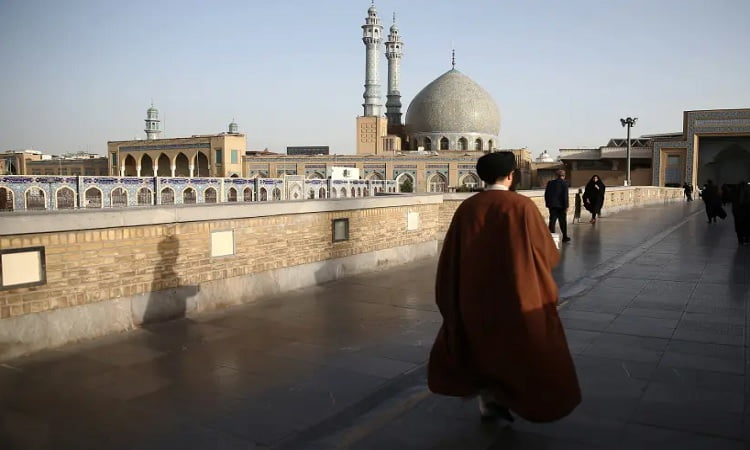
The Friday Prayer Imam of the religious city of Qom, which has been struck with a coronavirus outbreak that has left 29 infected and six dead, blamed US President Donald Trump on Saturday for targeting the city with the virus in order to “make Qom look like an unsafe city and to take revenge,” reported Radio Farda.

 
“The enemy wants to instill fear in people’s hearts, make Qom look like an unsafe city and to take revenge for all its defeats,” said Hojjat ol-Eslam Seyyed Mohammad Saeedi, the Friday Prayer Imam and Custodian of the Shrine of Masoumeh. “Trump will die frustrated in his wish to see Qom defeated.”
 
The cleric added that Trump targeted the city because it is a “shelter for the Shi’ites of the world, the center of religious seminaries and the city where Shi’ite sources of emulation live.”
 
Saeedi claimed that the coronavirus outbreak was Trump’s way of fulfilling his promise to hit Iranian cultural sites if the Islamic Republic took revenge for the killing of former IRGC Quds Force commander Qassem Soleimani, according to Radio Farda.
 
In January, Trump warned in a tweet that if Iran strikes any Americans or American assets, the US had targeted “52 Iranian sites (representing the 52 American hostages taken by Iran many years ago), some at a very high level & important to Iran & the Iranian culture.”
“The enemy wants to instill fear in people’s hearts, make Qom look like an unsafe city and to take revenge for all its defeats,” said Hojjat ol-Eslam Seyyed Mohammad Saeedi, the Friday Prayer Imam and Custodian of the Shrine of Masoumeh. “Trump will die frustrated in his wish to see Qom defeated.”


Iran Briefing | News Press Focus on Human Rights Violation by IRGC, Iran Human Rights