
U.S. Strike on Iran-backed Militia in Iraq and Syria Kills 25, Wounds 55
U.S. Strike on Iran-backed Militia in Iraq and Syria Kills 25, Wounds 55
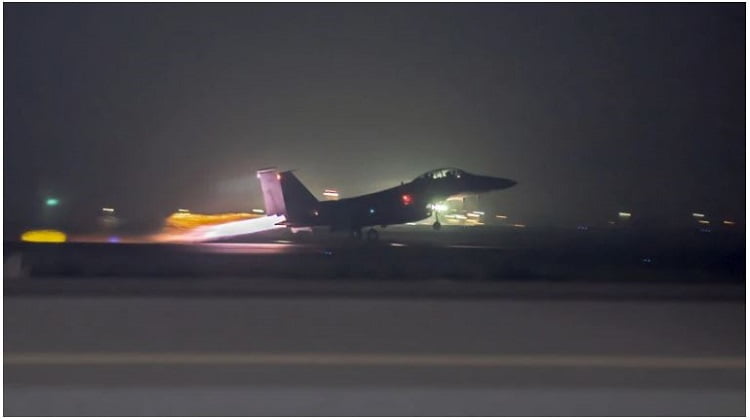
U.S. Strike on Iran-backed Militia in Iraq and Syria Kills 25, Wounds 55

Oppressed masses awoke after a single slap at a Tunisian market, Tehran won legitimacy with its nuclear deal, and ISIS may be down but it’s not out
It was December 17, 2010, in the central Tunisian city of Sidi Bouzid. In front of dozens of people, municipal inspector Faida Hamdy slapped a young vegetable vendor and confiscated his produce. The young man, Mohamed Bouazizi, will be remembered by millions throughout the Middle East in the decade to come.
Humiliated, Bouazizi set himself on fire, unleashing a storm that changed the region and ironically came to be known as the Arab Spring. He spent 18 excruciating days in the hospital before his death, while tens of thousands of Tunisians flooded the streets, calling for the demise of the dictatorship and the ouster of President Zine El Abidine Ben Ali, who would be forced into exile.
This civil awakening was met with disbelief. Many analysts and experts never imagined that everyday Tunisians, thought to be submissive, would rally against such a powerful regime, let alone keep on demonstrating and getting killed.
With their rebellion, the Tunisians infected the great Egypt, too, along with neighboring Libya, faraway Yemen, and eventually Syria. Leaders who had shaped the Middle East for decades lost their thrones, and in Libya, Yemen and Syria, civil wars are still going on. Elsewhere in the Arab world it became clear that public opinion, long considered irrelevant, had the potential to unleash a revolutionary force.
In terms of immediate political gain, most of the popular uprisings failed to root out the long-standing injustices that brought people to the streets. Egypt is still ruled by an authoritarian president who quashes even the smallest sign of criticism; the seeds of democracy planted with its first free democratic election in six decades were brazenly trampled. The notion of human rights, gloriously celebrated in Egypt’s post-revolution constitution, remain only empty words, and the promise of an egalitarian economy has been put aside.
Iran Briefing | News Press Focus on Human Rights Violation by IRGC, Iran Human Rights

Earlier this month, the United States revealed that its intelligence services had concluded the attack three months ago on Saudi oil sites was the work of Iran.
Reuters reported that that debris recovered indicates the strike came from the north of one of the locations attacked – refuting the Yemeni Houthi movement’s claims it was responsible.
Iran, which backs the Houthis, denied any involvement. Yet Yemen is south of Saudi Arabia, making Houthi responsibility impossible if the US intelligence assessment is indeed correct.
Israeli officials told Middle East Eye that they tend to accept the US findings, but also emphasised that like many other previous attacks and clashes, it was most probably a joint venture involving Houthis, Iran’s intelligence ministry and the Quds force of Iran’s Islamic Revolutionary Guards Corps (IRGC).
The Quds force’s leader is the notorious Major-General Qassem Soleimani. Officially he serves under IRGC commander Major-General Hossein Salami, a man known for his fiery and aggressive speeches targeting the US, Israel and Saudi Arabia.
But in reality Soleimani, a close confidant and adviser of the Supreme Leader Ali Khamenei, with whom he has developed fatherly relations, is considered as a much more important commander, certainly with a much better public image.
The interesting recent developments surrounding Iran and Yemen do not stop at the US assessment, however.
Western intelligence sources cited by the French newsletter Intelligence Online have identified the commander of the Iranian Quds force in Yemen. According to the sources, General Reza Shahi, a native of the Iranian city of Shiraz, commands a Revolutionary Guards unit in Yemen of about 400 fighters. It’s reinforced by experts from Hezbollah sent from Lebanon.
Khamenei and his military commanders, including Salami, Soleimani and Shahi, have been trying to conceal and hide Iranian involvement in Yemen.
Iran Briefing | News Press Focus on Human Rights Violation by IRGC, Iran Human Rights

A rescue mission is underway for at least one pilot who was in a recently overhauled Iranian fighter jet when it crashed during a test flight near the country’s northern border Wednesday, according to Iran’s state television.
The Russian-made MiG-29 went down in the mountainous Sabalan region near the Azerbaijan border after taking off from the Tabriz air base in northwestern Iran, a report said.
State media said the crash occurred near a dormant volcano, according to the Jerusalem Post.
The pilot was said to have contacted his base following the crash. Local agencies had earlier reported that the plane had two pilots who were both killed, according to Reuters.
While rescue teams and three helicopters were immediately dispatched, efforts were hampered by bad weather and snow-covered terrain, according to reports.
An investigation was underway into the cause of the crash.
Iran’s air force has an assortment of American-made military aircraft purchased before the 1979 Islamic Revolution. It also has Russian-made MiG and Sukhoi planes. Decades of Western sanctions have made it hard for Iran to maintain its aging fleet.
Earlier this week, reports said an advanced Sukhoi Su-57 fighter jet built to compete with top American stealth fighters crashed in Russia and the pilot bailed out safely.
The crash happened during a test flight just days before the Russian military was set to receive its first serial-produced Su-57.
The Russian-made MiG-29 went down in the mountainous Sabalan region near the Azerbaijan border after taking off from the Tabriz air base in northwestern Iran, a report said.
State media said the crash occurred near a dormant volcano, according to the Jerusalem Post.
The pilot was said to have contacted his base following the crash. Local agencies had earlier reported that the plane had two pilots who were both killed, according to Reuters.
While rescue teams and three helicopters were immediately dispatched, efforts were hampered by bad weather and snow-covered terrain, according to reports.
An investigation was underway into the cause of the crash.
Iran Briefing | News Press Focus on Human Rights Violation by IRGC, Iran Human Rights

The unrest in Idlib has sent more than 216,000 civilians fleeing from their homes.
President Donald Trump on Thursday issued a warning to allies of the Syrian government waging a military offensive to regain rebel-held territory that relief groups say has displaced hundreds of thousands of civilians since last month.
“Russia, Syria, and Iran are killing, or on their way to killing, thousands of innocent civilians in Idlib Province,” he tweeted. “Don’t do it! Turkey is working hard to stop this carnage.”
According to The Associated Press, Syrian government forces allied with Russia and Iran have been shelling parts of Syria’s Idlib province since late last month in an attempt to retake one of the last strongholds of the U.S.-allied rebels.
The unrest has sent more than 216,000 civilians fleeing from their homes, relief group Syrian Response Coordination Group told the AP.
The assault from Syrian President Bashar Assad’s forces comes months after Trump abruptly withdrew U.S. forces from the war-torn country’s northern border with Turkey, asserting his preference for regional powers to play a more prominent role while leaving the U.S. with little leverage in the ongoing civil war there. The move also paved the way for a Turkish incursion that killed both U.S.-allied Kurdish fighters and civilians.
According to the AP, the Syrian government’s offensive has driven civilians north toward the Turkish border as troops have pushed toward the major rebel-held town Maaret al-Numan, which sits on a key highway connecting two of Syria’s major cities — its capital, Damascus, and its largest, Aleppo.
In a statement issued earlier this week, the a spokesman for the United Nations secretary-general estimated that at least 30,000 civilians had been displaced by the offensive in the past week alone, and called for “an immediate cessation of hostilities” in the province while demanding “sustained, unimpeded and safe humanitarian access to civilians, including through the cross-border modality” for those fleeing.
Dropping temperatures and heavy rainfall have compounded treacherous conditions for displaced civilians.
Iran Briefing | News Press Focus on Human Rights Violation by IRGC, Iran Human Rights
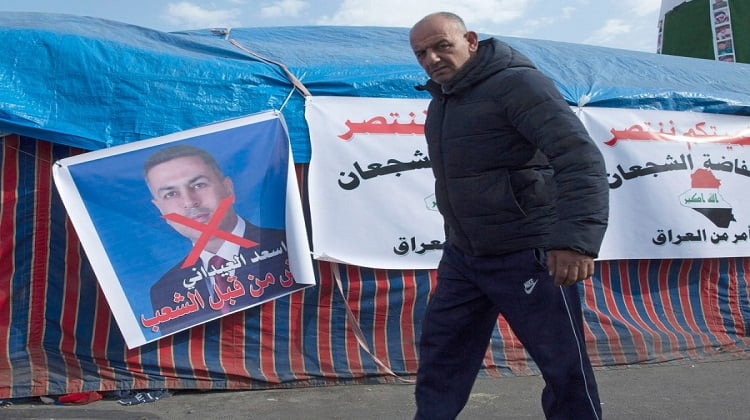
Iraq’s Iran-backed groups blast president over premier post

Iranian-recruited Afghans affiliated with the group Liwa Fatemiyoun posted a video on Tuesday showing them near the Golan Heights and claiming that they had come to fight the “Zionists.” The Fatemiyoun are a group of Afghan Shi’ites recruited by Iran’s Islamic Revolutionary Guard Corps to fight in Syria on the side of the Syrian regime. They have played a key role in some battles near Palmyra and they are now continuing to train and live in Syria.
Iran Briefing | News Press Focus on Human Rights Violation by IRGC, Iran Human Rights

The stand-off between America and Iran will get worse before it gets better
“IRAN IS AN island of stability in one of the most troubled areas of the world,” said Jimmy Carter, then America’s president, as he dined with his Iranian counterpart, the shah, Mohammad Reza Pahlavi. But as the leaders feasted, suffering Iranians stewed. Just over a year later, in 1979, Pahlavi was ousted and mullahs led by Grand Ayatollah Ruhollah Khomeini took power. It turned out Iran was not that stable. It has been causing trouble in the region ever since.
Few, least of all America’s spooks, saw the revolution coming in 1979. Nor, just a few years ago, did many imagine that America and Iran would come to the brink of war in 2019. But in June President Donald Trump nearly bombed Iran, which had attacked commercial shipping and shot down an American drone. There was more talk of war in September, after Iran or its proxy attacked oil facilities in Saudi Arabia. The risk of an all-out conflict will cast a shadow over 2020.“IRAN IS AN island of stability in one of the most troubled areas of the world,” said Jimmy Carter, then America’s president, as he dined with his Iranian counterpart, the shah, Mohammad Reza Pahlavi. But as the leaders feasted, suffering Iranians stewed. Just over a year later, in 1979, Pahlavi was ousted and mullahs led by Grand Ayatollah Ruhollah Khomeini took power. It turned out Iran was not that stable. It has been causing trouble in the region ever since. Few, least of all America’s spooks, saw the revolution coming in 1979. Nor, just a few years ago, did many imagine that America and Iran would come to the brink of war in 2019. But in June President Donald Trump nearly bombed Iran, which had attacked commercial shipping and shot down an American drone. There was more talk of war in September, after Iran or its proxy attacked oil facilities in Saudi Arabia.
Iran Briefing | News Press Focus on Human Rights Violation by IRGC, Iran Human Rights

In resolute speech on Mideast threats, Maj. Gen. Aviv Kochavi implied Israel attacks Iranian weapon convoys smuggled through Iraq. He also warned of a conflict up north Israeli Army Chief
Over the years, the annual lecture at the conference in memory of the late Israel Defense Forces chief of staff Amnon Lipkin-Shahak has become a kind of initiation ceremony for new IDF chiefs. Aviv Kochavi delivered it on Wednesday at nearly the end of his first year as chief of staff.
In a long, comprehensive and eloquent address at the Herzliya Interdisciplinary Center, Kochavi presented a thorough analysis of the regional situation. The bottom line – was it ever any different? – is not optimistic: Kochavi identifies more threatening activities against Israel, more hostile organizations, more missiles and rockets and improvements in the level of precision of the missiles in enemy hands.
Like his predecessor Gadi Eisenkot, Kochavi reiterates that none of Israel’s enemies want to start a war with it. But even more than Eisenkot in the latter’s speech in this same place last year, Kochavi sounds almost fatalistic in his assessment that military friction between Israel and Iran is expected to increase over the next year and could, under extreme circumstances, even deteriorate into war.Israeli Army Chief
Here are some of Kochavi’s key points in his hour-long lecture:
* The Middle East: Kochavi stressed the connection between the various arenas – Iran, Syria, Lebanon and the Palestinians in the territories – and the possibility that a flare-up in one area will affect the others. He sees Iran and its proxies as the main threat against Israel. To Kochavi, the Gaza Strip is a secondary arena, in which attainment of long-term calm will help the army focus on the conflict with Iran.
Iran Briefing | News Press Focus on Human Rights Violation by IRGC, Iran Human Rights

Following the fall of the Sunni-dominated Baathist regime in Iraq, Jordan’s King Abdullah II warned in in 2004 about the rise of a religious-political movement based on Shiite political Islam in the Middle East, which he called the “Shiite Crescent” and later the “Iranian Crescent.” This crescent stretches from Iran to the Gulf to Iraq and then Lebanon.
But now this same area is witnessing a new Shiism that opposes political Islam and is calling for secular democracy. Indeed, some religious leaders in the main three countries of the crescent — Iran, Iraq, and Lebanon — are developing a new theology that supports secularism.
The representative of Iraq’s top cleric, Ayatollah Ali al-Sistani, said in a Friday sermon in Najaf on Dec. 20, “People are the source of authority and it receives its legitimacy from them.” Then he asked politicians to go to the people to help resolve the current crisis, to listen to them and to organize early elections after forming an independent electoral commission and a fair electoral law. He warned about foreign inference in Iraqi matters, a reference to Iran in particular as well as to other influential foreign parties in Iraq.
In previous speeches, he criticized the idea of “guardianship of the Islamic jurist” (velayat-e faqih), which is the political form of the state in Iran, saying, “The religious authority only provides advice and recommendations in the direction of the people’s interests, but in the end, it is the people who decide what is the best for their current lives and future without any guardianship from any parties on them.”
During his religious leadership, Sistani has articulated a secular political doctrine, the “civil state,” in opposition to velayat-e faqih. He also has supported the idea of separation between the state and the religious institution.
Iran Briefing | News Press Focus on Human Rights Violation by IRGC, Iran Human Rights