Home Blog Page 185

Iranian Government Dictated to Local Media How to Cover Protests, New Documents Reveal

0

Journalists Will Be Charged with “Crimes” if Coverage Diverges from Official Line

Officials Expected Protests, Dictated Instructions to Media Before Price Hike Was Announced


Iranian Government Dictated to Local Media How to Cover Protests, New Documents Reveal


November 25, 2019—While Iran is still reeling from the recent protests that have left scores injured, more than a hundred dead, and thousands arrested, the Center for Human Rights in Iran (CHRI) has learned that two main government ministries have silenced the domestic media by issuing directives dictating coverage of the unrest, in a blatant violation of freedom of the press. Intelligence ministry officials have also threatened journalists that they will be charged with “crimes” if their reporting of events does not hew to the official narrative of events.

Moreover, contrary to the widespread view that the government was caught off guard by the protests, CHRI has learned from an informed source who requested anonymity for security reasons that officials anticipated there would be unrest after the planned announcement of the gasoline price hikes. According to the source, state officials met with media publishers to instruct them on coverage of the expected unrest before the price hikes were announced to the public.

CHRI has confirmed the above account with two other journalists who had detailed and reliable knowledge of the meetings.

“It is now clear, the state’s preemptive directive to the media to censor coverage of the protests, the subsequent news cut-off and internet shutdown, and the violence exacted against the protestors all went hand-in-hand,” said Hadi Ghaemi, CHRI executive director.

“This was a calculated crushing of peaceful dissent.”

CHRI condemns this flagrant violation of freedom of the press, and calls upon the Iranian government to withdraw its directive dictating coverage of the protests and allow full and independent reporting of domestic news and events.

Journalists Told How to Cover the Price Hike Before It Was Announced

In an interview with CHRI, a journalist with detailed knowledge of these events, stated: “Before the fuel price hike was announced and the protests started, Supreme National Security Council officials briefed newspaper publishers on two occasions.”

“The meetings were one-way affairs; no discussion was allowed. The officials spoke about the possibility of an increase in the price of gasoline and the potential for protests in some regions and they advised that the media should cover the issues within the framework of state policies,” he added.

“The fact that the government expected protests to happen has huge implications for the state’s use of lethal force against the protestors,” said Hadi Ghaemi. “The state’s violence was not a product of unanticipated chaos but rather a planned state decision to violently and ruthlessly crush the unrest,” Ghaemi added.


Read more …

Iran Briefing | News Press Focus on Human Rights Violation by IRGC, Iran Human Rights

Netanyahu Warns Iran is Plotting More Attacks Against Israel

0

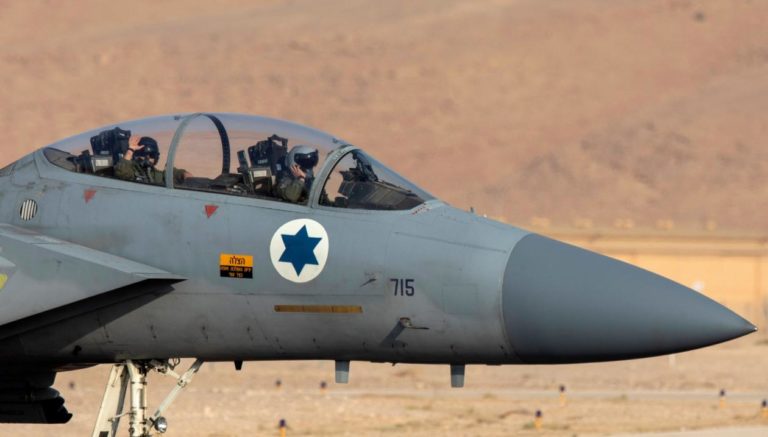
Israeli Prime Minister Benjamin Netanyahu warned Sunday that Iran is planning more attacks against Israel and the Israel Defense Forces (IDF) are working hard to prepare and protect the country from harm.


Netanyahu Warns Iran is Plotting More Attacks Against Israel


“Iran’s aggression in our region, and against us, continues,” Netanyahu said while meeting with IDF commanders on Mt. Avital in Israel’s north.

“We are taking all necessary actions to prevent Iran from entrenching here in our region. This includes the activity necessary to thwart the transfer of lethal weaponry from Iran to Syria, whether by air or overland. We will also take action to thwart Iran’s effort to turn Iraq and Yemen into bases for launching rockets and missiles against the State of Israel. Our commitment and our readiness to struggle against Iranian aggression is absolute and we are acting with all means to prevent Iran from achieving its goals. I cannot go into more detail but this is a constant process,” the prime minister said.

Netanyahu said Israel would confront Iran anywhere in the Middle East and criticized the Islamic Republic for killing protesters who are demonstrating against the regime.

“The leaders of Iran are concentrating on the citizens of Iran; they are slaughtering them. This is additional testimony to what kind of a regime this is. We will oppose it everywhere,” he said.

Last week, the IDF struck dozens of Iranian targets in Syria in response to four rockets that were launched at the Golan Heights on Tuesday.

“The attack was carried out in response to the launching of the rockets by the Iranian Quds force from Syrian territory,” the military said in a statement.

The Iranian Quds force is a unit in the Iranian Revolutionary Guard Corps responsible for operations outside of Iran’s territory.


Israel has conducted many airstrikes in Syria over the years to prevent Iran from gaining power there.


Source

Iran Briefing | News Press Focus on Human Rights Violation by IRGC, Iran Human Rights


One False Move By Israel or Iran Will Lead to War

0

Over the last two years, Israel has warned about Iran’s entrenchment in Syria. But Iran has continued its role in Syria, and it continues to threaten Israel and transfer precision guidance to Hezbollah for converting its rockets.


One False Move By Israel or Iran Will Lead to War


Israel has been monitoring Iranian entrenchment in Syria, weapons transfers that move to Iraq and also to Hezbollah in Lebanon, as well as Iranian-backed groups in Gaza. On November 12 Jerusalem put in motion operation ‘Black Belt,’ the attack on a senior Palestinian Islamic Jihad commander named Bahaa Abu al-Ata. He was a “ticking bomb,” Israel said after the operation, which led to 450 rockets being fired in retaliation from Gaza. There is another ticking bomb in Syria, where Israel struck numerous targets on November 20, a day after Iran’s Islamic Revolutionary Guard Corps fired rockets at Israel. One false move by Israel or Iran now could lead to a major regional war. Jerusalem must gamble on its precision airstrikes to deter Tehran.

“The Iranian attack towards Israel is further clear proof of the purpose of the Iranian entrenchment in Syria, which threatens Israeli security, regional stability and the Syrian regime,” Israel’s IDF said on Wednesday, November 20. The airstrikes were a major attack on the IRGC’s Quds Force, and also on Syrian air defense systems. Headquarters units, weapons warehouses, and bases were struck. Like in Gaza though, the airstrikes are not unique. Israel has carried out more than one thousand airstrikes in Syria. At the same time, Iran or Iranian-backed groups have sought to attack Israel with rockets and drones five times in the last two years. This includes a drone attack in February 2018, rockets fired in May 2018, a rocket in January 2019, rockets fired in September and on November 19.


Read more …

Iran Briefing | News Press Focus on Human Rights Violation by IRGC, Iran Human Rights
 

Iraqi Forces Kill 28 Protesters After Iranian Consulate Torched

0

Iraqi Forces Kill 28 Protesters After Iranian Consulate Torched

Iraqi Forces Kill 28 Protesters After Iranian Consulate Torched

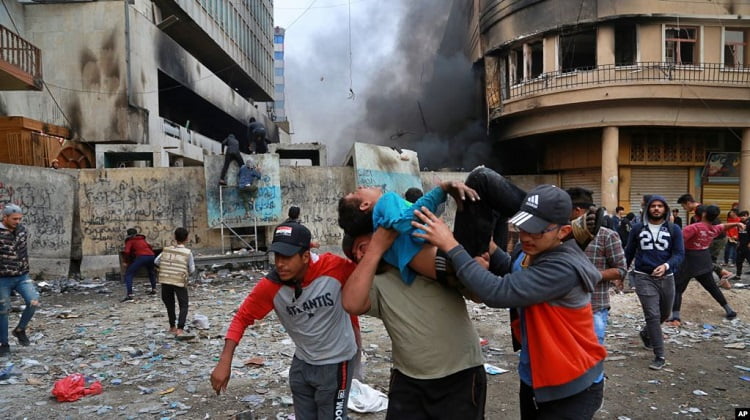
Iraqi security forces shot dead at least 28 protesters on Thursday after demonstrators stormed and torched an Iranian consulate overnight, in what could mark a turning point in the uprising against the Tehran-backed authorities.

Iran is Planning Attacks Against Israel, Warns Netanyahu

0

Israeli Prime Minister Benjamin Netanyahu said on Sunday that Iran is planning attacks against Israel, and that “all necessary actions” are being taken to prevent them.


Iran is Planning Attacks Against Israel, Warns Netanyahu


“Iran’s aggression in our region, and against us, continues,” said Netanyahu, according to an AFP report.

“We are taking all necessary actions to prevent Iran from entrenching here in our region. This includes the activity necessary to thwart the transfer of lethal weaponry from Iran to Syria, whether by air or overland,” he said, according to the report.

“We will also take action to thwart Iran’s effort to turn Iraq and Yemen into bases for launching rockets and missiles” at Israel, he added.

Netanyahu spoke as US General Mark Milley, chairman of the Joint Chiefs of Staff, was in Israel meeting with IDF Chief of Staff Lt. Gen. Aviv Kohavi.

Separately, Reuters reported on Monday that Iranian officials had planned the Sept. 14 attack on the world’s biggest oil processing facility in Saudi Arabia for months.

“Details were discussed thoroughly in at least five meetings and the final go ahead was given” by early September, Reuters quoted an Iranian official as saying.

“Agreement on [Saudi] Aramco [as the target] was almost reached unanimously,” the official said. “The idea was to display Iran’s deep access and military capabilities.”

One of the officials who spoke with Reuters said Iran was delighted with the outcome of the attack, and that it had also thumbed its nose at the United States.

One of the officials who spoke with Reuters said Iran was delighted with the outcome of the attack, and that it had also thumbed its nose at the United States.

“Agreement on [Saudi] Aramco [as the target] was almost reached unanimously,” the official said. “The idea was to display Iran’s deep access and military capabilities.”

One of the officials who spoke with Reuters said Iran was delighted with the outcome of the attack, and that it had also thumbed its nose at the United States.


Source … 

Iran Briefing | News Press Focus on Human Rights Violation by IRGC, Iran Human Rights


Are Iranian Hackers Planning An Attack On Key Oil Assets?

0

An infamous Iranian hacker group may be targeting industrial control systems to cause major disruptions in power grids, oil refineries, and other physical energy assets, in an apparent sharpened focus on cyber warfare on critical industries.Iranian Hackers


Are Iranian Hackers Planning An Attack On Key Oil Assets?


These attempts by Iranian hackers to infiltrate systems controlling energy assets come at a time of heightened tension between the United States and Iran and at a time of increased cyber threats to the energy industry in the United States and globally.

Iranian hacker group APT33—also known as Elfin, Refined Kitten, and Holmium—is thought to have recently shifted its focus from IT networks onto industrial control systems (ICS) that control utilities and oil refineries, among other industries, Microsoft security researcher Ned Moran tells WIRED’s senior writer Andy Greenberg.

Moran presented Microsoft’s findings at the CyberwarCon conference in Arlington, Virginia, this week. Those findings show that the Iranian hackers have narrowed over the past two months their password spraying—attempts to access a large number of accounts with a few common passwords—onto around 2,000 organizations, but have increased the number of targeted accounts. According to Microsoft’s Moran, half of the 25 top organizations that the hackers try to hack are industrial control system (ICS) manufacturers and providers.  

It’s unclear if the hackers have cracked any of the systems they attempted to hack. Their motivation is also unclear, but Microsoft’s Moran thinks that the ultimate goal is to try to gain access to a system in order to carry out a physically devastating attack on critical infrastructure, such as energy infrastructure.

By targeting ICS, the Iranian hackers are “trying to find the downstream customer, to find out how they work and who uses them. They’re looking to inflict some pain on someone’s critical infrastructure that makes use of these control systems,” Moran told WIRED.Related: This Large Oil Producer Is Facing A Major Refining Crisis

Cybersecurity solutions firms Trend Micro said earlier this month that it believes the APT33 group has been using about a dozen live Command and Control (C&C) servers for extremely narrow targeting against organizations in the Middle East, the United States, and Asia.

The apparent shift in the Iranian hacker group’s focus highlights the threats to critical U.S. infrastructure, including energy infrastructure, which has seen the frequency of cyberattacks increase over the past couple of years.   

Last year, the same Iranian hacker group stepped up its attacks on a variety of companies in the Persian Gulf, including energy firms.  

According to The National, there is wide belief that the hacker group is linked to the government in Tehran, with the attacks becoming more frequent after U.S. President Donald Trump pulled the Untied States out of the Iran nuclear deal.


Read more … 

Iran Briefing | News Press Focus on Human Rights Violation by IRGC, Iran Human Rights



Israel Demolished Iranian Republican Guard Corps HQs in Syria in Retaliation for Rocket Attack

0

What happens next? Is a Middle East War possible? Israel 


Israel Demolished Iranian Republican Guard Corps HQs in Syria in Retaliation for Rocket Attack


On November 19, four unguided artillery rockets arced out from Syrian territory into Israeli airspace in northern Galilee in the Golan Heights. These were detected and promptly destroyed by Israel’s Iron Dome air defense system.

What prompted this ineffectual attack from Iranian forces?


Like the Ouroboros, the snake that is forever preoccupied devouring its own tail, the side-show war between Israel and Iranian forces in Syria seemingly stretches out into an infinite series of violent affronts repaid in kind.

Since 2013, Iran has built up a military presence in Syria not only to combat rebels opposing the Syrian government under Bashar al-Assad, but to build up a military infrastructure that could pressure Israel, including by transferring arms to proxies like Hezbollah. Over that same period of time, Israel has retaliated with hundreds of airstrikes blasting the Iranian bases.

For example, in August, Israel warplanes killed two people in an attack described as pre-empting a scheme to deploy a swarm of drones to attack targets in Israel.

Several commentators have connected the November 19 rocket attack is being a response to Israel’s assassinated Bahaa Abu al-Ata, the commander of Palestinian Islamic Jihad, with a surprise air strike in Gaza on November 12. The same day, Syria reported a reported missile attack on the home of another PIL leader living in Damascus named Akram al-Ajouri, killing his son and one bystander.

Palestinians then responded by launching hundreds of rockets at Isareli targets, and the IDF retaliated against that with more air strikes in a surge of fighting that lasted for two days.


Thus, Israel’s retaliation for the November 19 rocket attack was inevitable. However, its scale and violence took observers by surprise.


Read more …

Iran Briefing | News Press Focus on Human Rights Violation by IRGC, Iran Human Rights


U.S. and Israel Seek Assurances on Iran From Each Other, but for Very Different Reasons

0

With Netanyahu’s legal woes and a new defense minister looking to score political points, Israel’s security establishment has one responsible adult Iran


U.S. and Israel Seek Assurances on Iran From Each Other, but for Very Different Reasons


Israel has hosted a series of senior defense officials in recent weeks, climaxing in Sunday’s visit by the chairman of the Joint Chiefs of Staff, Gen. Mark Milley, who was hosted by Israel Defense Forces Chief of Staff Aviv Kochavi.

Both countries took care to stress that ties between their respective defense establishments are particularly close. But two other considerations that aren’t talked about publicly are also apparently motivating this aerial convoy of senior American officials. Both have to do with calming fears – Israel’s fear of American abandonment and America’s fear of unilateral Israeli action.

The Israeli fear stems from the Trump administration’s recent moves: It has refrained from responding to Iranian attacks in the Gulf, including one that did serious damage to Saudi oil facilities, another that downed an expensive American drone, and has withdrawn American soldiers from the Kurdish regions of northeast Syria, opening the way for a Turkish ground invasion. Israel is scared by America’s apparent desire to quit the region, which leaves Iran with more room to maneuver.

The Americans, in contrast, are apparently worried about decisions Israel might make in the future. Senior Israeli officials speak ceaselessly about the dangers posed by Iran’s efforts to entrench itself militarily in southern Syria, smuggle advanced weaponry to Hezbollah and bolster its presence in Iraq and Yemen. Increased military friction between Israel and Iran plus its satellites could drag the Americans into a regional war, which, judging by his public statements, U.S. President Donald Trump doesn’t want.

This is somewhat reminiscent of the series of senior Pentagon officials who visited Israel in the summer of 2011 and again the following summer. At both junctures, as we later discovered, Israel was considering attacking Iran’s nuclear facilities on its own. Prime Minister Benjamin Netanyahu and then-Defense Minister Ehud Barak favored such an attack; the American generals were sent to take the pulse of their Israeli counterparts who opposed it.

As far as we know, no such attack is currently on the agenda, since Iran is still committed in principle to its nuclear deal with five major powers (the sixth, America, quit the deal in May 2018), and its recent violations of the deal haven’t yet crossed the line that Israel deems intolerable.

Nevertheless, Israeli officials’ recent statements about Iran have been unusually aggressive.

On Sunday, Netanyahu and Defense Minister Naftali Bennett toured the Syrian and Lebanese borders. Netanyahu announced that Israel would work to thwart arms smuggling from Iran to Syria and block its efforts “to turn Iraq and Yemen into bases for launching missiles.” Bennett added that Iranian forces in Syria “have nothing to look for here.”

Monday, at the official memorial ceremony for soldiers who died in the 1956 Sinai war, Bennett said, “it’s clear to our enemies that we’ll respond to any attempt to prevent us from living. Our response will be very precise and very painful. I’m aiming these remarks not only at those who threaten our lives on the southern front, but also at those in the north.”


Read more … 

Iran Briefing | News Press Focus on Human Rights Violation by IRGC, Iran Human Rights


Israel’s battle against Iran

0

Israel’s battle against Iran

Israel’s battle against Iran

The recent attack by Israel Air Force (IAF) warplanes against Iranian and Syrian sites in Syria was very massive, one of the largest strikes in the last three years.

Is Israel Heading Towards a ‘Preventive War’ Against Iran?

0

On October 10, 2019, during a memorial service in Jerusalem for the fallen soldiers of the 1973 Yom Kippur War, Israeli Prime Minister Benjamin Netanyahu spoke bluntly about the conclusions to be drawn from that war: “Few hours before the outbreak of the war,” Netanyahu stated, “when it was already clear that the confrontation was inevitable, Israel did not undertake the necessary measures to neutralize the imminent threat.


Is Israel Heading Towards a 'Preventive War' Against Iran?
Is Israel Heading Towards a ‘Preventive War’ Against Iran?


Israel’s reluctance to carry out a preventive strike against Egypt enabled our enemies to take the initiative and inflict on us heavy casualties. I by no means underestimate the difficulties embedded in the decision to undertake a preventive strike. This is a severe dilemma for every Israeli government. Certainly, because its implications are not clear. However, Israel faces sometimes existential threats in which it cannot, and should not, rule out the option of a preventive strike. In fact, under such circumstances a preventive strike is a must.”

To those who might have thought that Netanyahu was engaged in historical debate, Netanyahu made it clear that his message relates to present day, and the existential threat Iran poses to Israel: “Iran,” Netanyahu said, “threatens to wipe us off the map … The IDF is prepared to preempt any threat, defensively and offensively, with crushing strength, in weaponry and in spirit. This is the tremendous spirit that was instilled in us by the generation of the Yom Kippur War.”


This is not the first time that the Israeli prime minister had mentioned the possibility of taking preemptive military action against Iran. The period between 2010–2011 was perhaps the closest Israel had ever been to launching a preemptive strike on Iranian nuclear facilities, with strong support for the initiative coming from both Prime Minister Netanyahu and then-Defense Minister Ehud Barak. What motivated Netanyahu and Barak to consider a preemptive strike on Iranian nuclear facilities? These were the following main premises:

First, if left unimpeded, Iranian nuclear facilities will enter into “zone of immunity.” That is, they will become either so well protected or so well developed that an attack on them would be a short-term solution at best, and at worst—completely futile. Netanyahu believed Iran was quickly approaching this threshold and sought to strike while such an operation could still yield the desired result of thwarting Iranian nuclear ambitions in its infancy.


Read more …

Iran Briefing | News Press Focus on Human Rights Violation by IRGC, Iran Human Rights