Home Blog Page 186

This Is How U.S. Navy SEALs Would Go To War Against Iran

0

On July 21, 1987, a gigantic 414,000-ton supertanker entered the Persian Gulf with an unusually prominent escort—a U.S. Navy missile cruiser and three frigates.Navy


This Is How U.S. Navy SEALs Would Go To War Against Iran


The narrow straits of the Persian Gulf had become a shooting gallery due to the Iran-Iraq War, still raging seven years after Iraq’s surprise invasion of Iran in 1980. As Iran counterattacked into Iraqi territory, Baghdad—supplied and armed by the Soviet Union, France, Kuwait and Saudi Arabia—began blasting Iranian oil tankers with missiles, often with assistance from U.S. surveillance assets.

Iran retaliated by targeting Kuwaiti tankers with imported Chinese Silkworm missiles. Though terrifying, both side’s anti-ship missiles inflicted relatively little damage as the tankers were simply too bulky to be easily sunk. The same was not true for the frigate USS Stark, struck accidentally by an Iraqi Exocet missile in May 1987 that killed thirty-seven crew.

But Washington had an axe to grind with Tehran, not Baghdad—and decided to respond to pleas for military escort from Kuwait. This led to the controversial policy of reflagging Kuwaiti tankers so they could be escorted by U.S. warships in Operation Earnest Will.

The supertanker Bridgeton—formerly the Kuwaiti tanker al-Rekkah—was the first ship to receive a U.S. escort. Upon entering the narrow Straits of Hormuz, a flight of four Iranian Phantom jets swooped towards the Bridgeton convoy, but turned away at the last minute. On July 23, Tehran rumbled that tanker was carrying “prohibited goods” but made no obvious moves

U.S. intelligence had learned of Iranian plans to attack the convoy with motorboats operated by the Iranian Revolutionary Guard Corps Navy. Indeed, the head of the IRGC had lobbied for such an attack but was vetoed by Supreme Leader Ruhollah Khomeini. He had a subtler approach in mind.

As the Bridgeton cruised eighteen miles west of Iran’s Farsi Island on the morning of July 24, she abruptly struck what resembled a spiked-ball chained to the sea floor—a variant of an old Soviet M-08 mine built by North Korea and exported to Iran. An explosion ripped a large hole the tanker’s port cargo tank, flooding five of her thirty-one compartments but not injuring any crew.


Read more…

Iran Briefing | News Press Focus on Human Rights Violation by IRGC, Iran Human Rights
 

Why Iran and the Muslim Brotherhood are courting each other

Did the Brotherhood fail to notice what terrors the IRGC inflicted on the Syrian people, killing thousands and displacing millions?


Why Iran and the Muslim Brotherhood are courting each other


Iranian officials have been rocked by the fallout of the publication of intelligence cables leaked to the Intercept and the New York Times by an anonymous tipster.

The source claimed he wanted the world to see what Iran was doing to Iraq and so he leaked cables purportedly written by Tehran’s secretive Ministry of Intelligence and Security (MOIS), a parallel intelligence organisation to the Islamic Revolutionary Guard Corps’ (IRGC) intelligence service.

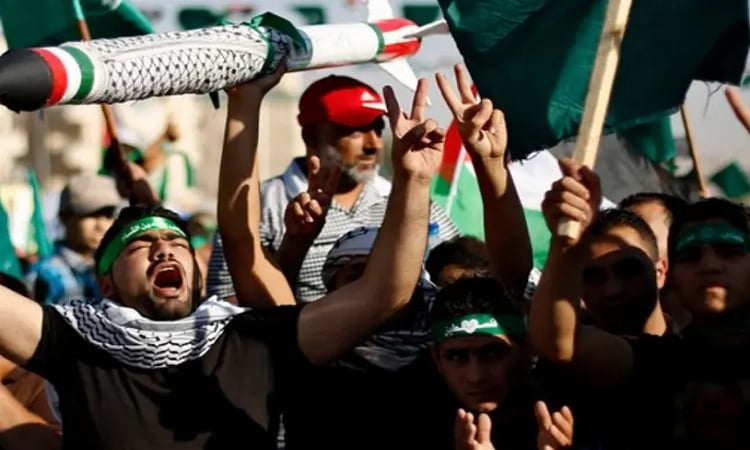
While the revelations about Iran’s colonisation of Iraq were shocking, what is increasingly disturbing is that the Muslim Brotherhood and the IRGC considered forging an anti-Saudi Arabia alliance.

MOIS’s intelligence suggests that three of the most prominent leaders of the Egyptian headquarters branch of the Muslim Brotherhood were involved in a meeting with what is now a US-blacklisted terrorist organisation.

The Brotherhood leaders involved were Ibrahim Munir Mustafa, Mahmoud El-Abiary, and Youssef Moustafa Nada. All are living in exile and are known to maintain a presence in Turkey, a country deemed safe for Brotherhood members to conduct their political activities.

While the meeting did not form the discussed alliance, there should be no surprise that the Brotherhood was flirting with the IRGC.

The Brotherhood blames Saudi Arabia and its allies for its woes since the “Arab spring” took hold of the Middle East. A mixture of poor political judgment and amateurish conduct while in office, as well as other factors, led to the Brotherhood’s collapse in Egypt and the imprisonment of many of its leaders and cadres.

This much is undisputed between both sides of the argument and it is therefore clear that the Brotherhood had motivation for seeking retribution against Riyadh and its partners.

Does that not go against the Brotherhood’s propaganda that it is always on the right side of history? Despite what happened, it is inexcusable for the Brotherhood to have flirtatious contact with a wildly sectarian power, such as Iran, and least of all with its most bloodthirsty institution, the IRGC.


Read more … 

Iran Briefing | News Press Focus on Human Rights Violation by IRGC, Iran Human Rights


Iran: Experts raise alarm at arrests and reported killings, internet shutdown

0

Iran: Experts raise alarm at arrests and reported killings, internet shutdown 

Iran: Experts raise alarm at arrests and reported killings, internet shutdown 

UN human rights experts have expressed grave concerns about the situation in Iran as protests spread across the country over the past week.

Leaks of Iran influence no surprise to Iraqis

0

Leaks of Iran influence no surprise to Iraqis

Leaks of Iran influence no surprise to Iraqis

Ground-breaking disclosures of secret intelligence reports within the Iranian government revealed how Iran controls much of the Iraqi government since the US-led invasion of Iraq in 2003.

Iran using shoot-to-kill policy on protesters

0

Iran using shoot-to-kill policy on protesters

Iran using shoot-to-kill policy on protesters

IRAN is operating a shoot-to-kill policy to crack down on protesters, a human rights organisation warned today.

Israel carries out ‘wide-scale strikes’ on Iranian forces in Syria

0

Israel says it has hit dozens of targets in Syria belonging to the government and allied Iranian forces.


Israel carries out ‘wide-scale strikes’ on Iranian forces in Syria


The Israeli military says the “wide-scale strikes” responded to rockets fired by an Iranian unit into Israel.

Syria says two civilians died and that Syrian air defences shot down most of the missiles over Damascus. Other reports say the death toll was higher.

Local reports said loud explosions were heard in the capital. Pictures on social media showed a number of fires.

On Tuesday morning, the Israeli military said it had intercepted four rockets fired from Syria towards northern Israel. It said the rockets did not hit the ground.

Israel has carried out hundreds of strikes in Syria since the civil war broke out in 2011.

It has been trying to thwart what it calls Iran’s “military entrenchment” there and block shipments of Iranian weapons to Lebanon’s Hezbollah movement.

But the latest operation was one of the broadest attacks to date, says the BBC’s Barbara Plett Usher in Jerusalem.

A senior Israeli security official said the Israelis had decided on a powerful retaliatory strike to signal they were “changing the rules” – that even a small attack from Syria would trigger an extensive response, our correspondent reports.

What did Israel say?

Early on Wednesday, the Israel Defense Forces (IDF) tweeted that the strikes targeted positions of Iran’s Quds Force and Syria’s armed forces.


“During our strike of Iranian & Syrian terror targets, a Syrian air defence missile was fired despite clear warnings to refrain from such fire. As a result, a number of Syrian aerial defence batteries were destroyed,” the IDF said.

The IDF also said it held “the Syrian regime responsible for the actions that take place in Syrian territory and warn them against allowing further attacks against Israel”.

Iran’s Quds Force is the external operations wing of the Islamic Revolution Guard Corps (IRGC).

Israel did not target the Russian-made advanced S-300 surface-to-air missile systems deployed near the positions of Russian troops, Israeli media report.

Russia, whose forces have helped turned the tide of Syria’s civil war in favour of President Bashar al-Assad, condemned the Israeli strikes.

Moscow, whose air defence system covers most of Syria’s airspace, generally does not interfere with Israeli strikes on Iranian forces and their affiliates.

The leaders of Russia and Israel enjoy good relations, and the Israeli military is said to warn the Russian military before it carries out any attacks.

Read more …

Iran Briefing | News Press Focus on Human Rights Violation by IRGC, Iran Human Rights


Iran has claimed ‘victory’ after protests. So why is the internet still off?

0

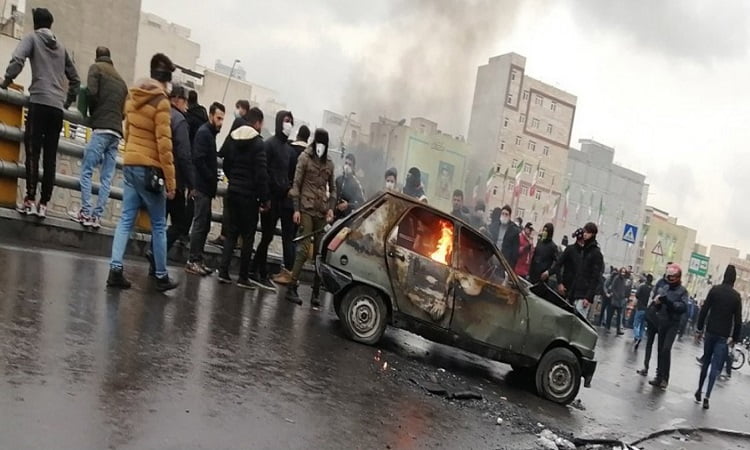
Iranian President Hassan Rouhani has claimed victory over the ongoing unrest in the country, state media reported Wednesday, six days after nationwide protests erupted following an abrupt spike in gas prices.iran

 
Iran has claimed 'victory' after protests. So why is the internet still off?
Iran has claimed ‘victory’ after protests. So why is the internet still off?
 
 
Speaking at a government meeting in Tehran, Rouhani said the country had been “victorious out of yet another test” and that “despite the country’s economic problems and existing grievances,” Iran had demonstrated it “would never allow the balance to tilt in favor of the enemy,” according to state broadcaster Press TV.
Iran’s government has blamed foreign enemies for the recent unrest — the severity of which remains unclear because a near-total internet shutdown has halted the flow of information out of the country.
 

What’s happening?

Demonstrators first hit the streets on Friday, a day after the government announced an eye-watering hike in fuel prices by as much as 300%. Iran’s economy has already been crippled by US sanctions, which saw its currency tank, prices soar, and medical and food shortages grow widespread. The fuel hike could further exacerbate economic conditions, forcing greater price increases.
Rouhani has suggested that the protesters were not Iranians but anti-government forces “pre-planned by the reactionary regional regimes, the Zionists, and the Americans.” And Iran’s Supreme Leader Ayatollah Khamenei said Tuesday the protests were related to security issues, rather than a movement by the Iranian people, and that “both friends and foes should know that we have repelled the enemy,” state news agency IRNA reported.
But the perspective of Iran’s protesters and ordinary civilians has been more difficult to ascertain in recent days.
Initially, images posted on social media showed rioters storming banks, petrol stations and government buildings and setting them ablaze. Then researchers at Netblocks, a group that tracks global connectivity, soon started noticing major drops in connectivity in Tehran and other cities.
While internet blackouts are not unheard of in the country, experts have said the scale and technical complexity of this particular blackout is different.
Social media posts have become less and less frequent as the blackout has taken full effect. CNN found many instances of videos purportedly showing ongoing clashes in the streets over the last 24 hours but was unable to verify them and they appeared to have been reposted from private Telegram groups.
Ordinarily, there are over 47 million active social media users in Iran, with Telegram and the Facebook-owned app Instagram being the most popular in the country.
 

Iran Briefing | News Press Focus on Human Rights Violation by IRGC, Iran Human Rights


Israel strikes dozens of Iranian targets in Syria following rocket attack

0

Israel strikes dozens of Iranian targets in Syria following rocket attack

Israel strikes dozens of Iranian targets in Syria following rocket attack

The Israeli military on Wednesday said it struck dozens of Iranian targets in Syria, carrying out a “wide-scale” strike in response to rocket fire on the Israeli-controlled Golan Heights the day before.

Iran: More than 100 protesters believed to be killed as top officials give green light to crush protests

0

Verified video footage, eyewitness testimony from people on the ground and information gathered from human rights activists outside Iran reveal a harrowing pattern of unlawful killings by Iranian security forces, which have used excessive and lethal force to crush largely peaceful protests in more than 100 cities across Iran sparked by a hike in fuel prices on 15 November, said Amnesty International today.


Iran: More than 100 protesters believed to be killed as top officials give green light to crush protests


At least 106 protesters in 21 cities have been killed, according to credible reports received by Amnesty International. The organization believes that the real death toll may be much higher, with some reports suggesting as many as 200 have been killed. State media have reported only a handful of protester deaths, as well as the deaths of at least four members of the security forces.

Video footage shows security forces using firearms, water cannons and tear gas to disperse protests and beating demonstrators with batons. Images of bullet casings left on the ground afterwards, as well as the resulting high death toll, indicate that they used live ammunition.

“The authorities must end this brutal and deadly crackdown immediately and show respect for human life,” said Philip Luther, Research and Advocacy Director for the Middle East and North Africa at Amnesty International.

“The frequency and persistence of lethal force used against peaceful protesters in these and previous mass protests, as well as the systematic impunity for security forces who kill protesters, raise serious fears that the intentional lethal use of firearms to crush protests has become a matter of state policy.”

Top government officials including Iran’s Supreme Leader Ali Khamenei have issued statements describing protesters as “villains” and giving security forces a green light to crush demonstrations.

Under international law, security forces may only resort to the use of lethal force when strictly unavoidable to protect against imminent threat of death or serious injury.

Amnesty International is also calling on the Iranian authorities to respect the rights to freedom of peaceful assembly and freedom of expression, including through lifting the near-total block on internet access designed to restrict the flow of information about the crackdown to the outside world.


Read more … 

Iran Briefing | News Press Focus on Human Rights Violation by IRGC, Iran Human Rights


Trump has said freeing American prisoners abroad is a top priority. What about U.S. prisoners in Iran?

0

Trump has said freeing American prisoners abroad is a top priority. What about U.S. prisoners in Iran?

Trump has said freeing American prisoners abroad is a top priority. What about U.S. prisoners in Iran?

When President Trump took office in 2017, the families of four U.S. citizens being held prisoner in Iran saw his unorthodox leadership style and brawny rhetoric as heralding a promising opportunity to win the freedom of their loved ones.