
Home Blog Page 322

Iran nuclear deal could be key to resolving region’s conflicts

0
Iran nuclear deal could be key to resolving region’s conflicts – Thomas Friedman, reporting from Abu Dhabi this week, wrote in The New York Times, “There are so many conflicting dreams and nightmares playing out among our Middle East allies in the war on [ISIS] that Freud would not have been able to keep them straight.”


The worst of these nightmares for US regional allies seems to be a nuclear deal between the P5+1 and Iran. Friedman recounts how a recent remark that Iran controls Arab capitals in Iraq, Syria, Lebanon and Yemen — made by a former adviser to Iranian President Mohammad Khatami — spurred further claims that Iran is saying one thing to the Western powers negotiating the nuclear agreement and another, more threatening thing to its neighbors in the region.

No matter, it seems, that Khatami and his adviser left office almost 10 years ago, and that the comments cited carry no weight in terms of Iranian policy.
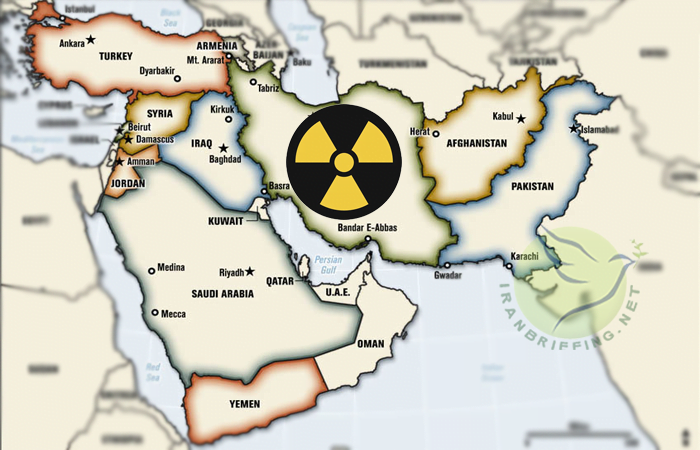
Iran nuclear deal could be key to resolving region’s conflicts, Iran, Nuclear, Region, Nuclear deal, Iraq, Syria, Lebanon, Yemen, U.N., U.N. sanctions, Mohammad Khatami , U.S., ISIS, Shiite militia, Hezbollah, Syria, Bashar Al-Assad, Turkey, Afghanistan, Lebanon, Russia, terrorists, Saudi Arabia, United Arab Emirates
Iran nuclear deal could be key to resolving region’s conflicts

Nonetheless, the remarks struck a nerve. Iran’s enemy status has been well earned as a state sponsor of terrorism for more than three decades. Few can dispute the cards that Iran has to play in the Middle East, for better or worse, and the understandable distrust and fear of Iran among the regional players.

But you make peace with your enemies, not your friends. The challenge for the United States is to get Iran to play its cards in a constructive way, in the context of a new approach to regional security that moves beyond age-old grievances and sectarian animosities to some shared objectives for a more peaceful region.

Whether because of the impact of US and UN sanctions, the demands of a younger generation or simple raison d’etat, Iran is signaling it may be ready to deal constructively on the region’s flash points, especially if and when a nuclear agreement is reached.

Let’s start with Iraq. Even Iraqi Kurdistan President Massoud Barzani praised Iran’s contribution to the defense of Erbil from the Islamic State (ISIS). Iran helped facilitate the transition from Nouri al-Maliki to Haider al-Abadi as prime minister. A smooth transition here was not assured. The oil deal last week between Baghdad and the Kurdistan Regional Government probably passed through Tehran for a final OK.

The Obama administration is banking on an Iraqi army that can hold its own against ISIS. Iran has been assisting Iraq in its defense from the start, but mostly through Shiite militia forces such as the Badr Brigades and Kataib Hezbollah. Iran could be encouraged to join the enterprise of helping Iraq develop its state institutions, including the Iraqi army, as the United States is doing. The point here is that US and Iranian interest in a stable Iraq is where to start.

Then there is Syria. Iran is the prime backer of the government of Syrian President Bashar al-Assad, which Iran considers not only the guardian of its own interests in the area, but the best firewall against ISIS.

This view is shared by leaders in Russia, Iraq and Lebanon, and elsewhere. US interests in both defeating ISIS and securing a political settlement to end the Syria war depend on Iran’s good offices in Damascus. The United States cannot deal with Assad, but Iran can.

Iran, like Washington’s regional allies, has a high tolerance for the spilling of Syrian blood. If the United States wants to deal Iran out in Syria, especially in the context of a bid to oust Assad, then Iran’s card will be to make the awful situation in Syria go from bad to worse.

Iran is not necessarily immovable on Assad’s survival. Iran’s four-point plan for Syria includes a decentralization of power away from the Syrian presidency. Iranian officials privately signal that Assad may not be untouchable, under the right conditions, but such conversations — if they are to bear fruit — can only occur with Iran in a spirit of collaboration, not confrontation. Otherwise, Iran will simply hunker down, and the war will go on.

And then there is Iran’s role in advising Hezbollah to maintain quiet on the Israel–Lebanon border since 2006. Hezbollah has kept the peace because this serves Iran’s strategy of deterrence with Israel. Forget the argument that Hezbollah is otherwise distracted in Syria. Iran and Hezbollah consider the intervention in Syria a success, as it served to save the regime in Damascus and protect Syria’s Shiite citizens and shrines from Sunni extremists who want to exterminate them. Hezbollah is coordinating with the Lebanese army against ISIS and Jabhat al-Nusra terrorists. Hezbollah’s intervention is not unpopular in Lebanon, especially among Shiites and Christians.

As this column wrote one year ago this month, the endgame of any dialogue with Iran will have to address Iran’s designation as a state sponsor of terrorism, and that means Iran’s support for Hezbollah. The United States and Israel should welcome such a conversation as a top priority.

Iran’s ability to affect these regional accounts in a positive way would be a breakthrough for the region. Its actions in Iraq and Syria against ISIS already in some ways measure up with what Turkey and other US allies have done — or not done — to shut down the flow of foreign fighters, supplies and finances to terrorist groups, or support a political settlement in Syria.

While Saudi Arabia and the United Arab Emirates are participating in the coalition — and this should not be minimized, especially for the symbolic value and the risks associated with their intervention, given the threats from ISIS leader Abu Bakr al-Baghdadi to the kingdom in particular — the military impact of these contributions to the actual course of battle is likely minimal.

The primary objective of the United States in the nuclear talks has rightfully been to prevent Iran from developing a nuclear weapon. But the stakes extend beyond nuclear proliferation. If ISIS is to be defeated, if Iraq is to have a chance at stability, if Syria is to have a chance at peace, if Afghanistan’s transition stands a chance of success, if the Israel–Lebanon border will stay quiet, all of this will depend on Iran’s choices. These challenges are all made harder by having Iran as an adversary, easier if Iran is engaged.

No one expects burying the hatchet to be easy or quick. It is all about the mature and enlightened decisions of states to solve problems rather than settle scores, to give more priority to governance and less to conflict. Lawrence Wright’s recent book — “Thirteen Days in September: Carter, Begin, and Sadat at Camp David” — on the Camp David negotiations presents a useful refresher on how seemingly implacable adversaries can be brought around to a historic peace. Although the Egypt–Israel peace treaty did not resolve all grievances, Camp David ushered in a new, more peaceful era in the region. The potential for a deal with Iran represents another such opportunity for the Middle East. Wright reminds us there is precedent for inspired leadership charting a new course in the region.


Source: Al Monitor – Iran nuclear deal …

Iran dispatching millions of militia to Gaza

0
Iran dispatching millions of militia to Gaza – The commander of Iran’s Basij force, Mohamad Reza Naghdi said that millions of Iranian Basij members are ready to go to Gaza and Syria.


Iran expresses readiness for dispatching millions of militia to Gaza, Iran, IRGC, IRGC Commander, General Mohamad Reza Naghdi, Islamic Republic, Basij, Palestinian, IRGC Aerospace Force, Hezbollah, Ayatollah Khmenei, General Seyed Majid Moussavi
Iran expresses readiness for dispatching millions of militia to Gaza

Basij is a conservative volunteer militia that is a branch of the Islamic Revolutionary Guards Corps (IRGC).

Naghdi said that over 22 million people are Basij members, adding the force also includes 2,000 military battalions.

Earlier in September Naghdi said that Basij has commenced relief and donation efforts for the reconstruction of Gaza after the 50-day war with Israel.

A number of other Iranian commanders also made statements about help from the Islamic Republic to Palestinian groups.

Basij also opened a bank account to collect money for buying weapons for Palestinians last July, referring to remarks by Iran’s Supreme Leader, Ayatollah Ali Khamenei.

On July 23, Khamenei stated that the only solution for the region is the destruction of Israel, and that the armed confrontation must expand beyond Gaza.

“We believe that the West Bank should also be armed like Gaza and those who are interested in Palestine’s destiny should act in this regard,” Khamenei said.

Last week Lieutenant Commander of the IRGC Aerospace Force Brigadier General Seyed Majid Moussavi announced that the “Lebanese and Palestinian resistance groups (Hezbollah and Hamas)” are in possession of Fateh-class missiles which were developed by Iran a few years ago.

“Considering the range of their missiles, they are able now to attack all targets from Southern to Northern parts of Israel,” he said.

“Based on what has been announced so far, their operational missile capability includes a fully vast but of course hidden, (number and type of) Fateh class missiles, and this missile capability can be used and has been organized,” Moussavi added.


Source: Trend – Iran dispatching millions of militia to Gaza

Iran, U.S. and the making of Syrian tragedy

0
Iran, U.S. and the making of Syrian tragedy – For all its agony, in full display frame by bloody frame for almost four years, Syria, the mother of all tragedies in the 21st century, remained a sideshow for President Barack Obama.


Iran, U.S., Syria, Obama, Ayatollah Khamenei, Iraq, ISIS, IRGC, America, Lebanon, Hezbollah, Bashar Al-Assad, General Qasem Soleimani, Christian , Kurdish Peshmerga, Shiite, nuclear, Israel, Christian , Middle East
Iran, U.S. and the making of Syrian tragedy

The slow death of an ancient land where great cultures and civilizations are layered with their entire splendor on top of each other – Phoenician, Greek, Roman, Byzantine, Arab, Jewish, Christian and Muslim – never penetrated the insular cold world that Obama inhabits.

Sure, there were the occasional, and sometimes eloquent, expressions of sympathy and sorrow, following the massacre of an entire village, the destruction of a whole neighborhood, the sectarian and ethnic cleansing of towns, but Syria never warranted a truly serious, honest deliberation on the part of the president as to what the United States can do with Syrians and others to stop the abominations of the Assad regime and his Russian enablers and Iranian protectors. In the scheme of things that occupied Obama’s mind in the Middle East; a nuclear agreement with Iran, a Palestinian-Israeli political settlement, a formula to deal with the Arab uprisings, or as is the case now; how to “degrade and defeat” the Islamic State of Iraq and Syria (ISIS), Syria at best was a second thought.


Studied ambiguity

From the beginning of the peaceful uprising in the spring of 2011 until today, where what is left of the Syrian state is more or less an Iranian protectorate, the Obama administration’s approaches to the myriad of conflicts in Syria ranged from studied ambiguity, ambivalence, denial, disingenuousness and yes subterfuge. When the Assad regime used violence and sectarianism to militarize the protest movement and labeled it a terrorist-Islamist uprising, President Obama dubbed it then “somebody else’s civil war.” The Obama administration initially kept the political Syrian opposition at arm’s length and then gave them tepid political support. With the security and humanitarian situation deteriorating rapidly and horrendously in Syria, the administration began to provide humanitarian and non-lethal aid to the opposition. President Obama and his White House staff (the young aides he brought with him from Congress who regard him as the Pericles of Washington) refused the recommendations of the adults in his administration; CIA director David Petraeus, and secretaries of state and defense Hillary Clinton and Leon Panetta to train and arm moderate Syrian rebels. Later, under mounting pressure and when the depredations of the Syrian regime became impossible to ignore, a modest program of training and equipping a small group of fighters under CIA supervision commenced in Jordan. But, since the Obama administration never believed in a military solution to the conflict between the Assad regime and its opponents, it was clear that the CIA program would remain modest, almost a pro-forma endeavor.


Obama administration’s approaches to the myriad of conflicts in Syria ranged from studied ambiguity, ambivalence, denial, disingenuousness and yes subterfuge.


Throughout the conflict, President Obama used the inevitable divisions and squabbling among some of the Syrian opposition groups that sought Washington’s support to highlight their deficiencies and to distort who they are. President Obama was disingenuous, to say the least, when he kept referring to the moderate opposition with his now infamous labels of: farmers, pharmacists and teachers, ignoring the fact that many of those who took up arms against the Assad regime initially were former members of his armed forces. These were the nationalists who preceded the Islamists who would dominate the later stages of the conflict. Obama’s inaction at that crucial time; that is before the destruction of some of Syria’s famed cities such as Aleppo and Homs, before the emergence of the murderous Nusra Front and ISIS and more importantly before Iran and its Lebanese proxy Hezbollah took charge of the counter revolution, that inaction is in part responsible for Syria’s descent to hell.


.… and stunning naïveté

In a moment, certainly not befitting the memory of Pericles, President Obama at an impromptu press conference on Aug. 19, 2012, issued a warning to Assad that the use of chemical weapons would constitute crossing a red line that “would change my calculus.” Obama stressed that “We’re monitoring that situation very carefully. We have put together a range of contingency plans.” A year later, the Syrian army unleashed a barrage of rockets laden with sarin gas against the Ghouta suburbs of Damascus, killing 1,429 people, a third of them children. What followed were an embarrassing series of fumbles and missteps that exposed Obama’s leadership to severe criticism and ridicule. After committing himself publicly to punish the Assad regime militarily and after dispatching naval assets to the Eastern Mediterranean to deliver the pounding, Obama characteristically backtracked saying he would seek congressional approval. The military option died when the Russians saved Obama by committing Assad to discard his chemical arsenal. As David Rothkopf noted in his excellent new book National Insecurity: “The red-line fumble prompted an avalanche of questions from some of Obama’s closest allies and supporters about not only his own leadership but on America’s future role in the world.”

Two disturbing points relevant to Obama’s character and leadership need to be mentioned in this context. The infamous “red-line” warning was a spontaneous verbal arrow shot by Obama against Assad without prior consultations with his national security aides, as was later revealed. The other one is more sinister. For months before the August 2012 chemical weapons atrocity, which was the worst use of chemical weapons since the Iran-Iraq war, the Obama administration knew that Assad had been using chemical weapons against his own people, but on a smaller scale. There were reports about 13 prior chemical attacks.

Unlike the “red-line” warning, President Obama’s decision to call on Assad to “step aside” in August 2011 (it seems that August is the cruelest of months for Obama in the Middle East) was taken after inter-agency deliberations. Some experienced old hands who knew Syria cautioned that the president should not make such a demand unless he has an “or else” option he can resort to when Assad in all likelihood ignored or scuffed at the proposition. One young White House aide close to Obama, and blessed by ignorance of things Syrian, cavalierly dismissed the caution, saying something to the effect that the tsunami called by some “the Arab Spring” that swept Tunisian and Egyptian presidents Bin Ali and Mubarak from power would surely sweep Assad away. The source who related this exchange to me summed up his frustration thus: “stunning naïveté.”


Iran, as a silent partner

The Obama administration’s approach to Syria is heavily influenced by the on-going nuclear negotiations between the United States and Iran. The United States is trying hard not to do anything in Syria that could undermine the Assad regime and negatively impact Iran’s posture in the negotiations, given Tehran’s tremendous strategic, economic and political investment in the survival of the Assad regime.


The Obama administration’s approach to Syria is heavily influenced by the on-going nuclear negotiations between the United States and Iran.


The emergence of ISIS has created some sort of a silent partnership with Iran or a de facto co-habitation in Iraq. President Obama spoke matter-of-factly about “Iran has influence over Shiites, both in Syria and in Iraq, and we do have a shared enemy in ISIS.” Obama confirmed again Syria’s status as a second thought when he defined his objectives there by saying: “obviously, our priority is to go after ISIS and so what we have said is that we are not engaging in a military action against the Syrian regime, we are going after ISIS facilities and personnel who are using Syria as a safe haven in service of our strategy in Iraq.” Secretary of Defense Chuck Hagel, in a recent testimony in congress, said that the United States has no military partner on the ground in Syria, as if the United States never dealt with the groups operating under the umbrella of the Free Syrian Army. The U.S. plan to train and equip 5,000 Syrian fighters in 12 to 18 months does not reflect the dire needs of the nationalist Syrian rebels who are being attacked simultaneously by the Assad regime and ISIS and Nusra Front. Hegel rebuffed calls by members of the coalition like France and Saudi Arabia to accelerate arming and training the Syrian opposition and establishing a no-fly zone. He counseled time and patience. But Hagel essentially admitted that the United States is willing to co-exist with the Assad regime indefinitely when he said: “You can change Assad today, and that’s not gonna change all the dynamics quickly.” He drove his point home adding: “Who are you going to replace Assad with, and what kind of army will take on ISIS?”


Iran’s viceroy

Iran today is the dominant outside power in four Arab capitals; Baghdad, Damascus, Beirut and recently Sanaa. The United States is increasingly acquiescing to this new regional strategic balance. President Obama had no qualms stating and accepting the fact that “Iran has influence over Shiites, both in Syria and in Iraq, and we do have a shared enemy in ISIS.” Clearly, Iran has a regional strategy, and in Iraq and Syria it is willing to fight directly or by proxy. It was Iran and its Lebanese Shiite proxy Hezbollah, along with Shiite militias from Iraq that saved the Assad regime in Damascus from imminent collapse. The Assad regime is totally beholden to Iran. Governments in Baghdad – even when the United States had a sizable military force in Iraq – cannot be formed without considerable input from Iran. The enigmatic supreme leader Ali Khamenei keeps getting letters from his America suitor Barack Obama, proposing cooperation. But the old Ayatollah, true to form, keeps bashing the United States and leaving it to perplexed officials and scholars to try to decipher his mood, words, gestures and grunts.

In Lebanon, Iran’s influence is channeled through Hezbollah, which has hijacked the Lebanese state and its brittle institutions. Hezbollah is trying to enlist the weak Lebanese army in its confrontations with ISIS and Nusra Front in the border area and recently there were reports that Hezbollah has begun recruiting economically disenfranchised members of the Christian, Druze and even Sunni communities in Eastern Lebanon, paying them monthly salaries ranging between $1500 and $2500. Hezbollah is brazenly exploiting the genuine fears of many Lebanese that the hordes of ISIS and Nusra Front fighters will sweep into their towns and villages unless they are stopped in Syria. Hezbollah’s narrative, which is being echoed by some of their Christian allies, is that if we did not fight in Syria, ISIS would be rampaging throughout Lebanon. What is missing in this narrative is that it was Hezbollah’s military intervention in Syria in the first place that brought the ISIS and Nusra Front’s monsters to Lebanon.

The living embodiment of Iran’s regional ambitions is the cunning and ruthless Qasem Soleimani, the commander of the Quds Force, the elite division of the Iranian Islamic Revolutionary Guard Corps. Soleimani, for all intents and purposes, is Iran’s viceroy in its immediate but restive provinces of Iraq, Syria and Lebanon. In recent weeks and months, the usually media shy Soleimani has been pictured smiling broadly with Shiite militias and Kurdish Peshmerga units. Watching how Soleimani has been received and treated over the years by his admiring Arab satraps is a testimony to Iran’s rising strategic influence and the collapse of the old order in Baghdad and Damascus. (I am chuckling at remembering the Persian roots of the word satrap).


The living embodiment of Iran’s regional ambitions is the cunning and ruthless Qasem Soleimani, the commander of the Quds Force, the elite division of the Iranian Islamic Revolutionary Guard Corps.


Iran in Syria

A new report published by the campaign group Naame Shaam, which is funded and led by the Netherland-based Rule of Law Foundation, chronicles in shocking details Iran’s domination of Syria. The report, “Iran in Syria: from an ally of the regime to an occupying force,” provides a wealth of information and many examples and case studies of human rights violations, including war crimes committed in Syria by Iranian-controlled militias.

Naame Shaam, a group of Syrian, Iranian and Lebanese activists headed by Fouad Hamdan, seeks to establish a new narrative about the war in Syria which says essentially that the Iranian Pasdaran and Hezbollah are fighting and leading the major military operations in Syria. Iran’s huge investment in Syria is driven by its strategic interests in maintaining its military supply lines to Hezbollah in Lebanon which serves as Iran’s first line of defense when and if Israel attacks Iran’s nuclear facilities. The total dependence of the Syrian regime on Iran has introduced a fundamental shift in the relationship between the old allies whereby the Iranian regime now acts like an occupying power in the regime-held areas of Syria.

The report delineates ways of bringing possible legal charges of complicity in various crimes committed in Syria against Iranian officials such as Qasem Soleimani, who is considered by the group as the de facto ruler of Syria. Mr. Hamdan, who is currently visiting the United States to discuss the group’s report, told me that the timing of issuing the report is linked to the expiration date of the nuclear talks between Iran and the P-5 plus 1 group.

“We wanted to generate a discussion that could focus on the need to address openly, legally and politically the fundamental problems created by Iran’s hegemony over Syria.”

Unfortunately, the U.S. government is nowhere near this conclusion. Informed sources revealed that Secretary John Kerry has requested recently from his Near East Bureau a review of the Syria conflict with practical recommendations. But there was one proviso: no recommendations that could upset Iran to the point that it could undermine the nuclear talks.


Source: Al Arabiya – Iran, U.S. and the making of Syrian tragedy

How Iran Jails Journalists and Human Rights Lawyers

0
How Iran Jails Journalists and Human Rights Lawyers – Among the endangered species in Iran these days are journalists–and the lawyers who defend them.

Only last month two female journalists were arrested for reporting on recent acid-throwing incidents in the city of Isfahan, where women who were supposedly improperly dressed have been disfigured and blinded by being sprayed with acid. Also arrested was the photographer who documented protests against these attacks. These three journalists were soon released, thanks to public outrage over the acid incidents–authorities have yet to arrest anyone–and the arrests themselves. But they were the lucky ones.

How Iran Jails Journalists and Human Rights Lawyers, Iran, Human Rights, Human Rights in Iran,  Journalists, Human Rights Lawyer, Jail, Iran Human Rights, Arrested, Jason Rezaian, Yeganeh Salehi, Abdolfattah Soltani, Mohammad Seifzadeh, Hasan Rouhani, Evin Prison, Middle East, acid attacks,
How Iran Jails Journalists and Human Rights Lawyers

Editors, publishers and reporters often are summoned by Iranian authorities for allegedly violating the main national press law. The pattern is established: Security officials show up unannounced at a journalist’s home or workplace and arrest him or her. They search the premises and confiscate papers, computers, digital files and cellphones. Interrogations follow. If authorities decide to hold the journalist, they feel no compunction to provide a reason, nor to allow contact with immediate family or access to a lawyer.

This was the experience of Jason Rezaian, an Iranian-American reporter for the Washington Post, and his journalist wife, Yeganeh Salehi. They were arrested at home in July; both had personal belongings confiscated. The judiciary provided only vague explanations for the arrests. Ms. Salehi was released last month but has remained silent about her interrogation and incarceration experiences, no doubt out of fear of jeopardizing her husband’s case. This, too, is true to form. Those hauled in for questioning are told when they are released that speaking out and any publicity would hurt rather than help them and their loved ones.

Mr. Rezaian has been in prison, incommunicado, for more than 100 days. A bit of information about his case emerged last week from Mohammad Javad Larijani, the secretary-general of the Iran High Council for Human Rights. In an interview with Euronews television channel in Geneva, Mr. Larijani said that prosecutors have charged Mr. Rezaian with “being  involved in activities beyond journalism.” He predicted that the charges would be dropped and Mr. Rezaian released “in less than a month.” On Wednesday, however, a high-ranking judicial official denied that Mr. Rezaian would be released soon. This was not terribly surprising. On paper, Mr. Larijani’s job is to protect human rights in Iran; but effectively he whitewashes the Islamic Republic’s abysmal record on human rights. When I was a political prisoner in Iran in 2007, Mr. Larijani also assured world media of my impending release; then, too, this proved an empty promise.

As of July, 65 news providers were behind bars in Iran, according to Reporters Without Borders, and Iran remains “one of the world’s most repressive countries as regards to freedom of information.” Journalists in Iran must grapple with not only the Ministry of Guidance but also the Ministry of Intelligence, which works hand in hand with the judiciary. Meanwhile, the Revolutionary Guards have established their own (intrusive) Internet watchdog organization.

Lawyers brave enough to defend journalists and political dissidents have not fared well either. Abdolfattah Soltani was sentenced to 18 years in prison in 2012. Mohammad Seifzadeh is serving a six-year sentence. The human and women’s rights lawyer and activist Nasrin Sotoudeh completed nearly three years in prison last year; she was briefly detained again when she joined the protests against the acid attacks in Isfahan.

Iranian lawyers and journalists display admirable courage in these difficult conditions. Lawyers continue to take cases and journalists continue to report stories and criticize government repression. Along with their informal colleagues on blogs and Facebook, they sign petitions, call for their incarcerated colleagues to be freed, and seek to uphold the principal of press freedom. Despite good intentions, the government of President Hasan Rouhani has been unable to protect them. Journalists and their lawyers pursue this struggle on their own.

Haleh Esfandiari directs the Middle East program at the Woodrow Wilson International Center for Scholars. She was held in solitary confinement in Evin Prison in Tehran for 105 days in 2007. The views expressed here are her own.


Source: The Wall Street Journal – How Iran Jails Journalists and Human Rights Lawyers

Iran to have internet smart filtering within months

0
Iran to have internet smart filtering within months – such as Facebook and Twitter – are already blocked but now hardliners want to go further and control messaging apps that have been used to criticise officials.

Iran will have “smart filtering” within six months to weed out internet content the authorities deem offensive or criminal, the telecommunications minister said on Friday.

Tehran already blocks access to popular websites including Facebook, Twitter and YouTube to stop Iranians from surfing content seen as immoral or undermining the Islamic regime.

Iran to have internet smart filtering, Iran, Iran Cyber, Social Media, Facebook, Twitter, YouTube, smart filtering, Viber, Tango, WhatsApp, Hassan Rouhani, social networks, Instagram, sanctions
Iran to have internet smart filtering

Mahmoud Vaezi’s remarks come just days after a body tasked with policing the internet ordered his ministry to regularise the use of Instagram within two months or access to it would be blocked.

Last month, Iran prevented access to an Instagram page devoted to the lifestyle of Tehran’s young elite that stirred indignation in the sanctions-hit country.

In September, the judiciary gave the government a month to ban messaging applications Viber, Tango and WhatsApp over insults to Iranian officials, but they remain accessible.

Internet censorship is a bone of contention between conservative hardliners and government members including President Hassan Rouhani who use social networks.

Mr Rouhani, a moderate, has called internet censorship counterproductive, but ultra-conservatives who control key institutions disagree.

Mr Vaezi said “the first phase of smart online filtering will be ready within a month, a second phase within three months and a third within six months”, the Isna news agency reported.

In September, Fars news agency quoted him as saying ministry engineers were working on ways to remove “criminal” content from social networks.

At the time, a police official said that “smart filtering of social networks” would be better than blocking the Internet so users could still benefit “from the useful” aspect of the web.

Iran formed a special internet police unit in early 2011 to combat “cyber crimes”, particularly on social networking sites which are popular among the opposition and dissidents.

The unit came under harsh criticism, and its chief was sacked in December 2012, after a blogger, Sattar Beheshti, died in custody, triggering an international outcry over reports he was tortured to death after criticising the Iranian regime in his posts.

Official figures show that more than 30 million people out of Iran’s total population of 75 million use the Internet.

A recent study found that 69 percent of young users use illegal software to bypass official restrictions.


Source: The Telegraph – Iran to have internet smart filtering

US rejects Iran’s claims it has built a replica drone

0
US rejects Iran’s claims it has built a replica drone – Pentagon officials have rejected the Iranian regime claims that they have successfully flown a replica of a US drone that crashed in the regime three years ago.


US rejects Iran's claims it has built a replica drone, Iran, U.S., Drone, Pentagon, Ayatollah Khamenei, RQ-170
US rejects Iran’s claims it has built a replica drone

Iran claimed to have captured a US RQ-170 Sentinel reconnaissance drone in eastern Iran in 2011 after it was reported as lost by US forces in neighboring Afghanistan.

Officials in Tehran then said in May that Iran had produced a Sentinel copy, and planned to arm it to attack US Navy ships.

The state-run Tasnim News Agency released a video this week of Supreme Leader Ayatollah Ali Khamenei saying: “Today is a very sweet and an unforgettable day for me.”

Iran has also released a video claiming to show the drone in flight, but Aviationist blog and others that track drone issues said the frames appear computer-generated and the way the aircraft moves suggests it is merely a small model.

Asked about the Iranian replica, Pentagon spokesman Colonel Steve Warren said: “Replica being the operative word there. There is no way it matches American technology.”


Source: NCR – US rejects Iran’s claims it has built a replica drone

IRGC boasts of supplying missiles to Syria, Hezbollah

0
IRGC boasts of supplying missiles to Syria, Hezbollah – The Iranian regime’s Revolutionary Guard (IRGC) has boasted of how it has supplied Syrian dictator Bashar al-Assad and Lebanese Hezbollah with missile systems.


Brigadier General Hajizadeh, commander of IRGC‘s aerospace section told the regime’s Fars news agency: “The factories that manufacture missiles in Syria are built by Iran and the missiles designed by Iran are being manufactured there.

“Syria’s missile industry factories have been transferred there from Iran.

IRGC boasts of supplying missiles to Syria and Hezbollah, Iran, IRGC, IRGC Commander, Syria, Hezbollah, Bashar al-Assad, Palestine , General Hajizadeh, Iranian regime, Ayatollah Khamenei, UN Security Council, Nouri al-Maliki, Iraq,
IRGC boasts of supplying missiles to Syria, Hezbollah

“Even the Resistance Front has been taught how to build missiles by Iran. The Lebanese Hezbollah and the Palestine resistance have become quite expert in this field and now missiles are everywhere.”

Hajizadeh added: “Our first missiles capable of targeting Israel had a range of no more than 1100km. These were completed in several stages and now we manufacture Sejjil missiles that are multistage-solid-fuel missiles with a range of 2000km that are now deployed and abundant in our units.

“We have Hormoz-1 and Hormoz-2 missiles as well. Each of them has its own specifications and they can hit vessels, battleships and cruisers at long distances.”

Hajizadeh said all these projects were implemented through the ‘prodding and encouragement’ by the Supreme Leader Ali Khamenei himself and that it was the ‘wisdom of His Excellency that we build missiles with pinpoint accuracy’.

The Iranian regime’s export of missiles and related technology to other countries is in clear violation of UN Security Council resolutions banning the activity.

But the policy of appeasement by the Western countries has emboldened the Iranian regime to violate UN resolutions and international laws and conventions.

At a time when the regime is at an impasse in the nuclear negotiations, has received a damaging blow in the removal of Nouri al-Maliki in Iraq, and is tainted and detested in the Arab and Islamic World for its crimes in Syria, Iran is attempting to avert the adoption of tougher Western action through hollow muscle-flexing and by threatening the international community.


Source: NCR – IRGC boasts of supplying missiles to Syria, Hezbollah

Iran Behind Iraq’s Shiite Militias

0
Iran Behind Iraq’s Shiite Militias – A special report in Reuters today (.pdf) documents the extensive ties three leading Iraqi Shiite militias—Asaib Ahl al-Haq, the Badr Brigades, and Kataib Hezbollah—have with Iran. Reuters describe the militias as being “instrumental” in the fight against the Islamic State of Iraq and Syria (ISIS). Aside from bordering Iraq, “Iran’s population is overwhelmingly Shi’ite, as are the majority of Iraqis.”


The Reuters report prominently details the battle over the Iraqi city of Amerli this past summer.

One of the biggest rallying points in recent months was Amerli, an Iraqi town of some 15,000 Shi’ites, which was besieged by IS for two months. Most residents there are Turkmen, not Arabs, but that did not change the symbolism of the conflict for Shi’ites. Graffiti sprayed outside the town in August read “Amerli is the Karbala of the age” – a reference to a seventh century battle that is a defining moment for Shi’ites.

Iran helped train Kataib fighters in the use of AK-47 assault rifles, heavy machine guns, mortars, rockets and IEDs, according to Abu Abdullah, the Kataib commander. Kataib fighters also used a camera-equipped drone to gather information on IS positions. A Reuters reporter met two men who spoke Farsi, the language of Iran, accompanying Asaib fighters during the battle. A third man said he had come from Iran to train police. …

The importance of the battle for Iran was underscored when photographs and videos surfaced on the Internet that allegedly showed Revolutionary Guard commander [Qassem] Soleimani in the town.

Reuters quotes an Iraqi official who describes Soleimani as “an operational leader” who “goes to the front to inspect the troops and see the fighting.” According to the official, Soleimani reports directly to Iran’s Supreme Leader Ayatollah Ali Khamenei, so when “[h]e needs money, gets money. Needs munitions, gets munitions. Needs materiel, gets materiel.”

Iran Behind Iraq’s Shiite Militias, Iran, IRGC, IRGC Commander, Iraq, Shiite, U.S., ISIS, Syria, General Qassem Soleimani, Ayatollah Khamenei, Hezbollah
Iran Behind Iraq’s Shiite Militias

Soleimani, the commander of Iran’s Islamic Revolutionary Guard Corps, has previously been credited with coordinating “between Iran and pro-Assad forces” and last year was said to be “the main political force in Syria.”

The Reuters report also observes that Iran models its interactions with the Iraqi Shiite militias on the way it interacts with Hezbollah in Lebanon, where the group operates “as both a military outfit and political party,” and “has grown to become the most powerful force in Lebanon.”

Hezbollah’s domination of Lebanese politics, including preventing the selection of a new president, has recently earned the Iranian-backed terror organization criticismfor working against Lebanon’s national interests.

Similarly, last week the Arab media reported that Iran had created a “new Hezbollah” in Syria, uniting Shiite militias there to fight alongside the army of President Bashar al-Assad.

The Shi’ite militias, according to Reuters, “have certainly fuelled sectarian violence.” Recent reports have called them “just as brutal” as ISIS.

Sami al-Askari, a one-time adviser to former Iraqi Prime Minister Nuri al-Maliki, told Reuters, “The American approach is to leave Iraq to the Iraqis. The Iranians don’t say leave Iraq to the Iraqis. They say leave Iraq to us.”


Source: The Tower – Iran Behind Iraq’s Shiite Militias

Iran’s vested interest in nuclear talks

0
Iran’s vested interest in nuclear talks – As the nuclear talks between Iran and the great powers unfold, there is much concern that a hawkish Republican Senate would derail the negotiations.


But no matter what the new Senate does, the Islamic Republic is unlikely to walk away from the negotiating table. Why? Because while the United States sees nuclear diplomacy as advancing the cause of detente, Iran sees it as yet another shield to hide its advancing of ominous policies.

Since the exposure of its illicit nuclear program in 2002, Iran’s main intention has been to legitimize its expanding atomic infrastructure.

Iran's vested interest in nuclear talks, Iran, Nuclear, United States, Islamic Republic, United Nations Security Council, U.N. Security Council, International Atomic Energy Agency, Human Rights, Ayatollah Khamenei, Persian Gulf, Shiite Muslim, Iraq, U.S., Middle East, Israel, Sunni Muslims
Iran’s vested interest in nuclear talks

The record shows that Iran’s cagey diplomats have gone far in achieving that objective. Although numerous United Nations Security Council resolutions have enjoined Iran to suspend all of its nuclear activities, there is little interest by the great powers in enforcing the injunctions they crafted in the first place. Last year’s interim accord — the Joint Plan of Action — not only acknowledged Iran’s right to enrich uranium at home but also stipulated that, after a period of time, enrichment capacity could be industrialized.

These are impressive accomplishments for a state that not only defies the U.N. Security Council but also thwarts the International Atomic Energy Agency’s attempt to gain access to its scientists and sites. So long as Iran stays at the table it can count on further Western indulgences.

Iran has also gained much in non-nuclear sectors from its continued participation in the talks. Its dismal human rights record and harsh repression of its citizens are rarely mentioned by the Western chancelleries. A standard practice of America’s Cold War summitry was to press the cause of dissidents in all encounters with Soviet representatives. Given fears that Iran’s hyper-sensitive mullahs would abjure nuclear compromises should their domestic abuses be highlighted, Western diplomats have been largely silent about Iran’s domestic shortcomings. The nuclear talks and the prospects of an accord conveniently shield the Iranian supreme leader, Ayatollah Ali Khamenei, and his penal colony from censure and criticism.

The Islamic Republic today is an aggressive state on the march in the Middle East. Through its proxies and aid it is propping up the Bashar Assad government in Syria and enabling its genocidal war against its citizens. Iran is the most consequential external actor in Iraq and has been instrumental in pressing its Shiite Muslim allies to reject substantial inclusion of Sunni Muslims in Iraq’s governing structure.

In the Persian Gulf, Tehran continues to press for eviction of the U.S. presence, appreciating that only America’s armada stands in the way of its hegemonic ambitions. Terrorism remains an instrument of Iran’s statecraft, particularly against Israel. Yet, there is a reluctance to push back on Iran in the increasingly chaotic Middle East for the fear that such a move would undermine the nuclear talks.

All the curiosities of America’s policy were on display in a letter reportedly sent recently by President Obama to Khamenei, offering to work with Iran in disarming the militant group Islamic State. Such correspondence misses the point that Iran has already rejected collaboration with the United States on regional affairs and that its leaders have claimed that America created Islamic State as a means of justifying its return to Iraq.

In the coming weeks, diplomats will try hard to craft a nuclear agreement with Iran. They may succeed or they may extend the talks beyond their own self-imposed deadline of Nov. 24. In the meantime, they will warn the Iranians that time is running out and various windows are about to slam shut. They will fret about how the Republican-controlled Senate will foreclose diplomacy by pressing its claims and maybe even passing sanctions, that the task at hand will be to keep Iranians at the table and the Senate at bay.

All of this misses the point that Iran participates in the talks because doing so serves so many of its interests. And one of those interests may yet be an accord that eases its path toward nuclear empowerment.


Source: Los Angeles Times – Iran’s vested interest in nuclear talks

Iran Helped Crush Syria’s Revolution

Iran Helped Crush Syria’s Revolution – When protests started in Syria in 2011, Iran came to the aid of Bashar al-Assad’s government.


It didn’t trust the armed forces so it helped create paramilitary groups to break up the protests and then battle the emerging rebel movement.

As the war intensified Iran brought in militias from Iraq, took over military strategy, and sent in not only its own advisers and fighters, but also those from Lebanon’s Hezbollah.

Iran is following almost the exact same script in Iraq today to counter the insurgency after it launched its summer offensive in 2014.


Two Countries, One Very Similar Strategy

In both Syria and Iraq the Iranians came to rely upon irregular forces because they did not trust the army and police. When Syrians began demonstrating against the Assad government in 2011 there was a general feeling in Damascus and Tehran that the military could not be trusted to put them down.

Iran Helped Crush Syria's Revolution, Iran, IRGC, Quds Force, Ayatollah Khamenei, Iraq, Syria, Islamic Republic, Region, Bashar al-Assad, Lebanon, Hezbollah, Army, Police, Qasim Suleimani, Basij, U.S., Arab countries,
Iran Helped Crush Syria’s Revolution

That was proven true when many soldiers would later desert and join the rebels. In Iraq, the Iraqi Security Forces (ISF) disintegrated in the face of the insurgency when its summer offensive began in June 2014.

Michael Knights of the Washington Institute for Near East Policy estimated that 60 of the Army’s 243 battalions were lost with all of their equipment in northern Iraq after the fall of Mosul. A US official told the New York Times that five of Iraq’s 14 army divisions were combat ineffective.

With neither the Syrian nor Iraqi armed forces proving reliable Iran turned to militias to fill the void.

In Syria, Iran relied upon Syrian and Iraqi militias to handle security, while the latter were brought back to Iraq when the insurgency took off there in 2014. The Assad government created the Shabiha, then the Popular Committees, which would later become the National Defense Force (NDF) to deal with the protests and then the rebels.

Iran advised Syria on the creation of all three forces using the example of its own Basij. The Basij were a paramilitary group created in Iran during the 1979 revolution and were used to put down the Green Movement in 2009. Iran provided training to all three forces not only in Syria, but in Iran as well.

When the fighting really took off in Syria Tehran also brought in its militia allies from Iraq. This included the League of the Righteous, Hezbollah Brigades, the Badr Organization, and new groups like Abu al-Fadhal al-Abbas, and many others. Eventually a Badr commander was appointed by Iran to coordinate all the Iraqi militias with the Syrian and Iranian governments.

This was no surprise as Badr was created by Iran during the Iran-Iraq War and had the longest relationship with Tehran of any of the pro-Iranian militias in Iraq.

A similar policy was carried out in Iraq. Those same militias that were fighting in Syria began mobilizing for deployment within Iraq in January 2014 after Fallujah fell in Anbar. That included creating new popular defense brigades and launching recruitment campaigns. Many groups also brought back their fighters from Syria to face the Iraqi insurgency, and eventually became integrated into regular Iraqi Security Forces (ISF) units.

This would only increase after June’s ISIS blitz. As in Syria, Badr has seemingly taken control of militias and larger security policy in Iraq. Badr head Hadi Ameri has led operations in Salahaddin’s Amerli, Babil’s Jurf al-Sakhr and is currently in command of re-taking the Baiji district in northern Salahaddin. Mohammed Ghaban from Badr was also recently named the new Interior Minister.

This served several purposes. First, the militias proved capable fighters against the Syrian rebels and Iraqi insurgency.

Second, it allowed Iran to increase its influence in both countries by not only asserting its militia allies as major defenders of the government, but also becoming part of the existing military structures in Syria and Iraq. Institutionalizing the militias is a way to guarantee their longevity in both countries long after the rebellions are put down.


Iran’s Hand In Syria

Iran came to define much of the military strategy in both Syria and Iraq. As soon as the protests started in Syria, Iran began sending in advisers to help the Assad government. This was directed by the head of the Iranian Revolutionary Guards Corps – Quds Force (IRGC-QF) General Qasim Suleimani, and assisted by IRGC-QF head of operations and training General Mohsen Chizari.

Both were named by the US Treasury Department in May 2011 for their role in suppressing the Syrian public. A retired IRGC general said that there were 60-70 Quds Force commanders in Syria at any given time.

There were also several thousand Iranian Basij militiamen deployed to the country. These men not only advised the Shabiha, the National Defense Force, and the Syrian military, but carried out combat operations as well.

Similarly in Iraq, in June Iranian President Hassan Rouhani said that Iran was ready to defend Iraq after the fall of Mosul. Immediately afterward there were reports that 150-2,000 Quds Force members were dispatched to Iraq.

That force is said to be several thousand strong now. They are deployed not only to central Iraq, but are also with Kurdish forces in Diyala and Ninewa.


The Hand Of Iran’s Strategic Mastermind

Just like in Syria, General Qassem Suleimani has been put in charge of Iraq. He’s said to have set up a control center at the Rasheed Air Base in Baghdad, helped with the defense of Samara in June and Irbil in August, the relief of Amerli in September, the clearing of Jurf al-Sakhr in Babil in October, and the current operation in Baiji, Salahaddin.

This has all been highlighted in various postings to social media with pictures of the general throughout Iraq. This is part of an on-going propaganda campaign to let Iraqis and the international community know that Iran is on the ground and leading the fight in Iraq.

Iran is not only providing assistance at the front to the ground troops in Syria and Iraq, but is playing a large role in the formation of policy in Damascus and Baghdad. This is again increasing Iran’s influence not only with the respective governments, but at the street level as well as it is seen as the main defenders of both countries.


Hezbollah Enters The Fight On Iran’s Behalf

To assist with its operations Iran brought in Lebanon’s Hezbollah to both Syria and Iraq. Hezbollah provided another set of trainers for the Syrian military and militias. Lebanese fighters have also taken part in combat in Syria since 2012.

After the fall of Mosul, Hezbollah leader Hassan Nasrallah offered to send fighters to Iraq. By July the Christian Science Monitor reported that there were around 250 Hezbollah advisers in the country.

That month a Hezbollah commander died near Mosul as well showing that they were at the front. Hezbollah advisers were also said to have been involved in the recent operation in Jurf al-Sakhr that successfully cleared the area in the middle of October.

Iran has often relied upon Hezbollah as a proxy force to assist with its foreign policy. In Arab countries like Syria and Iraq it’s believed that they provide better trainers as they share the same language and culture. In Syria they have also provided snipers, intelligence gathering, etc. They may do the same in Iraq as well if they are not already.

Iran has closely followed the same military policy in both Syria and Iraq.

As the security forces of Damascus and Baghdad were questionable, Iran turned to militias to fight protesters, rebels and insurgents. Iranian advisers and fighters, and Lebanon’s Hezbollah supported these irregular forces.


Iran’s Endgame

Tehran’s ultimate goals in both countries are generally the same with one exception.

In both nations it wants to defeat the insurgents. It also wants to expand its influence, which it has greatly done. It not only has advisers throughout the security forces and in government offices, but it is shaping strategy and both Syria and Iraq have come to rely upon Iranian-funded militias for their defense.

Tehran is being opportunistic as well in thinking long-term here. It is taking advantage of the situations as they presented themselves in each country to assert themselves within the state. It also hoping that this power remains far after the insurgencies in both countries are put down.

Finally in Iraq it has one additional concern, which is to make sure that the country never emerges as a rival again as it was during the Saddam period. The Iran-Iraq War still looms large over Iran’s worldview, so even though it wants Iraq to win its current war, it does not want it to emerge as a strong nation afterward.

That is the real story of Iran’s relationship with Iraq. While Iran has become one of Iraq’s most important allies in its time of need, it has its own agenda, which does not always suit Iraq’s interests.


Source: AINA – Iran Helped Crush Syria’s Revolution