Basij Commander (volunteer) Force Brigadier General Mohammad Reza Naqdi warned of the decadence and degradation of the codes of ethics in Europe and the US, warning that the European race is on the brink of extinction.
“The West’s cultural invasion is not merely against the Iranian nation and it also includes their own nations (in Europe) as they intend to separate not just our, but also their own nations from ethics and morality because if the European and US nations live an ethics-based life, they won’t accept the Zionists’ cruelties so easily,” Naqdi said, addressing Basij commanders in the Northeastern city of Mashhad on Wednesday.
Basij Commander: European Race on Brink of Extinction
“The result of institutionalization of corruption in the West is that their race is becoming extinct in such a way that history books should write 100 years later that a race named the European race existed on the Earth some time ago,” he added.
In relevant remarks in July 2013, Supreme Leader of the Islamic Revolution Ayatollah Seyed Ali Khamenei underlined the necessity for all Muslims to stand against the western states’ cultural invasion and domination.
He pointed to certain efforts made to promote Western culture in other societies, and said adherence to the Western culture by the majority of the people across the world “does not constitute a model or (good) reason to follow this culture in an Islamic society”.
“Quranic guidelines and criteria should be followed in an Islamic society,” the Leader further underlined, adding that faith, common sense, and the sayings of Imams and prophets constitute Quranic criteria.
Expressing satisfaction with the growing interest in the recitation and memorization of the holy Quran among the Iranian youth, the Leader urged all members of the society to read Quran.
A top advisor to the Commander of the Islamic Revolution Guards Corps (IRGC) underlined the Iranian Armed Forces’ preparedness to confront enemies, and said IRGC forces are equipped with state-of-the-art weapons and powerful missiles.
IRGC Top Advisor Hails Iran’s Missile Power
“Today, Iran’s missile systems are ready to respond to any enemy threats,” Brigadier General Komeil Kohansal said, addressing a gathering in the Northern city of Sari on Tuesday.
Elsewhere, he referred to the enmities of the arrogant powers, specially the US, with the Muslim states, and said the US is like a virus threatening the entire world, which wants to never see tranquility in Islamic countries and has killed over one million people in Iraq and Afghanistan.
Tehran launched an arms development program during the 1980-88 Iraqi imposed war on Iran to compensate for a US weapons embargo. Since 1992, Iran has produced its own tanks, armored personnel carriers, missiles and fighter planes.
Yet, Iranian officials have always stressed that the country’s military and arms programs serve defensive purposes and should not be perceived as a threat to any other country.
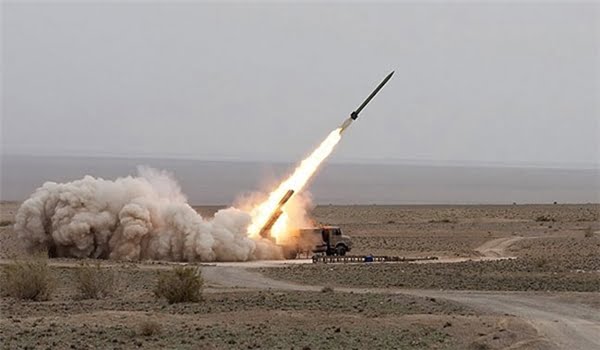
In March, the Iranian defense ministry started the mass-delivery of different ballistic missiles, including Qadr, Qiam, Fateh 110 and Khalij-e Fars missiles, as well as Mersad air defense system to the IRGC and Khatam ol-Anbia Air Defense Base.
“The honorable specialists of the Defense Ministry’s Aerospace Organization displayed the defense industry’ power and capability in providing the Armed Forces’ needs to the most advanced missile equipment by supplying them with Qadr, Qiam, Fateh 110 and Khalij-e Fars (Persian Gulf) ballistic missiles and Mersad air defense system and showed that the different and comprehensive sanctions of the enemies imposed strictly and specially on our defense sector have totally failed to undermine their resolve and determination,” Defense Minister Brigadier General Hossein Dehqan said, addressing a ceremony held to mark the delivery of the new missile systems to the IRGC and Khatam Ol-Anbia Air Defense Base.
“These missiles can strike and destroy enemy targets with a high precision capability and provide for a wide range of the Armed Forces’ needs to missiles with different ranges,” he added.
Dehqan underlined that all these missiles have been built by Iranian specialists, and said, “Today the Armed Forces enjoy such a high degree of defensive capabilities that they can counter back any kind of threat posed from beyond the borders of the Islamic Republic of Iran.”
He also described enemies’ threats of military action against Iran as media hype for internal use.
Qadr is a 2000km-range, liquid-fuel and ballistic missile which can reach territories as far as Israel. Qiam is also a new type of surface to surface and cruise missile.
The Fateh-110 is a short-range, road-mobile, solid-propellant, high-precision ballistic missile with advanced navigation and control systems.
The Fateh-110 has been designed and developed by the Iranian experts in the Defense Ministry’s Aerospace Organization and has not been modeled on any foreign product.
The supersonic Khalij-e Fars (Persian Gulf) missile, which carries a 650-kilogram payload, is smart and immune to interception, and features high-precision systems.
The supersonic ballistic missile is the most advanced and most important missile of the IRGC Navy.
The distinctive feature of the missile lies in its supersonic speed and trajectory. While other missiles mostly traverse at subsonic speeds and in cruise style, Khalij-e Fars moves vertically after launch, traverses at supersonic speeds, finds the target through a smart program, locks on the target and hit it.
The range of the solid-fuel missile is 300km and it can be fired from triple launchers.
The missile could successfully hit a mobile target one-tenth of an aircraft carrier in its early tests.
Also, Mersad Air Defense Missile System is a completely indigenized system developed by the Iranian experts and technicians to promote the country’s combat power.
The system has already passed field tests and is used as part of the country’s integrated air defense network.
The Mersad system equipped with Shahin missiles is capable of tracing and targeting any enemy aircraft at 70 to 150km altitude and is considered as a mid-altitude system among the country’s missile shields.
TEHRAN (FNA)- Head of Iran’s Civil Defense Organization Gholam Reza Jalali announced on Tuesday that his organization and Khatam ol-Anbia Air Defense Base have signed an agreement on the establishment of intelligent and stable defense systems in sensitive spots of the country, including Fordo and Natanz nuclear sites.
Iranian Commander Urges Smart Defense for Nuclear Sites
“Based on this agreement the two sides will make use of each others’ capacities to set up smart and stable defense system in the sensitive spots in Fordo and Natanz,” Jalali told reporters on the sidelines of a ceremony held to mark endorsement of the agreement.
He noted that since both Iran’s Civil Defense Organization and Khatam ol-Anbia Air Defense Base have a common enemy who adopts integrated measures against Iran “we should be prepared in all defense areas with an integrated line of defense as well”.
“Our enemy uses intelligent power and we should make use of an intelligent air defense system as well,” General Jalali said, adding, “We have prepared and signed this Memorandum of Understanding (MoU) today because Khatam ol-Anbia is in charge of defending the country against enemy’s air threats and Iran’s Civil Defense Organization is in charge of defending the country against the threats posed to the infrastructures.”
He noted that the MoU will strengthen the strong points of the country’s civil defense and air defense, and said, “We will utilize each others’ capabilities in sensitive locations like Fordo and Natanz according to the MoU.”
General Jalali said the two sides have set up a joint working group in cyber and electronic defense areas to pave the way for all-out defense, and continued, “We have also launched cooperation in area of defending the country’s infrastructure to reduce the vulnerabilities and pave the way for easier cooperation between the two bodies.”
In May, Jalali underlined the necessity for the establishment of civil defense systems in those provinces of the country which host nuclear facilities.
“Threat assessment and civil defense systems need to be deployed in the seven Iranian nuclear provinces (Tehran, Bushehr, Hormozgan, Ardebil, Markazi, Isfahan and Yazd),” Jalali said in the Southern province of Fars at the time.
In relevant remarks in February, Jalali underlined the importance of nuclear sites’ safety for the country, and announced that the organization plans to stage a series of exercises this year to practice management of possible nuclear leak.
“The important point regarding nuclear facilities is that we should be ready against natural disasters such as earthquake to prevent leak in nuclear infrastructures,” the Iranian commander said.
He also noted that the main aim of nuclear leak crisis plan is practicing ways for protecting, rescuing and helping people and conducting required evacuation at the time of leak, if needed.
Jalali also called on the International Atomic Energy Agency (IAEA) to oblige countries with nuclear power plants to follow the safety standards to protect lives of civilians.
TEHRAN (Tasnim) – Iran’s Navy and the Islamic Revolution Guards Corps (IRGC) plan to hold joint naval exercise in the coming months, a senior
Iran’s Navy Commander Rear Admiral Habibollah Sayyari told the Tasnim News Agency that the wargames will be held in the second half of the current Iranian year, which ends on March 20, 2015.
IRGC and Iran’s Navy to Stage Joint Naval Drills
The commander, however, did not specify an exact date for the naval exercise.
“During the upcoming wargames, we will try to test the newest achievements and bring them to the operational phase,” he added.
Back in April, the Iranian Navy held joint naval exercises with a Pakistani fleet of warships in waters off the eastern coast of the Strait of Hormuz in the Persian Gulf. Two units from the country’s naval forces had taken part in the drills.
In December 2012, the Iranian navy launched a specialized naval drills, dubbed Velayat 91, to display the country’s capabilities in a vast area covering the Strait of Hormuz, the Sea of Oman, northern Indian Ocean, the Gulf of Aden and Bab-el-Mandeb Strait.
Iran has repeatedly clarified that its military might is merely based on the nation’s defense doctrine of deterrence and poses no threat to other countries
Iran’s judiciary issued a statement on Monday claiming Yeganeh Salehi, the reporter for The National newspaper arrested last month, is being detained for “security issues”.
Yeganeh Salehi, UAE newspaper reporter held in Iran for “security issues”
Yeganeh Salehi, a foreign correspondent at the Abu Dhabi government-owned newspaper, was arrested by Iranian authorities on July 22, along with her husband Jason Rezaian, an Iranian-American and Tehran correspondent for the Washington Post.
The couple were part of a group of three journalists arrested by Iranian authorities, but it is not known why they were arrested or their current whereabouts.
A statement from judiciary spokesperson Gholam Hossein Mohseni Ejehi said the case against the three reporters was still in the “initial stages of investigation.”
“The reason behind their detention is not financial but security issues… In line with the law I cannot reveal the details of the case or the charges facing the accused,” Ejehi added.
During a raid on the couple’s home, security forces “ransacked their house and confiscated their personal items, including computers, books, and notes,” the International Campaign for Human Rights in Iran, a New York-based human rights organisation, told Reuters.
“We are very worried about them… haven’t heard from them in eight days,” Fatemeh Talaee, Salehi’s mother was quoted as saying. “We have the right to know where they are and why they were detained,” she said, speaking by phone from Tehran.
In a video message posted on the Washington Post’s website, Mary Rezaian, Rezaian’s mother, said there was no indication her son was in any danger when they last spoke two days ago, but expressed worry that her son, who suffers from high blood pressure, does not have access to his regular medication.
Earlier this month, The National’s editor-in-chief, Mohammed Al Otaiba, called for Salehi’s release in a front page article.
“Yeganeh is a highly valued foreign correspondent of ours. Her reports from Iran — which at times have been facilitated by the Iranian government — have provided notable insights into the country, helping explain Iran to its neighbours in the Gulf,” Al Otaiba said.
“We don’t believe they could in any way be construed as anti-Iranian, nor have they dealt with sensitive security matters. We sincerely hope that Yeganeh is being well-treated and that she is released soon. We want her back doing what she does so well: reporting on a country that she loves.”
The United States has called for their release and a senior US official said Washington was using “all appropriate channels” to make its concerns known to Iran.
“There is absolutely no reason for this to occur,” Wendy Sherman, the undersecretary of state for political affairs, said at a hearing of the Senate Foreign Relations Committee.
In its most recent online post, the International Campaign for Human Rights in Iran said several Iranian reporters, who requested anonymity, it the couple’s arrest has astonished their journalist colleagues.
“There is no doubt that these two have not committed any crimes. If there had been a crime, they would have announced it during that first week and they would have been put on trial. When ‘investigations’ take three weeks, it means that other goals are pursued through the arrests,” an unnamed reporter told the organisation.
Arabian Business understands that UAE officials have been in contact with their Iranian counterparts concerning the matter.
Iran Human Rights: Dozens Unlawfully Held in City’s Prisons
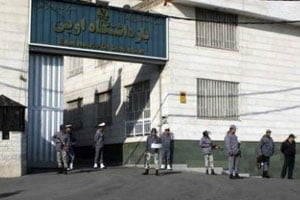
Several dozen prisoners in a northern city are serving prison terms for exercising their basic human rights. Iranian authorities should immediately and unconditionally release all political prisoners, Human Rights Watch said.
The 59-page report, is based on a review of 189 cases in three prisons in the city of Karaj, near the capital, Tehran, including the charges they faced, details of their trials before revolutionary courts, and information from lawyers, prisoners’ families, and others. Human Rights Watch concluded that in 63 of these cases, authorities had arrested the prisoners, and revolutionary courts had convicted and sentenced them, solely because they exercised fundamental rights such as free speech and rights to peaceful assembly or association. In dozens of other cases, including 35 prisoners sentenced to death on death row for terrorism-related offences, Human Rights Watch suspects egregious due process violations that may have tainted the judicial process.
“The election of a new, avowedly moderate president a year ago raised hopes that many of Iran’s political prisoners would soon walk free, but many remain behind bars,” said Joe Stork, deputy Middle East and North Africa director at Human Rights Watch. “The lion’s share of responsibility for releasing these prisoners rests with the judiciary, but President Hassan Rouhani and his cabinet should be doing more to press for their release.”
The political prisoners include members of the political opposition, bloggers and journalists, a lawyer, and labor and religious minority rights activists
The political prisoners include members of the political opposition, bloggers and journalists, a lawyer, and labor and religious minority rights activists. They are serving prison sentences on vague and sweeping charges for acts that Iran’s judiciary claims threaten the country’s national security, and are among several hundred political prisoners detained in prisons throughout Iran, according to reports released by UN rights experts.
Human Rights Watch asked the head of the Iranian judiciary in May for information on the cases of 175 prisoners, most of whom are covered in this report, including details of the charges and any evidence against them. The judiciary has not responded.
Most of the political prisoners are in one ward of Rajai Shahr prison, also known as Gohardasht prison, including 33 members of the beleaguered Baha’i community, Iran’s largest non-Muslim minority. They include five Baha’i leaders serving sentences of up to 20 years on charges that included spying, “insulting religious sanctities,” and “spreading corruption on earth,” all arising from their peaceful activities as Baha’i leaders.
At least 11 other Baha’is held in the same prison ward are faculty members and administrators affiliated with the Baha’i Institute for Higher Education, an alternative university created in 1987 for Baha’is that the government had excluded from state university education. The Baha’i International Community says that as of May 2014, 136 Baha’is were in Iranian prisons solely on religious grounds.
Karaj prison authorities are also holding two Christian pastors and two Christian converts. One of the pastors, Saeed Abedini, is serving an eight-year sentence for “intent to endanger the national security” by establishing and running home churches, his wife, Naghmeh Abedini, told Human Rights Watch.
Masoud Bastani, one of nine journalists and bloggers unlawfully imprisoned in Karaj, worked for theJomhuriyat news website before his arrest in July 2009. Mahsa Amrabadi, his wife, also a journalist, said her husband was sentenced to six years in prison for “propaganda against the state” and “assembly and collusion against the national security.”
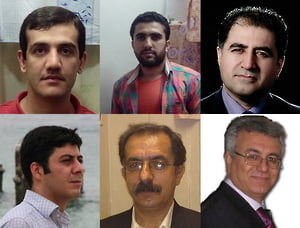
Human Rights Watch identified seven rights defenders and a veteran human rights lawyer among those in Rajai Shahr prison. The human rights lawyer, Mohammad Seifzadeh, 67, cofounded the Defenders of Human Rights Center with Shirin Ebadi, the Nobel Peace laureate, and other lawyers. An initial sentence of nine years was reduced to two, but six more years were added after he wrote letters and signed statements critical of the government while in prison, Ebadi told Human Rights Watch.
Human Rights Watch also identified 126 prisoners convicted of more serious crimes, some on death row for terrorism-related offenses, whom the authorities may have targeted for their peaceful activities. While Human Rights Watch was unable to obtain sufficient information to refute the authorities’ accusations in many cases, it documented egregious due process violations in some of their cases, calling into question the legitimacy of the convictions.
One of them, Mohammad Ali (Pirouz) Mansouri, is serving 17 years for supporting the outlawed Mojahedin-e Khalq Organization (MEK), an opposition group that the Iranian government considers a terrorist organization, his daughter, Masoumeh Mansouri, said. She told Human Rights Watch that a revolutionary court convicted her father of moharebeh, “enmity against God,” which can incur the death sentence, and “insulting the Supreme Leader” after two short court sessions.” The court referred to Mansouri’s visit to Camp Ashraf in Iraq, where members of the group lived in exile for years, to visit his wife and sisters, and his attending a 2007 speech at a ceremony at Khavaran cemetery in Tehran commemorating the 1988 execution of thousands of prisoners, many of them MEK members, as evidence of his guilt, she said.
Many others among the 126 describe themselves as Sunni activists or “missionaries” who support a strict, literalist interpretation of Sunni Islam. Most are from Iran’s Kurdish or Baluch minorities but others are foreign nationals, according to a source familiar with their cases. The authorities say that some participated in armed activities, including assassination attempts and murders, and that others assisted armed groups or threatened Iran’s security by other means.
Thirty-five of the 126 prisoners are on death row and at imminent risk of execution, Human Rights Watch said. Many are believed to have been held for weeks or months at Intelligence Ministry detention facilities, and tortured or otherwise ill-treated, several sources familiar with some of the cases told Human Rights Watch. Human Rights Watch has closely reviewed the cases of several of these men, including Zaniar and Loghman Moradi, Hamed Ahmadi, Jahangir Dehghani, Jamshid Dehghani, and Kamal Molaei, who are all accused of terrorism-related activities on behalf of opposition groups, but deny the charges and allege, in vivid detail, that security and intelligence forces subjected them to months of incommunicado detention and torture to secure coerced confessions from them.
On June 12, Human Rights Watch and 17 other rights organisations asked the Iranian government to halt the executions of the listed prisoners in Karaj prisons, and impose an immediate moratorium on all executions.
At least one of the prisoners on death row, Barzan Nasrollazadeh, is believed to have been under18 at the time of his alleged crime. International law, including under the Convention on the Rights of the Child, to which Iran is a party, prohibits the execution of offenders who were under 18 at the time of their alleged crime.
“President Rouhani should speak out clearly for an immediate moratorium on executions given the serious doubts about the fairness of revolutionary courts trials,” Stork said. “And Iran needs to release anyone being held for exercising their legal rights.”
A number of Azeri nationalist-civil activists have been arrested
HRANA – Many Azeri nationalist-civil activists in Ardabil province, who were planned to climb Sabalan peak, the same as previous years, have been arrested by security and intelligence forces.
According to the report of Human Rights Activists News Agency (HRANA), while some nationalist-civil activists of towns and cities in Ardabil province were planned to climb Sabalan peak, like past years, the security and intelligence service forces blocked their way to Sabalan station and prevented them from climbing. Also, they have arrested the activists who could reach to Sabalan station, around 8 pm, on August 11.
Security forces have used excessive force and have insulted the arrestees during their transfer to Meshkin-Shahr. Beating, using swear words, humiliation and insulting are some of these inhuman behaviors.
Arrestees have been transferred to revolutionary court of Meshkin-Shahr on August 16th after spending two days in detention center at the police station. The judge has neglected their defenses and charged them with allegations like illegal gathering and propaganda against the government and has threatened them with jail punishment. The arrestees have announced that they will start group hunger strike, if they would be imprisoned, and they will not put bail.
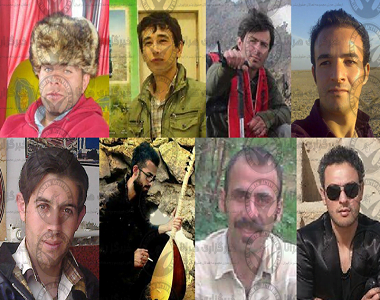
The names of activists who were arrested are: Rahim Gholami, Aydin Zakeri, Meysam Joulani, Jafar Rostami, Saeid Hosaini, Hamid Ghovvati, Habib Negahban, Eisa Azizi, Hasan Joulani and Reza Ghoumi.
A senior IDF source revealed Sunday that in addition to supplying Hamas terrorists with weapons, including so-called “Judgement Day” missiles, Iran supported the Gaza terror group by launching a massive cyber assault on Israel during Operation Protective Edge.
The source, a senior commander in the IDF Computer Service Directorate, told Walla! on Sunday that as Israel faced terrorists in the Hamas enclave, it also faced “a significant Iranian effort” to attack the Jewish state through cyber warfare.
“We haven’t seen such a scope (of attacks) like this in the past, also in terms of the type of targets,” said the commander, who elaborated that Israeli civilian communications infrastructures also was attacked by Iran.
The IDF’s Homefront Command website, which provides security information to the Israeli public such as rocket warnings, also came under fire by the Iranian hackers, and the IDF Spokesperson’s Unit site was targeted as well.
Arutz Sheva‘s Hebrew website came under a cyber attack during the operation too, although the culprits there were Turkish and not Iranian. Turkey replaced Iran in 2012 as Hamas’s leading financial sponsor.
Fortunately, the IDF has been making impressive technological strides in defensive cyber-warfare, according to the commander, who remarked that just a year ago IDF forces on the ground often had trouble receiving information gathered by the IDF Intelligence Corps, which had to go through various sources first.
Now, thanks to a new network system of the Intelligence Corps and Computer Service Directorate, information in Operation Protective Edge was passed in real-time to soldiers on the ground.
The commander gave an example from the operation in which a terrorist involved in the digging of terror tunnels was captured by IDF forces.
During the IDF investigation of the terrorist, information on targets extracted from him was passed real-time through the new technology, and was transmitted by the Intelligence Corps to the Navy, which was able to immediately fire on the targets with precise munitions.
Roughly 65% of the new technology network is completed, according to the source, with the rest of the process promising to further connect units on the ground to essential intelligence information.
The commander also noted on the threat to the IDF posed by the Islamic State (IS, formerly ISIS), which has been conquering large portions of Iraq and Syria while committing various atrocities.
“They are a primitive organization, but effective. There are ten thousand fighters travelling in pick-up trucks, something like (Mongolian Emperor) Genghis Khan’s hordes. They work through a network, and document their murderous attacks. In this way they exercise a strong element of consciousness,” said the commander, noting their methods of instilling fear.
IRGC Commander: Enemies Using New Tactics against Islamic Resistance
TEHRAN (FNA)- Commander of the Islamic Revolution Guards Corps (IRGC) Navy Rear Admiral Ali Fadavi warned that enemies have now resorted to new methods and tactics to destroy the Islamic resistance.
“The trend of regional developments shows that enemies’ hatred and hostility to the Islamic resistance has not decreased and has taken a new form and dimensions,” Fadavi said during a visit to the IRGC Navy units in Abu Moussa Island in the Persian Gulf on Saturday.
Stressing that the hostile goals of the enemies necessitate the IRGC and other Islamic resistance forces to strengthen their combat and defensive preparedness, he said, “Under such conditions, we have not and will not lose even one single day to maintain and boost our defensive readiness.”
The Iranian Foreign Ministry in a statement in July urged the Muslim countries to show their support for the resistance movement and the Palestinians in practical terms.
“The Resistance Movement is defending Islam in an unequal battle against the state terrorism and the apartheid regime of Israel,” part of the statement said.
The Zionist regime is making endless efforts to Judaize the Holy Quds and change the Islamic identity of Beitul-Muqaddas, it said, adding that the Palestinians are witnessing daily brutal attacks on the Muslims’ first Qibla.
Four Iranian Arab activists receive heavy sentences for “waging war against God”
NCRI – The Iranian regime’s judiciary in south-western city of Ahvaz has handed down heavy sentences to four Iranian Arab activist who had already spent 31 months in prison under torture.
The branch of Revolutionary Court in Iran has sentenced Hassan Abayat, 56, to life prison, Idan Bet-Sayyah,37, to 10 years imprisonment and Jassem Swaaedi,30, and Khaled Obeidavi,29, each to 5 years imprisonment for “waging war against god” and forming an organization in opposition to the regime.
The four had been forced to make a TV confession admitting injuring a regime’s security agent in 2012, but later the charges were dropped.
It is reported that injury signs on bodies of the activists shows the extent of physical torture by the Iranian regime’s henchmen.
The National Council of Resistance of Iran, recently in a report titled “Human rights in Iran during first year of Hassan Rouhani’s ‘moderate’ presidency“ reported, “of the 38 political prisoners hanged in the first year of Rouhani’s Presidency, twenty-four were Baluchi activists, eight were Ahvazi Arabs, and five were Kurds.