Home Blog Page 702

US blacklists Iranian commander, firms

0
Wed Feb 10, 2010 7:22PM
Stuart Levey, the US Treasury’s undersecretary for terrorism and financial intelligence
The US Treasury Department orders a freeze on assets of a commander and four subsidiaries of a construction company linked to Iran’s Islamic Revolutionary Guards Corps (IRGC).

The Treasury said in a Wednesday statement that Khatam al-Anbiya’s commander, IRGC General Rostam Qasemi, was blacklisted, while the four sanctioned firms include Fater Engineering, Imensazen Consultant Engineers, Makin and Rahab Institutes.

“As the IRGC consolidates control over broad swaths of the Iranian economy, displacing ordinary Iranian businessmen in favor of a select group of insiders, it is hiding behind companies like Khatam al-Anbiya and its affiliates to maintain vital ties to the outside world,” said Stuart Levey, the US Treasury’s undersecretary for terrorism and financial intelligence on Wednesday.

“Today’s action exposing Khatam al-Anbiya subsidiaries will help firms worldwide avoid business that ultimately benefits the IRGC and its dangerous activities,” he added.

The freeze comes one day after US President Barack Obama said the United States was developing a “significant regime of sanctions” against Iran, following Tehran’s announcement of starting the enrichment of uranium to a level of 20 percent.

Despite numerous reports by the International Atomic Energy Agency to the contrary, Obama once again accused Tehran of pursuing a nuclear program that would lead to nuclear weapons.

Tehran denies the charges, saying its nuclear program is peaceful and aimed at civilian application of the technology.

According to Obama, the UN Security Council is moving quickly to broaden the economic sanctions imposed on Iran.

Iran began enriching uranium to a level of 20 percent at its Natanz enrichment facility on Tuesday in order to provide nuclear fuel for its Tehran research reactor, which produces radioisotopes for the treatment of cancer patients.

Iranian Foreign Ministry spokesman Ramin Mehmanparast said the same day that 850,000 patients in Iran depend on radioisotopes produced by the Tehran research reactor.

HRF/HGH/MMN

Yashar Darolshafa’s Mother and Brother Arrested/RAHANA

0

http://www.rahana.org/en/?p=241

4 , February , 2010

Following Yashar Darolshafa’s arrest, his mother and brother were also arrested at their home.

RAHANA Prisoners’ Rights Unit – Following the arrest of Yashar Darolshafa last night, his mother and his brother were also arrested at their home today.
According to RAHANA reporter, Yashar was arrested last night by agents from the Intelligence Ministry who took him away after searching the house.
Yashar Darolshafa who is a leftist student activist was once arrested on November 4th, 2009 but released 20 days later.

Iran: Revolutionary Guards Tighten Economic Hold

0

http://www.globalissues.org/news/2009/12/29/4061

  • by Omid Memarian (berkeley, california)
  • Tuesday, December 29, 2009
  • Inter Press Service

News that Iran’s Revolutionary Guard Corps is withdrawing a billion dollars from the country’s Foreign Reserve Fund in order to complete Phases 15 and 16 of the gigantic South Pars gas project has generated concern among Iranian analysts, who believe the move reveals the military organisation’s excessive power over Iran’s economy.

In view of looming sanctions from the United States and the United Nations Security Council over Iran’s nuclear programme, the IRGC’s control over the country’s sensitive oil, and gas and nuclear industries could provoke a serious crisis, they warn.

Last week, Rostam Ghassemi, the commander of Khatam-ol-Anbia Construction Complex, which is the contractor for the two South Pars fields, told Mehr News Agency that in order to remedy the ‘financial difficulties’ facing these phases, the IRGC is planning to withdraw a billion dollars from Iran’s Foreign Reserve Fund.

‘Progress problems for Phases 15 and 16 were caused by the National Iranian Oil Company’s tardy provision of financial resources needed by the project,’ he said. ‘The Economic Council [headed by President Mahmoud Ahmadinejad] has approved the withdrawal and the administrative process for it is currently underway at the Central Bank.’

The IRGC’s Khatam-ol-Anbia Construction Base, considered the most important financial unit of the Guards and currently the largest contractor of government projects in Iran, was established in 1990 with the agreement of Iran’s Supreme Leader. Over the past four years, the entity has been the contractor for 1,500 of the country’s most important government projects.

A branch of the Iranian military, the IRGC has built up a sprawling business empire since the 1979 Revolution, with annual revenues estimated at some 12 billion dollars and investments in sectors ranging from oil, gas and petrochemicals to cars, bridges and roads. It also controls the paramilitary Basij militia.

‘The ruling political class, the IRGC, needs to control and monitor Iran’s financial resources in order to continue its political hold,’ Mashallah Shamsolvaezin, a prominent Iranian journalist, told IPS in a telephone interview from Tehran.

‘Ahmadinejad sees absolutely no need to obtain permission from anyone, but such interference in the economy will work against him,’ he added.

In 2006, the Khatam-ol-Anbia Construction Base took on the National Gas Company’s 90-kilometre Asalouyeh-Iranshahr pipeline project in Iran’s Sistan and Baluchistan provinces, a contract worth 1.3 billion dollars.

Another large project the Oil Ministry awarded to IRGC is the South Pars Gas Field Development Project’s Phases 15 and 16. At 2.97 billion dollars, the contracts were awarded to Khatam-ol-Anbia Base two years ago, bypassing the tender process. However, the IRGC firm was unable to finish the project in time.

Jamshid Asadi, an economics professor at the American University in Paris, said that the latest action by IRGC culminates its aggressive efforts to monopolise key state projects over the last six years.

‘Unfortunately, this is not the beginning. IRGC’s strong presence in Iran’s economy, its efforts to replace the private sector, and its lack of supervision by the Parliament or other oversight units is in fact completing the political coup d’etat which began with Ahmadinejad’s election [in 2005],’ he said.

In early 2005, towards the end of President Mohammad Khatami’s second term, through a military takeover at the airport, the IRGC revoked the Imam Khomeini International Airport’s tender, which had been partially awarded to a consortium of Turkish and Austrian companies.

In another case, when Turkcell won the international tender for a cell phone network operation license, the Parliament and the cabinet were put under pressure to revoke the tender.

‘A billion-dollar withdrawal which could not be granted without Mahmoud Ahmadinejad’s influence and direct order has been seen as the IRGC’s technical incompetence to fulfill its obligations and reliance on the government’s support,’ a former member of parliament told IPS on the condition of anonymity.

The Khatam-ol-Anbia Construction Base has also been linked to Iran’s nuclear activities and is currently under sanctions by the European Union and the United States.

‘The economic dominance of the IRGC over gigantic gas and oil projects has made Iran’s economy extremely vulnerable towards new round of sanctions on the country’s financial institutions and oil industry,’ the source said.

Assadi told IPS, ‘This process is illegal. The Economics Council was one of the economic units which were stripped of their powers during Mr. Ahmadinejad’s term and even under its previous power, it had no autonomy over whether or not funds were withdrawn against the Foreign Reserve Fund.’

‘It falls within the Parliament’s authorities to approve the government’s proposed budget and if the Economics Council approves such a thing, it has overstepped its authorities and duties,’ he added.

Dr. Sadegh Zibakalam, a political analyst in Tehran, told IPS, ‘In response to objections that Ahmadinejad has repeatedly withdrawn funds from the Forex Reserve Fund, he has said that he has not taken even one dollar without the Parliament’s approval.’

‘IRGC’s withdrawal from the Forex Reserve Fund contradicts Ahmadinejad’s statements,’ he noted. ‘Iran’s Foreign Reserve Fund’s Board of Trustees were removed from office by Ahmadinejad himself and it seems that he is solely responsible for the Fund.’

‘Considering that IRGC’s companies and their related companies are mentioned in the sanctions [against Iran adopted by the U.N. Security Council], there is a danger that the IRGC’s presence in Iran’s large national oil projects might cause other oil and gas companies from Malaysia to China and Western countries to be pressured not to cooperate with Iran; this could face the Iranian oil and gas industries with serious threats,’ added Zibakalam.

During the period of relative press freedom in Iran between 1998 and 2005, the IRGC’s companies were repeatedly accused by independent Iranian media of sidestepping customs rules and regulations, and importing goods and equipment through unofficial entry points. During the Khatami era, reformist newspapers exposed the existence of 60 illegal ports in southern Iran.

Other reports by Iranian officials suggested that nearly one-third of the country’s imports are made through illegal markets, the underground economy, and illegal ports.

According to a report the IRGC provided to Iranian Parliament’s Budget Committee, Khatam-ol-Anbia Base owns 812 registered companies inside and outside Iran.

© Inter Press Service (2009) — All Rights Reserved

Iran confirms detaining British nationals

0

Tue Dec 1, 2009 10:1AM

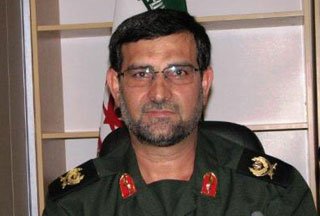
IRGC’s naval commander Ali Reza Tang-siri
Iran’s Islamic Revolution Guards Corps (IRGC) has confirmed that it has detained several British nationals in the Persian Gulf waters.

IRGC’s naval commander Ali Reza Tang-siri on Tuesday confirmed the detention and said the British nationals were arrested by IRGC’s naval forces, Fars news agency reported.

The top commander said confronting foreign forces in the Persian Gulf was among the IRGC’s duties.

This is the third time that Iran arrests Birirtish nationals on its national waters.

In March 2007, Iranian forces seized eight British Royal Navy sailors and seven marines for trespassing Iran’s territorial waters. They were released the following month.

In a similar incident in 2004, eight British servicemen were detained in the same area but were later freed.

At the time, Iranian officials confiscated espionage devices from the British nationals.

British Foreign Secretary David Miliband said in a statement on Monday that five British nationals were detained on November 25 in the Persian Gulf after their yacht reportedly trespassed on Iranian waters. He said the yacht was en route from Bahrain to Dubai when Iranian forces arrested the Britons.

Miliband said the UK had no confrontation with Iran over the issue, expressing hope that he issue would “soon be resolved.”

AR/DT

http://edition.presstv.ir/detail/112576.html

IRGC Business Connections

0

http://www.sanctioniranregime.eu/fact-sheets/irgc-business-connections/

The IRGC increasingly controls vast financial assets and economic resources within Iran. By some estimates the IRGC may involved in upwards of 30-40% of all economic activity inside Iran. The Guard runs numerous companies and dominates many of Iran’s key industries including construction, shipping and energy among others. Many of the IRGC’s business and industrial activities – especially those connected to the oil and gas sector – are heavily dependent on the international financial system. The IRGC has become so entrenched in the Iranian economy that it has become nearly impossible to conduct business in Iran without touching some Guard entity.

The Guard controlled engineering and construction firm Khatam ol-Anbia is heavily involved in Iran’s oil and gas sector. The company with about 25,000 “workers” is the largest construction organization in Iran. The company has access to government funding, a supplement of military workers and military equipment. The company was responsible for constructing the Tehran subway and controls Phases 15 and 16 of the South Pars gas field in an estimated $2 billion project.

In August 2008 the Khatem-ol Anbiya Construction Organization was sanctioned by the EU, instituting a travel ban and asset freeze. In its designation the EU stated the organization, “uses IRGC engineering resources for construction acting as prime contractor on major projects including tunneling, assessed to support the Iranian ballistic missile and nuclear programs.”[1]

The Guard annually takes in about $1billion in revenue according to a 2007 estimate, with expectations that the figure would double as President Ahmadinejad steered more business to the Guard. According to the U.S. State Department, the Guards are “taking on an increasingly influential role in Iran’s economy, with IRGC-affiliated companies winning important government contracts.”[2]

“The IRGC is so deeply entrenched in Iran’s economy and commercial enterprises, it is increasingly likely that if you are doing business with Iran, you are somehow doing business with the IRGC.” (Treasury Secretary Henry Paulson, Our National Security, CFR-NY, June 14, 2007)

IRGC Owned or Controlled Entities[3]:

  • Khatam al-Anbya Construction Headquarters
  • Oriental Oil Kish
  • Ghorb Nooh
  • Sahel Consultant Engineering
  • Ghorb-e Karbala
  • Sepasad Engineering Co
  • Omran Sahel
  • Hara Company
  • Gharargahe Sazandegi Ghaem

Footnotes:

[1] Council Common Position 2008/652/CFSP of 7 August 2008 amending Common Position 2007/140/CFSP concerning restrictive measures against Iran
[2] (Matthew Levitt, Wall Street Journal Europe, July 2, 2007)
[3] http://www.treas.gov/press/releases/hp644.htm

IRGC support for terrorism

0

http://www.sanctioniranregime.eu/fact-sheets/irgc-support-for-terrorism/

IRGC support for Hizbollah terrorists

Iran, through the IRGC, maintains an extremely close patron-client relationship with the armed terrorist elements of Hizballah. The overarching ideology of the terrorist organization is so closely linked with the Iranian regime that members of its leadership regularly brag about their obedience to Iranian Supreme Leader Ali Khamenei.[1] While Iran supports terrorist organizations across the globe, Hizballah is by far the largest recipient of Iranian support. According to U.S. intelligence, Iran views Hizballah as the “model” for other terrorist groups and provides the organization with financial aid, training and weaponry.[2]

The Iranian Revolutionary Guard Corps is the vehicle for Iranian support for Hizballah. According to the State Department report on terrorism, Iran relies on the IRGC-Quds Force to cultivate and support terrorist organizations across the world. According to the State Department annual report on terrorism, the Quds force provides weapons, training, and financial aid to Hizballah.[3]

The report elaborated that Iran provided Hizballah with $200 million and trained over 3,000 Hizballah operatives in 2008 alone. This funding and training was provided via the Quds force.[4] The Directory General of the Islamic Union in Lebanon – a Hizballah dominated, nominally broad-based Islamist coalition – explained that this training “lies at the heart” of Hizballah’s connection to the IRGC.[5]

In addition to designating the IRGC-Quds Force as a Specially Designated Global Terrorist, the U.S. Treasury Department has sanctioned a number of individuals involved with the IRGC for their direct role in supporting terrorism. In July 2009, the Treasury sanctioned Abu Mahdi al-Muhandis, advisor to Quds Force commander Qasem Soleimani, for providing material support to Hizballah, Hamas and other U.S. designated terrorist organizations.[6]

According to most intelligence estimates, Hizballah’s arsenal includes upwards of 42,000 long- and short-range rockets. The IRGC has assisted in this rearmament in direct violation of U.N. Security Council Resolution 1701 which ended the fighting between Israel and Hizballah in the summer of 2006. Iran smuggles weapons to Hizballah via Syria, Turkey and Armenia. In the summer of 2008, a military convoy exploded as it left a munitions warehouse in the Tehran suburb of Khavarshahar. According to reports received by Western officials, the warehouse was controlled by the IRGC and the shipment was intended for Hizballah.[7]

The IRGC has recruited and trained members of Hizballah and has facilitated drills in southern Lebanon. According to a report in the Kuwaiti daily A-Siyasa, over 200 IRGC agents operate in Iraq, Bahrain and the United Arab Emirates in order to recruit and fashion cells of Hizballah operatives.[8] Senior Quds Force commander Qasem Soleimani also reportedly oversaw a Hizballah drill in southern Lebanon in the middle of November of last year.[9] These two reports indicate that the IRGC leadership is well integrated into Hizballah’s training structure.

Footnotes:

[1] Secretary General Hassan Nasrallah’s deputy Sheikh Abdel Karim Obeid stated that Nasrallah views obedience to the Supreme Leader as a principle. (Fars News, Official: Nasrallah Follows Path of Iranian Leader, August 16, 2009.) Additionally, Deputy Secretary General Sheikh Naim Qassem stated in an interview with the Lebanese daily Nahar al-Shabab that Iran (specifically the Supreme Leader) provides Hizballah with “general guidelines” and “legitimacy.” (July 30, 2009)
[2] Director of National Intelligence Dennis Blair, Questions for the Record, Senate Select Committee on Intelligence, hearing dated February 12, 2009, answers unclassified July 30, 2009
[3] State Department 2008 Country Reports on Terrorism
[4] Deputy Assistant Secretary for Terrorist Financing Daniel Glaser, Testimony before the House Foreign Affairs Subcommittees on Middle East and South Asia and Terrorism, Nonproliferation, and Trade. April 17, 2008.
[5] The Jerusalem Post Al Wattan: 20 Hizbullah men die in Iran training. April 10, 2008.
[6] TG-195: Treasury Designates Individual, Entity Posting Threat to Stability in Iraq. July 2, 2009
[7] Con Coughlin, The Daily Telegraph (London). Iranian military convoy rocked by mystery explosion. July 25, 2008
[8] As reported by The Jerusalem Post and The Media Line News Agency. Report: Iranians train Syrians to fight Sunnis. November 16, 2008.
[9] Ha’aretz and Channel 10. Senior Iranian commander leads Hezbollah drill in south Lebanon. December 2, 2008

IRGC support for Palestinian terrorists

The IRGC is heavily involved in the training, supply and financing of Hamas and the Palestinian Islamic Jihad. The IRGC’s Quds Force according to the U.S. State Department’s annual terrorism report provides “aid in the form of weapons, training, and funding to Hamas and other Palestinian terrorist groups.”[1]

In 2002, Israel naval forces seized the vessel Karin-A off the coast of Gaza. The vessel, which intelligence reports indicate was arranged by the IRGC, contained fifty tons of weapons intended for Hamas and other Palestinian terrorist groups.

In October 2006, then-Hamas Interior Minister Said Siyam reportedly signed an agreement with the IRGC to transform Hamas’ military wing into an adjunct IRGC force. The cost of the training was said to be $60 million.[2] The IRGC has provided military training for Palestinian terrorist groups in Gaza as well as bringing terrorists to camps in Lebanon and Iran for training.[3]

In February 2007 Khaled Mashaal, Hamas’s supreme leader, traveled to the Sudanese capital, Khartoum, to meet senior Quds Force officials to discuss setting up a supply route to enable Iran to smuggle rocket-propelled grenades, anti-tank missiles, guns and explosives from Iran, through Africa and through the border between Gaza and Egypt.[4]

Footnotes:

[1] State Department Country Reports on Terrorism, 2008
[2] “IRGC, Inc.; The business of Iran’s hardline military elite” Omeed Jafari, The Weekly Standard, May 15, 2007
[3] Ma’ariv, June 7, 2007
[4] The Daily Telegraph, June 15, 2007

IRGC activities on foreign territory

0

http://www.sanctioniranregime.eu/fact-sheets/irgc-activities-foreign-territory/

IRGC activity in Afghanistan

Iran’s involvement in Iraq is similar to that in Afghanistan, with the regime aiming to exploit American weaknesses in order to become a bigger regional player by spreading its ideas and influence.

Quds Force has also provided assistance to the Taliban in Afghanistan. The Quds Force provided training to the Taliban on small unit tactics, small arms, explosives and indirect fire weapons. Since at least 2006, Iran has arranged arms shipments including small arms and associated ammunition, rocket propelled grenades, mortar rounds, 107mm rockets and plastic explosives to select Taliban members.

U.S. and NATO troops have intercepted shipments of Iranian-made arms in Afghanistan, including mortars, plastic explosives and explosively formed penetrators that have been used to deadly effect against armored vehicles in Iraq. Former U.S. ambassador to Afghanistan William Wood said on January 31, 2008 that “there is no question that elements of insurgency have received weapons from Iran.” The discovery of the first caches of Iranian-made weapons in Afghanistan in Apri 2008, says a State Department official, “sent shock waves through the system.”

Iran remained unwilling to bring to justice senior al-Qa’ida members it has detained, and has refused to publicly identify those senior members in its custody. Iran has repeatedly resisted numerous calls to transfer custody of its al-Qa’ida detainees to their countries of origin or third countries for trial. Iran also continued to fail to control the activities of some al-Qa’ida members who fled to Iran following the fall of the Taliban regime in Afghanistan.

IRGC activity in Iraq

Although Iran’s goals in Iraq since the U.S.-led coalition in invasion of Iraq in 2003 are not totally clear, it seeks—at a minimum—to do everything possible to counter U.S. influence in the country and the region, and to ensure that Iraq can never again become a threat to Iran. Iran has sought to achieve its goals in Iraq through several strategies: supporting pro-Iranian Shiite factions and armed terrorist militias; attempting to influence Iraqi political and sectarian leaders; and building economic ties throughout Iraq that might accrue goodwill to Iran. Iranian support for terrorist activity has hindered—and continues to pose a threat to—U.S. efforts to stabilize Iraq, and has heightened the U.S. threat perception of Iran generally.

From 2005-2007, at the height of Iran’s support to Shiite militias, U.S. officials publicly discussed specific information on Quds Force – a special unit of the IRGC – and Hezbollah aid to Iraqi Shiite militias, particularly the Jaysh Al-Mahdi. Despite its pledge to support the stabilization of Iraq, Iranian authorities continued to provide lethal support, including weapons, training, funding, and guidance, to militant groups that targeted Coalition and Iraqi forces and killed innocent Iraqi civilians. The Quds Force provides Iraqi militants with Iranian-produced advanced rockets, sniper rifles, automatic weapons, and mortars that have killed Iraqi and Coalition Forces as well as civilians. Tehran was responsible for some of the lethality of anti-Coalition attacks by providing militants with the capability to assemble improvised explosive devices (IEDs) with explosives that were specially designed to defeat armored vehicles. The Quds Force, in concert with Lebanese Hizballah, provided training both inside and outside of Iraq for Iraqi militants in the construction and use of sophisticated IED technology and other advanced weaponry.

Various press reports have put the number Quds intelligence personnel in Iraq around 150. Some U.S. commanders who have served in southern Iraq said they understood that there were perhaps one or two Quds Force personnel in each Shiite province, attached to or interacting with pro-Iranian governors in those provinces. Quds Force officers often do not wear uniforms and their main role is to identify Iraqi fighters to train and to organize safe passage for weapons and Iraqi militants between Iran and Iraq, although some observers allege that Iranian agents sometimes assisted the Jaysh Al-Mahdi in its combat operations.

From December 2006 through October 2007 U.S. forces arrested a total of 20 Iranians in Iraq many of whom were alleged to be Quds Forces officers. In late 2007, the U.S. military released ten of them, but continued to hold ten caught in the northern Kurdish city of Irbil believed of high intelligence value. Eventually these remaining ten were also freed, the final five on July 9, 2009. On August 12, 2008, U.S.-led forces arrested nine Hezbollah members allegedly involved in funneling arms into Iraq.

On March 24, 2007, with U.S. backing, the U.N. Security Council unanimously adopted Resolution 1747 (on the Iran nuclear issue), with a provision banning arms exports by Iran—a provision clearly directed at Iran’s arms supplies to Iraq’s Shiite militias and Lebanese Hezbollah. In an effort to financially squeeze the Quds Force, on October 21, 2007, the Bush Administration designated the Quds Force (Executive Order 13224) as a provider of support to terrorist organizations. On January 9, 2008, the Treasury Department took action against suspected Iranian and pro-Iranian operatives in Iraq by designating them as a threat to stability in Iraq under a July 17, 2007 Executive Order 13438. The penalties are a freeze on their assets and a ban on transactions with them. On October 21, 2007, the Administration designated the Revolutionary Guard and several affiliates, under Executive Order 13382, as proliferation concerns.

Domestic operations

0

http://www.sanctioniranregime.eu/fact-sheets/domestic-operations/

The Basij, a paramilitary volunteer militia loyal to Iranian Supreme Leader Ayatollah Ali Khamenei and operating under the Iranian Revolutionary Guard Corps, was founded to ensure the survival of the regime against foreign and domestic threats. The Basij has leaders based in mosques in every village and city throughout Iran, giving it the widest security network in the country. During the Iran-Iraq War tens of thousands of Basij members were killed on the battlefield when they volunteered to clear minefields. Following the war, the Basij were used throughout the 1990s to quell internal dissent, crackdown on student protests and enforce the regime’s strict moral code.

The Basij is widely viewed as playing a large role in the 2005 election of Mahmoud Ahmadinejad – himself a former Basij member – as President of Iran. More recently, the Basij noticeably took the lead in crowd control in June 2009 when tens of thousands of Iranians demonstrators took to the streets to protest alleged electoral fraud in Ahmadinejad’s reelection. In the ensuing weeks of rioting, Mir Hussein Moussavi, the opposition presidential candidate, decried the violence carried out by the Basij against protestors. Saying that the Basijis lack uniforms, proper identification or anything that denotes them as public employees, Moussavi said they appeared with hoses, clubs, iron bars, truncheons and sometimes firearms.

The Basji has been linked to the murder of numerous civilians, including that of Neda Agha-Soltan whose death was video taped and spread widely on the internet. Human Rights Watch said the Basij were raiding homes and university dorm rooms at night, destroying property, shooting indiscriminately into crowds, beating people, and confiscating satellite dishes. They said the raids were to stop anti-government chanting and to prevent people from watching foreign news broadcasts. Commander of the Basij forces Hojjatoleslam Hossein Taeb said during the violence that the U.S. had planned to overthrow the Iranian regime and that the Basij’s most important role is to continue to confront the “soft threats in all the cultural, economic, political and social arenas.”

Executive Summary

0

http://www.sanctioniranregime.eu/fact-sheets/executive-summary/

The entire Iranian Revolutionary Guard Corp, also known as the Islamic Revolutionary Guard Corps (IRGC), should be sanctioned by the European Union due to its terrorist activity, its support for Iran’s nuclear and missile programs and its suppression of the Iranian people. Multiple senior commanders of the IRGC have already been sanctioned by the UN Security Council and the EU for their involvement in Iran’s missile and nuclear programs. The EU has also already sanctioned the IRGC Air Force and the Khatem-ol Anbiya Construction Organization, an IRGC-owned group of companies assessed to support the Iranian ballistic missile and nuclear programmes.

Formed in the aftermath of the 1979 Islamic Revolution, the Revolutionary Guard is an elite military corps that operates independently of Iran’s regular armed forces and reports directly to the Supreme Leader. The IRGC is deeply involved in the country’s nuclear, missile and other weapons proliferation activities:

  • The IRGC has operational control of the regime’s strategic arsenal of Shihab-3 missiles.
  • The IRGC has responsibility for the protection of Iran’s nuclear program and likely oversees covert bomb development activity.
  • The IRGC controls much of the nation’s defense industries.

The organization actively supports insurgents in Iraq, provides aid to the Taliban in Afghanistan, and funds, trains, and equips, Hamas, Hizballah and other Palestinian terrorist organizations.

  • The IRGC supplied key funding to the terrorist group Hizballah to enable its killing of 58 French soldiers and 241 American service members in the 1983 bombing of French and U.S. military barracks in Lebanon. The IRGC was also responsible for providing assistance in the bombing of the 1983 U.S. Embassy in Beirut which killed 63.
  • The IRCG was implicated in the 1996 bombing of Khobar Towers in Saudi Arabia killing 19 U.S. servicemen.
  • The IRCG was implicated in 1994 bombing attack of the Amia Jewish Center in Argentina killing 85 people.

In addition the group brutally suppresses any internal threat to the stability of Iran’s theocratic regime as demonstrated by the recent and ongoing crackdown on election protestors.

The IRGC is deeply involved in the country’s nuclear, missile and other weapons proliferation activities: The IRGC has responsibility for the protection of Iran’s nuclear program and likely oversees covert bomb development activity. An undeclared uranium enrichment facility disclosed by the U.S., UK and France in September 2009 is reportedly located on an IRGC base near the city of Qom. The IRGC has operational control of the regime’s strategic arsenal of Shihab-3 missiles, with ranges capable of striking southeastern Europe.

The IRGC reportedly began its work in the nuclear field during the height of the Iran-Iraq war. According to the National Council of Resistance of Iran (NCRI), which exposed Iran’s clandestine nuclear program in 2002, by 1987 the program had established several research and development centers at various universities throughout the country and had a budget of $800 million for nuclear research. [1]

In July 2008, the British paper The Telegraph reported that the IRGC had setup several front companies around Tehran to manufacture components for advance P-2 centrifuges, capable of enriching uranium at 2-3 times the rate of previous P1 models. According to the report, a previous attempt to develop the P-2 had been halted in 2004 after IAEA inspectors uncovered the activity.[2] Senior IRGC officials are believed to have been part of Iran’s contacts with Pakistani nuclear scientist A.Q. Khan.

In February 1998, the British government identified the IRGC as having procured goods and/or technology for weapons of mass destruction programs, in “addition to doing non-proliferation related business;”[3]

In 2008 the U.S. Government designated the IRGC an entity of proliferation concern for its involvement in Iran’s missile program, According to the U.S Treasury Department:

“The IRGC has been outspoken about its willingness to proliferate ballistic missiles capable of carrying WMD. The IRGC’s ballistic missile inventory includes missiles, which could be modified to deliver WMD. The IRGC is one of the primary regime organizations tied to developing and testing the Shahab-3. The IRGC attempted, as recently as 2006, to procure sophisticated and costly equipment that could be used to support Iran’s ballistic missile and nuclear programs.” [4]

In August 2008 the EU sanctioned the IRGC Air Force saying the group “operates Iran’s inventory of short and medium range ballistic missiles.”[5]

Several of the IRGC’s leaders have also been sanctioned under UN Security Council Resolution 1747. These designations were later incorporated by the EU into its sanctions regime. Sanctioned individuals include:

1. Brigadier General Morteza Rezaie (Deputy Commander of IRGC)
2. Vice Admiral Ali Akbar Ahmadian (Chief of IRGC Joint Staff.)
3. Brigadier General Mohammad Reza Zahedi (Commander of IRGC Ground Forces)
4. Rear Admiral Morteza Safari (Commander of IRGC Navy)
5. Brigadier General Mohammad Hejazi (Commander of Bassij resistance force)
6. Brigadier General Qasem Soleimani (Commander of Quds force)
7. General Zolqadr (IRGC officer, Deputy Interior Minister for Security Affairs)[6]

Footnotes:

[1] http://www.foxnews.com/story/0,2933,310979,00.html
[2] The Daily Telegraph, July 7, 2008
[3] http://www.iranwatch.org/suspect/records/iran-revolutionary-guard-corps-(irgc).html
[4] http://www.treas.gov/press/releases/hp644.htm
[5] Council Common Position 2008/652/CFSP of 7 August 2008 amending Common Position 2007/140/CFSP concerning restrictive measures against Iran
[6] http://www.iaea.org/NewsCenter/Focus/IaeaIran/unsc_res1747-2007.pdf

Iran’s Joint Armed Forces Chief of Staff Wants to Control the Parties’ Activities

0

Hassan Firouzabadi, the Joint Armed Forces Chief of Staff, wants the compilation and quick approval of a law to control [political] parties since at present no such law exists.

The military officer revealed the military’s scheme to control the [political] parties and to “determine the right direction of politics through” the Ministry of the Interior, the Supreme National Security Council, and the Islamic Consultative Assembly of Iran (the Majlis). He said that all parties must continue their political activities according to the directives that they will be receiving from the Ministry of the Interior and the Supreme National Council.

Hassan Firouzabadi commented a few days after it was revealed that the Reformists won by an absolute majority in the Central Council of Parties elections. He made his comments during the ceremony introducing Mohammad Hejazi as the new commander of Joint Armed Forces Staff’s support, calling the people’s protest after the elections a “disturbance” and “rioting.” He noted that during these riots and disturbance the political scene of the country became troublesome and chaotic, and some people might wonder how political activities could go on, since one of the byproducts of the post-election riots was [the belief] that healthy political activity could not be resumed.

He added, “The country’s main bodies determined by the Constitution, i.e. Ministry of the Interior, the Supreme National Council, and the Islamic Consultative Assembly of Iran, should be engaged in this matter and announce the right political direction in a legal form.” He said that even if there is no law about controlling the parties, “That law must be compiled and sent to the Islamic Consultative Assembly of Iran (the Majlis) for quick approval.”

This military commander continued, “The parties must initiate and conduct their affairs on par with the directives and approval of the Ministry of the Interior, the Supreme National Security Council, and the laws of the Islamic Consultative Assembly Council. Also, the party members and their supporters must not worry that they might be prosecuted if they become members of any political party and as a result might not able to take care of their families or their children.”

Translated from norooz