A hardliner Iranian politician and a senior member of Revolutionary Guard commander has said that after the killing of Qassem Soleimani, Iran “was after an excuse to attack Israel”, which he said was involved in the killing of the Qods Force commander.IRGC
IRGC Man Says Iran Was ‘Looking For Excuse’ To ‘Flatten Tel Aviv’ After Soleimani Killing
A hardliner Iranian politician and a senior member of Revolutionary Guard commander has said that after the killing of Qassem Soleimani, Iran “was after an excuse to attack Israel”, which he said was involved in the killing of the Qods Force commander.
Mohsen Rezai (Rezaee), who is the Secretary of the Islamic Republic Discernment Council told the Lebanese Al Mayadeen television, “Have no doubt that we would have flatten Tel Aviv for sure”.
Al Mayadeen is close to the Lebanese Hezbollah supported by the Islamic republic of Iran.
Rezai in his interview also accused Israel of informing the United States about Soleimani’s flight from Damascus to Baghdad on January 2-3 and played a role in his targeted killing as he arrived at the airport.
Soleimani was killed by a U.S. drone just after midnight January 3, when his convoy was moving out of the Baghdad international airport.
Rezai said Iran was ready to hit back at Tel Aviv, if the United States conducted another attack.
Iran vowed revenge immediately after Soleimani’s death and five days later launched ballistic missiles at two military bases in Iraq housing U.S. troops.
Rezai was a commander during the eight-year Iran-Iraq war in the 1980s, who later became chief commander of the IRGC, and has tried to get elected as president without success.
Soleimani was killed by a U.S. drone just after midnight January 3, when his convoy was moving out of the Baghdad international airport.
Rezai said Iran was ready to hit back at Tel Aviv, if the United States conducted another attack.
Iran vowed revenge immediately after Soleimani’s death and five days later launched ballistic missiles at two military bases in Iraq housing U.S. troops.
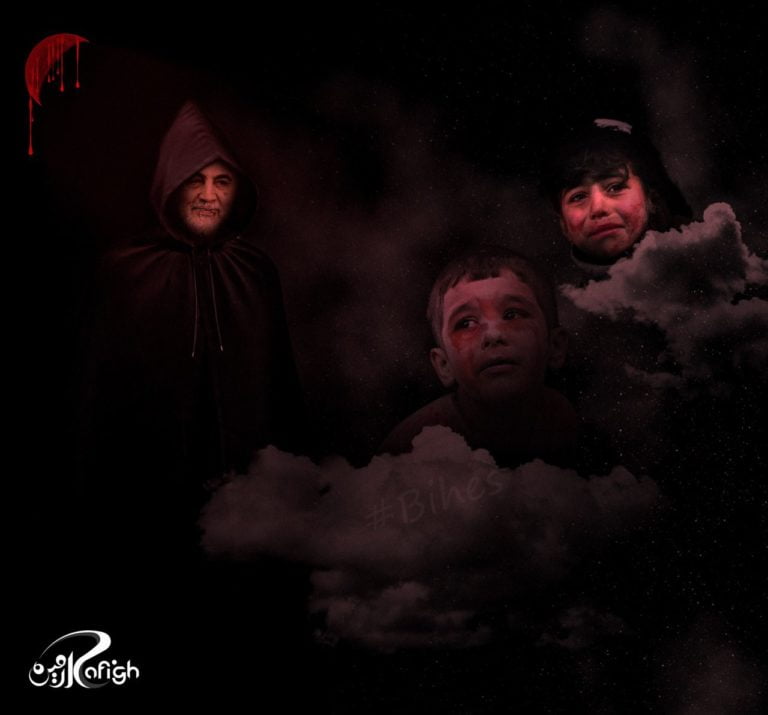
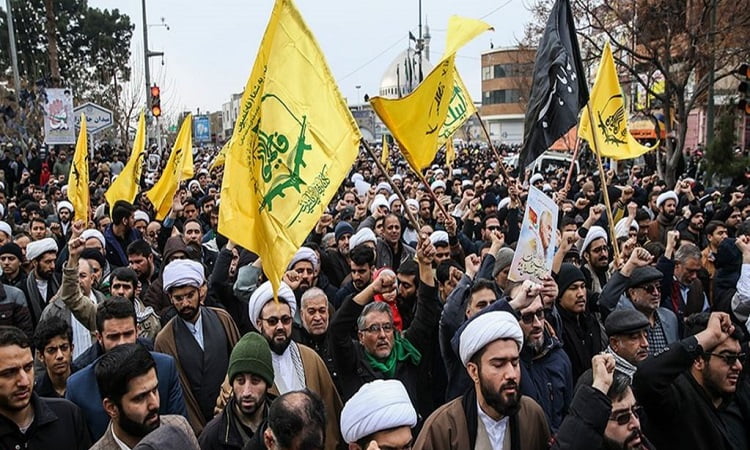
On 3rd of January a news spread in social media regarding Qasem Soleimani and AbuMahdiMohandes who has died by a US drone strike near Baghdad Airport and this was the end of their lives. In social media, especially Iranian users, there was a chaotic situation, some called of “the general of hearts” and mourn for him while others were happy and celebrated his death. In this article some hidden points will be discussed without any criticism.
Who was Qasem Soleimani? He was born on 11th of March, 1957 in a city called Rabor in Kerman Province. He spent his childhood and juvenile working as a construction labor and later he became one of the contractors of Kerman’s Water and Sewage Organization. After Islamic Revolution in 1979 and establishment of Islamic Revolutionary Guards Corpshe attended this militia organization. By the beginning of Iran-Iraq war he started training IRGC members and transferring them to the southern battle fields of Iran and a short while later he himself as the leader of a troop went to Susangerd to confront Iraqi troops and stop their invasions. In 1981 he was appointed as the commander of 41 Division of Sarallah by Mohsen Rezaei, the then chief commander of IRGC.
He participated in lots of military operations and was the commander of Valfajr 8th, Karbala 4th and 5thoperations. After the war in 1988, 41 Division of Sarallah returned to Kerman under his command and started fighting with the so called “enemies” in the eastern borders of Iran. In February 2010 he was appointed by Khamenei – who is the chief commander according to priciple 110 of Islamic Republic Constitutional Law – as major general (the highest military ranking). In 2000 he was appointed as the commander of IRGC Qods Force by Khamenei which has the mission to do operations out of Iranian borders. Soleimani was the second commander of this troop and was appointed after Ahmad Vahidi. He played a key role in Middle East especially in regional chaos known as “Islamic Awareness” (Arab Spring). Before being appointed as the commander of IRGC Qods Force he used to fight with drug smugglers in Iran-Afqanistanborders.
Some politicians believe that his appointment while Taliban was coming to power was not just a coincidence, but a wise decision as he was risen up in a mountainous region and had a good insight into the political relations of tribal communities and AfqanistanSocial and political situation. Considering his experience of the interior wars in Kurdistan, he was a great choice as in Afqanistan of Taliban Era which was in interior wars, he should have done some operations there. As soon as protests began in Syria he went there to help Bashar Alasad and this is 3 years before ISIS come to existence, so this claim that he went there to fight against ISIS is more a propaganda from Islamic Republic than reality, to convince people he was a hero, it is also important to mention that under the operations known as “Holy Shrines Defends” a large number of Afqans under his command died. It also notable that during Iran protests in November 2019 between 1500 to 2000 protesters were shot dead and Soleimani had mentioned that to keep the Islamic Republic he was ready to massacre even 10 million Iranians.
The last but not least, his brother, SohrabSoleimani, was the Director General of the Prisons Organization of Islamic Republic who got arrested for financial corruption and was removed but this case was never revealed nor heard in a court. In the moment of writing this article his wife in accused of financial corruption and felony of embezzlement in 12 different cases.
Iranian General or Islamic Republic butcher? Some people including BBCPersian are trying to name him “spiritual General”, “General of hearts or “Iranian General” and by following Islamic Republic foot paths and exported reformists has efforts to raise public pettiness, avoiding the fact that we live in free circulation of information and such efforts would not work anymore and people are aware. The fact is that when IRGC was going to be established, Khomeini said its name must be “Islamic Revolutionary Guard Corps, no words more or less” and one cannot ever find the country name “Iran” in its title at all, not in the past or present, also according to principle 150 of Constitutional Law this organization is responsible to “guard the Islamic Revolution and its achievements”and Iran is not a matter for them.
According to the first article of its charter also as their duty it indicates: “to guard Islamic Revolution in Iran and its achievements and doing best efforts to fulfill God’s will and expand Allah’s government in accordance with Islamic Republic Laws” which in other words is the translation of what Khomeini insisted as “exporting Islamic Revolution to the world”; in article 34 of the aforementioned charter “Islamic Revolutionary Guard Corps member (Pasdar)” is someone who is “ready to jihad in Allah’s way and secures Islamic Republic and its achievements as a religious duty” and must have due respect to “Fundamentals of Islam, Islamic Revolution and Islamic Republic system; believes and respects actively religious Leader; and actively respect and believes in Islamic orders, Islamic Republic Laws and follows Islamic moral and ethical orders”.
It should be born in mind that Basij (a militia force) operates under supervision of IRGC and the 4th chapter of the charter talks about rules in this regard. So, as it is discussed, Qasem Soleimani not only is not an Iranian General or hero, but he was someone serving Islamic Republic and Khamenei, thus no attraction towards nation’s benefit can be named for him.
Soleimani and ISIS: one of the vast advertisements about Soleimani is his presence and fighting against Islamic Extremist terrorists including Taliban and ISIS and specially for the latter his role is extremely exaggerated while as mentioned above when he went to Syria the real challenge was Syrian protesters against Bashar Alasas Dictatorship and it was 3 years before ISIS even exist. Moreover, the fact that they repeatedly tell Iranian people that if he was did not fight with ISIS, they would have invaded Iran is just an illusion, and the question is what exactly ISIS could have done to Iran that Islamic Republic has not done? From the very first days of getting the power up to the present, by Khalkhali’s orders then and revolutionary court judges today a great number of Iranians have been prosecuted, and as the last efforts in November Protests IRGC has killed between 1500 to 2000 innocent unarmed protesters and yet after almost 2 months no official statistic has been released regarding the murdered and detained ones. In other words, ISIS is another name for Islamic Republic and IRGC.
Iranians and Stockholm syndrome: Iranians kindness caused them to mourn for Soleimani in a way that one would think they have forgotten in past few weeks a massacre happened and lots of brave Iranians who asked for freedom had been shot dead by orders Soleimani and other IRGC commanders issued. The question is that after a week that Internet was disconnected to avoid sending the reports to the foreign news agencies and the current attorney general of Islamic Republic announced it happily that no one has a precise statistic especially international organizations and embodies, and the injured had been kidnapped from hospitals by IRGC Intelligent service agents,when internet was reconnected the people mourning now for Soleimani and announce their condolences, started posting nonsense posts about their food, drink, dance, etc. and only a few people talked about the disaster happened in Iran. So Iraniansunder the influence of regime’s propaganda fell sympathy with their hostage takers but do not care about the fellow countrymen.
From Safavid Dynasty to Islamic Republic: It was King Ismail I who has come with the idea of inventing Shi’a and began a religious nationality movement to put an end to all efforts of Iranians against Islam and by creating an imaginary personality called Shahrbanou from Sasanian Empire and marrying her with Hussein, the 3rd Imam of Shi’as, the rest of Imams became Iranian! Ahmad Kasravi, a very well-known Iranian Author mentions in one of his books that Iran owes a government to mullahs. Today a group known as “third wave” are trying to do the same thing and they follow the plan of “Arian Shi’a” that some believe it is theorized by Esfandiar Rahim Mashayi, Ahmadinejad’s vice president and you can find their footsteps even in Europe and America as exported theoreticians in grounds of “Islamic Feminism” and “Soleimani Iranian Hero General”.
Confronting Iranian Protester and the Imported Mercenaries: a very vital question missing is what Qasem Soleimani was doing in Baghdad with the PMC deputy chief? It was reported in a vast number that those confronting Iranian Protesters could not speak Farsi at all or easily, and in the first days of Protests, a news was published saying that PMC troops and Fatemiyoun has entered Iran. Also before Iran protests Soleimani went to Iraq and in a meeting mentioned Islamic Republic knows how to confront protesters in Iran and he knows how they can control them. Putting these two facts together, the conclusion would be he went with his friends after their victory in silencing the Iranian protesters and at least no other possibility can be imagined for his presence in Iraq.
Soleimani was terrorized or a terrorist was killed? International Relations Dictionary, under the word “Terrorism” mentions: “Terror and Terrorism is indicated to the activities of governmental or nongovernmental men activities to use cruel methods and maneuvers in their actions to achieve their political goals.” Thus terror can be defined as eliminating political opponent in any possible way and with any possible tool to achieve this goal. So any cruel action taken cannot be defined as terror, even though can be mounted as a crime and indeed this point of view is different with those who divide terrorism to political and non-political, but in today’s world most of terroristic activities are based on political aims and less organized crimes that are name terroristic that lack political aims.
There are many International Documents to condemn Terrorism and passing numerous laws to avoid terroristic actions and one of them is “the Convention on the Prevention and Punishment of Crimes against Internationally Protected Persons, including Diplomatic Agents (in 1973)” and it is obvious that Qasem Soleimani was not a diplomatic. To sum up, yet, there is no absolute definition of terror and terrorism neither nationally nor internationally and in International legislation one of the documents who tried to provide a clear definition is the UN Security Council Resolution number 1566 (October 2004) that indicates: “Criminal activities especially against non-military people with the purpose to kill or serious harm or taking as hostages with the aim to develop terror among people or make a government or international organizations to take an action or avoid doing an action which is mentioned in International Conventions and protocols in regard of terrorism, can be excused by any reason such as political, philosophical, ideological, racial, tribal, religious, etc. …”. So internationally the attack to the car carrying Qasem Soleimani cannot be recognized as a terror.
On the other hand, it is obvious that Islamic Republic and USA Since 1979 up to now are in war although it is not war in the classic definition of it and in this situation and also considering Iraq’s present situation, i.e. after Saddam Hussein removal there has always been internal war and yet no integrated, independent and powerful government has come to control the country, adding the fact that the presence of Qasem Soleimani was to Support Abdul Mahdi as prime minister and avoid his dismissal from power to keep the influence of Islamic Republic in Iraq, that Iraqis are against it, empowers this theory that what happened to Soleimani was a “targeted murder” rather than a “terror”.
On the other hand, considering his activities in Syria and Iraq and also his close relation with Hassan Nasrullah the Head of LebonanHizbollah and also considering that IRGC is in the list of terrorist groups, we can come to this conclusion that he was an international terrorist, a person who did not hesitate to shed the bloods of Iranians and non-Iranians.
Post-Soleimani Islamic Republic: the regime is trying to convince Iranians that without Soleimani there are serious threats towards Iran, so people must forget what has happened in November and in other words, Islamic Republic very wellknows that in the future parliamentary election which will be in almost 2 months, the least number of people would participate and vote, and regime is in an unstable situation, now by using this situation, they try to convince people to participate and vote and again, as they did during the last 40 years, interpret this presence as their legitimacy and popularity among people.
It is also notable that a project has started to make a metaphysical character for Soleimani and Khamenei, e.g. miniatures showing Soleimani with Hossein (Shi’a’s 3rd Imam) and Abolfazl (Hossein’s half-brother) and Soleimani in Paradise with Shi’a Imams and Khomeini, to relating and simulating his death with Abolfazl’s death, to saying that only his hand he put on the ring given to him by Khamenei remained invulnerable and this is a sign showing Khamenei is sent from Allah and this is a miracle. Islamic Republic regime with or without Soleimani will continue its plans and it would be so credulous to believe that murdering Soleimani made them to void JCPOA as IAEA has published reports mentioning Islamic Republic is working on its nuclear plans secretly and from a very long time ago it was a controversial issue inside the country and the group known as principlists (extremist Muslims) were against it from the very first moment.
As conclusion, considering the fact that IRGC is known as the “shadow government of the Religious Leader” and as Ahmadinejad called them “Smuggler Brothers” and the majority of terroristic attacks ordered by regime become to reality by this organization and the important role it plays in ignoring sanctions, adding the money laundry they do for the regime which is the main reason Islamic Republic is against signing CFT and FATF, and also considering its name that does not contain any nationality sign, even Iran, and Islamic Republic Constitutional Law and IRGC charter which assign them to export Islamic Revolution and theocratic regime values and guarding that, a reasonable person can never consider Qasem Soleimani as a national hero or general. He was just a person caring about religious supreme leader and Islamic Republic and his role in presence of PMC and Fatemiyoun to confront Iranian protesters asking for freedom in November 2019 is inevitable. Now it is up to those Iranians who mourn for him to ask themselves which one was more beloved for the country, those nearly 2000 people who were killed and more than 10,000 who were under arrest and everyday some dead bodies are found in rivers, dams, deserts or streets with signs of tortures on their bodies or a person who served theocratic dictator of Islamic Republic and other Middle Eastern Dictators to kill innocent unarmed people and did not care about Iran, Syria, Lebanon, Iraq, Afqanistan and other countries?
It is possible to summarize the entire achievements of the Iranian regime inthe past 40 years in bloody suppression, adventurism in the Middle East and relentless attempts for achieving nuclear weapons, sanctionsand followinghigh-prices, looting people’s assets, anti-West propaganda, exporting of revolution, and imposing huge costs on the country.
Regime Is the Root of Insecurity and Instability in the Middle East
However, the question is what has prevented the regime’s collapse until now?
In February 1979, when the mullahs took the power in Iran and insisted on the exporting of revolution, none thought that this idea will shortly become the foremost element for countless crises and insecurity in the Middle East. However, the mullahs’ aggressive approach influenced the political space of neighboring countries and paved the way for the most critical incidents.
At the time, the United States heightened its presence in the region to deter the regime from achieving its regional goals.Then-U.S. administration constructed its strategy based on removing the pro-Iran governments and isolating Tehran. Of course, policymakers were hoping to rein in the Islamic Republic and eventually boost the “moderate” forces inside the regime to waneexpected threats of the new version of fundamentalism. However, this policy that is known as appeasement remained fruitless against authoritarian ruling systems since World War II.
The Iranian regime, in the opposite, resorted to the cultural potential that circulated among regional peoples. In this context, Iranian authorities widened their cultural influence by holding Islamic ceremonies such as ‘Arbaeen’ procession. No doubt, the U.S., unaware of the cultural proximity in the region, brought significant impacts on the benefit of the ayatollahs’ foreign policies in the Middle East.
Nonetheless, exporting terrorism under the pretext of “the revolution” could guarantee the Iranian regime’s survival so far, but how? And why have the U.S. and its allies,despite their excessive military power,appeased Tehran’s malign behavior in the region. Notably, the Iranian regime has a notorious background in the bombing and killing of foreign civiliansand troops in Lebanon, Iraq, Kuwait, and Saudi Arabia. However, Iranian officials frequently brag about their “regional power” with absolute immunity from being held accountable.
When Syria’s civil war erupted, Iran’s powerful Islamic Revolutionary Guards Corps (IRGC) recruited, trained, and deployed thousands of Shi’ite fighters to prop up the regime of President Bashar al-Assad.Pro-Iranian Militia
The Return Of Pro-Iranian Militia Fighters To Afghanistan Fuels Fears In Kabul
Among them was the Fatemiyoun Brigade, comprised mainly of Afghans from the country’s Shi’ite Hazara minority. From 2011, the IRGC recruited thousands of Afghan migrants and refugees within its own borders and covertly drafted hundreds of Shi’a inside Afghanistan.
The majority of Muslims in Afghanistan are Sunni, but around 15 percent of its population — mainly Hazara — are Shi’a with religious links to the Shi’ite majority in Iran.
With the Syrian war ebbing, several thousand Fatemiyoun fighters have returned to their homeland, prompting fears that Iran could mobilize the proxy group to target U.S. interests in neighboring Afghanistan, where some 13,000 American troops are stationed.
Tensions between Washington and Tehran have soared following the U.S. killing of Iran’s top military commander, Major General Qasem Soleimani, in a drone strike at the Baghdad airport on January 3. In retaliation, Tehran fired missiles at an Iraqi air base that houses U.S. forces.
“We should certainly be concerned about the risk of Iran using this asset in Afghanistan to go after U.S. troops or other American interests in the country,” said Michael Kugelman, South Asia associate at the Woodrow Wilson International Center for Scholars in Washington.
“Let’s be clear: At least right now, there are more than 10,000 American soldiers across Iran’s eastern border. That’s a tempting target, and these [Shi’ite] fighters in Afghanistan give Tehran a potentially useful proxy to go after those troops,” he added.
‘Immediate Threat’
Rahmatullah Nabil, the two-time head of Afghanistan’s National Directorate of Security (NDS), the country’s main intelligence agency, estimated that between 2,500 to 3,000 Fatemiyoun fighters have returned to Afghanistan.
“At this stage it seems they are not in a position to pose an immediate threat to Afghanistan’s national security,” said Nabil, who was intelligence chief from 2010-12 and 2013-15. “They are not organized but scattered in different parts of the country.”
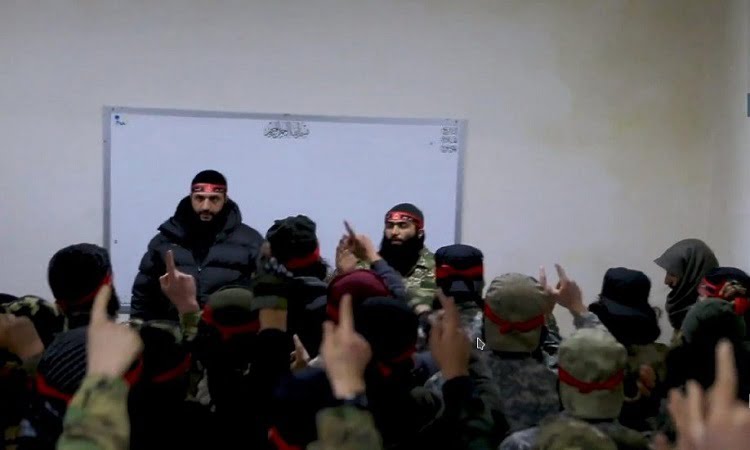
Iran’s Islamic Revolutionary Guards Corps is involved in training recruits to believe that jihad can be an offensive ideology and that thousands of young Shi’ites across the Middle East should answer Iranian Ayatollah Khamenei’s calls for military strikes, a new report shows.
Inside Iran’s IRGC training programs and quest to dominate MidEast
Titled ‘Beyond Borders: The Expansionist Ideology of Iran’s Islamic Revolutionary Guard Corps’ and published by the Tony Blair Institute for Global Change, the report looks deeply at Iran’s training of IRGC members. Former UK Prime Minister Tony Blair gave a speech to the Council on Foreign Relations in New York on Tuesday about the key findings.
Kasra Aarabi, who authored the report, concludes that for over four decades “the Iranian regime has worked tirelessly to impose a totalitarian state-sanctioned Shia Islamist ideology, both inside and outside Iran. Nowhere is the engine of this ideology more visible than the IRGC.” The way that Iran’s regime indoctrinates people including recruits to the IRGC is to present itself and Shi’ites as victims and claim it is “resisting.”
This may have been true in the 1970s and 1980s, but today Iran is more often the aggressor in places like Syria and its allies are often involved in suppressing protests in Iraq and Lebanon.
Iran’s IRGC pushes a sectarian message arguing, according to the report, that Shi’ites are under attack from a “[Sunni] Arab-Zionist-Western axis.” Images circulated on Telegram accounts and social media show how they push claims that the US and the West created ISIS, or that Jews and Israelis created Saudi Wahhabist Islam.
The report documents how Iran’s IRGC has presented its role as part of a religious war. This is an all-encompassing ideology that embraces not only concepts like “jihad” but also instructs volunteers on how to organize their family life and pushes a chauvinist line of thinking.
The author compares the documents to the Salafist-Jihadi worldview of groups like ISIS, and argues that both the IRGC and its extremist opponents on the other fringe manipulate scripture. Imagery is important here too. The IRGC symbol, used by its proxies and allies, is a first holding a rifle which denotes “the supposed religious legitimacy of violence.”
In 2012, Hezbollah committed itself to armed conflict in defense of its Syrian ally, Bashar al Assad, against rebels and Islamic State fighters attempting to overthrow the Assad government. With the backing of Iran and Russia, they successfully supported the Syrian Arab Army (SAA) in largely putting down the armed insurgency.
Hezbollah and Iranian-backed militias suffer heavy losses fighting in Syria
In 2012, Hezbollah committed itself to armed conflict in defense of its Syrian ally, Bashar al Assad, against rebels and Islamic State fighters attempting to overthrow the Assad government. With the backing of Iran and Russia, they successfully supported the Syrian Arab Army (SAA) in largely putting down the armed insurgency.
But Hezbollah and Iranian-backed militias fighting on behalf of the Bashar al Assad’s government have suffered heavy losses since late January fighting Sunni militant groups in the Aleppo countryside located in northwestern Syria.
The area has become a strong-hold for jihadist groups like Hay’at Tahrir al Sham, al Qaeda linked militants and various Turkish-backed groups. Many of these groups operate under or are affiliated with the Incite the Believers Operation Room.
In recent weeks, the SAA and its allies have launched an offensive to retake the opposition stronghold in northwestern Syria. They have largely been successful at retaking strategic roads and villages in their advance. However, the cost of retaking areas lost during the Syrian Civil war has come at a price for Hezbollah and its allied militias.
On January 24th, it was announced that a Hezbollah commander, Jaafar al Sadiq, was killed in Syria. Four days later, the death of three Hezbollah fighters were announced: Ammar Darwish, Abbas Yunis and Abbas Taha, all killed fighting in the Aleppo countryside. As the fighting intensified in areas such as al Zahraa, another Hezbollah fighter, Muhib al Nimr was also killed.
Iran exploits vacuum of power in southern Syria to threaten Israel
Iran exploits vacuum of power in southern Syria to threaten Israel
Syrian regime media reported airstrikes across a wide area around Damascus on Thursday morning. Incidents took place near Marj al-Sultan Airport, about 8 km. north of Damascus International Airport, at a key interchange of the M5 northeast of Damascus and south of the city near Kiswa and Izra.
There are no pictures of him in the Iranian media. The United States has published a blurry image of him. None of Iran’s many media outlets have ever had an interview with or a comment from him. He is nowhere to be seen and nobody ever talks about him. $15 Million Man
The IRGC’s Mysterious $15 Million Man
As far as Iranian media are concerned, he does not exist. Avid Iran watchers who scan every picture of Supreme Leader Ali Khameneni and his military commanders have never seen him in any picture. Yet, he is the only IRGC commander the United States has put a price tag on his head: $15 million for any information about him and the network he runs in Yemen. He is Brigadier General Abdolreza Shahlai (Shahlaei), but it could be a fake name for a real man.
In January, on the same night that the IRGC downed a Ukrainian airliner just outside Tehran, Reuters had another story that was lost in the news traffic in the eventful night. The report said that on January 3, when a U.S. drone killed Qods Force Commander Qassem Soleimani, another U.S. military unit was tasked with killing a second senior Qods Force Commander, Abdolreza Shahlai, but he escaped unscathed. Since then, The Pentagon, the IRGC and the Iranian media have remained silent about the report.
Nevertheless, U.S. officials believe Shahlai is one the most active Qods Force commanders in the Middle East who has been planning, funding and executing operations to kill U.S. forces in the region from Afghanistan to Iraq, and from Syria to Yemen.
On January 20, 2007 he was in Karbala where five American military men were killed, and three others wounded in an ambush. On that day, at least 24 U.S. soldiers were killed within 24 hours in various parts of Iraq. Some were shot by Iraqi militia supported by Iran.
U.S. sources say Shahlai is the deputy commander of Qods Force who controls many organizations believed to be behind targeting American forces worldwide. He has planned and executed the murder of many coalition soldiers in Iraq and provided weapons and ammunition to radical Shiite groups. The United States designated him as a terrorist in 2008.
Iran Arrests Christian Convert Activist After Criticizing Regime’s ‘Soft Repression’
Iran Arrests Christian Convert Activist After Criticizing Regime’s ‘Soft Repression’
Concerns are being raised internationally about the well-being of an Iranian Christian convert who was arrested during an anti-government protest in Tehran last week.