Home Blog Page 175

Iran Faces Threat Of Full Global Sanctions

0

There is a lot more to last week’s decision by the U.K., France, and Germany to trigger the dispute resolution mechanism in the 2015 Joint Comprehensive Plan of Action (JCPOA) ‘nuclear deal’ with Iran than meets the eye.Global Sanctions
 

Iran Faces Threat Of Full Global Sanctions


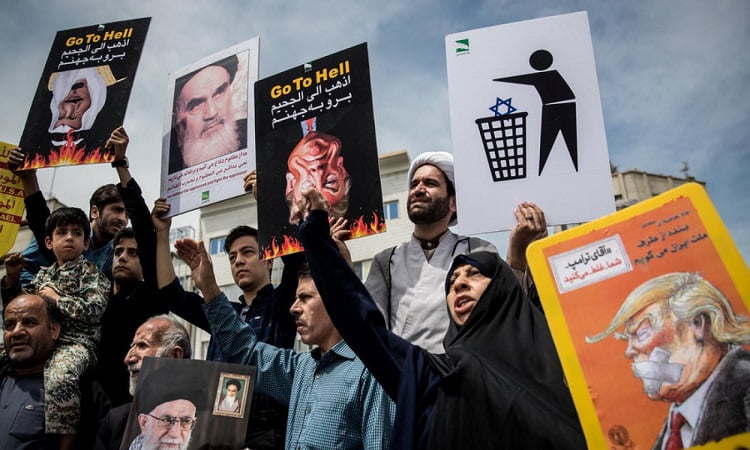
The countries – three out of the total six states that formed the P5+1 group that signed the JCPOA (the others being the U.S., Russia, and China) – are working in line with pressure from the U.S. “either to force Iran back to the negotiating table on the JCPOA or to exponentially increase its economic pain,” as a senior source who works closely with Iran’s Petroleum Ministry told OilPrice.com. “This time around, the U.S. is looking for Iran to make the decision: go back to the pro-West moderate policies of [President Hassan] Rouhani and all will be good or allow the IRGC [Islamic Revolutionary Guards Corps] to tighten its grip and all will be bad,” he underlined.

More specifically, whilst many of the European Union (E.U.) initiatives related to the impasse between Iran and the U.S. have proven to be largely ineffective in practical terms – most notably, perhaps, the payment mechanism to facilitate trade between the E.U. and Iran – the invoking of the dispute resolution mechanism has teeth. “That’s because it’s part of the JCPOA itself, rather than some E.U.-only thing, with the reason for its being used basically being statements out of Iran that it’s increasing its level of uranium enrichment, and the P5+1 estimates of what the real figures are,” said the Iran source. According to a comment last week from Rouhani, Iran is now enriching more uranium than it did before it agreed to the JCPOA in 2015, whilst Israel maintains its view that Iran has continued a secret nuclear enrichment programme throughout the entire time of the deal.

The reality is somewhere in between, according to senior sources in Iran spoken to by OilPrice.com last week. The JCPOA limits Iran’s stockpile of enriched uranium to 300 kilograms (kg), less than half of Iran’s stockpile before the 2015 JCPOA was signed. 


Read more …

Iran Briefing | News Press Focus on Human Rights Violation by IRGC, Iran Human Rights


Low-Intensity Conflict: Cyber, Iran’s Next Move

0

Iran’s next move could be one of low-intensity conflict that could have a big impact on our cyber infrastructures


Low-Intensity Conflict: Cyber, Iran’s Next Move


The level of angst and concern of a hot-war between Iran and the United States has largely been quelled, as time has put space between the flashpoint incidents that caused the relationship to move from contentious to war-footing. As the global news cycles move to other issues—be it the Coronavirus exiting China, the impeachment of the U.S. President Trump or the global economic meetings in Davos—the Iranian Islamic Revolutionary Guard Corps (IRGC) are putting in place their next move.

Low-Intensity Conflict

Based on a few years of paying attention to Iran’s intelligence actions and capabilities, I believe we will see more activity and intensity into the cyber domain as a part of the IRGC’s “low-intensity conflict” (LIC) doctrine. As the deputy director of the CIA, Robert Gates stated in 1988 in his keynote, “Low-Intensity Conflict: The Role of Intelligence,” LIC is defined largely by where the beholder is situated. He referred to a national security directive that characterized LIC as “political-military confrontation between contending states or groups, below conventional war, and above the routine, peaceful competition among states.”

“LIC is a strategy of conflict, where dilatory tactics are employed with increasing violence to wear down the opponent,” Gates, said, invoking Jean-Paul Sartre: “(The insurgent) tires out his adversary until they are sick of him.”

Thus, one could argue the Iranians have been involved in LIC within both the physical and cyber domains for quite some time.

Cyber Domain

The FBI told U.S. companies that Iranian hackers can be expected to target “cleared defense contractors, government agencies, academia and non-governmental organizations focused on Iran issues.”

We can track this activity via the Department of Justice’s trail of trials in which IRGC personnel are identified in indictments and court proceedings as actively working to insinuate themselves into U.S. infrastructure. Additionally, the Justice Department’s activities highlight to us the active role the IRGC plays in conducting espionage within the United States.


Read more …

Iran Briefing | News Press Focus on Human Rights Violation by IRGC, Iran Human Rights
 

34 US service members diagnosed with traumatic brain injuries after Iranian missile strike

0

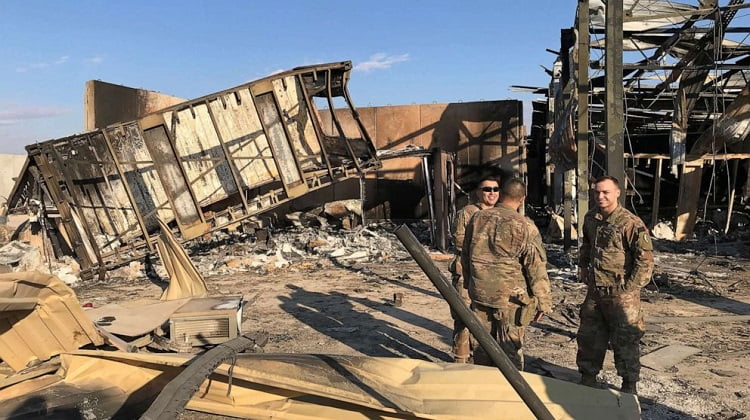
34 US service members diagnosed with traumatic brain injuries after Iranian missile strike

34 US service members diagnosed with traumatic brain injuries after Iranian missile strike

Thirty-four US service members have been diagnosed with traumatic brain injuries following the Iranian missile attack on US forces in Iraq earlier this month, Pentagon spokesman Jonathan Hoffman said Friday.

Successor to slain Iran general faces same fate if he kills Americans: U.S. envoy

0

Successor to slain Iran general faces same fate if he kills Americans: U.S. envoy

Successor to slain Iran general faces same fate if he kills Americans: U.S. envoy

The successor to the Iranian commander killed in a U.S. drone strike would suffer the same fate if he followed a similar path by killing Americans, the U.S. special representative for Iran said, according to Asharq al-Awsat newspaper.

New Quds Force deputy is Iran’s missile man in Lebanon

0

Mohammad Hejazi led IRGC forces in Lebanon and worked with Hezbollah to improve precision guidance.


Iran’s Islamic Revolutionary Guards Quds Force has a new deputy commander and he was the key to Hezbollah’s precision missile project. Mohammed Hejazi was previously a high ranking IRGC commander, a suppressor of protests in Iran and had been under Qasem Soleimani’s command as the central figure in Iran’s operations in Lebanon.


According to a public IDF report released in August 2019 Hejazi was involved in Hezbollah’s precision guided missile project in Lebanon. The report said that he was an IRGC operative, commander of Iran’s precision guided missile project in Lebanon and directly commands Iranian personnel in Lebanon.” He has been in Lebanon for years, according to Iranian media sources and reports online at various regional media. Prior to going to Lebanon for the IRGC he was involved in research and logistics, making him keenly aware of how Iran moves its missiles to groups like Hezbollah. Ynet reported he was also linked to the 1994 AMIA bombing of the Jewish community center in Argentina.

Hejazi, whose name is sometimes given as Seyyed Mohammad Hosseinzadeh Hejazi, or Muhammad Hussein-Zada Hejazi, was born in 1956 in Isfahan. He fought in the Iran-Iraq war in the 1980s and played a key role suppressing Kurds. Later he became a commander of the Basij militia in Iran and then rose through IRGC ranks to become a deputy commander and one of its most senior officers. He was sanctioned by the US in 2007 and the EU in 2011 for his role in human rights and other violations. He helped suppress protests for President Mahmoud Ahmadinejad in 2009.


He faded from public view in 2014, and seems to have been in Lebanon during that time, helping Hezbollah stockpile and improve its estimated 150,000 missiles. Al-Ain media reports that he was Hezbollah’s key man linking them to the IRGC.


Read more …

Iran Briefing | News Press Focus on Human Rights Violation by IRGC, Iran Human Rights

Meet the General Who Ran Soleimani’s Spies, Guns and Assassins

Brigadier General Ahmed Foruzandeh ran Iran’s infamous Quds Force war in Iraq that helped make Qassem Soleimani a household name.


They’re the Quds Force officers who tracked and killed Iraqis working with the U.S.-led coalition, hunted those deemed hostile to Iranian influence through a council of assassins, and smuggled the spies, money, weapons, and secrets into Iraq that sowed chaos across the country during the American occupation. 

Qassem Soleimani first gained the attention of Western media through his role in instigating a campaign of covert violence against the U.S. in Iraq which cost the lives of over 600 American troops. But underneath the now famous Islamic Revolutionary Guard Corps icon, other officers managed the war that first made Soleimani notorious. 

For a period during the mid-2000s, one of those officers was Brigadier General Ahmed Foruzandeh, who rose to command the Ramazan Corps, part of the Guard’s elite Quds Force, after cutting his teeth in the unit running guerrilla warfare operations during the Iran-Iraq war.

“Although Qassem Soleimani was the architect of that broader strategy, it was his lesser known lieutenants who ran and oversaw the operations,” Dr. Afshon Ostovar, a scholar at the Naval Postgraduate School, said. “Foruzandeh was one of the top Quds Force operatives in the field in Iraq, yet his name was hardly known at the time.” 

Declassified documents obtained by The Daily Beast through the Freedom of Information Act offer new details of Foruzandeh’s campaign of violence in Iraq during the latter 2000s. They show how Foruzandeh and the Islamic Revolutionary Guard Corps (IRGC) funneled guns, money, and spies into Iraq and assassinated both Americans and Iraqis. And they offer hints that the man who helped Iran kill hundreds of Americans throughout the Iraq war may not have actually retired years ago as he let on, but continued to consult for his former boss long after the war ended.

Iranian and American media alike have treated Foruzandeh’s old boss, the former Quds Force commander Soleimani, with something approaching hagiography. In profiles and obituaries, he’s cast as a legendary “shadow commander” possessed of superhuman abilities and cunning, a judgment not entirely supported by Soleimani’s colleagues. 


Iran Briefing | News Press Focus on Human Rights Violation by IRGC, Iran Human Rights


US dismisses Iranian lawmaker offering reward for killing Trump: ‘Ridiculous’

0

US dismisses Iranian lawmaker offering reward for killing Trump: ‘Ridiculous’

US dismisses Iranian lawmaker offering reward for killing Trump: ‘Ridiculous’

A member of the Iranian parliament offered a reward of $3 million to anyone who kills President Trump, ISNA, an Iranian news agency, reported Tuesday. 

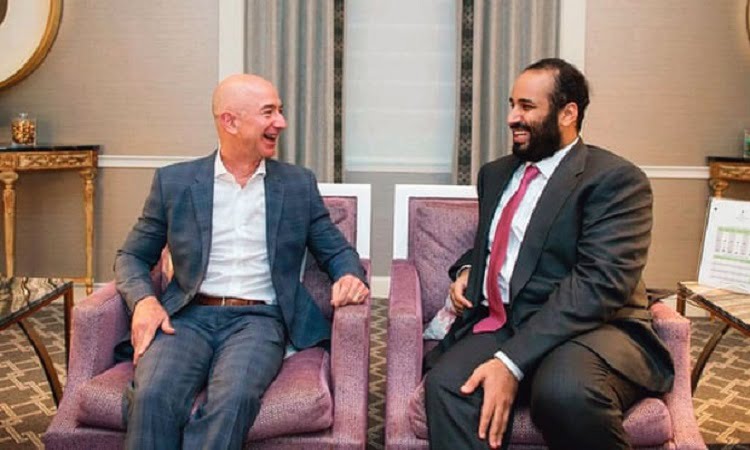
Amazon boss Jeff Bezos’s phone ‘hacked by Saudi crown prince’

0

The Amazon billionaire Jeff Bezos had his mobile phone “hacked” in 2018 after receiving a WhatsApp message that had apparently been sent from the personal account of the crown prince of Saudi Arabia, sources have told the Guardian.Amazon boss


Amazon boss Jeff Bezos's phone 'hacked by Saudi crown prince'
Amazon boss Jeff Bezos’s phone ‘hacked by Saudi crown prince’


The encrypted message from the number used by Mohammed bin Salman is believed to have included a malicious file that infiltrated the phone of the world’s richest man, according to the results of a digital forensic analysis.

This analysis found it “highly probable” that the intrusion into the phone was triggered by an infected video file sent from the account of the Saudi heir to Bezos, the owner of the Washington Post.

The two men had been having a seemingly friendly WhatsApp exchange when, on 1 May of that year, the unsolicited file was sent, according to sources who spoke to the Guardian on the condition of anonymity.

Large amounts of data were exfiltrated from Bezos’s phone within hours, according to a person familiar with the matter. The Guardian has no knowledge of what was taken from the phone or how it was used.

The extraordinary revelation that the future king of Saudi Arabia may have had a personal involvement in the targeting of the American founder of Amazon will send shockwaves from Wall Street to Silicon Valley.

It could also undermine efforts by “MBS” – as the crown prince is known – to lure more western investors to Saudi Arabia, where he has vowed to economically transform the kingdom even as he has overseen a crackdown on his critics and rivals.

The disclosure is likely to raise difficult questions for the kingdom about the circumstances around how US tabloid the National Enquirer came to publish intimate details about Bezos’s private life – including text messages – nine months later.

It may also lead to renewed scrutiny about what the crown prince and his inner circle were doing in the months prior to the murder of Jamal Khashoggi, the Washington Post journalist who was killed in October 2018 – five months after the alleged “hack” of the newspaper’s owner.


Read more … 

Iran Briefing | News Press Focus on Human Rights Violation by IRGC, Iran Human Rights


Iran’s wounded rulers bring region to the boil

0

Despite the ayatollahs blood-thirstily demanding vengeance, the consequences of Qassem Soleimani’s killing aren’t particularly impacting the Western world, or even overseas-based US forces. Rather, they are playing out in the cities of Lebanon and Iraq, and even Iran itself. Political tensions are boiling and casualties are mounting. 


Iran’s wounded rulers bring region to the boil


Three months into the Lebanese uprising and confrontations between the police and protesters are taking an increasingly violent turn, with 400 casualties over just 24 hours at the weekend. Meanwhile, with each new day we hear claims that a government of “technocrats” is closer to being formed under Hezbollah’s choice of prime minister, Hassan Diab. Yet protesters know that, as long as designated ministers are beholden to key factions, the same corrupt, clientelistic practices will continue. Indeed, Gebran Bassil, Hassan Nasrallah and other self-interested factions are furiously competing to maximize their share of seats and perpetuate their monopolization of power and resources.
The Americans have finally woken up and begun putting pressure on the parties; emphasizing that support can only resume if a clean, competent and independent government is formed. The World Bank and other major donors are ready to roll out cash injections of billions of dollars if the requisite reforms are introduced. Yet Tehran deliberately throws spanners in the works because, from its point of view, it is better Lebanon be a conflict-blighted, bankrupt basket case than it opens its doors to Western assistance.
Meanwhile, rumors are flying that Hezbollah activists have been steering the rioting and attacks on public buildings, hoping to terrorize citizens into believing that the best they can hope for is to re-embrace the corrupt, sectarian, impoverished status quo.
About 300 Lebanese banks and ATMs have been attacked by masked assailants. Banks have been the focus of public anger because they exemplify the unhealthy relationship between money and politics. A kleptocratic class has bled the economy white, triggering a financial crisis that elites have exacerbated by smuggling their ill-gotten wealth outside the country. With the currency in freefall, ordinary Lebanese are obstructed from withdrawing their hard-eared savings. 


Read more …

Iran Briefing | News Press Focus on Human Rights Violation by IRGC, Iran Human Rights
 

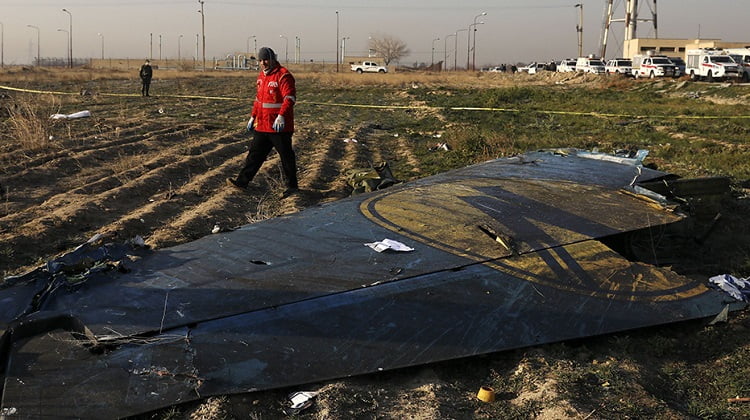
Iran backs away from plan to send downed Ukrainian jet’s black boxes abroad for analysis

0

Iran backs away from plan to send downed Ukrainian jet’s black boxes abroad for analysis

Iran backs away from plan to send downed Ukrainian jet’s black boxes abroad for analysis

Iran appears to be going back on its promise to send the black boxes from a Ukrainian passenger plane its military shot down abroad for analysis.