Home Blog Page 96

Israeli Intelligence Cooperation with Arab Allies Thwarts Iranian Terrorism

The magnitude of the terrorist threat in the Middle East has grown steadily since the outset of the so-called “Arab Spring.” The need to modernize intelligence in the service of counterterrorism is a matter of particular concern to the Persian Gulf states, which share the common goal of impeding the spread of Iran’s transnational terrorist network and reducing the damage caused by Iran-affiliated Shiite militias. The newly formed intelligence cooperation between Israel and several Arab states has already thwarted Iranian attacks.

The large-scale withdrawal of US military forces from the Middle East, which occurred during the administrations of Barack Obama and Donald Trump, handed Iran an opportunity to dominate the region. The American retreat made the GCC states even more wary of Tehran’s malign influence and intentions.

The new peace agreements between Israel and its new Arab allies in the region, which found common ground with Jerusalem over their common fear of the Iranian regime, did more than secure freedom of navigation in international waters. They opened the Persian Gulf to Israeli intelligence, a consequence that was a shock to the mullahs in isolated Iran. The regime is on a quest to be the regional hegemon, and it is going after that goal via terrorism and a dogged pursuit of nuclear weapons. Iran threatens freedom of navigation in the Persian Gulf and the Strait of Hormuz, and supports the operations of the Shiite transnational terrorist network it painstakingly constructed.

Read the complete article at: BESA Center


The new peace agreements between Israel and its new Arab allies in the region, which found common ground with Jerusalem over their common fear of the Iranian regime, did more than secure freedom of navigation in international waters. They opened the Persian Gulf to Israeli intelligence, a consequence that was a shock to the mullahs in isolated Iran. The regime is on a quest to be the regional hegemon, and it is going after that goal via terrorism and a dogged pursuit of nuclear weapons. Iran threatens freedom of navigation in the Persian Gulf and the Strait of Hormuz, and supports the operations of the Shiite transnational terrorist network it painstakingly constructed. Israeli Intelligence

An American Turncoat and Iranian Espionage

On February 8, 2019, former US intelligence specialist Monica Witt was charged with betraying her oath to protect and defend the US by conducting espionage on behalf of Iran. She stands accused of delivering US national defense information to the Islamic regime.

Witt served in the US military in the Middle East starting in 2002, including in Iraq (in 2005), Qatar, Afghanistan, and Tajikistan. She is believed to have converted to Islam before leaving the Air Force, though she may have converted in early 2012 during a ceremony broadcast on Iranian television.

According to a speech given by the Iranian intelligence minister to the Majlis (the Iranian parliament), the Iranian Ministry of Intelligence (MOIS) monitors US forces and servicemen in the region with the help of local allies.

In 2007, the US Department of the Treasury sanctioned the Islamic Republican Guard Corps-Quds Force (IRGC-QF) under Global Terrorism Sanction Regulations. On April 8, 2019, the US designated the IRGC as a foreign terrorist organization.

Read the complete article at: Algemeiner


On February 8, 2019, former US intelligence specialist Monica Witt was charged with betraying her oath to protect and defend the US by conducting espionage on behalf of Iran. She stands accused of delivering US national defense information to the Islamic regime. Witt served in the US military in the Middle East starting in 2002, including in Iraq (in 2005), Qatar, Afghanistan, and Tajikistan. She is believed to have converted to Islam before leaving the Air Force, though she may have converted in early 2012 during a ceremony broadcast on Iranian television. According to a speech given by the Iranian intelligence minister to the Majlis (the Iranian parliament), the Iranian Ministry of Intelligence (MOIS) monitors US forces and servicemen in the region with the help of local allies. In 2007, the US Department of the Treasury sanctioned the Islamic Republican Guard Corps-Quds Force (IRGC-QF) under Global Terrorism Sanction Regulations. On April 8, 2019, the US designated the IRGC as a foreign terrorist organization. Iranian Espionage Iranian Espionage

India Blames IRGC’s Quds Force For Blast Outside Israeli Embassy

India has concluded that Iran was behind a blast outside the Israeli embassy in New Delhi in January, with the device planted by a local Shiite cell, an Indian news organization reported Monday.

The Hindustan Times said investigators concluded the attack was carried out by the Quds Force branch of Iran’s Islamic Revolutionary Guard Corps tasked with carrying out overseas operations, and that the device was detonated by remote control.

According to the report, there was an attempt to mislead investigators into blaming the Islamic State terror organization for the bomb, but counter-terrorism agencies were clear that it was an Iranian attack.

“That the bomb was not of high intensity, with no human targets in mind was perhaps because the Iranians did not want to run afoul of a friendly nation like India. But the message was clear and the threat is real,” an unnamed expert told the outlet.

A letter found close to the scene of the blast was a death threat to the ambassador that warned he was being constantly being watched and vowed to avenge the deaths of “martyrs” Qassem Soleimani, Iran’s Islamic Revolutionary Guards Corps (IRGC) commander who was killed in a January 2020 United States drone strike; Abu Mahdi al-Muhandis, a top Iraqi militia commander who was killed along with Soleimani; and Mohsen Fakhrizadeh, the architect of Iran’s nuclear program, killed in a November 2020 attack Tehran has blamed on Israel.

The handwritten note, in English, but riddled with grammatical and spelling errors, was addressed to Israel’s ambassador, Ron Malka, and referred to him as a “terrorist of the terrorist nation.”

It claimed to be from the “India Hizbollah,” a group that is not previously known, according to the report, which included a photo of the letter. Lebanese Hezbollah is an Iran-backed terror organization that is sworn to Israel’s destruction.

Warning that Malka is in their crosshairs, the letter said “you cannot stop anyway no matter how hard you would pick, we can end your life anytime anywhere.”

Read the complete article at: The Times of Israel

Also read: Iran Releases British-Iranian Aid Worker Accused of Spying

Iran Releases British-Iranian Aid Worker Accused of Spying

Iran has released British-Iranian aid worker Nazanin Zaghari-Ratcliffe from house arrest at the end of her five-year prison sentence, but she has been summoned to court again on another charge, her lawyer said on Sunday.

British Prime Minister Boris Johnson said his government would continue to do everything possible to secure her permanent release so she could return to the UK.

Zaghari-Ratcliffe, a project manager with the Thomson Reuters Foundation, was arrested at a Tehran airport in April 2016 and later convicted of plotting to overthrow the clerical establishment.

Zaghari-Ratcliffe, who served out most of her sentence in Tehran’s Evin prison, was released last March during the coronavirus pandemic and kept under house arrest, but her movements were restricted and she was barred from leaving the country.

On Sunday the authorities removed her ankle tag.

“She was pardoned by Iran’s supreme leader last year, but spent the last year of her term under house arrest with electronic shackles tied to her feet. Now they’re cast off,” her lawyer Hojjat Kermani told an Iranian website. “She has been freed.”

Iran’s judiciary was not immediately available to comment about the release. Her family and the foundation, a charity that operates independently of media firm Thomson Reuters and its news subsidiary Reuters, deny the charge.

Kermani said a hearing for Zaghari-Ratcliffe’s second case has been scheduled on March 14.

“In this case, she is accused of propaganda against the Islamic Republic’s system for participating in a rally in front of the Iranian Embassy in London in 2009 and giving interview to the BBC Persian TV channel at the same time,” Kermani said.

He said he hoped that “this case will be closed at this stage, considering the previous investigation”.

Read the complete article at: Reuters
Also read: Iran and Russia Intelligence Pact Amid Israeli and US Victories

Saeed Mohammad, head of IRGC’s biggest commercial enterprise, runs for president

0

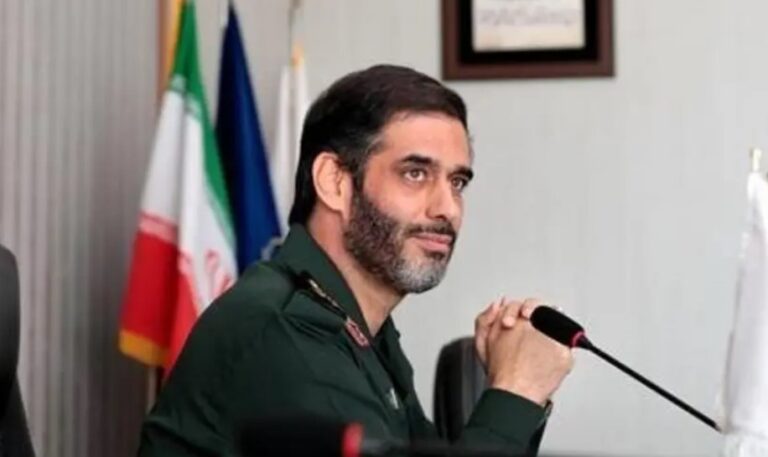
Saeed Mohammad, the head of the Khatam al-Anbiya Construction Headquarters run by the Islamic Revolutionary Guard Corps, has resigned from his position to run in Iran’s June presidential elections.

Saeed Mohammad the Khatam al-Anbiya (PBUH) Construction Headquarters is behind some of Iran’s largest domestic infrastructure projects.

The Iranian Students’ News Agency reported his resignation on Sunday via a letter he penned to the IRGC in which he described himself as the “soldier of the Revolution’s Supreme Leader.”

Read the Complete Article at NewsNow.com

Also Read: IRGC Muhammad Rasulullah Division releases documents on Iran-Iraq war operations

“As a soldier of the Supreme Leader of the Revolution, I will always be proud to serve the holy people of Iran in the service of the holy system of the Islamic Republic and in the light of the Imam, the leadership and the precious martyrs of the Revolution,” Mohammad wrote. Mohammad is considered a veteran of the IRGC with and close links to the office of Supreme Leader Ali Khamenei. In recent months, Mohammad has spent time raising his public profile by touring key Iranian cities like Ahwaz and Tabriz, cities which saw significant protests in recent weeks by angry retirees who say their pension funds no longer provide them with a decent life amid high inflation and unemployment.“Mohammad is not only the first ‘second generation’ Guardsman to head Khatam al-Anbiya, but he is also the first with no military background or fighting experience in the IRGC. With a Ph.D. in civil engineering, he represents the Guard’s technocratic and educated class and has been at the forefront of driving the economic expansion of the IRGC, which now controls as much as 40 percent of Iran’s economy,” Iran expert Kasra Aarabi wrote in a profile on Mohammad for the Tony Blair Institute for Global Change.“This experience and the absence of a military background would enable Mohammad to present himself as both a loyal Guardsman.

IRGC Muhammad Rasulullah Division releases documents on Iran-Iraq war operations

0

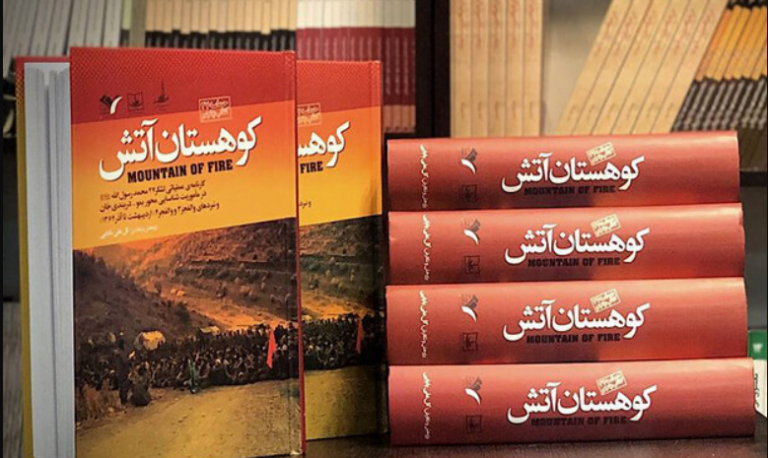
The 27th Mohammad Rasulullah Division of the Islamic Revolutionary Guard Corps (IRGC) has declassified a large number of documents on the operations carried out during the 1980-1988 Iran-Iraq war in a book.

Besat 27 is the publisher of “Mountain of Fire” compiled by Golali Babai.

The book also gives extensive reports on the reconnaissance made by the division in the Bamu-Darbandikhan axis, and the operations Valfajr (Dawn) 3 and 4 from April to December 1983.

The reports have been produced based on a number of first-hand documents that have been preserved at some reliable archives, most of which have not been published before.

Read the complete article at NewsNow.com

Also Read: Exclusive: Iran jails Jewish-Iranian for 10 years for living in Israel

The major report of the book focuses on the long and difficult reconnaissance mission made by the division in the Bamu-Darbandikhan axis during 1983 to gather information for carrying out operations Valfajr 5 and 3 in the Mehran and Diali regions, and Operations Valfajr 4 in the Shiller, Marivan, and Panjvein regions. In an introduction to the book, Babai wrote that the book line by line has been authored based on the written and verbal documents prepared by research centers for the war.27th Muhammad Rasulullah Division was established as the 27th Muhammad Rasulullah Brigade by Ahmad Motevasselian and Mohammad-Ebrahim Hemmat during the war and was expanded into a division just before the Jerusalem Operation. A biography of Abbas Varamini, a commander of the 27th Muhammad Rasulullah Division was published earlier in 2018. Javad Kalateh-Arabi is the writer of the book entitled “In the Tumult of Silence”.Varamini was an educated individual different from his companions. He was a coordinator in the process of capturing the American Embassy in Tehran. After the formation of the Islamic Revolutionary Guard Corps (IRGC), there was a necessity to recruit experienced experts and forces, and Varamini entered IRGC and later participated in several operations during the 1980-1988 Iran-Iraq war.

Exclusive: Iran jails Jewish-Iranian for 10 years for living in Israel

Xiyue Wang, a Princeton graduate student who was wrongfully imprisoned by Iran’s regime between 2016-2019, told The Jerusalem Post on Thursday he met an Iranian Jew in Tehran’s Evin prison who was incarcerated for his stay in Israel.

Wang said the Iranian Jew who “went to Israel” was “given a 10 year sentence” when he returned to the Islamic Republic.

The Islamic Republic proscribes travel to Israel a crime.

Wang said the Iranian Jew lived for “5 or 6 years in Israel” and “did not like Israel.”

The Iran scholar Wang added  that “The problem they had with him was that he went to Israel,” said Wang, who described the Iranian Jew as “big guy” who is still in prison, “I would think.” Wang noted that the Iranian Jew did not reveal much about himself.

“Sometimes Iranian Jews go to Israel and the Iranian government pretends it did not know,” said Wang, who is the Jeane Kirkpatrick fellow at the American Enterprise Institute.

The Post conducted a Persian-language internet search about the Iranian Jewish political prisoner. There was no open source material or media reports on his case.

Read the complete article at: The Jerusalem Post


Xiyue Wang, a Princeton graduate student who was wrongfully imprisoned by Iran’s regime between 2016-2019, told The Jerusalem Post on Thursday he met an Iranian Jew in Tehran’s Evin prison who was incarcerated for his stay in Israel. Wang said the Iranian Jew who “went to Israel” was “given a 10 year sentence” when he returned to the Islamic Republic. The Islamic Republic proscribes travel to Israel a crime. Wang said the Iranian Jew lived for “5 or 6 years in Israel” and “did not like Israel.” The Iran scholar Wang added  that “The problem they had with him was that he went to Israel,” said Wang, who described the Iranian Jew as “big guy” who is still in prison, “I would think.” Wang noted that the Iranian Jew did not reveal much about himself. “Sometimes Iranian Jews go to Israel and the Iranian government pretends it did not know,” said Wang, who is the Jeane Kirkpatrick fellow at the American Enterprise Institute. The Post conducted a Persian-language internet search about the Iranian Jewish political prisoner. There was no open source material or media reports on his case. Jewish-Iranian Jewish-Iranian

US bombs facilities in Syria used by Iran-backed militia; monitor counts 17 killed

0

The United States launched airstrikes in Syria on Thursday, targeting facilities near the Iraqi border used by Iranian-backed militia groups. 

US defense officials announced the strikes without providing details and with no mention of casualties, saying only that they were retaliation for a rocket attack in Iraq earlier this month that killed one civilian contractor and wounded a US service member and other coalition troops.

The Syrian Observatory for Human Rights (SOHR) said Friday that at  least 17 pro-Iran fighters were killed in the US strikes in Syria at the Iraq border overnight.

“The strikes destroyed three lorries carrying munitions… There were many casualties. Preliminary indications are that at least 17 fighters were killed, all members of Popular Mobilization Forces,” the director of the SOHR, Rami Abdul Rahman, told AFP, referencing the powerful coalition of pro-Iran Iraqi paramilitaries.

Read the complete article at: Arab News


The United States launched airstrikes in Syria on Thursday, targeting facilities near the Iraqi border used by Iranian-backed militia groups.  US defense officials announced the strikes without providing details and with no mention of casualties, saying only that they were retaliation for a rocket attack in Iraq earlier this month that killed one civilian contractor and wounded a US service member and other coalition troops. The Syrian Observatory for Human Rights (SOHR) said Friday that at  least 17 pro-Iran fighters were killed in the US strikes in Syria at the Iraq border overnight. “The strikes destroyed three lorries carrying munitions… There were many casualties. Preliminary indications are that at least 17 fighters were killed, all members of Popular Mobilization Forces,” the director of the SOHR, Rami Abdul Rahman, told AFP, referencing the powerful coalition of pro-Iran Iraqi paramilitaries. US bombs facilities US bombs facilities There were many casualties. Preliminary indications are that at least 17 fighters were killed, all members of Popular Mobilization Forces,” the director of the SOHR, Rami Abdul Rahman, told AFP, referencing the powerful coalition of pro-Iran Iraqi paramilitaries

UN condemns up to 23 killings in Iran’s border area with Pakistan

At least a dozen people and possibly up to 23 have been killed in Iran’s Sistan-Baluchistan province where the Islamic Revolutionary Guard Corps (IRGC) of the Iranian Armed Forces and security forces have used lethal force against fuel couriers from ethnic minorities and protesters, the United Nations said on Friday.

Iran is investigating an incident in which at least two Iranians were shot dead this week at the border with Pakistan, and Islamabad has handed over the body of one of the victims, the Iranian foreign ministry said a week ago.

The shooting of people carrying fuel across the border led to protests that spread from the city of Saravan to other areas in the southeastern province of Sistan-Baluchistan, including the capital, Zahedan.

Read the complete article at: The Jerusalem Post


At least a dozen people and possibly up to 23 have been killed in Iran’s Sistan-Baluchistan province where the Islamic Revolutionary Guard Corps (IRGC) of the Iranian Armed Forces and security forces have used lethal force against fuel couriers from ethnic minorities and protesters, the United Nations said on Friday. Iran is investigating an incident in which at least two Iranians were shot dead this week at the border with Pakistan, and Islamabad has handed over the body of one of the victims, the Iranian foreign ministry said a week ago. The shooting of people carrying fuel across the border led to protests that spread from the city of Saravan to other areas in the southeastern province of Sistan-Baluchistan, including the capital, Zahedan. Iran is investigating an incident in which at least two Iranians were shot dead this week at the border with Pakistan, and Islamabad has handed over the body of one of the victims, the Iranian foreign ministry said a week ago. The shooting of people carrying fuel across the border led to protests that spread from the city of Saravan to other areas in the southeastern province of Sistan-Baluchistan, including the capital, Zahedan. border area border area

Iran and Russia Intelligence Pact Amid Israeli and US Victories

EXECUTIVE SUMMARY: The Islamic Republic of Iran has experienced a number of serious counterintelligence failures over the years. Last month, Iran and Russia, a close ally of the Islamic regime, signed a pact that should assist it as it attempts to reform its counterintelligence.

The Islamic Republic of Iran has an extensive and complex intelligence apparatus. Its two most important intelligence institutions are the Ministry of Intelligence (MOI) and the intelligence arm of the Islamic Revolutionary Guard Corps (IRGC). A third key intelligence organization is the IRGC’s Intelligence Protection Organization, which operates independently of its intelligence arm and deals in counterintelligence.

While Iran’s intelligence organizations are well equipped and have achieved important successes (particularly in the area of signals intelligence, or SIGINT), the country’s intelligence apparatus is deficient with respect to counterintelligence, or “intelligence protection” as the regime has renamed it. The three most recent counterintelligence failures—all of them devastating— concerned the assassination of Quds Force chief Qassem Soleimani in Baghdad, the slaying of al-Qaeda´s number 2 on Iranian soil, and the assassination in Tehran of the architect of the Iranian nuclear program, Mohsen Fakhrizadeh.

Last month, in January 2021, Iranian FM Muhammad Javad Zarif made yet another visit to Moscow to meet with his counterpart, Sergey Lavrov. Zarif has traveled to Russia more than 30 times, illuminating the Islamic Republic’s great dependence on that country. What made his most recent visit significant was the signing by the countries of a security treaty.

While the agreement ostensibly aims to increase collaboration between the countries in the field of cyber security, the Tasnim News Agency, which has strong links to the IRGC, said, “The head of Iran’s Civil Defense Organization…unveiled plans for joint cooperation focusing on the exchange of intelligence, interaction against threats, and joint defense.” The Iranian Ministry of Foreign Affairs stated in a press release that Iran and Russia had signed an “Information Security Cooperation Pact” and that one of the objectives of the pact is the “strengthening [of] information security.”

Read the complete article at: Besa Center

Also read: Iran’s IRGC and China’s Red Army Competitions and Crimes