Home Blog Page 97

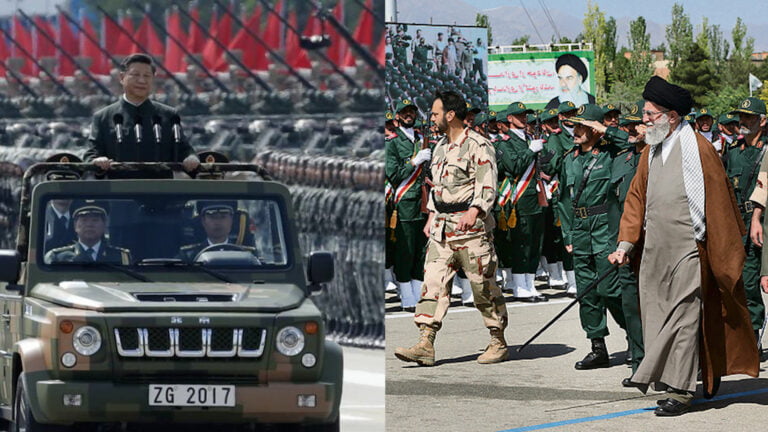
Iran’s IRGC and China’s Red Army Competitions and Crimes

PDF Version

Farsi Translation (ترجمه فارسی)


Grand dreams of world domination are part and parcel of communist China’s ideologies. Countries with rich and scarce natural resources are where that dream begins. China has recently even sought to dominate other celestial bodies, including the Moon and Mars, and has made significant gains in this regard. These achievements are the result of meticulous planning and China’s scientific, technological, and economic advances, as well as the hacking and theft of scientific data and information from Western countries.


China’s politicians and leaders of its major corporations along with commanders and military officers of the Chinese Red Army are educated, experienced and hardworking individuals.


China is well on its way to become the world’s largest economy in the coming years. It will have the strongest military power and will easily smoke out the competition, leaving the United States and Russia in its trail.


The Chinese communist system is the most brutal way of governing that humanity has witnessed to date. China does not allow anything or anyone to get in the way of realizing Its dreams. The most recent examples of this are the massacre of pro-democracy activists in Beijing’s Tiananmen Square in 1989, the brutal crackdown in Hong Kong in recent years and the genocide of millions of Uyghur Muslims in the Xinjiang Uyghur Autonomous Region of China.

The closest match for China when it comes to crimes against humanity is the Islamic Republic of Iran. A country with incredibly high amounts of natural resources such as minerals, oil, gas and other precious metals as well as a young, driven and educated population, but unlike China, it seeks to dominate a few poor and Shia countries, such as Lebanon. Palestine, Syria, Iraq, Afghanistan and Yemen.


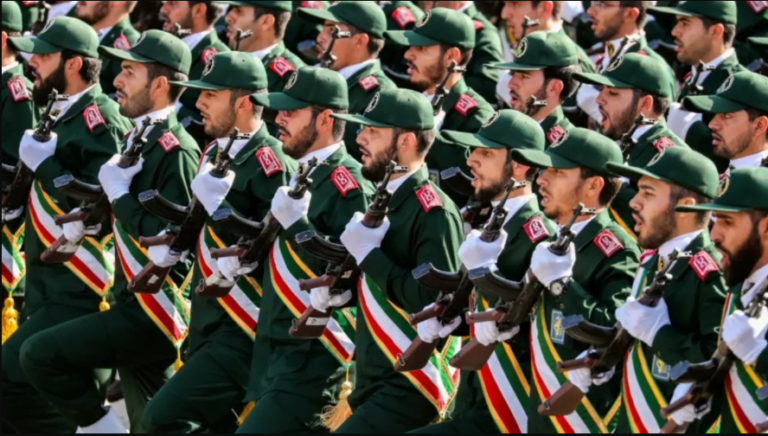
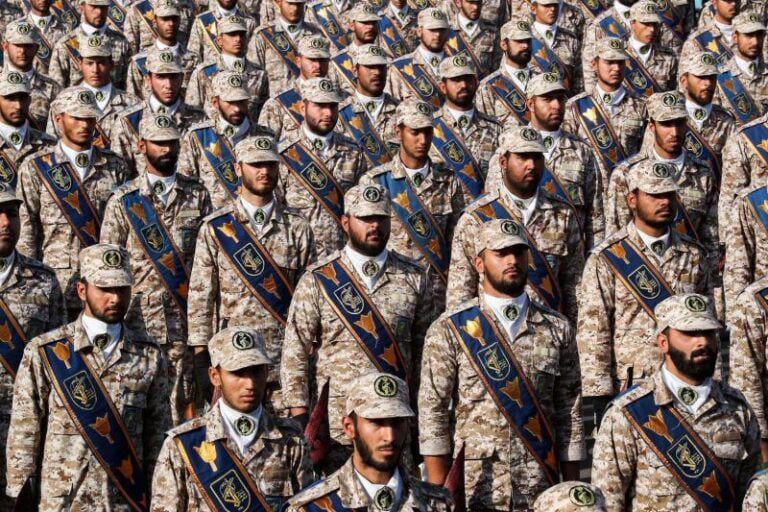
Unlike China, Iran’s attempt to control the internal affairs of these countries was not through technological, scientific and economic advances, but only through the exportation of terrorism, ethnic and religious unrest, bribery, theft, bombing and sales of arms and missiles to militias and terrorist groups. As such, Iran is considered one of the main factors behind middle-east’s current state of turmoil, the responsibility of which falls directly on the shoulders of the Islamic Revolutionary Guard Corpse or IRGC, especially the Quds Force branch, its extraterritorial operations arm.


The IRGC has total monopoly over Iran’s economy, security and internal affairs with the ability to control the executive, legislature and judiciary governmental branches as well as districts, municipalities and governorates.


The commanders of IRGC and the leaders of the Iranian regime, unlike communist China and its Red Army, are mostly thieves, illiterate and inexperienced, accompanied by lazy, incompetent and corrupt religious clerics. Together they form the mafia of the Islamic Republic of Iran that has full control only over its helpless citizens and dreams of one day dominating its poor and war-torn neighboring countries. The future of such system is nothing but poverty and isolation along with a bankrupt economy, slowly decaying.


It is interesting that these two seemingly contradictory Islamic and communist systems have many similarities, ideologically. The most obvious of which are, violation of moral and human values, disregard for all human rights, creation of fear and panic among people, censorship, cruelty, murder, torture and suppression of dissidents and minorities.
The IRGC and Judiciary Collude in Disbandment of Iran’s Largest NGO

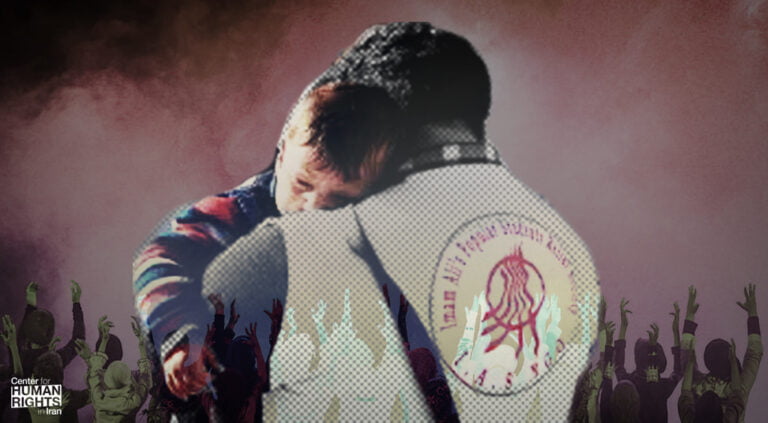
An Interior Ministry motion to disband Iran’s largest NGO, the Imam Ali Popular Students Relief Society (IAPSRS), was granted by a court in Tehran on March 3, 2021.

The disbandment of Iran’s largest independent NGO, and the only one in the country holding consultative status with the United Nations, is a clear indication of interference into the activities of autonomous NGOs by the security establishment, and the collusion of the judiciary in that interference. 

The action follows the arrest and detention of top members of the Imam Ali Society, and their eventual release on bail set at outrageously high levels, which is another indication of the role of the security forces in exerting pressure through the courts on the NGO.

Agents from the Islamic Revolutionary Guard Corps’ (IRGC) Intelligence Organization arrested the founder of the Imam Ali Society, Sharmin Meymandinejad, along with colleagues Morteza Kaymanesh and Katayoun Afrazeh on June 21, 2020. 

Iranian officials have tried various methods to interrupt the work of long-established NGOs. 

One method has been the creation of parallel and seemingly-independent organizations, such as Jamiat Emam Rezaeeha, or the Imam Reza Society, working alongside the Imam Ali Society.

The Imam Reza Society is led by Mohammad Hassan Yekta, the former commander of the IRGC’s Baghiatollah Headquarters for Cultural and Social Affairs, and a former senior adviser to Judiciary Chief Ebrahim Raisi, when the latter headed the Astan Quds religious-industrial conglomerate (from 2016-2019). 

A similar move was made against the Iranian Bar Association, when the judiciary created a parallel body called the Legal Advice Center, although it lacks the credibility enjoyed by its independent competitor.

On its webpage, the Imam Ali Society describes itself as an “international, non-governmental organization which started its activities in 1999. The NGO earned special consultative status with the Economic and Social Council of the United Nations in 2010 and general consultative status in 2018.”

Read the complete article at: Center for Human Rights in Iran

Also read: Amnesty Accuses IRGC of Reckless Killing of Ten Protestors

Syrian monitor says Iran continues military recruitment operations

0

Iran continues to consolidate its powers in Syrian territories as deployed military personnel on the ground rise, Syrian Observatory for Human Rights reported on Wednesday.

The number of volunteers recruited into Iran-loyal militias in Syria are now more than 18,000, according to the UK-based watchdog.
Israel meanwhile has been consistently attacking positions in southern Syria to force Iranian-supported to withdraw from the area.

Last week, Israel mounted a missile attack in at least five sites housing fighters from the Iran-backed militias and the Lebanese group Hezbollah, who fighting along Syrian government forces.

On January 13, at least 57 military personnel were killed in a series of Israeli offensives in eastern Syria, the highest toll from such attacks in the war-torn country, the Observatory reported at the time.

Read the complete article at: Arab News


Iran continues to consolidate its powers in Syrian territories as deployed military personnel on the ground rise, Syrian Observatory for Human Rights reported on Wednesday. The number of volunteers recruited into Iran-loyal militias in Syria are now more than 18,000, according to the UK-based watchdog. Israel meanwhile has been consistently attacking positions in southern Syria to force Iranian-supported to withdraw from the area. Last week, Israel mounted a missile attack in at least five sites housing fighters from the Iran-backed militias and the Lebanese group Hezbollah, who fighting along Syrian government forces. On January 13, at least 57 military personnel were killed in a series of Israeli offensives in eastern Syria, the highest toll from such attacks in the war-torn country, the Observatory reported at the time. Last week, Israel mounted a missile attack in at least five sites housing fighters from the Iran-backed militias and the Lebanese group Hezbollah, who fighting along Syrian government forces. On January 13, at least 57 military personnel were killed in a series of Israeli offensives in eastern Syria, the highest toll from such attacks in the war-torn country, the Observatory reported at the time. military recruitment military recruitment

Rockets Hit Iraq Base Hosting U.S. Troops Amid Tension With Iran

Ten rockets struck a military base used by U.S. forces in Iraq amid heightened tensions between Washington and Iran-backed militant groups in the country.

A U.S. civilian contractor suffered a cardiac episode while sheltering during the attack and died, according to Pentagon press secretary John F. Kirby. No U.S. servicemembers were hurt in the attack on Iraq’s Al Asad base, Mr. Kirby said. There was no immediate claim of responsibility. An Iraqi news agency, Sabreen, which supports Iranian-allied militias, published photos and initial reports of the attack.

President Biden said Wednesday that his administration is looking into the rocket attack.

“Thank God, no one was killed by the rocket,” he said. “One individual, a contractor, died of a heart attack. But we’re identifying who’s responsible and will make judgments from that point.”

Read the complete article at: The Wall Street Journal


Ten rockets struck a military base used by U.S. forces in Iraq amid heightened tensions between Washington and Iran-backed militant groups in the country. A U.S. civilian contractor suffered a cardiac episode while sheltering during the attack and died, according to Pentagon press secretary John F. Kirby. No U.S. servicemembers were hurt in the attack on Iraq’s Al Asad base, Mr. Kirby said. There was no immediate claim of responsibility. An Iraqi news agency, Sabreen, which supports Iranian-allied militias, published photos and initial reports of the attack. President Biden said Wednesday that his administration is looking into the rocket attack. “Thank God, no one was killed by the rocket,” he said. “One individual, a contractor, died of a heart attack. But we’re identifying who’s responsible and will make judgments from that point.” “Thank God, no one was killed by the rocket,” he said. “One individual, a contractor, died of a heart attack. But we’re identifying who’s responsible and will make judgments from that point.”

Iran Accused Of Eco-Terrorism: Purposefully Dumping Oil In Israeli Waters

0

The Israeli government is accusing Iran of environmental terrorism over the historic oil disaster unfolding along its Mediterranean coast line. At this point, nearly 100 tons of tar and contaminated material have been scraped off the country’s shores since cleanup efforts began on the 21st of February. In the ensuing investigation the original culprit has since been identified by authorities as a pirate-owned Libyan oil tanker carrying stolen cargo from Iran to Syria.

The Minister of Environmental Protection, Gila Gamliel, reports that the vessel in question is the Panama-flagged oil tanker Emerald. In a tweet, Gamliel linked the vessel to the Islamic Republic, adding that “Iran is (conducting) terrorism by damaging the environment, and (when) Iran is damaging the environment it isn’t just hurting the state of Israel.”

The ship in question sailed through the Persian Gulf and the Red Sea without any radio contact, turning off her tracking devices while transiting the Suez Canal but then reactivating them once across. The ship’s transponder was off before entering Israeli waters. Clearly, such behavior is surreptitious.

Read the complete article at: Forbes


The Israeli government is accusing Iran of environmental terrorism over the historic oil disaster unfolding along its Mediterranean coast line. At this point, nearly 100 tons of tar and contaminated material have been scraped off the country’s shores since cleanup efforts began on the 21st of February. In the ensuing investigation the original culprit has since been identified by authorities as a pirate-owned Libyan oil tanker carrying stolen cargo from Iran to Syria. The Minister of Environmental Protection, Gila Gamliel, reports that the vessel in question is the Panama-flagged oil tanker Emerald. In a tweet, Gamliel linked the vessel to the Islamic Republic, adding that “Iran is (conducting) terrorism by damaging the environment, and (when) Iran is damaging the environment it isn’t just hurting the state of Israel.” The ship in question sailed through the Persian Gulf and the Red Sea without any radio contact, turning off her tracking devices while transiting the Suez Canal but then reactivating them once across. The ship’s transponder was off before entering Israeli waters. Clearly, such behavior is surreptitious.

Iran: IRGC vehicle attacked by Baluchi militants – state media

0

Sunni Baluchi militants attacked a vehicle belonging to Iran’s Revolutionary Guards on Tuesday in the southeast of the country, which has been hit by unrest in the past week, the state broadcaster IRIB reported.

It quoted Mohammad Hadi Marashi, deputy governor of the impoverished Sistan-Baluchestan province, as saying the vehicle belonged to a Guards engineering unit. Baluchi militants

Read the complete article at NewsNow.com

Also Read: Amnesty Accuses IRGC of Reckless Killing of Ten Protestors

He did not say whether or not there had been any casualties. Marashi said the attack was carried out by the Sunni militant group Jaish al Adl (“Army of Justice”), which says it seeks greater rights and better living conditions for the minority ethnic Baluchis. The group has claimed responsibility for a number of attacks, including a 2019 suicide bombing on a bus that killed 27 members of the elite Revolutionary Guards. The pro-Baluchi news website Rasadbalochistan quoted Jaish al Adl as saying it had targeted two Guards vehicles. In past Iran has accused its regional rival, Sunni Arab Saudi Arabia, of supporting Sunni separatist groups who have attacked its security forces. Riyadh has denied the charges. U.N. High Commissioner for Human Rights Michelle Bachelet last week accused Iran of “persistent impunity for human rights violations” in minority regions, including Sistan-Baluchestan. Iran has rejected such criticism as politically motivated and based on a lack of understanding of Tehran’s Islamic laws. The pro-Baluchi news website Rasadbalochistan quoted Jaish al Adl as saying it had targeted two Guards vehicles. In past Iran has accused its regional rival, Sunni Arab Saudi Arabia, of supporting Sunni separatist groups who have attacked its security forces. Riyadh has denied the charges. U.N. High Commissioner for Human Rights Michelle Bachelet last week accused Iran of “persistent impunity for human rights violations” in minority regions, including Sistan-Baluchestan. Iran has rejected such criticism.

Amnesty Accuses IRGC of Reckless Killing of Ten Protestors

Iran’s Islamic Revolutionary Guard Corps (IRGC) fired on unarmed protesters in Sistan and Baluchestan province last month, killing at least ten people, including a 17-year old boy, rights organization Amnesty International said, urging for criminal investigations over the reckless killing.

Amnesty accused the IRGC, Iran’s omnipresent paramilitary force, of displaying “callous disregard for human life” by firing on unarmed Baluchi fuel porters near the town of Saravan, and said “there must be urgent, independent criminal investigations into these unlawful killings, in line with international law and standards.”

“Anyone against whom there is sufficient admissible evidence must be prosecuted in a fair trial, without resorting to the death penalty,” said Diana Eltahawy, Amnesty’s deputy director for the Middle East and North Africa.

The lethal violence unleashed on members of Iran’s largely impoverished Baluchi minority, who the province’s governor accused of trying to enter a military base and engaging in “destructive action,” was not justified under international law because they posed no imminent threat, Amnesty argued.

“The official justification the Iranian authorities have given for their deadly use of live ammunition reflects their complete disregard for international standards on the use of firearms. It also shows a shameless contempt for their obligations to respect and preserve human life and to ensure that public officials do not carry out extrajudicial executions by illegal use of firearms,” said Eltahawy.

Amnesty verified the account through eyewitnesses and video footage confirming that IRGC members intentionally fired weapons at protesters who posed no serious threat.

Baluchi fuel porters, who are often forced to pay bribes to IRGC officers at the borders, often endure extreme poverty and face deep-seated discrimination. After the February 22 violence, the IRGC was accused of cracking down on demonstrations in response to the reckless killing, deploying “live ammunition, pointed metal pellets, and tear gas, against men, women and children,” Amnesty reported.

Read the complete article at: The Arab Weekly

Also read: Iran’s Public School Curriculum Should Be a Global Concern

IRGC Quds Force set up a shop in Turkey’s capital to recruit militants including al-Qaeda aspirants

0

A convicted militant who has been working for the Islamic Revolutionary Guard Corps (IRGC) Quds Force set up a cell in the Turkish capital to radicalize young people, a classified intelligence report obtained by Nordic Monitor has revealed.

Hakkı Selçuk Şanlı, a Turkish national who served prison time for helping set up the Quds Force network in the 1990s under the orders of then-IRGC general Nasir Takipur, was put to use again by his handlers after keeping a low profile for years. As part of one of his assignments from Iran’s notorious intelligence service, he was directed to open a shop in Turkey’s capital of Ankara, registered in his son’s name, in order to recruit new assets on behalf of the Quds Force.

Şanlı was arrested on May 13, 2000 and was sentenced to 12 years, six months in prison for involvement in terrorist plots targeting Turkish and US interests. But he was freed in 2004 when the government of then-Prime Minister and now President Recep Tayyip Erdoğan pushed an amnesty bill through Parliament, reducing sentences for some convicts.

Read the complete article at: Anixneuseis


Hakkı Selçuk Şanlı, a Turkish national who served prison time for helping set up the Quds Force network in the 1990s under the orders of then-IRGC general Nasir Takipur, was put to use again by his handlers after keeping a low profile for years. As part of one of his assignments from Iran’s notorious intelligence service, he was directed to open a shop in Turkey’s capital of Ankara, registered in his son’s name, in order to recruit new assets on behalf of the Quds Force. Şanlı was arrested on May 13, 2000 and was sentenced to 12 years, six months in prison for involvement in terrorist plots targeting Turkish and US interests. But he was freed in 2004 when the government of then-Prime Minister and now President Recep Tayyip Erdoğan pushed an amnesty bill through Parliament, reducing sentences for some convicts.

Iran’s Public School Curriculum Should Be a Global Concern

The government of Iran remains the world’s largest state sponsor of terrorism, and unfortunately its educational curriculum is no exception. Public school teachers in Iran today use textbooks designed by the state to indoctrinate young people to export global revolution using terrorism and other aggressive means. As a result, the content of its textbooks should be a global concern.

The Iranian state curriculum especially encourages terrorism and political subversion against Arab states in particular. It also demonizes America, Israel and the Jewish people, including in ways that are part and parcel with these same hateful conspiracy theories and calls to violence.

The Iranian government’s current textbooks indoctrinate children with messages that put them on a permanent footing for war. The books teach children how to assemble assault rifles, to carry out military maneuvers, and to learn about the importance of cyber warfare.

The books also idealize young people who sacrifice their lives to sustain or export the Iranian revolution. Often this involves glorifying child soldiers who fought and died under traumatic circumstances during the Iran-Iraq War or displaying children wielding weapons of war, including a rocket launcher.

Also presented on the same textbook page listing “model martyrs defending the shrines” is Mustafa Badreddine, the deceased terrorist mastermind of Lebanese Hezbollah, as well as Ali Reza Tavassoli, a founder of the Fatemiyoun Brigade, one of the Islamic Revolutionary Guard Corps’ proxy groups that recruits young Afghan men, including child soldiers, to fight in Syria.

This year Iran’s state curriculum added passages across numerous subjects to celebrate the martyrdom of the IRGC’s late terror master, Qassem Soleimani. For example, an official textbook on military studies now features a graphic under the heading “Templates and Models of Steadfastness and Resistance.”

In addition to Soleimani, the picture includes Abu Mahdi Al-Muhandis, whom it calls a “model martyr of the Islamic World.” At the time of their death in 2020, both al-Muhandis’s Kata’ib Hezbollah in Iraq and Soleimani’s IRGC Quds Force were US-designated terrorist groups.

Read complete article at: Arab News

Also read: Characteristics Of Recent Uprising In Iran’s Sistan and Baluchestan

Iran’s Brutal Repression of Minorities

The Jamestown Foundation recently reported that the Islamic Republic of Iran handed out prison sentences to five Azerbaijani activists for supporting Azerbaijan during the Second Karabakh War. Simultaneously, they reported that during Armenia’s occupation of Nagorno-Karabakh, many Azerbaijani mosques were transformed into Iranian mosques and were thus were made “Persian” in style following repair work, a reality that greatly infuriated Azerbaijan’s president, who viewed the measure to be cultural repression.

Around the same period, Hamid Mutashir, the President of the Al Ahwaz Liberal Party, reported that the Iranian Revolutionary Guards killed six Baloch civilians. Sirwan Mansouri, a Kurdish journalist based in the Middle East, added: “The Iranian regime has arrested more than 100 Kurdish activists from different cities in Kurdistan, among them men, women and even children without any reason. Most of them are now getting tortured and their families have no news regarding where they are or what their condition is.” In recent days, a number of Kurdish journalists and political activists took part in a twitter campaign and wrote letters of protest to the European Parliament to no avail.

Read the complete article at: Jewish Press


The Jamestown Foundation recently reported that the Islamic Republic of Iran handed out prison sentences to five Azerbaijani activists for supporting Azerbaijan during the Second Karabakh War. Simultaneously, they reported that during Armenia’s occupation of Nagorno-Karabakh, many Azerbaijani mosques were transformed into Iranian mosques and were thus were made “Persian” in style following repair work, a reality that greatly infuriated Azerbaijan’s president, who viewed the measure to be cultural repression. Around the same period, Hamid Mutashir, the President of the Al Ahwaz Liberal Party, reported that the Iranian Revolutionary Guards killed six Baloch civilians. Sirwan Mansouri, a Kurdish journalist based in the Middle East, added: “The Iranian regime has arrested more than 100 Kurdish activists from different cities in Kurdistan, among them men, women and even children without any reason. Most of them are now  Brutal Repression Brutal Repression