Home Blog Page 165

Iran’s coronavirus crisis exacerbates internal struggle between government and IRGC

COVID-19 crisis exacerbates internal struggle between govt and IRGC
          Iran’s coronavirus crisis exacerbates internal struggle between government and IRGC


A tense struggle is unfolding in Iran between the country’s civilian leaders and the parallel state of the Islamic Revolutionary Guard Corps.


The two entities are fighting about who will control the national response to COVID-19, according to sources.


The outbreak of the pandemic in Iran followed closely that of China.


Today the Iranian government claims the disease has infected no more than 115,000 people and killed fewer than 7,000.


But these numbers seem low for a country of 82 million, and many observers dispute them.


The secrecy with which the government is treating the coronavirus epidemic may be masking an increasingly tense turf war between Iran’s civilian leaders, led by President Hassan Rouhani, and the IRGC.


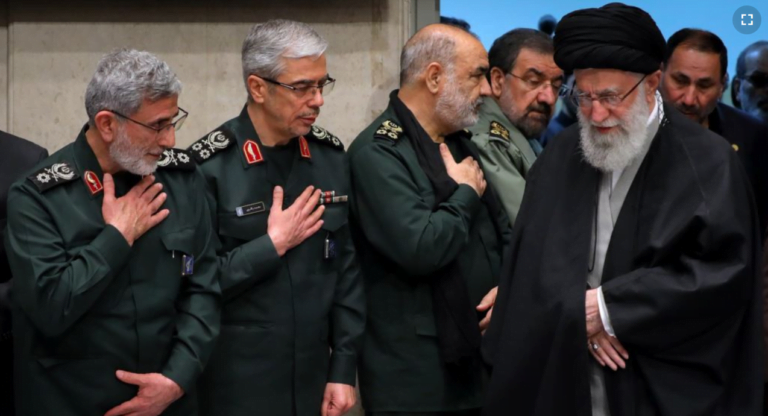
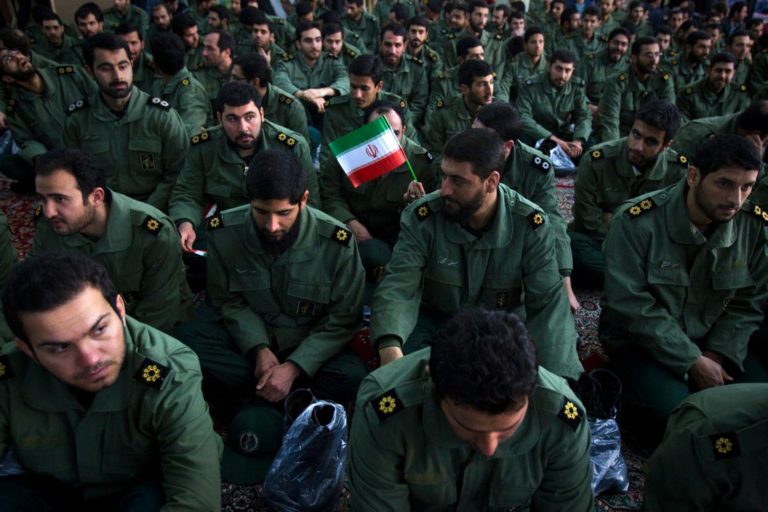
The latter is controlled by Iran’s Supreme Leader, Ali Khamenei. Iran watchers describe the IRGC as a ‘praetorian guard’ whose members possess immense power and often wealth.


Today the IRGC is a military force with a command structure that is distinct from that of Iran’s regular Armed Forces.


It maintains its own army, navy and air force, has its own paramilitary and political protection units, and is in charge of Iran’s nuclear program.


The IRGC has seen its income fall drastically in the past two years, partly due to the continuing economic pressure that Iran is facing from strict sanctions imposed on it by the United States.


The effects of the dramatic reduction in the value of Iran’s currency —down nearly 2/3 since 2018— have only been exacerbated by the monumental drop in global oil prices, which has practically decimated Tehran’s main source of foreign income.


Read More


Also Read: Israeli regime feels insecure with Noor-1 satellite upon occupied territories’ sky
The effects of the dramatic reduction in the value of Iran’s currency —down nearly 2/3 since 2018— have only been exacerbated by the monumental drop in global oil prices, which has practically decimated Tehran’s main source of foreign income. COVID-19 COVID-19 COVID-19 COVID-19 COVID-19

Israeli regime feels insecure with Noor-1 satellite upon occupied territories’ sky
Israeli regime feels insecure with Noor-1 satellite upon occupied territories' sky
Israeli regime feels insecure with Noor-1 satellite upon occupied territories’ sky
 

“Noor-1 satellite regularly passes over the occupied lands; this is while that Zionists are facing a new self-made challenge of annexing of the West Bank to the occupied lands and this issue has had very negative and dire repercussions for them [Israeli regime] with the awareness of world nations.”


“The passage of the satellite over the occupied territories creates insecurity for them and US effort to downplay the salient achievements of IRGC may be a kind of consolation to the Zionists that are being pursued by the American officials,” Brigadier General Rasoul Sanaeirad, Political Head of the Ideological-Political Bureau at the Office of the Commander-in-Chief of Iran’s Armed Forces, told Mehr News Agency on Friday.


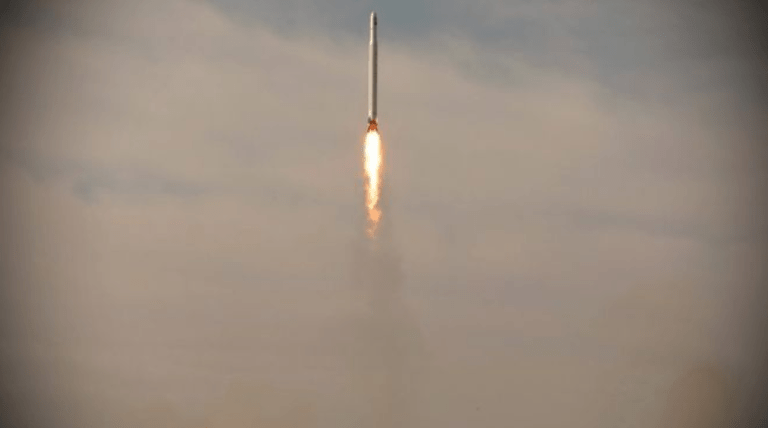
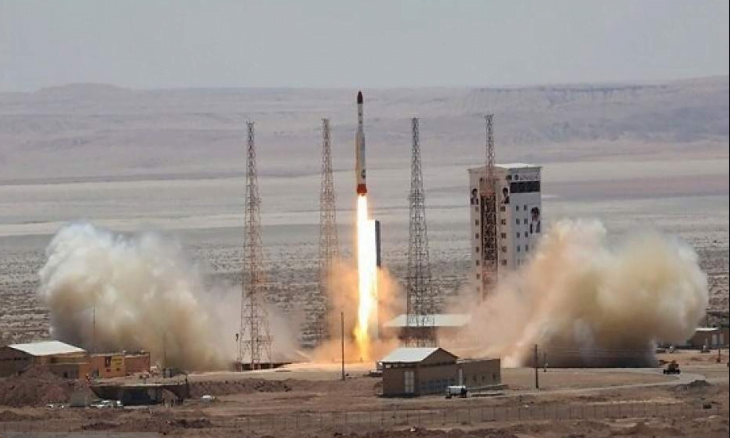
Turning to the statements made by US officials who downplayed the salient achievements of the Islamic Revolutionary Guards Corps [IRGC] in the successful launch of Iran’s first military satellite entitled ‘Noor-1’ into the orbit, he added, “the successful launch of Iran’s first military satellite by IRGC was carried out with a three-stage carrier which is significant in various dimensions, showing the creation of a new balance both in the region and world.”


Read More


Also Read: Iran has Put its First Military Satellite into Orbit. Why now?

The balance change is not in favor of the US, because, Americans have attended the region with Iranophobia, he said, adding that they plunder the wealth of many regional countries with the excuse of providing security. Referring to the acknowledgment of US officials in the success of injection of the satellite by IRGC Aerospace Force, he stated. “Pentagon and US scientific centers have confessed the success of Iran’s first military satellite launched into space.” The Islamic Republic of Iran has always emphasized that its power is for the spread of security in the region and is ready to establish cooperation. Israeli regime Israeli regime Israeli regime Israeli regime Israeli regime

IRGC Advisor, Abu al-Fadhel Serlak Killed in Khasser

0
IRGC Advisor named Abu al-Fadhel Serlak Killed in Khasser
IRGC Advisor Abu al-Fadhel Serlak Killed in Khasser


An advisor from Iran’s Islamic Revolutionary Guard Corps (IRGC), Abu al-Fadhel Serlak, was killed in the city of Khasser in southeastern Idleb province, the Iranian Fars News Agency announced. 


Serlak was “defending the Zeinab shrine” when he was killed last Sunday, Fars News reported on Tuesday, without providing additional details. 


The IRGC has faced increasing Israeli airstrikes over the past two months, especially in April and early May, resulting in the deaths of a number of its fighters.

Read More


Also Read: Al Jazeera deletes podcast tweet glorifying Iran’s Soleimani shortly after posting

Abolfazl Sarlak, a commander of Iran’s Islamic Revolutionary Guard Corps (IRGC), has been killed in Syria, Iranian state media reported. Iran’s state news agencies have given conflicting reports on how Sarlak was killed. The semi-official Mehr news agency said he was killed by an explosive trap set up by ISIS in eastern Aleppo on Sunday, while the semi-official Fars news agency said he was killed during clashes with “terrorists” in the town of Khanaser in Aleppo.
 Sarlak had been fighting “takfiris” in Syria and Iraq “for years,” Mehr said. Iran uses the term “takfiri” to refer to Sunni groups it deems extremist. Sarlak had been living in Aleppo with his wife and two children, the official IRIB news agency said, adding that he had an “important role” in the IRGC’s headquarters in Aleppo.
The commander was close to slain commander Qassem Soleimani, according to the Iranian media. Soleimani, who headed the Quds Force – the overseas arms of the IRGC – was killed in a US airstrike at Baghdad’s international airport in January.
Following news of Sarlak’s death, IRGC-linked accounts on social media shared an undated image showing him with the new head of the Quds Force Esmail Ghaani.

 Read More

Iranian Army says technical error behind deadly friendly fire incident


Iranian Army says technical error behind deadly friendly fire incident


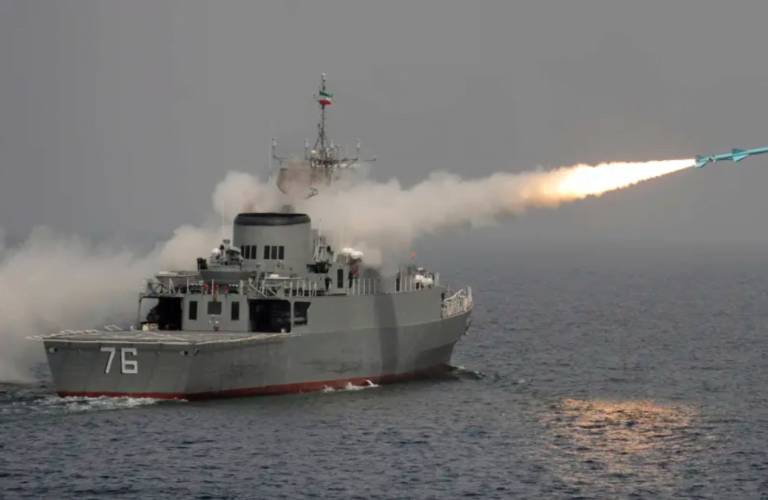
A technical error is behind an incident in which a missile fired from an Iranian naval vessel hit another Iranian vessel, killing 19 soldiers and injuring 15 others, according to Radio Farda.


A website affiliated with the Iranian Army released the information in a video report on Monday, saying that a missile homing device malfunctioned and mistakenly guided the missile toward the Konarak support vessel that had been placing targets for the exercise.


Iranian television had reported earlier that the Konarak vessel had stayed to close to the target after placing it.


The video report on Monday added that it’s possible that the technical error was caused by “electronic warfare by the enemy” without specifying a possible source, according to Radio Farda. No evidence was provided for the claim and “the enemy” is often blamed by Iran for a variety of shortcomings or issues.

On Sunday, Mohammad Rastad, Managing Director of the Ports and Maritime Organization (PMO), told Iran’s ILNA news agency that a cyber attack managed to damage a number of private systems at the Shahid Rajaei port near Bandar Abbas and the Strait of Hormuz in recent days.


Rastad stressed that operations had not been disrupted by the attack, despite earlier reports to the contrary and confirmed that the attack was carried out by a foreign entity, according to the Fars News Agency.


In statements issued since the deadly naval incident, Iranian officials have continued to refer to the deadly incident as an “accident,” without providing much further information.


Read More

Also Read: Countries Certified as Not Cooperating Fully with U.S. Counterterrorism Efforts

A spokesman for the Iranian Army denied reports on Wednesday that the Iranian Revolutionary Guards Corps had shot the Iranian Navy’s Konarak vessel on Sunday, calling the reports “complete nonsense.

Countries Certified as Not Cooperating Fully with U.S. Counterterrorism Efforts

0
Countries Certified as Not Cooperating Fully with U.S. Counterterrorism Efforts


Yesterday, the Department of State notified Congress that Iran, North Korea, Syria, Venezuela, and Cuba were certified under Section 40A(a) of the Arms Export Control Act as “not cooperating fully” with U.S. counterterrorism efforts in 2019.  This is the first year that Cuba has been certified as not fully cooperating since 2015.  This certification prohibits the sale or license for export of defense articles and services and notifies the U.S. public and international community that these countries are not fully cooperating with U.S. counterterrorism efforts.


Iran: In 2019, Iran continued to be the world’s largest state sponsor of terrorism, supporting Hizballah, Palestinian terrorist groups, and other terrorist groups operating throughout the Middle East.  In 2019, Iran maintained its support for various Iraqi Shia terrorist groups, including Kata’ib Hizballah (KH), Harakat al-Nujaba (HAN), and Asa’ib Ahl al-Haq (AAH).  Iran’s Islamic Revolutionary Guard Corps (IRGC), a designated Foreign Terrorist Organization, has been directly involved in terrorist plotting and has killed U.S. citizens.  The IRGC – most prominently through its Qods Force – has the greatest role among Iranian regime actors in directing and carrying out a global terrorist campaign.


North Korea: In 2019, four Japanese individuals who participated in the 1970 hijacking of a Japan Airline flight continued to live in the DPRK.  The Japanese government also continued to seek a full account of the fate of 12 Japanese nationals believed to have been abducted by DPRK state entities in the 1970s and 1980s.


Read More

Also Read: Al-Jazeera Podcast in Praise of Gen. Qassem Soleimani Receives Wide Acclaim in ME, Infuriates Saudis

Syria: Syria has continued its political and military support for terrorist groups, including the provision of weapons and political support to Hizballah.  The Assad regime’s relationship with Hizballah and Iran grew stronger in 2019 as the regime became more reliant on external actors to fight opponents and secure areas.  The IRGC and IRGC-backed militias remain present and active in the country with the permission of President Bashar al-Assad.


Al Jazeera deletes podcast tweet glorifying Iran’s Soleimani shortly after posting

Al Jazeera deletes podcast tweet glorifying Iran’s Soleimani shortly after posting
                     Al Jazeera deletes podcast tweet glorifying Iran’s Soleimani shortly after posting


Qatar’s state-run broadcaster Al Jazeera published a podcast last week glorifying Iran’s slain Islamic Revolutionary Guard Corps (IRGC) Qods Force commander Qassem Soleimani.

A few days later, Al Jazeera deleted the link to the podcast from its Twitter page.

Al Jazeera’s podcast was part of its “Rumooz” series (which is the Arabic word for “icons”), and introduced the episode by saying: “His star has shone in the Iran-Iraq war, then he became the engineer of most of Iran’s foreign battles, leaving his mark on some of the most volatile areas in the region: Syria, Yemen, Iraq and others. His assassination almost ignited a third world war, who is Qassem Soleimani?”


The podcast’s introduction is filled with cinematic music that builds dramatically, leading to the opening statement.


“I am Soleimani, the soldier fighting for the sake of Allah… The name great Satan fears… I am nothing more than a soldier of the Islamic Revolution… A soldier, I thank Allah, for blessing me with martyrdom,” the voice actor says.


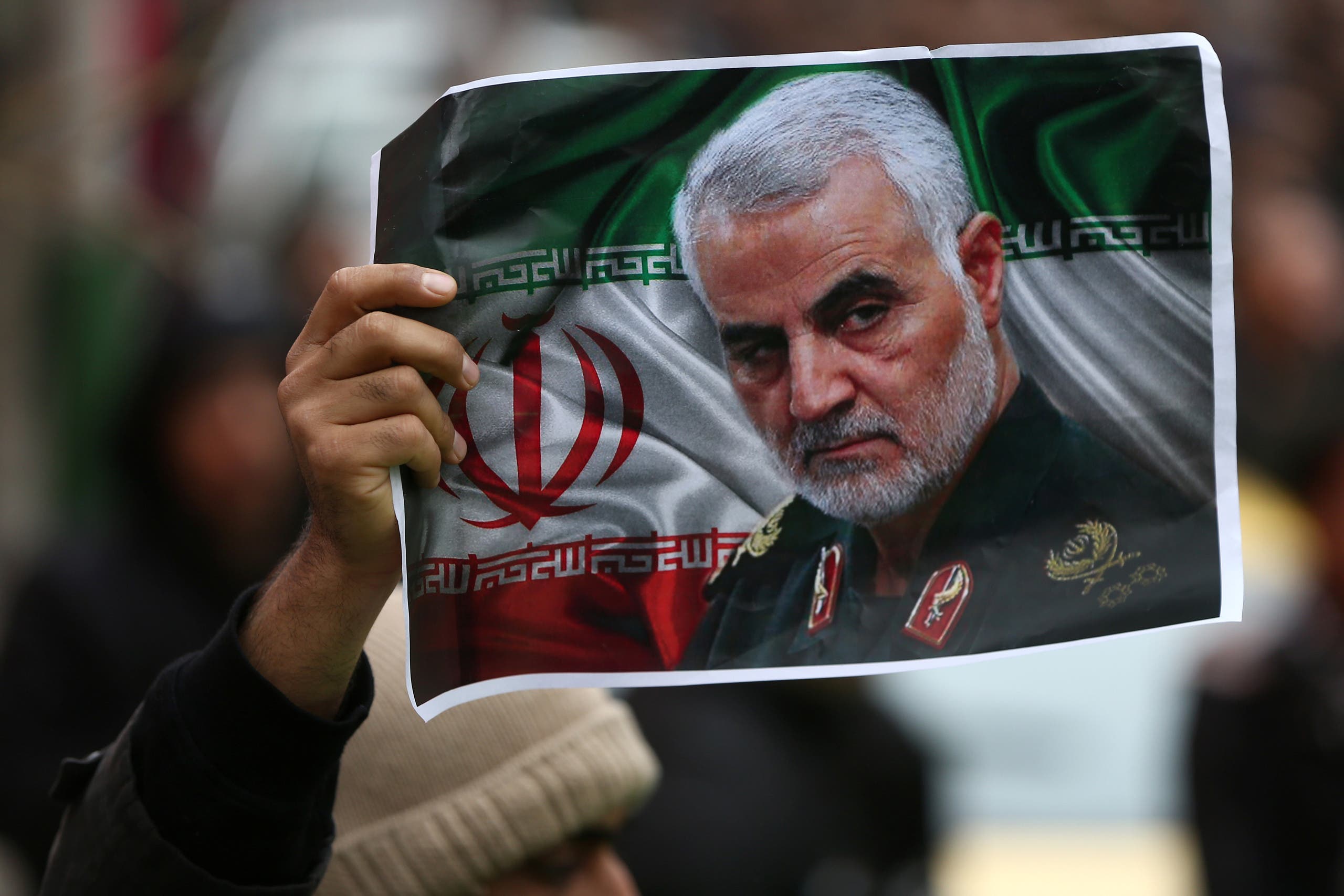
An Iranian holds a picture of late General Qassem Soleimani, head of the elite Quds Force, who was killed in an air strike at Baghdad airport, as people gather to mourn him in Tehran, Iran January 4, 2020. (Reuters) 


An Iranian holds a picture of late General Qassem Soleimani, head of the elite Quds Force, who was killed in an air strike at Baghdad airport, as people gather to mourn him in Tehran, Iran January 4, 2020. (Reuters)


The IRGC is designated as a terrorist entity by the US government.


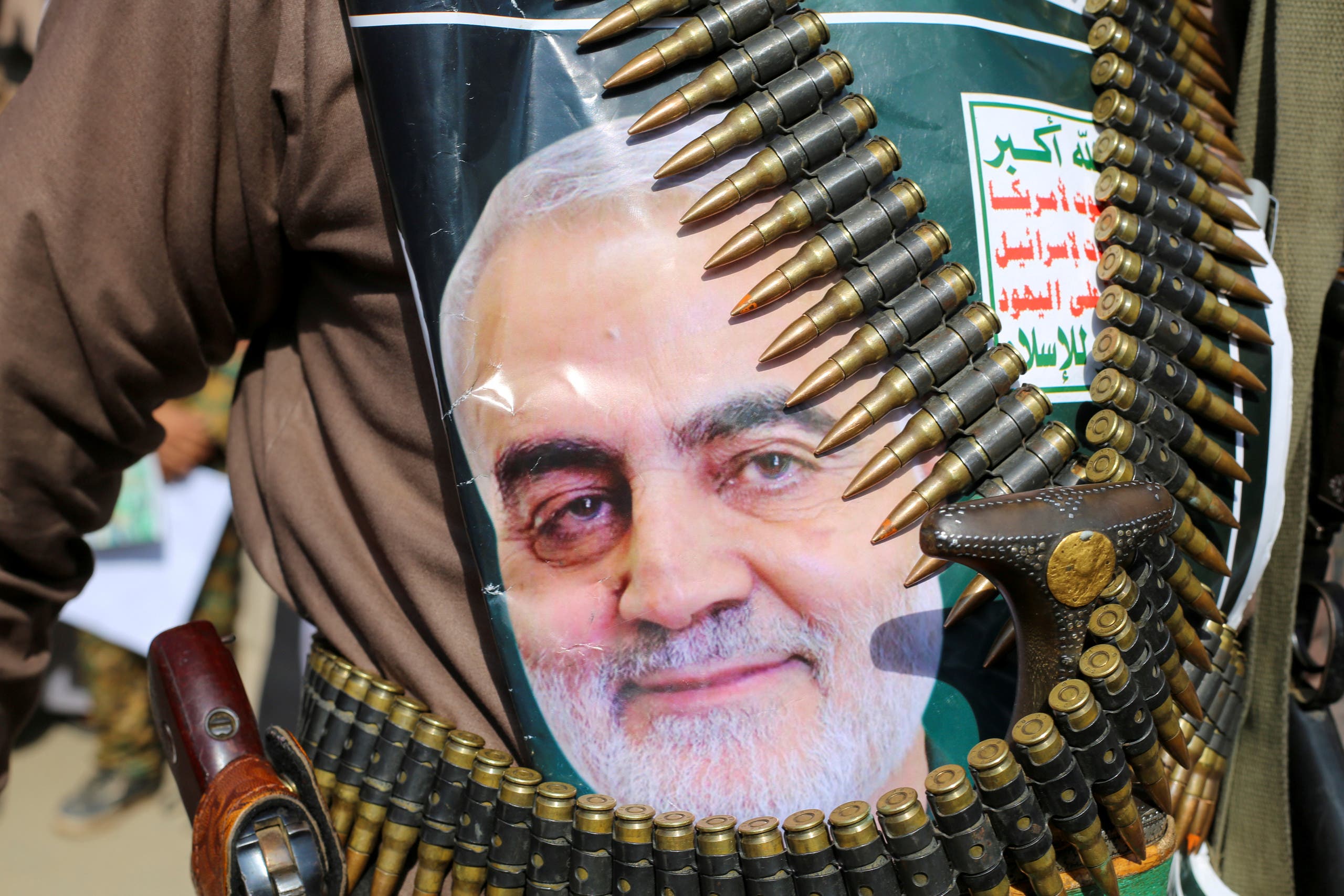
A supporter of the Houthis in Yemen has a poster attached to his waist of Iranian Major-General Qassem Soleimani, head of the Quds Force, who was killed in an air strike at Baghdad airport. The writing on the poster reads: God is the Greatest, Death to America, Death to Israel, Curse on the Jews, Victory to Islam. (Reuters)


Read More

The podcast’s voice actor speaking as Soleimani said: “We defended Syria, its people, and the whole region against the American-Zionist conspiracy and terrorism, and Iran has become a source of stability in Syria… We helped them using our experience through non-military jihadi groups.”

“Hezbollah, Hamas, and the Islamic Jihad Movement are not proxy groups, but are our brothers and partners in the resistance project against the Zionist regime.”

Al-Jazeera Podcast in Praise of Gen. Qassem Soleimani Receives Wide Acclaim in ME, Infuriates Saudis

0
Al-Jazeera Podcast in Praise of Gen. Qassem Soleimani Receives Wide Acclaim in ME, Infuriates Saudis
Qatar’s state-run broadcaster Al-Jazeera’s motion graphics podcast glorifying Iran’s martyred Islamic Revolution Guards Corps (IRGC) Qods Force Commander Lieutenant General Qassem Soleimani received wide acclaim and admiration from across the world, but certainly not from Saudi Arabia and its media, including Al-Arabiya TV.


The Saudi-owned Al-Arabiya released the podcast on its twitter page just to express that it’s gone mad, while the global audience admired the Qatari broadcaster for the move.


Al Jazeera’s podcast was part of its ‘Rumooz’ series (which is the Arabic word for ‘icons’), and introduced the episode by saying that “his star has shone in the Iran-Iraq war, then he became the engineer of most of Iran’s foreign battles, leaving his mark on some of the most volatile areas in the region: Syria, Yemen, Iraq and others. His assassination almost ignited a third world war. who is Qassem Soleimani?”


The podcast’s introduction was filled with cinematic music that builds dramatically, leading to the opening statement.


“I am Soleimani, the soldier fighting for the sake of Allah… The name great Satan fears… I am nothing more than a soldier of the Islamic Revolution… A soldier, I thank Allah, for blessing me with martyrdom,” the voice actor said.


The podcast’s voice actor speaking as Soleimani said, “We defended Syria, its people, and the whole region against the American-Zionist conspiracy and terrorism, and Iran has become a source of stability in Syria… We helped them using our experience through non-military jihadi groups.”


Read More


Also Read: IRGC Linked Agency Says Media, Analysts Got Khamenei’s Pacifist Message Wrong

“Hezbollah, Hamas, and the Islamic Jihad Movement are not proxy groups, but are our brothers and partners in the resistance project against the Zionist regime.”

The voice actor also referred to the cowardly assassination of General Soleimani at Baghdad airport in January by the US drones.

IRGC Linked Agency Says Media, Analysts Got Khamenei’s Pacifist Message Wrong

0
Pacifist Message: IRGC Linked Agency Says Media, Analysts Got Khamenei Wrong
IRGC Linked Agency Says Media, Analysts Got Khamenei’s Pacifist Message Wrong


Tasnim news agency in Iran says some foreign media and analysts got a tweet by Iranian Supreme Leader Ali Khamenei’s Pacifist wrong and portrayed it as if he was prepared to make peace with the United States.


The IRGC-linked news agency said that the interpretation about the tweet in praise of Imam Hassan, the second Shiite Imam, as a peace-maker was biased. Imam Hassan is known in the history of the Shiites for making a peace deal with his enemies, while his brother the non-compromising Imam Hussain was “martyred” in the course of a clash with his enemies.


Meanwhile, Tasnim charged that misinterpreting Khamenei’s words would be an act of “treason” in the country’s current situation.

Read More


Also Read: Noor-1 satellite changed balance of power: Maj. Gen. Bagheri

Tasnim news agency in Iran says some foreign media and analysts got a tweet by Iranian Supreme Leader Ali Khamenei wrong and portrayed it as if he was prepared to make peace with the United States. Meanwhile, Tasnim charged that misinterpreting Khamenei’s words would be an act of “treason” in the country’s current situation.

Many on social media recirculated the tweet from Khameni’s accounts believing it is a move to signal his readiness to negotiate with the United States. Tasnim explained that the tweet was taken from an old speech by Khamenei. Some Iran experts had explained on Twitter that Khamenei does not personally tweet and probably a social media aide had chosen to re-publish an old statement from him.

Ayatollah Khamenei translated a book about Imam Hassan and his peace deal in 1977 and used this example when he came up with the idea of “heroic flexibility”, ahead of 2015 nuclear deal with world power. Saturday May 9 coincided with Imam Hassan’s birthday and this justified the re-publishing of the old comment from Khamenei’s website. Pacifist Message  Pacifist Message  Pacifist Message  Pacifist Message  Pacifist Message 

The fundamental problems with the Iranian system of government

Iran Islamic republic was established in 1979. From the formation of religious government until now, the Iranian country has been run by sharia rules and law. Religious based law is very old and it is not capable of modern and democratic standards. For this reason, there are a lot of problems in a country that pulls the country towards strangulation and anarchism. The root of the problems is in the traditional governmental system and dictatorship. However, corruption, human rights violations, and poverty are the main problems of Iranian society that have had severe negative effects on people daily lives.

The fundamental problems with the Iranian system of government


Generally, whole governmental systems, such as the supreme leader office, ministries, official institutions, military and security forces, and the justice system is corrupt. In other words, the majority of government income is illegally shared between those organs. According to Transparency International reports, Iran has been considered one of the most corrupted countries in the world for decades. For this reason, governmental corruption prevents economic growth and development of the country in different sectors. In addition, the corruption inside the government has been caused the inability to manage crises like flooding, earthquake, sand storming, air pollution, water resources management, environmental degradation, and the outbreak of contagious diseases such as spreading of Coronavirus throughout the country. Also, officials do not feel any responsibility for these crises, and often they don’t pay attention and they do not make plans to resolve Iranian society problems. For this reason, corruption and existing social crises have caused public discontent in the country against government. Besides corruption inside the system, the Iranian government is known as one of the main human rights violators in the world. Because of this, Citizens, especially women, different ethnic groups, religious minorities, and general labors are subjected to a different kind of discrimination in the country. Read more

Also read Coronavirus: Russian hospital staff ‘working without masks’

Noor-1 satellite changed balance of power: Maj. Gen. Bagheri

Noor-1 satellite changed the balance of power: Maj. Gen. Bagheri


Chief of Staff of Iran’s Armed Forces Major General Mohammad Bagheri said that the power displayed by the Noor-1 satellite introduced a change to the balance of power in favor of the Iranian nation. And he also said that it was a huge intelligence failure for the enemies of the Islamic revolution.


Referring to the successful launch of the Noor-1 satellite by the Islamic Revolutionary Guards Corps as an example of intelligent design and planning with reliable scientific, technical and practical support, Major General Mohammad Bagheri noted, “We thank God that during the outbreak of COVID-19, the successful launch of the Noor-1 satellite indicated the sense of responsibility of the armed forces both in the fight against the coronavirus and increasing the country’s capacity by having a presence in space.”

Read More


Also Read: Iran has Put its First Military Satellite into Orbit. Why now?

Chief of Staff of Iran’s Armed Forces Major General Mohammad Bagheri.  says that the power displayed by the Noor-1 satellite . introduced a change to the balance of power in favor of the Iranian nation.  and is a huge intelligence failure for the enemies of the Islamic revolution. and but and but and but

Referring to the successful launch of the Noor-1 satellite . by the Islamic Revolutionary Guards Corps as an example of intelligent design.  and planning with reliable scientific. technical and practical support. Major General Mohammad Bagheri noted, “We thank God that during the outbreak of COVID-19. the successful launch of the Noor-1 satellite indicated the sense of responsibility. of the armed forces both in the fight against the coronavirus.  and increasing the country’s capacity by having a presence in space.”

Chief of Staff of Iran’s Armed Forces Major General Mohammad Bagheri. says that the power displayed by the Noor-1 satellite . introduced a change to the balance of power in favor of the Iranian nation.