Home Blog Page 166

Iran has Put its First Military Satellite into Orbit. Why now?

Iran has Put its First Military Satellite into Orbit.


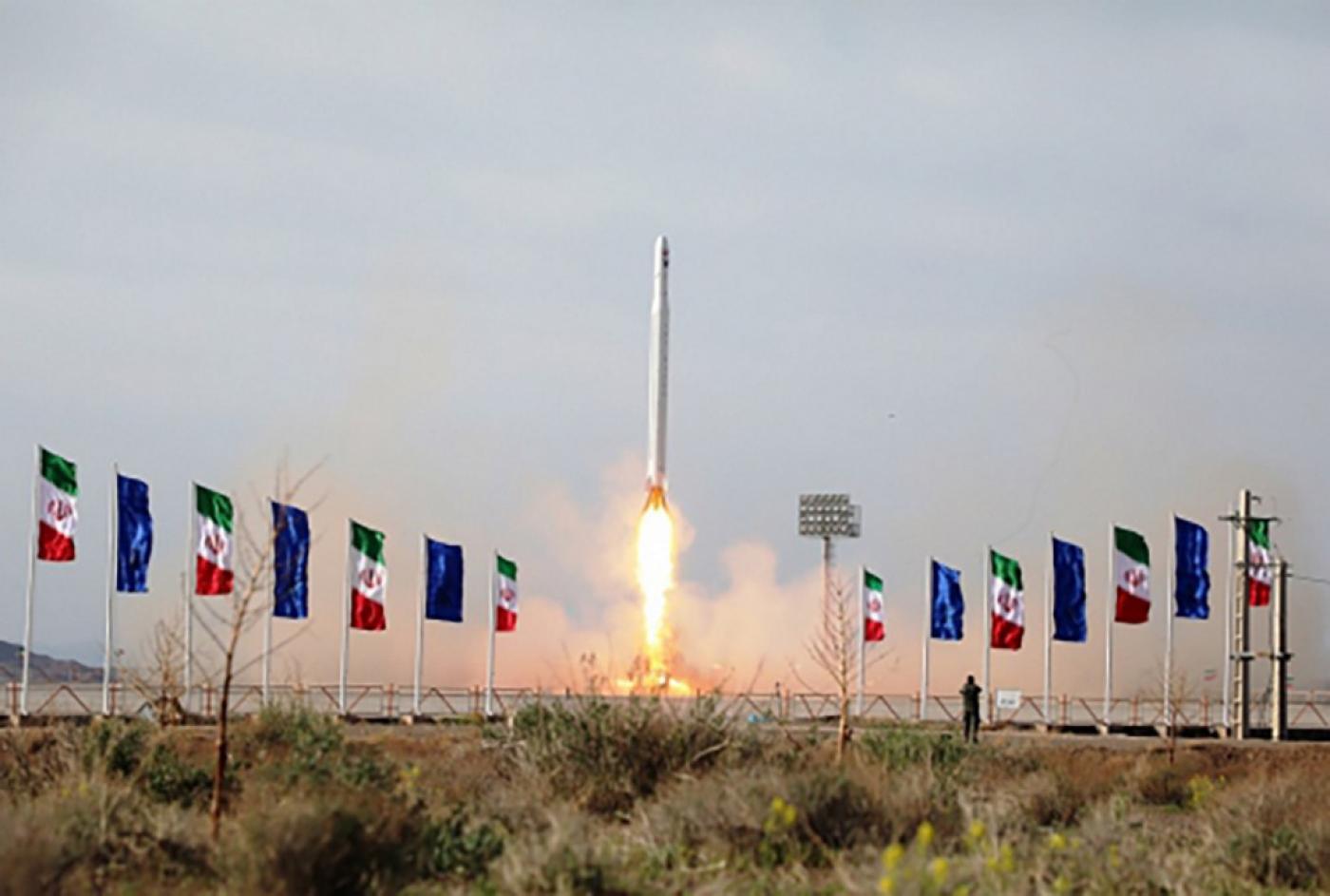
Last month, on the 41st anniversary of the establishment of the Islamic Revolutionary Guard Corps (IRGC), Iran successfully put its first military satellite into orbit. 


The homegrown satellite, dubbed Noor, was launched from the country’s central desert region. IRGC Commander Major General Hossein Salami called the launch a “strategic achievement”, while Tasnim News Agency described it as a “milestone” in the nation’s space industry.


Meanwhile, US Secretary of State Mike Pompeo strongly condemned the launch, arguing that Iran’s space programme was “neither peaceful nor entirely civilian”.


Significant setbacks

The rhetoric by both sides raises important questions. What is the military significance of Tehran’s space programme? Why has the IRGC decided to launch a military satellite now? And how should the United States respond?


In terms of military significance, the Islamic Republic is one of a handful of nations with indigenous space-launching capabilities. In February 2009, Tehran successfully sent the Omid satellite into space.


It placed another satellite, Fajr, into low-earth orbit, in February 2015. And in July 2017, Iran launched into space its satellite-carrying rocket, Simorgh, capable of reaching a higher altitude and carrying a heavier load than earlier models.


This means that Iranian military leaders believe there is value in investing their limited financial resources in the country’s space programme. Yet, in recent years, the programme has suffered significant setbacks, including failures to put satellites into orbit, (Payam and Doosti in 2019 and Zafar-1 this year), a launchpad explosion, and a separate fire at Imam Khomeini Space Center last year.


February 2019, media reports suggested that the US had an active programme.to sabotage Iran’s space capabilities. According to these reports,.this explained the astonishingly high rate (67 percent) of orbital launch failures in Iran, compared with a five percent rate worldwide. The US government never confirmed the allegations.


US military and political officials have claimed that Iran would use the experience it gained in launching satellites.to develop ballistic missiles. Intercontinental ballistic missile technology has been developed since the Second World War, and there have been several examples of states converting these missiles into satellite launch vehicles, but never vice versa.
Read More

Also Read: Iran using virus crisis to revive image, escalate tensions
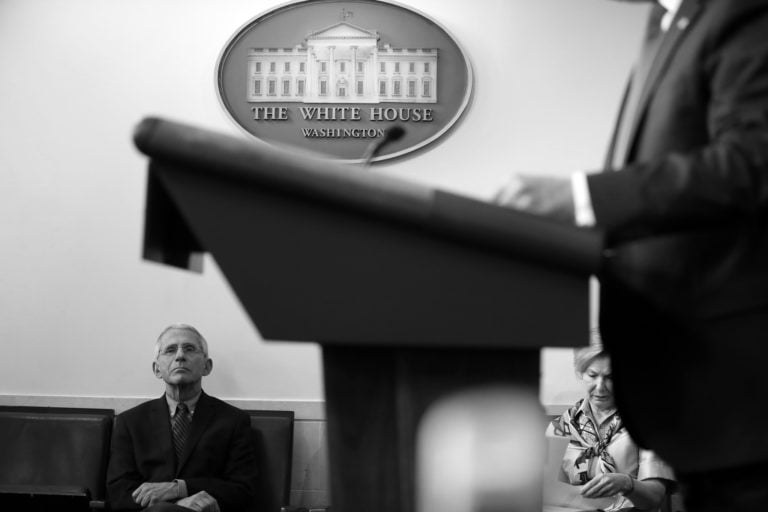
Fauci: No scientific evidence the coronavirus was made in a Chinese lab

0

Anthony “Tony” Fauci has become the scientific face of America’s COVID-19 response, and he says the best evidence shows the virus behind the pandemic was not made in a lab in China.


Fauci: No scientific evidence the coronavirus was made in a Chinese lab


Fauci, the director of the U.S. National Institute of Allergy and Infectious Diseases, shot down the discussion that has been raging among politicians and pundits, calling it “a circular argument” in a conversation Monday with National Geographic.

“If you look at the evolution of the virus in bats and what’s out there now, [the scientific evidence] is very, very strongly leaning toward this could not have been artificially or deliberately manipulated … Everything about the stepwise evolution over time strongly indicates that [this virus] evolved in nature and then jumped species,” Fauci says. Based on the scientific evidence, he also doesn’t entertain an alternate theory—that someone found the coronavirus in the wild, brought it to a lab, and then it accidentally escaped.

Fauci is most concerned that the United States will be put to the test this fall and winter by a second wave of COVID-19 if the country does not blunt the infection rate by the summer.

“Shame on us if we don’t have enough tests by the time this so-called return might occur in the fall and winter,” he says, advising that the U.S. needs to make sure we not only have an adequate supply of tests available before a second wave hits, but also a system for getting those tests to the people who most need them.

“I don’t think there’s a chance that this virus is just going to disappear,” he says. “It’s going to be around, and if given the opportunity, it will resurge.” As such, Fauci says the U.S. should also focus this summer on properly reinforcing the nation’s health care system, ensuring the availability of hospital beds, ventilators, and personal protective equipment for health care workers.

He also stressed the importance of continuing to social distance everywhere until the case counts start to fall in cities and states. The U.S. witnessed about 20,000 to 30,000 new cases every day in the month of April, suggesting the country is stuck in its peak.

Still, he remains optimistic that a vaccine will be ready within an historically short time frame, citing one promising candidate that he thinks may move into advanced clinical trials by the early summer. Fauci has said that he thinks a final vaccine could be available for general use as early as January, which would break records for the speed at which previous vaccines were developed.

One reason for his confidence is the “impressive” results being seen now in animals tested with a vaccine candidate made by Cambridge, Massachusetts-based Moderna Therapeutics, which brought it into human trials in a record 42 days. The candidate is what is known as an mRNA vaccine—a drug that uses snippets of a virus’s genetic material—rather than the dead or weakened virus itself—to build the proteins that trigger the body’s protective immune response. Read more 


IRGC forces, gunmen killed in clashes in Iran’s Kurdistan province

0
IRGC forces, gunmen killed in clashes in Iran's Kurdistan province
IRGC forces, gunmen killed in clashes in Iran’s Kurdistan province


In the clashes erupted in Divandarreh region in Iran’s Kurdistan province on Tuesday, a number of Iran’s Islamic revolution Guards Corps (IRGC) forces and some members of an unidentified armed group were killed, Tasnim news agency reported.


Following the clashes with an “anti-revolutionary terrorist” group on Tuesday in Divandarreh region, three of the IRGC forces were killed, an IRGC statement carried by Tasnim read.


Read More


Also Read: Iran weighs holding its anti-Israel ‘al-Quds Day’ amid pandemic

In the clashes erupted in Divandarreh region in Iran’s Kurdistan province on Tuesday, a number of Iran’s Islamic revolution Guards Corps (IRGC) forces and some members of an unidentified armed group were killed, Tasnim news agency reported. Following the clashes with an “anti-revolutionary terrorist” group on Tuesday in Divandarreh region, three of the IRGC forces were killed, an IRGC statement carried by Tasnim read. In the clashes erupted in Divandarreh region in Iran’s Kurdistan province on Tuesday, a number of Iran’s Islamic revolution Guards Corps (IRGC) forces and some members of an unidentified armed group were killed, Tasnim news agency reported. Following the clashes with an “anti-revolutionary terrorist” group on Tuesday in Divandarreh region, three of the IRGC forces were killed, an IRGC statement carried by Tasnim read. In the clashes erupted in Divandarreh region in Iran’s Kurdistan province on Tuesday, a number of Iran’s Islamic revolution Guards Corps (IRGC) forces and some members of an unidentified armed group were killed, Tasnim news agency reported. Following the clashes with an “anti-revolutionary terrorist” group on Tuesday in Divandarreh region, three of the IRGC forces were killed, an IRGC statement carried by Tasnim read. In the clashes erupted in Divandarreh region in Iran’s Kurdistan province on Tuesday, a number of Iran’s Islamic revolution Guards Corps (IRGC) forces and some members of an unidentified armed group were killed, Tasnim news agency reported.

Iran using virus crisis to revive image, escalate tensions
Iran using coronavirus crisis to revive image, escalate tensions
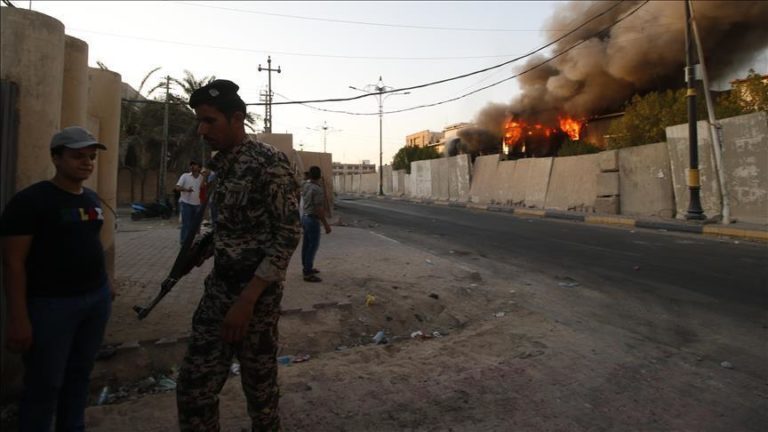
                        Iran using coronavirus crisis to revive image, escalate tensions
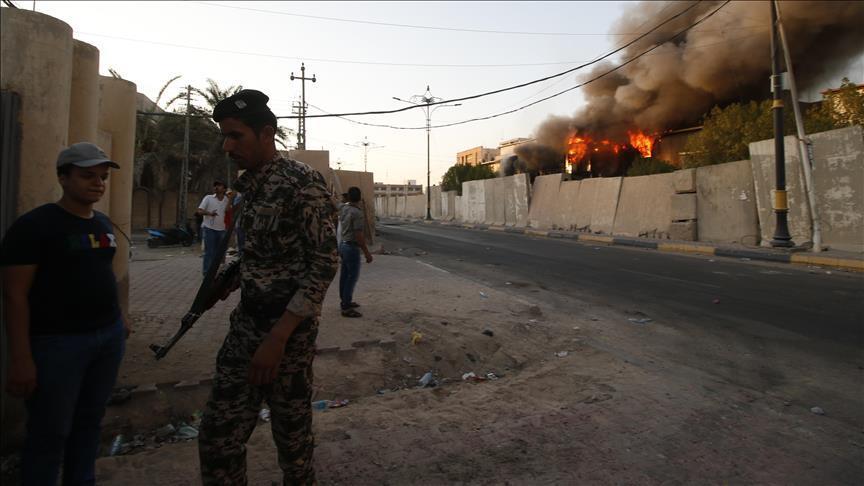
 

The hard-liners of Iran — primarily the Islamic Revolutionary Guard Corps (IRGC) — are using the cover of the coronavirus crisis to refurbish their image domestically by escalating tensions in the region against the US and its allies, and accelerating plans to settle islands the country unlawfully occupies in the Gulf. This worrying behavior should preclude the lifting of the UN’s conventional arms embargo in October.


The killing of Qassem Soleimani in early January and the IRGC’s inability to respond in kind shook the image of invincibility Iran’s leaders wanted to project.


A week later, the IRGC shot down a Ukrainian airliner, killing all 176 passengers and crew, causing an international uproar and further weakening that image, especially with its feeble attempt to cover it up.


Internally, many Iranians also vehemently protested, as most of the passengers were Iranian or of Iranian origin.


Those two events further tarnished the Guards’ image, which was already bloodied by their November 2019 crackdown on civilian protests throughout Iran, when they killed hundreds of unarmed protesters.


In February, the IRGC was able to engineer parliamentary elections, eliminating the little opposition that existed in the old Majlis. The hard-liners won 221 seats to the reformists’ 20, ensuring a rubber-stamp assembly.


Having secured a commanding majority in parliament, the hard-liners are not much worried about the second round of parliamentary elections in September.


However, they are training their eyes on next year’s presidential election to ensure a hard-liner victory.


Equally important, they are gearing up for the battle of succession to the frail Supreme Leader Ali Khamenei — an event that could happen at any time because of incapacitation or death.

Read More

Also Read: Iran weighs holding its anti-Israel ‘al-Quds Day’ amid pandemic

coronavirus crisis coronavirus crisis coronavirus crisis coronavirus crisis corona-virus crisis

IRGC taking Iran toward military dictatorship

0
Iran’s Islamic Revolutionary Guard Corps (IRGC) appears to be seizing the opportunity provided by the coronavirus pandemic to increase its power.      
IRGC taking Iran toward military dictatorship
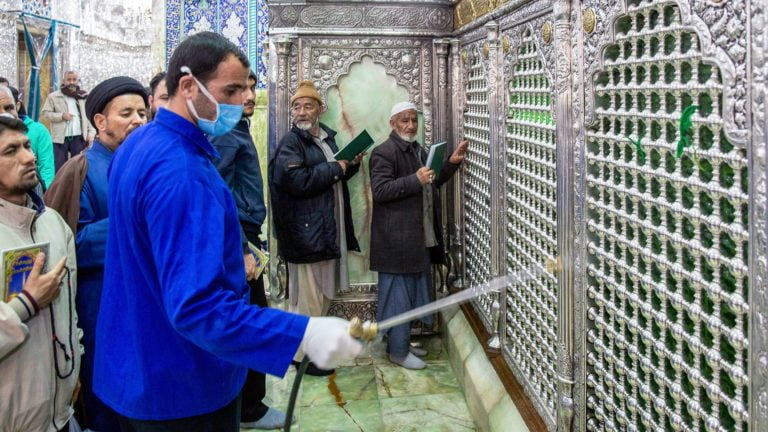
The IRGC is cognizant of the fact that the popularity of the ruling clerics has been significantly impacted in recent months, particularly due to its handling of the coronavirus crisis. When the virus first emerged in Iran, top clerics strongly opposed following the health authorities’ recommendations. Mohammad Saeedi, Supreme Leader Ali Khamenei’s representative in Qom, argued that the enemy would not succeed in projecting the holy city as being unsafe. Saeedi insisted on leaving the shrines in Qom open and encouraged people to visit them in order to be cured of the coronavirus. Iranians quickly witnessed how the clerics’ decisions made Qom the center of the coronavirus outbreak in the country and heightened the crisis. A manager of the Group of Experts of Social Factors Impacting Health at the Shahid Beheshti University in Tehran even admitted in February: “Almost all cases in the country have been caused by Qom. Therefore, our greatest mistake was that we did not control the source.” Lawmakers have also criticized the clerics for mishandling the situation. Alireza Rahimi, a member of the Majlis (parliament) leadership, was quoted by state-run news agency ISNA as asking: “Why was the coronavirus outbreak in Qom overshadowed by the Majlis elections? Why was Qom not quarantined to prevent the spread of coronavirus across the country?” People also witnessed how the clerics continued to refuse to follow the health authorities’ recommendations to quarantine Qom. One of the most important criticisms of the clerics came from Nahid Khodakarami, head of Tehran City Council’s Health Commission, who said on March 1: “Two weeks ago, I told Dr. Iraj Harirchi and even Dr. (Ali) Nobakht (the head of the parliamentary health committee) that Qom must be quarantined, but they did not listen. There must be restrictions placed on Qom. Now, the entire country has been infected. Even in a small city like Khansar, three people have tested positive for coronavirus. All three had gone there from Qom. Yesterday, three people traveled from Qom to Tehran and all of them died. If we had not given priority to the concerns of the clerics, we would have been in a much better situation.” Qom is a center for training powerful Shiite religious figures from other countries, with thousands of seminaries established there. Among those studying in Qom at the time of the outbreak were hundreds of Chinese students. The top clerics also refused to delay the Majlis elections in late February. Later, a video clip emerged showing the tragic situation in Qom’s mortuary. It was widely circulated among Iranians on social media. Interior Minister Abdolreza Rahmani Fazli admitted: “Some had recommended delaying the elections, and insisted on delaying elections in Qom. But I, as the official for the elections, refused to approve these recommendations.” Meanwhile, the IRGC has been coy and has shrewdly attempted to increase its popularity by depicting itself as the country’s hero. After the coronavirus outbreak began, the IRGC started marginalizing Rouhani’s government and many of the clerics by infiltrating hospitals, overseeing health officials and introducing nationwide initiatives for supposedly fighting coronavirus. For example, the IRGC this month unveiled a new Iranian-made device that is reportedly capable of instantly detecting the virus. The commander-in-chief of the IRGC, Maj. Gen. Hossein Salami, boasted: “The device is able to detect every coronavirus infection case within a 100-meter radius by creating a magnetic field and using a bipolar virus inside the device. When the device’s antenna is pointed at a specific location, it will detect the contaminated spot within five seconds. This device has been tested in various hospitals and has an 80 percent accuracy level.” Read more

Iran weighs holding its anti-Israel ‘al-Quds Day’ amid pandemic

Iran weighs holding its anti-Israel al-Quds Day amid pandemic
                 Iran weighs holding its anti-Israel al-Quds Day amid pandemic


Iran’s leaders have closed mosques and taken other measures to slow the spread of the coronavirus. As thousands of their countrymen died and almost 100,000 were infected.


However, the leaderships are now facing questions about how it will handle its annual Israel-bashing event called al-Quds Day.


The day is supposed to be held on the last Friday of Ramadan, which this year falls on May 22.


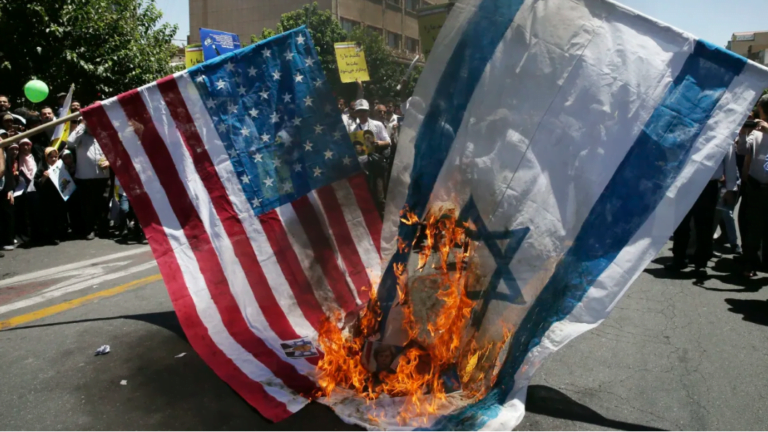
Last year’s al-Quds (Jerusalem) Day, which is centered on the “liberation” of Jerusalem from the “Zionists,”. They hold featured posters and propaganda promising death to Israel.


Iran has adopted the Palestinian cause for decades, using it as part of its overall anti-American and anti-Israel propaganda machine.


The Islamic Republic claims to be part of the “resistance” against Israel. Last year, the regime promised that the Trump administration’s “Deal of the Century” would fail.


Usually, there are mass rallies on al-Quds Day in Tehran and people gather. However, the pandemic has meant there is less desire to have gatherings amid social-distancing guidelines.


According to Fars News in Iran, the head of the “Coordinating Council for Islamic Propaganda” held a meeting to discuss the progress of al-Quds Day this year.


It was attended by officials from the Islamic Revolutionary Guard Corps.  The Interior Ministry and the ministries of Foreign Affairs and Health also attended.


The meeting included discussions of how the anti-Israel event is an “unstoppable occasion”. And that it is a relic of the Islamic Revolution. But its manner of display this year, including gatherings, will be contingent on the coronavirus spread.


Read More


Iran Has Far More Coronavirus Cases Than It Is Letting On

The surprising number of Iranian government officials succumbing to COVID-19 offers a hint that the disease is far more widespread than the official statistics indicate.Coronavirus 


Iran Has Far More Coronavirus Cases Than It Is Letting On


You are standing before a huge barrel of apples. You can’t see the apples, but you can reach in and pick them out. Most are delicious, but a very small number of them are rotten—just about one in 12,000, your friend assures you. You reach in blindly and miraculously pick out a rotten apple. You reach in again and withdraw a whole heaping bushel of apples, maybe 50 in all. Most are good, but when you look closely you see them: one, two, three, four more rotten apples. One rotten apple is an amazing coincidence. Five means your barrel has lots of rotting apples in it and your friend was lying to you.
 
As of yesterday, according to Johns Hopkins University’s Coronavirus Resource Center, Iran has reported 6,566 COVID-19 cases, or about one in every 12,000 people in its population. The first case appeared on February 19. Right now Iran is third behind China (80,695) and South Korea (7,314), and just ahead of Italy (5,883). But the official Iranian number is almost certainly an undercount, probably due to the Iranian government’s attempt to hide a desperate situation for which it is partially responsible. When the final history of the coronavirus epidemic of 2020 is written, it may go something like this: The disease started in China, but it became finally and irrevocably uncontained in Iran. Knowing that the Iranian number is much higher than currently disclosed tells the rest of the world that the epidemic is even further along than official statistics indicate.
 
The first sign of dishonesty came on February 28, when Masoumeh Ebtekar, one of the country’s vice presidents, announced that she had the virus. Ebtekar is one of the most famous politicians in the country, well known even in the West for her role as a particularly sadistic member of the group that held U.S. diplomats hostage in 1979 in Tehran. Of course, being a notorious sociopath confers no immunity against COVID-19. But here is where the rotting apples come in.  
 
Iran Briefing | News Press Focus on Human Rights Violation by IRGC, Iran Human Rights  

US sanctions Iranian-Iraqi businessman, mining company linked to IRGC

0

The US Treasury Department imposed sanctions Friday on a businessman accused of working with Iran’s Islamic Revolutionary Guard Corps (IRGC) to illegally generate revenue and smuggle weapons.


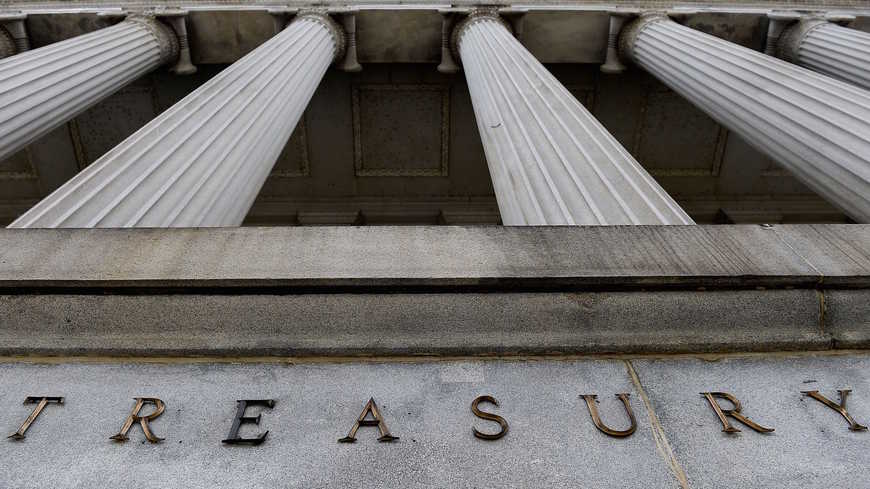
An exterior view of the US Department of the Treasury building is seen in Washington, DC, March 27, 2020. Photo by OLIVIER DOULIERY/AFP via Getty Images
An exterior view of the building of US Department of the Treasury is seen on March 27, 2020 in Washington, DC. (Photo by Olivier DOULIERY / AFP) (Photo by OLIVIER DOULIERY/AFP via Getty Images)


The sanctions freeze any US-held assets belonging to Amir Dianat, an Iranian-Iraqi national the Treasury Department says was involved in the shipment of missiles on behalf of the IRGC’s elite Quds Force and smuggling “lethal aid” from Iran to Yemen.

The United States also designated Taif Mining Services, a company owned, controlled or directed by Dianat, according to the Treasury statement.

“The Iranian regime and its supporters continue to prioritize the funding of international terrorist organizations over the health and well-being of the Iranian people,” said Treasury Secretary Steven Mnuchin. “The United States remains committed to working with financial institutions, non-profit organizations, and international partners to facilitate humanitarian trade and assistance to the Iranian people.”

The Donald Trump administration has imposed tough economic sanctions on the Islamic Republic since withdrawing from the landmark nuclear deal with Iran and other world powers.

Read more:

Amid Coronavirus Crisis, Iranian Officials Plan To Build Nuclear Bomb

0

Amid Coronavirus Crisis, Iranian Officials Plan To Build Nuclear Bomb

Amid Coronavirus Crisis, Iranian Officials Plan To Build Nuclear Bomb

The IAEA Director-General announced on Tuesday, March 3, 2020, that the Iranian regime has not allowed inspectors to visit three undisclosed sites so far Mr. Rafael Grossi, the agency’s director-general called on Iran to immediately grant access to suspected nuclear sites.

How Iran Became a Global Vector of Infection for COVID-19

0

The authoritarian theocracy faces specific challenges in dealing with the coronavirus


How Iran Became a Global Vector of Infection for COVID-19


As the world hunkers down to face the global outbreak of COVID-19, also called the coronavirus (or “Wuhan virus,” depending on one’s political inclinations), the focus of world attention has shifted from its origin point of China—where aggressive containment measures have seemingly worked to counter the exponential growth of those infected—to Italy, where a swift eruption of cases in the north has led to an effective shutdown of the entire country. Lost in this frantic and spastic global attention span is how hard the virus has been hitting Iran. Exclusive reports from doctors inside the country reveal a state of disorganized chaos, little to no accurate information, and scarce resources that limit the ability of the health-care system to cope with the flood of new cases.

Iran currently has the third-worst outbreak of COVID-19 following China and Italy, with as of Friday 514 official deaths since the first reported case on Feb. 19. Speculation that the situation there is far, far worse than official accounts indicate has been bolstered by the relatively large number of Iranian upper echelons—regime officials, clerics, and members of the Islamic Revolutionary Guard Corps (IRGC)—who have contracted the disease, some of them fatally.

Additionally, several countries have discovered cases of COVID-19 that originated with travelers from Iran in the early days of March. One of the first cases in New Zealand came from a family who had recently traveled to the Islamic Republic. At least three of the first 12 cases in Canada came via Iran, as did all 33 initial cases in Iraq. In the United States, the first confirmed COVID-19 case in New York City was a health-care worker who had returned from Iran, and Los Angeles also identified a coronavirus patient from Iran who passed through LAX. India evacuated hundreds of Indian Muslim pilgrims from affected areas in Iran, many of whom tested positive for the coronavirus. And in Lebanon, reports indicate—difficult to confirm—that Hebzollah officials (possibly including Secretary-General Hassan Nasrallah himself) had contracted the virus from an Iranian delegation that visited the country headed by the speaker of Iran’s parliament, Ali Larijani. There are also reports of new cases in China that were transmitted there by travelers from Iran.


Read more …

Iran Briefing | News Press Focus on Human Rights Violation by IRGC, Iran Human Rights