Home Blog Page 104

Iran’s Revolutionary Guard Is Radicalizing Young Men Across The Middle East

0


Iran’s Revolutionary Guard Is Radicalizing Young Men Across The Middle East

Like his six predecessors as president, Joe Biden enters office with the challenge posed by Iran’s regime high on his to-do list. Putting partisanship aside, as far as leverage against Tehran is concerned, the incoming administration has inherited a powerful hand from its predecessor, with the Islamic Republic’s economy already under huge pressure due to U.S. sanctions. Moving forward, speculation now centres on when and how Biden should re-engage Tehran, and if any concessions can be obtained beyond the nuclear issue.

Yet there can be no turning the clock back to 2015 when the nuclear deal was signed between world powers and the Islamic Republic. Since then, Iran has changed internally, and its place in the region is very different. Key to these changes is the increased power of the Islamic Revolutionary Guard Corps (IRGC), the clerical regime’s ideological armed wing which, as our new report for the Tony Blair Institute for Global Change shows, has become more influential in shaping and implementing the Islamic Republic’s security, military, and foreign policies, enforcing what we call its “militia doctrine.”

Often seen as part of the Iranian deep state, the Revolutionary Guard is increasingly transitioning to the state itself. IRGC-affiliated candidates are well placed to take the presidency in June and whoever succeeds ageing Ayatollah Khamenei as supreme leader will need the IRGC more than ever to maintain power.

Read the complete article at: IFMAT


Like his six predecessors as president, Joe Biden enters office with the challenge posed by Iran’s regime high on his to-do list. Putting partisanship aside, as far as leverage against Tehran is concerned, the incoming administration has inherited a powerful hand from its predecessor, with the Islamic Republic’s economy already under huge pressure due to U.S. sanctions. Moving forward, speculation now centres on when and how Biden should re-engage Tehran, and if any concessions can be obtained beyond the nuclear issue. Radicalizing Young Men Radicalizing Young Men

Female Activists Imprisoned for Attending Protests, Refusing “Virginity Test”

Female Activists Imprisoned for Attending Protests, Refusing “Virginity Test”


Two imprisoned student activists continue to be persecuted for peacefully protesting unjust policies and practices in Iran, including so-called “virginity tests.”

Charged with “assembly and collusion against national security” for peacefully participating in protests, Saha Mortezaei must now serve six years in prison after her sentence was upheld by Branch 54 of the Appeals Court in Tehran.

“For a while, the security agents had been warning Saha about her sit-in protests [starting in October 2019] against being denied enrollment in the University of Tehran’s doctorate program in political science and international relations,” a source with detailed knowledge of her case told the Center for Human Rights in Iran (CHRI) on February 10, 2021.

Speaking on condition of anonymity for fear of reprisals for speaking publicly, the source added, “When her protests continued into the November 2019 mass demonstrations and riots flared up at the University of Tehran, Saha was arrested on the night of November 17, 2019, at her student dormitory.”

Read the complete article at: Iran Human Rights


Two imprisoned student activists continue to be peIranrsecuted for peacefully protesting unjust policies and practices in Iran, including so-called “virginity tests.” Charged with “assembly and collusion against national security” for peacefully participating in protests, Saha Mortezaei must now serve six years in prison after her sentence was upheld by Branch 54 of the Appeals Court in Tehran. “For a while, the security agents had been warning Saha about her sit-in protests [starting in October 2019] against being denied enrollment in the University of Tehran’s doctorate program in political science and international relations,” a source with detailed knowledge of her case told the Center for Human Rights in Iran (CHRI) on February 10, 2021. Speaking on condition of anonymity for fear of reprisals for speaking publicly, the source added, “When her protests continued into the November 2019 mass demonstrations and riots flared up at the University of Tehran, Saha was arrested on the night of November 17, 2019, at her student dormitory.” Female Activists Female Activists

IRGC-made militias the most dangerous of all Iran-backed groups

0
IRGC-made militias the most dangerous of all Iran-backed groups


Militias manufactured by Iran’s Islamic Revolutionary Guard Corps (IRGC) are the fastest growing category of Iranian-backed militia in the Middle East, and pose the greatest threat to the region’s stability, according to a new report from the Tony Blair Institute for Global Change.

The new report, “The View from Tehran: Iran’s Militia Doctrine,” finds that Iran’s militia network is not a homogeneous bloc and that only some groups are “proxies.”

The so-called “Iran-backed militias” are made up of a combination of independently formed grassroots militias and groups manufactured by the IRGC, the clerical regime’s ideological army.

While the relationship between Iran and the grassroots militias is rooted in tactical or shared interests and is primarily based on supply of weapons and material, the latter is rooted in a shared worldview with these militias fully subscribing to the regime’s ideology of Velayat-e Faqih, which gives Iran’s supreme leader absolute authority over Shia Muslims as God’s representative on Earth.

Read the complete article at: The Jerusalem Post


 Militias manufactured by Iran’s Islamic Revolutionary Guard Corps (IRGC) are the fastest growing category of Iranian-backed militia in the Middle East, and pose the greatest threat to the region’s stability, according to a new report from the Tony Blair Institute for Global Change.  The new report, “The View from Tehran: Iran’s Militia Doctrine,” finds that Iran’s militia network is not a homogeneous bloc and that only some groups are “proxies.” The so-called “Iran-backed militias” are made up of a combination of independently formed grassroots militias and groups manufactured by the IRGC, the clerical regime’s ideological army. While the relationship between Iran and the grassroots militias is rooted in tactical or shared interests and is primarily based on supply of weapons and material, the latter is rooted in a shared worldview with these militias fully subscribing to the regime’s ideology of Velayat-e Faqih, which gives Iran’s supreme leader absolute authority over Shia Muslims as God’s representative on Earth.

Iran producing uranium metal in violation of 2015 nuclear deal, U.N. inspectors say

0
Iran producing uranium metal in violation of 2015 nuclear deal, U.N. inspectors say


The U.N. atomic agency said Wednesday that Iran has started to produce uranium metal, marking the latest breach of the 2015 nuclear agreement by Tehran.

Inspectors for the International Atomic Energy Agency, or IAEA, verified on Feb. 8 that Iran had produced a small amount of uranium metal at a nuclear plant in Isfahan, the agency’s spokesman, Fredrik Dahl, said in an email. In a report to member states, IAEA Director General Rafael Mariano Grossi informed the agency’s member states about the development.

The material can be used to build the core of a nuclear weapon. The 2015 nuclear deal between Iran and world powers expressly forbids producing uranium metal or researching and developing uranium metallurgy for 15 years.

The production of uranium metal further complicates any potential diplomacy between Tehran and the new administration in Washington when each government has staked out negotiating positions that put the onus on the other side to take the first conciliatory step.

Read the complete article at: NBC News


The U.N. atomic agency said Wednesday that Iran has started to produce uranium metal, marking the latest breach of the 2015 nuclear agreement by Tehran. Inspectors for the International Atomic Energy Agency, or IAEA, verified on Feb. 8 that Iran had produced a small amount of  at a nuclear plant in Isfahan, the agency’s spokesman, Fredrik Dahl, said in an email. In a report to member states, IAEA Director General Rafael Mariano Grossi informed the agency’s member states about the development. The material can be used to build the core of a nuclear weapon. The 2015 nuclear deal between Iran and world powers expressly forbids producing  or researching and developing uranium metallurgy for 15 years. The production of  further complicates any potential diplomacy between Tehran and the new administration in Washington when each government has staked out negotiating positions that put the onus on the other side to take the first conciliatory step.

Iranian Cyber Groups Spying on Dissidents & Others of Interest to Government

0
Iranian Cyber Groups Spying on Dissidents & Others of Interest to Government

A new investigation of two known threat groups show cyber actors are spying on mobile devices and PCs belonging to targeted users around the world.

The Iranian government is continuing to actively spy on the mobile phones and PCs of dissidents and other individuals thought to be of interest to the regime, a new Check Point Research investigation of two Iran-based cyber-threat groups has revealed.

One of the groups, called Infy, has been operating since at least 2007 and has been associated with attacks targeting Persian-language media, diplomatic targets, and Iranian dissidents in multiple countries, including the United States, Canada, and Germany.

Infy’s modus operandi has been to install surveillance malware on PCs belonging to targeted individuals and collecting a wide range of information from them, including contact information, sensitive data, voice recordings, and image captures. Infy ceased operations briefly between mid-2016 and mid-2017 after researchers from Palo Alto took down the group’s command-and-control (C2) infrastructure and, with that, its ability to communicate with the victims.

Read the complete article at: Dark Reading


The Iranian government is continuing to actively spy on the mobile phones and PCs of dissidents and other individuals thought to be of interest to the regime, a new Check Point Research investigation of two Iran-based cyber-threat groups has revealed. One of the groups, called Infy, has been operating since at least 2007 and has been associated with attacks targeting Persian-language media, diplomatic targets, and Iranian dissidents in multiple countries, including the United States, Canada, and Germany.   Infy’s modus operandi has been to install surveillance malware on PCs belonging to targeted individuals and collecting a wide range of information from them, including contact information, sensitive data, voice recordings, and image captures. Infy ceased operations briefly between mid-2016 and mid-2017 after researchers from Palo Alto took down the group’s command-and-control (C2) infrastructure and, with that, its ability to communicate with the victims.

Secret recording suggests Iranian official concedes truth about downing of Flight PS752 may never be revealed

0
Secret recording suggests Iranian official concedes truth about downing of Flight PS752 may never be revealed


The Canadian government and security agencies are reviewing an audio recording in which a man — identified by sources as Iran’s foreign affairs minister — discusses the possibility that the destruction of Flight PS752 was an intentional act, CBC News has learned.

The individual, identified by sources as Minister of Foreign Affairs Mohammad Javad Zarif, is heard saying on the recording that there are a “thousand possibilities” to explain the downing of the jet, including a deliberate attack involving two or three “infiltrators” — a scenario he said was “not at all unlikely.”

He is also heard saying the truth will never be revealed by the highest levels of Iran’s government and military.

“There are reasons that they will never be revealed,” he says in Farsi. “They won’t tell us, nor anyone else, because if they do it will open some doors into the defence systems of the country that will not be in the interest of the nation to publicly say.”

Read the complete article at: CBC


The Canadian government and security agencies are reviewing an audio recording in which a man — identified by sources as Iran’s foreign affairs minister — discusses the possibility that the destruction of Flight PS752 was an intentional act, CBC News has learned. The individual, identified by sources as Minister of Foreign Affairs Mohammad Javad Zarif, is heard saying on the recording that there are a “thousand possibilities” to explain the downing of the jet, including a deliberate attack involving two or three “infiltrators” — a scenario he said was “not at all unlikely.” “There are reasons that they will never be revealed,” he says in Farsi. “They won’t tell us, nor anyone else, because if they do it will open some doors into the defence systems of the country that will not be in the interest of the nation to publicly say.” Secret recording Secret recording

IRGC commander warns regional countries of ties with Israel

0


First-in-command of the Islamic Revolutionary Guard Corps (IRGC) Hossein Salami has warned that Zionists’ presence will bring only ‘fire’, warning some regional countries of ties with the regime, Mehr reported.

“We warn reactionary regimes of the region that Zionists are a cursed tree that only results in fire wherever it grows. Allowing them [to grow] is nothing but proof of enmity against Muslims. You should not indulge in friendship with Zionists,” Major General Salami said on Monday in the ceremony of joining of 340 speedboats to IRGC Navy in Bandar Abbas.

The US is no longer a world power, it is no longer able to pursue its desired policies anywhere, Salami said.

Read the complete article at: News AM


First-in-command of the Islamic Revolutionary Guard Corps (IRGC) Hossein Salami has warned that Zionists’ presence will bring only ‘fire’, warning some regional countries of ties with the regime, Mehr reported. “We warn reactionary regimes of the region that Zionists are a cursed tree that only results in fire wherever it grows. Allowing them [to grow] is nothing but proof of enmity against Muslims. You should not indulge in friendship with Zionists,” Major General Salami said on Monday in the ceremony of joining of 340 speedboats to IRGC Navy in Bandar Abbas. The US is no longer a world power, it is no longer able to pursue its desired policies anywhere, Salami said.

The IRGC and Iran’s “Water Mafia”

0
The IRGC and Iran’s “Water Mafia”
          The IRGC and Iran’s “Water Mafia”


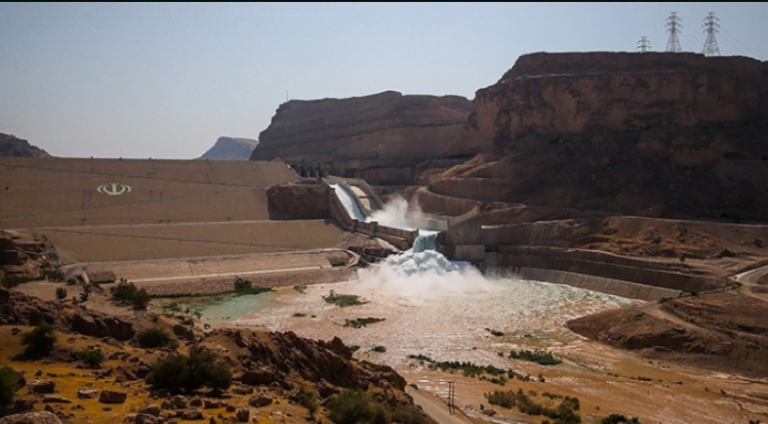
Several weeks ago, Saeed Mohammad’s name made the rounds as a possible candidate for Iran’s upcoming presidential election in June for Water Mafia.


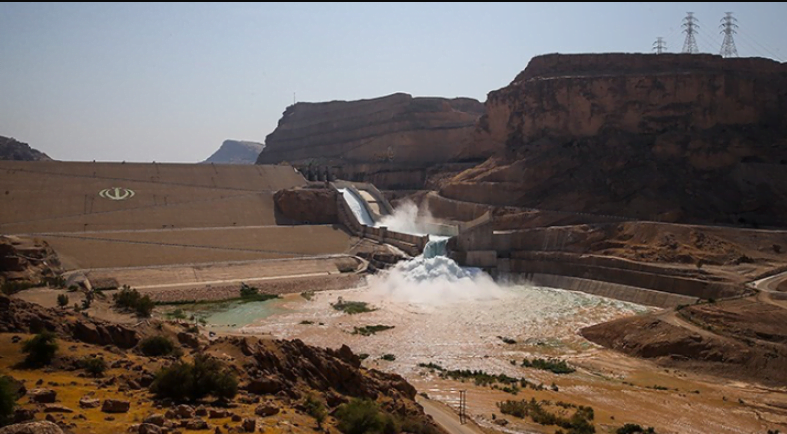
Observers started looking into the past of the relatively unknown general, who was the former head of dam building firm Sepasad and now serves as the chief of Khatam al-Anbiya Construction Headquarters.


The rather young general, who likes to be called Dr. Mohammad, has connections to reformists and conservatives with deep pockets and powerful allies.


With some reformists calling for a new military leader to run after the term of the current president, Hassan Rouhani comes to an end, some might say he should consider himself lucky to be in the right place at the right time.


Mohammad’s potential candidacy raises some immediate questions as well. The first one that comes to mind is how does a dam builder come into the picture in the first place?


Iran has been hit hard by a devastating water crisis and some conservative political operatives see him, as the head of the country’s largest construction firm, as someone who can solve problems — a relatively young general who the supreme leader trusts.


The next question that arises is what exactly does the Islamic Revolutionary Guard Corps (IRGC), which is known for intervening in regional politics, sending fighters to Syria and Iraq, and threatening international shipping in the Persian Gulf, have to do with water management?


After the fall of the shah in 1979, the IRGC was created to protect and export the Islamic revolution.


In the years since it has evolved into a significant military and financial player in its own right. Khatam al-Anbiya, its construction arm, gets funding from the government for all kinds of major building projects, including oil and gas and petrochemical plants, dams, tunnels, and water transfer schemes.


Read the complete article at NewsNow.com


Also Read: Biden Should Address Iran’s Supply Of Weapons To Houthis

Biden Should Address Iran’s Supply Of Weapons To Houthis

0
Biden Should Address Iran’s Supply Of Weapons To Houthis

Rather than rewarding the Iranian leaders by returning to the Joint Comprehensive Plan of Action nuclear deal and lifting sanctions on the regime, the US Biden administration should make addressing Iran’s devastating role in Yemen’s conflict a priority.

The Iranian regime is violating a UN arms embargo by supplying weapons to the Houthis in Yemen. UN experts last week accused Iranian entities and individuals of delivering weapons. The annual report by sanctions monitors stated: “There is a growing body of evidence that shows that individuals or entities within Iran are engaged in sending weapons and weapons components to the Houthis.” According to the report, the experts “documented several supply routes for the Houthis in the Arabian Sea using traditional vessels (dhows).” Weapons seized included anti-tank guided missiles, sniper rifles and rocket-propelled grenade launchers similar to those made in Iran. The Biden administration has remained silent in the light of this important report.

This is not the first time UN experts have linked the Iranian regime to the Houthis and their weaponry. A panel of experts reported in 2017 that it was extremely unlikely the Houthis could manufacture such missiles on their own. “The design, characteristics and dimensions of the components inspected by the panel are consistent with those reported for the Iranian-manufactured Qiam-1 missile,” it said.

Read the complete article: Arab News


The Iranian regime is violating a UN arms embargo by supplying weapons to the Houthis in Yemen. UN experts last week accused Iranian entities and individuals of delivering weapons. The annual report by sanctions monitors stated: “There is a growing body of evidence that shows that individuals or entities within Iran are engaged in sending weapons and weapons components to the Houthis.” According to the report, the experts “documented several supply routes for the Houthis in the Arabian Sea using traditional vessels (dhows).” Weapons seized included anti-tank guided missiles, sniper rifles and rocket-propelled grenade launchers similar to those made in Iran. The Biden administration has remained silent in the light of this important report.

Convicting Iranian Regime’s Terrorist Diplomat is not Enough

Convicting Iranian Regime’s Terrorist Diplomat is not Enough

The verdict of the Iranian regime’s terrorist diplomat Assadollah Assadi was returned by a Belgian federal court on Thursday the 4th of February. He was given the 20-year maximum sentence that prosecutors called for.

According to reports tallied by Iran’s main opposition, the People’s Mujahedin of Iran (PMOI / MEK Iran) and the National Council of Resistance of Iran (NCRI), Assadi is the first Iranian diplomat to be charged with masterminding and plotting terrorist attacks, but he is not the first Iranian diplomat to be involved with such activity. The Iranian regime uses its foreign embassies as centers of espionage and terrorism.

Although Assadi and three co-conspirators were charged, the Iranian regime’s network of operatives in Europe goes much further.

There are calls for firm action to be taken, such as a reassessment of relations with Iran and the end to policies of appeasement. The International Committee in Search of Justice (ISJ) recommended exactly this, saying that anything other than firm action is allowing and even emboldening the Iranian regime to continue plotting terrorist attacks on European soil.

Read the complete article at: Stop Fundamentalism


The verdict of the Iranian regime’s terrorist diplomat Assadollah Assadi was returned by a Belgian federal court on Thursday the 4th of February. He was given the 20-year maximum sentence that prosecutors called for. According to reports tallied by Iran’s main opposition, the People’s Mujahedin of Iran (PMOI / MEK Iran) and the National Council of Resistance of Iran (NCRI), Assadi is the first Iranian diplomat to be charged with masterminding and plotting terrorist attacks, but he is not the first Iranian diplomat to be involved with such activity. The Iranian regime uses its foreign embassies as centers of espionage and terrorism. Although Assadi and three co-conspirators were charged, the Iranian regime’s network of operatives in Europe goes much further.